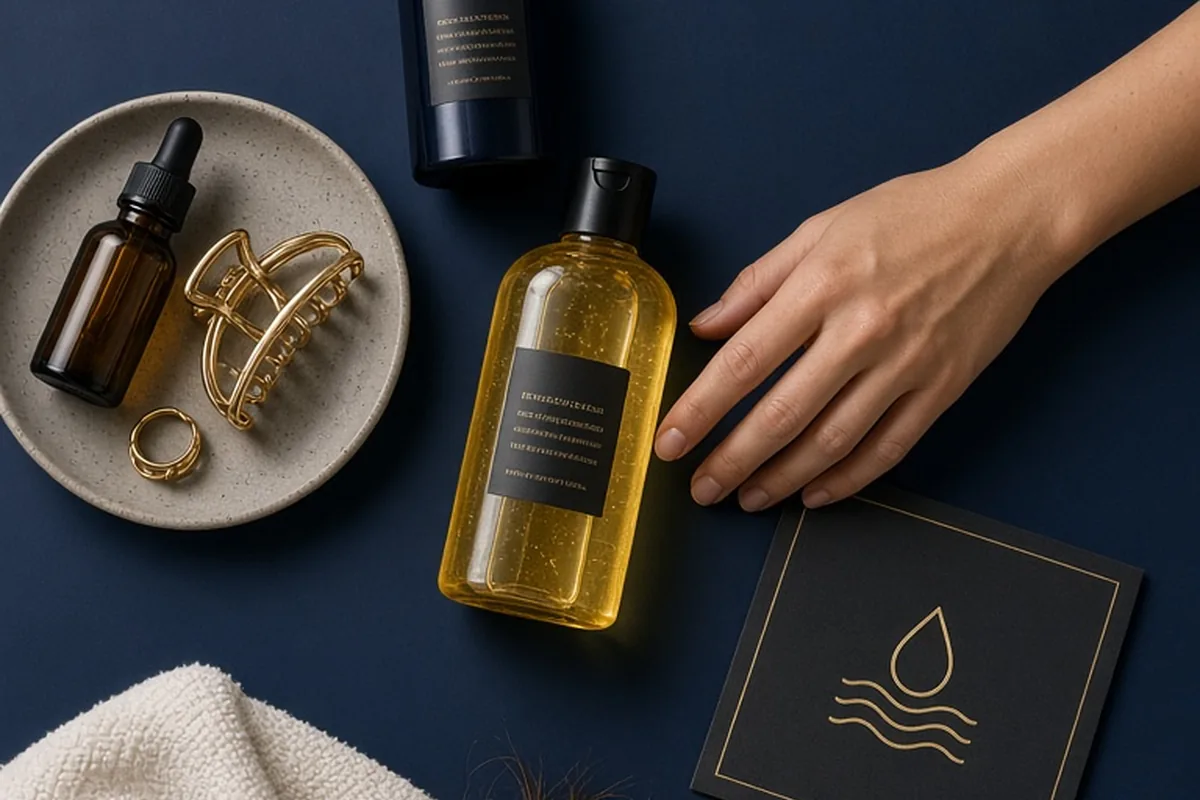
Most people with fine hair should use a moisturizing shampoo once or twice a week, rather than every wash. Because individual fine strands have a small diameter and fewer cuticle layers, daily use of rich moisturizing formulas quickly causes product buildup, limp roots, and premature greasiness. Alternating a lightweight hydrating formula with a gentle balancing or volumizing shampoo delivers essential moisture to delicate mid-lengths and ends without collapsing natural body.
Fine hair presents a unique daily dilemma: the strands are fragile and prone to parched, split ends, yet the root zone easily becomes flat, greasy, and overwhelmed by traditional conditioning agents. Finding the right balance requires treating your scalp and your hair shaft as two distinct environments with separate moisture demands.
Matching Wash Frequency to Scalp Oil Production and Strand Texture
Determining how often to incorporate a moisturizing cleanser begins with evaluating your scalp type rather than your hair ends. Your scalp contains sebaceous glands that produce natural sebum, while the hair shaft consists of dead keratin fibers that rely on external moisture and protective sebum for flexibility. Fine hair has a narrow diameter, meaning oil from the scalp travels down the strand much faster than it does on coarse hair. If your scalp naturally produces high levels of sebum, using a rich moisturizing shampoo daily will saturate the roots and trap dead skin cells against the scalp surface.
For an oily scalp with fine hair, washing three to four times a week is typical, but a moisturizing formula should only be used for one of those sessions. The remaining washes should rely on a clarifying or scalp-balancing shampoo that removes excess sebum without stripping the skin barrier. Conversely, if you have a dry or mature scalp that produces minimal natural oil, your total wash count might only be two or three times per week. In that scenario, using a lightweight moisturizing cleanser for two out of three washes provides the lubrication needed to prevent mechanical breakage during brushing and styling.
Hair pattern also dictates your weekly cadence. Fine, straight hair shows oil accumulation within twenty-four hours because sebum flows down unhindered straight paths. Fine, curly or coily hair possesses structural bends that obstruct sebum distribution, leaving the lengths thirsty even if the scalp is balanced. Fine curlies often benefit from using a moisturizing shampoo twice weekly, accompanied by targeted scalp cleansing, whereas fine, straight hair typically thrives with a single weekly moisture wash paired with alternating volumizing cleansers.
Moisturizing Shampoo for Fine Hair: Safe Rotation Cycles
A static routine using one single bottle of moisturizing shampoo rarely works for fine textures over an extended period. Instead, the most reliable strategy is a weekly rotation schedule that alternates between a moisturizing formula, a lightweight daily or volumizing cleanser, and an occasional clarifying treatment. This rotational approach delivers hydration in controlled doses, allowing the hair fiber to absorb humectants without accumulating a heavy barrier that repels water and prevents volume at the crown.
A practical four-wash rotation for someone washing every other day involves using a gentle daily shampoo for wash one, a dedicated moisturizing shampoo for wash two, a gentle volumizing cleanser for wash three, and a clarifying shampoo for wash four. This sequence resets the hair fiber before moisture can compound into heaviness. If you wash your hair daily due to intense workouts or personal preference, limit moisturizing shampoo to two non-consecutive days, such as Tuesday and Saturday, while relying on an ultra-mild, low-lather cleanser for the intervening days.
When introducing a new moisturizing formula, monitor your hair across three wash cycles to evaluate how the cumulative residue behaves. If your hair feels exceptionally soft on day one but turns stringy, coated, or dull by day two, the shampoo is either too heavy for your hair density or being applied too frequently. Dialing back the frequency by one wash per week usually restores bounciness while preserving the hydrating benefits.
Recognizing Hydration Overload Versus True Moisture Deficits
Fine hair exhibits distinct signs when it receives too much moisture, which are frequently misdiagnosed as dryness. When fine strands become over-saturated with conditioning emollients and film-forming polymers, they lose their elasticity and structural tensile strength. The hair becomes overly soft, feels limp or mushy when wet, refuses to hold a curl or blowout, and lies completely flat against the skull within hours of drying. Many people assume this lack of responsiveness means the hair needs more conditioning, creating a cycle of product buildup that exacerbates the problem.
True moisture deficit, on the other hand, presents as rough friction, static electricity, brittle snap when bending the strand, and split ends that catch on clothing. Dehydrated fine hair feels coarse to the touch and appears matte rather than shiny, but it rarely feels greasy at the root. If your hair is exhibiting static flyaways and snagging during detangling, it is asking for hydration. If it feels slick, clings together in separated clumps, and appears wet even when completely dry, it is suffering from moisture and emollient overload.
To run a simple elasticity check at home, take a single strand of wet, clean hair and gently stretch it between your fingers. If it stretches slightly and bounces back to its original length, your moisture and protein balance is sound. If it stretches excessively without returning, feels gummy, or snaps under negligible tension, you have excessive moisture softening the internal bonds. If it has no stretch at all and snaps instantly with a crisp break, your strand requires gentle humectants and lipid replacement.
Ingredient Formulas That Hydrate Fine Hair Without Adding Weight
The success of using a moisturizing shampoo on fine hair depends heavily on the specific hydrators listed on the bottle. Coarse hair thrives on rich, occlusive plant butters such as shea butter, cocoa butter, and heavy plant oils like coconut or castor oil. These ingredients create thick protective blankets over the cuticle. On fine hair, however, large molecular weight occlusives quickly coat the exterior, flatten the cuticle, and attract airborne dust and excess sebum, resulting in rapid grease formation.
Fine hair responds best to low-molecular-weight humectants and lightweight emollients that draw water into the hair cortex rather than coating the exterior. Look for formulas containing glycerin, hyaluronic acid, aloe vera leaf juice, panthenol (provitamin B5), and hydrolyzed silk or wheat proteins. Panthenol is particularly beneficial for fine hair because it penetrates the cuticle layer and swells the strand from within, providing both internal moisture retention and measurable thickness without leaving an oily surface film.
If plant oils are included in your moisturizing shampoo, ensure they appear near the bottom of the ingredient list or consist of lightweight, dry oils such as squalane, argan oil, jojoba seed oil, or camellia oil. These oils possess smaller lipid structures that absorb easily without forming a persistent, water-repellent shell. Avoid products where mineral oil, petrolatum, or high concentrations of non-water-soluble silicones such as dimethicone dominate the top of the deck, as these will require harsh surfactants to remove later.
Application Techniques That Protect Roots While Nourishing Ends
How you physically apply your moisturizing shampoo is just as critical as your calendar schedule. Most lathering mistakes happen when people dump a concentrated dollop of shampoo directly onto the top of the head. For fine hair, this concentrates the heaviest moisturizing agents directly onto the roots where sebum is already highest, while the dry ends receive only the residual suds during rinsing. This application error causes instant root collapse and leaves mid-lengths under-nourished.
To apply moisturizing shampoo effectively, dispense a nickel-sized amount into wet palms and emulsify the product vigorously between your hands until it develops a light, spreadable lather before it touches your scalp. Part your hair with your fingers and target the cleanser primarily at the nape of your neck, behind the ears, and along the lower hairline where sweat and sebum gather. Use the pads of your fingers in circular motions to clean the scalp skin, letting the lather gently rinse down the lengths of the hair without vigorously scrubbing the fragile mid-lengths together.
Consider using a reverse-washing method on days when you use your moisturizing shampoo. Apply a lightweight conditioner to your mid-lengths and ends first, let it sit for two minutes to shield the fragile ends, and then apply your moisturizing shampoo exclusively to the scalp before rinsing everything out together. This barrier technique protects the ends from friction while preventing conditioning agents from depositing directly onto the root zone.
Adjusting Your Hydration Schedule for Color Treatments, Heat, and Weather
Your fine hair moisture schedule should remain flexible, adapting to chemical services, thermal styling frequency, and outdoor climate shifts throughout the year. Chemical lightening, permanent hair dye, and regular blow-drying lift the hair cuticle and deplete the protective 18-methyleicosanoic acid (18-MEA) lipid layer. Bleached or color-treated fine hair loses moisture at a rapid rate because the porous cuticle can no longer seal hydration inside the cortex. If your fine hair is chemically processed, increase moisturizing shampoo use to two or three times per week to offset cuticle porosity.
Seasonal environmental shifts also alter the hair's hydration requirements. During cold winter months, indoor central heating strips atmospheric moisture, while freezing outdoor air causes the cuticle to contract and become brittle. You may need to increase moisturizing shampoo frequency during winter to prevent static electricity and frictional breakage from wool coats and scarves. Conversely, during humid summer months, high ambient moisture causes the hair fiber to swell naturally, meaning you can often reduce moisturizing shampoo to once weekly and rely more on clarifying formulas to combat sweat and humidity buildup.
If you use thermal tools like flat irons or curling wands more than twice a week, heat alters the internal keratin structure, making fine strands prone to dry fraying. In this scenario, pairing a weekly moisturizing wash with an external heat protectant spray delivers better results than simply washing with a heavy shampoo every day. The goal is to supply baseline hydration through the cleanser without overloading the strand, leaving space for protective leave-in thermal barriers.
Troubleshooting Greasiness, Flat Roots, and Mid-Day Collapse
If you introduce a moisturizing shampoo and notice your roots flattening by noon or your scalp feeling uncomfortably slick, do not immediately discard the product. The issue is usually an imbalance in surfactant strength or rinse thoroughness rather than an inherent failure of the shampoo. Fine hair has a dense strand-to-surface ratio, creating a compact canopy that easily traps shampoo residue if water does not penetrate all the way through to the scalp.
First, evaluate your rinse duration. Fine hair requires at least sixty to ninety seconds of thorough rinsing under running, lukewarm water to fully dissolve surfactants and suspended emollients. If you rush the rinse step, residual humectants remain behind, binding with natural scalp oils to create a dense film. Additionally, avoid using scalding hot water, which stimulates the sebaceous glands to produce compensatory oil while stripping moisture from the mid-lengths.
Second, if flat roots persist despite thorough rinsing, implement a monthly or bi-weekly clarifying reset. Use a sulfate-based or chelating clarifying shampoo once every ten to fourteen days to strip away persistent polymer buildup, hard water minerals, and styling product residue. After resetting the strand with a clarifying wash, your fine hair will absorb the benefits of your moisturizing shampoo much more cleanly during subsequent washes, restoring both movement and hydration.
Frequently asked questions
Can I use moisturizing shampoo every day if I have fine, color-treated hair?
Daily use of moisturizing shampoo is generally not recommended for fine hair, even when color-treated, because it causes rapid buildup and root collapse. Instead, wash every other day or alternate your moisturizing shampoo with a color-safe, sulfate-free gentle cleanser to protect your pigment while preserving volume.
What is the difference between a hydrating shampoo and a volumizing shampoo for fine hair?
Hydrating shampoos contain humectants and emollients designed to draw water into the hair shaft and smooth the outer cuticle layer. Volumizing shampoos focus on thorough cleansing and use lightweight film-formers to create temporary friction and lift between individual strands without depositing heavy conditioning agents.
Will a moisturizing shampoo cause fine hair to fall out or thin?
Moisturizing shampoo does not cause biological hair loss, but if used too frequently without adequate scalp cleansing, heavy oils and unrinsed polymers can clog hair follicles and trap shedding hairs against the scalp. Ensuring regular scalp-focused cleansing keeps follicles clear and supports healthy growth cycles.
How do I know if my fine hair needs protein instead of moisture?
Fine hair that needs moisture feels dry, static-prone, and rough, whereas fine hair that needs protein feels mushy, limp, stretches excessively when wet without springing back, and snaps easily. If your hair feels lifeless and cannot hold any styling shape after moisturizing, it likely requires a lightweight protein treatment rather than additional hydration.
Your next step
Inspect your current shampoo ingredient list for heavy butters and schedule your moisturizing wash for just one day this week, alternating with a gentle balancing formula to see if your volume improves.