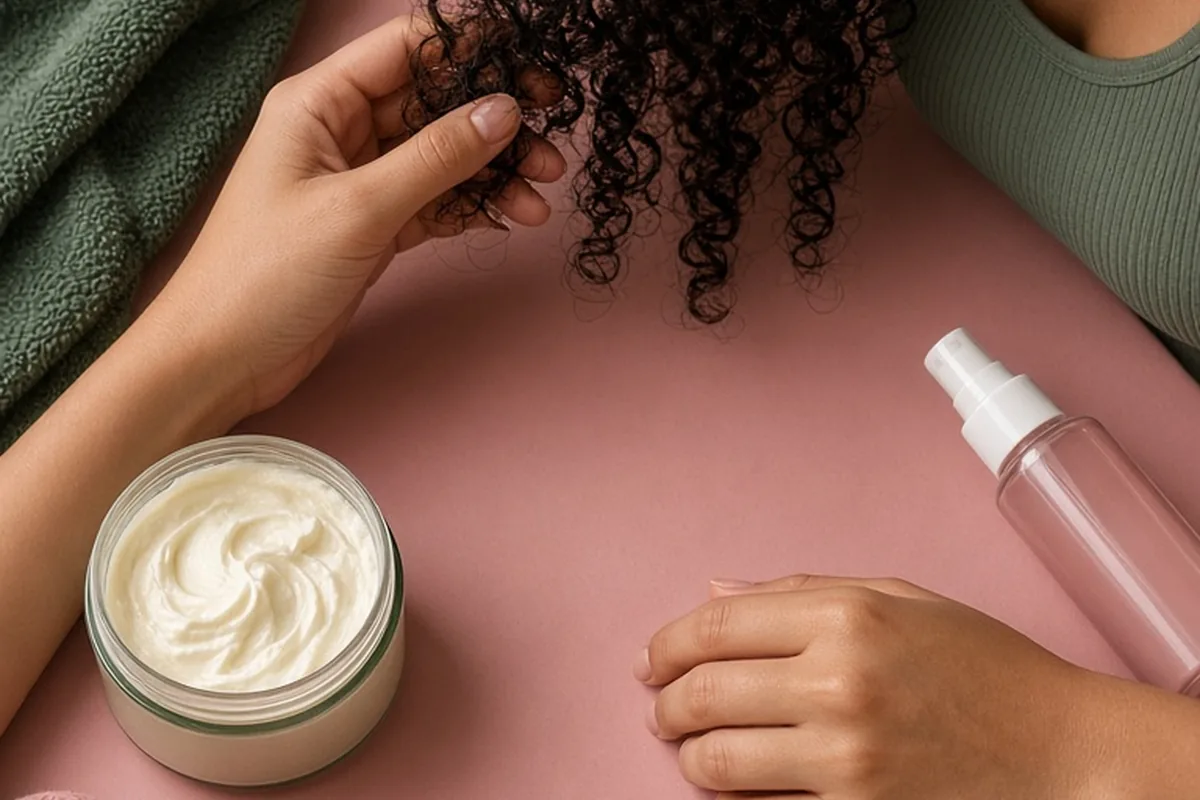
Most curly hair thrives when moisturized every two to four days, though the ideal frequency depends heavily on strand porosity, curl tightness, and local humidity. Tighter coils and high-porosity curls often benefit from lightweight hydration every forty-eight hours or daily water-based refreshing, while looser waves and low-porosity curls usually stay balanced with moisture applied two or three times a week during wash and styling days.
Finding a sustainable moisturizing schedule for curly hair often requires moving away from rigid calendar rules and learning how your strands react to water, oils, and styling creams. Because natural scalp oils travel slowly down spiraled hair shafts, curls are naturally prone to dryness, but adding product too frequently can cause heavy buildup and limp definition.
Establishing a Baseline Schedule by Curl Pattern and Strand Width
Curl pattern and strand thickness form the starting point for your moisturizing frequency. Loose, wavy textures (often classified within Type 2 patterns) and fine Type 3 curls have a tighter cuticle structure and smaller individual strand diameters. These curls can easily become weighed down by frequent applications of heavy butters or daily leave-in conditioners. For these looser and finer curl types, moisturizing thoroughly on wash days—typically two to three times per week—using light, water-based leave-in mists is often sufficient to maintain bounce and definition without causing greasiness.
In contrast, tighter corkscrew curls and dense coily textures (Type 3C through Type 4 patterns) present more bends, twists, and surface friction along each strand. This physical structure makes it difficult for natural sebum from the sebaceous glands to reach the ends of the hair. Coarser strands also have a larger surface area that loses internal water more readily when exposed to friction from clothing, pillowcases, and dry indoor air. Individuals with tight curls or coarse strands generally need re-moisturizing every one to three days, alternating between light liquid hydration mid-week and intensive deep conditioning on wash days.
How Hair Porosity Dictates Your True Hydration Frequency
While curl shape provides an initial estimate, porosity—the hair shaft cuticle's ability to absorb and retain water—is the most accurate indicator of how often your curls need hydration. Low-porosity hair has tightly bound, overlapping cuticle scales that resist water penetration. Once moisture successfully penetrates low-porosity strands, it remains locked inside for several days. Applying daily creams or heavy oils to low-porosity hair rarely adds moisture; instead, it sits on the exterior cuticle layer, creating a tacky film that attracts dirt. Low-porosity curls typically need deep hydration only once or twice a week, ideally paired with gentle indirect heat or steam during conditioning to lift the cuticles.
High-porosity hair behaves in the opposite manner. Gaps, tears, or naturally raised cuticles allow high-porosity curls to absorb water almost instantly, but that same moisture evaporates just as rapidly into the surrounding air. If your hair feels parched a few hours after washing, high porosity is frequently the underlying cause. High-porosity curls generally require moisture reinforcement every forty-eight hours. The routine must focus not only on adding water-based hydrators but also on layering emollient sealants, such as plant butters or rich oils, to create an artificial barrier that slows down water evaporation.
Structuring Wash-Day Conditioning Versus Mid-Week Refreshing
A practical moisturizing schedule separates deep, structural hydration on wash day from maintenance refreshing between washes. True hair hydration comes strictly from water. Conditioning products work by delivering water-soluble moisturizing agents (such as glycerin, aloe vera, and panthenol) deep into the cortex and smoothing the external cuticle. A dedicated wash day once every five to seven days should center on thorough cleansing followed by a rinse-out conditioner or a twenty-minute deep conditioning mask to replenish internal water reserves.
Mid-week refreshing serves to revive curl shape and restore suppleness without stripping the hair with shampoo or drenching it completely in the shower. Rather than reaching for heavy styling creams on day three or four, lightly mist the mid-lengths and ends with plain water or a diluted water-based leave-in spray. Use your hands to smooth the mist down the hair shaft in downward gliding motions, then apply a pea-sized drop of lightweight oil or serum over dry patches. This technique rehydrates the hair fibers without oversaturating the scalp or creating heavy product buildup.
Layering Products with the LOC and LCO Methods
The sequence in which you apply products determines how long hydration lasts between moisturizing sessions. The two primary methods for sealing moisture into curly textures are the Liquid-Oil-Cream (LOC) method and the Liquid-Cream-Oil (LCO) method. Both systems begin with a liquid base—either plain water or a lightweight, water-first leave-in conditioner—which supplies the actual hydration your hair fibers need.
The difference lies in how you seal that water inside the strand. In the LOC method, applying an oil directly after the liquid helps trap water before a rich butter or styling cream smooths the exterior cuticle, making this approach particularly effective for high-porosity and coarse coily textures. In the LCO method, a moisturizing cream is applied directly over the liquid base, followed by a light sealing oil on the outside. The LCO sequence is often better suited for medium-porosity hair and finer curls, as it distributes emollients more evenly without trapping excess oil against the cuticle layer.
Recognizing Moisture Overload Versus Dryness and Protein Imbalance
Moisturizing too often can lead to a condition known as hygral fatigue or moisture overload. This occurs when the hair cuticle expands and contracts repeatedly from continuous water absorption without sufficient structural reinforcement. When curls suffer from moisture overload, they feel gummy or limp when wet, stretch excessively without bouncing back, lose their natural curl pattern, and feel mushy or excessively soft. If your curls exhibit these characteristics, increasing your moisturizing frequency will worsen the problem; the hair requires a clarifying wash and a protein-strengthening treatment instead.
True dryness, by contrast, presents as brittle, rough, and stiff strands that break easily when gently pulled. Dry hair tangles quickly, sounds raspy when rubbed together, and lacks elasticity. Balancing moisture frequency requires monitoring this delicate equilibrium: healthy curls need enough water for elasticity and flexibility, paired with enough structural protein to maintain curl spring and tensile strength. When in doubt, alternate moisture-heavy masks with light protein conditioners rather than applying deep moisturizers every day.
Adjusting Moisture Frequency for Weather and Seasonal Shifts
Your ideal moisturizing schedule will naturally change throughout the year as outdoor temperatures and indoor heating fluctuate. During cold winter months, low outdoor humidity combined with forced indoor air pulls moisture out of exposed hair strands rapidly. Curls that thrive on a twice-weekly moisture routine in the spring may require daily light mists and heavier protective sealants during winter to counteract indoor dry heat and outer friction from wool scarves and coats.
Summer brings high ambient humidity, which presents a different challenge. While moisture is abundant in humid air, humectants in styling products can pull excess environmental moisture into the hair shaft, causing the cuticle to swell and creating severe frizz. In warm, humid conditions, you may need to moisturize less frequently with heavy creams and instead switch to film-forming humectants (such as flaxseed gel or aloe vera) combined with anti-humectant styling gels that lock the curl pattern in place and prevent atmospheric water from distorting the strands.
Clearing Product Buildup to Restore Moisture Absorption
A common mistake in curly hair care is mistaking product buildup for genuine dryness. When leave-in conditioners, oils, and butters are applied repeatedly throughout the week without proper clarifying, they form an impenetrable coating on the hair surface. When you try to moisturize curls covered in buildup, water beads up and rolls off the strand instead of absorbing, leading to dry, dull, and brittle ends despite constant product application.
To keep your moisturizing schedule effective, incorporate a clarifying shampoo or an apple cider vinegar rinse once or twice a month depending on your styling habits. Clarifying strips away stubborn silicone residues, heavy plant waxes, and mineral deposits from hard water. Once the cuticle is cleared of old residue, your leave-in hydrators and deep conditioners can penetrate directly into the hair shaft, allowing your moisture routine to last several days longer without needing daily reapplication.
Frequently asked questions
Can I moisturize my curly hair every single day?
You can apply a lightweight water mist daily if your hair feels parched or loses definition, but daily applications of heavy creams, butters, or deep conditioners are unnecessary and often lead to buildup or moisture overload. Reserve heavy moisturizing treatments for wash days and rely on simple water sprays for daily maintenance.
How do I know if my curls need water or oil?
If your hair feels stiff, brittle, and lacks elasticity, it needs water-based hydration delivered through a leave-in conditioner or mist. If your hair feels reasonably soft after washing but loses its sheen and moisture within a few hours, it lacks a sealing oil or butter to lock that water inside the cuticle.
Does sleeping in a deep conditioner provide better moisture for curly hair?
No, sleeping in deep conditioner is not recommended because prolonged exposure to wet product weakens the hair cuticle and causes hygral fatigue. Most formulated deep conditioners reach maximum efficacy within twenty to thirty minutes, after which they should be thoroughly rinsed out.
Why does my curly hair feel dry even after applying leave-in conditioner?
This usually indicates either product buildup preventing moisture from penetrating the hair shaft, or very high porosity causing water to evaporate rapidly. Try using a clarifying shampoo to reset the hair cuticles, follow with a deep conditioner, and seal the ends with a nourishing oil or butter.
Your next step
Assess your curl porosity this week by observing how quickly your hair absorbs and loses water, then set a trial schedule of moisturizing every three days while logging how your curl definition responds.