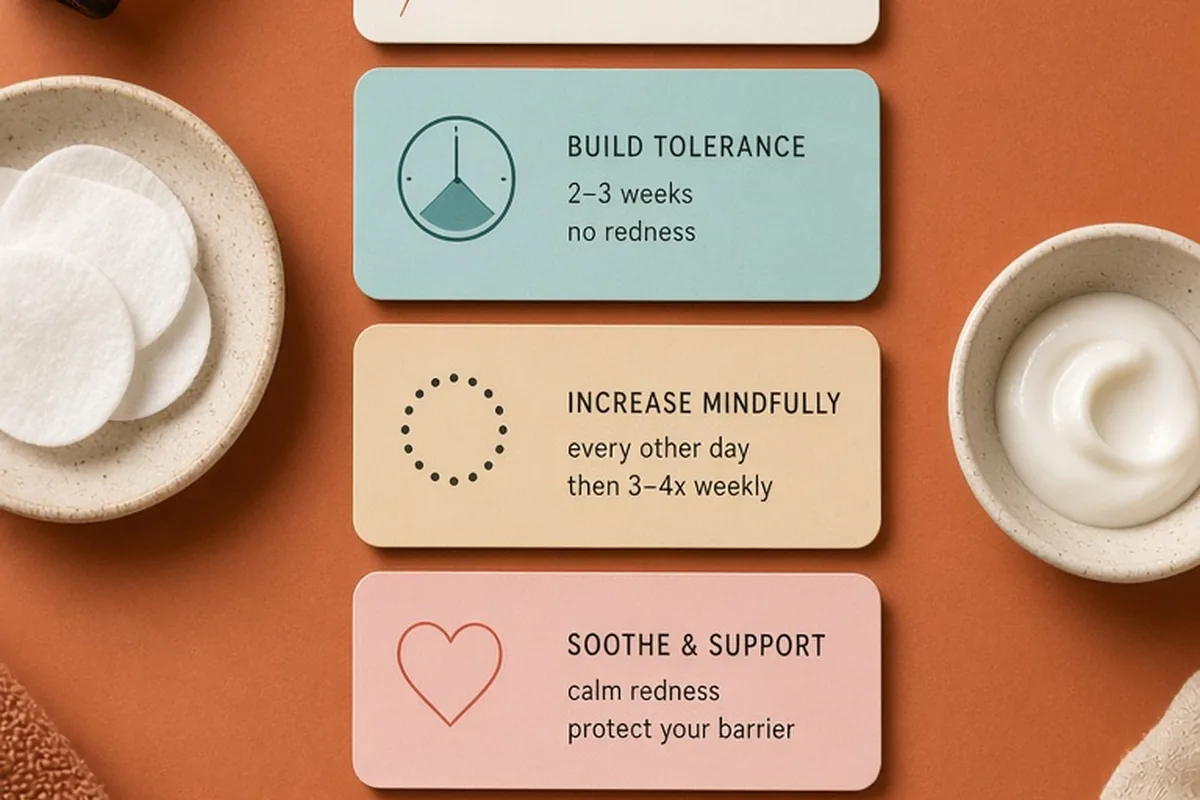
If you have sensitive skin, start by applying azelaic acid once or twice a week in the evening. As your skin builds tolerance over two to three weeks without redness or burning, gradually increase usage to every other day. Many people with reactive skin achieve balanced results using it three to four times weekly, while daily use should only be attempted once tolerance is well established.
Azelaic acid offers a mild approach to refining texture, calming redness, and smoothing tone, but sensitive skin barriers still demand a structured and patient introduction.
Understanding the Initial Pacing Strategy for Sensitive Skin
Sensitive skin responds best to gradual acclimation rather than immediate daily application. When introducing azelaic acid, the goal during the first several weeks is to observe how your epidermal barrier handles the compound without causing micro-inflammation. Applying the product just once or twice during the first week allows you to monitor for delayed irritation, which often takes twenty-four to forty-eight hours to manifest in reactive complexions.
A practical starting rhythm involves selecting two non-consecutive days, such as Tuesday and Saturday evenings. On these days, cleanse with an unfragranced, non-foaming cleanser, apply your soothing moisturizer first, and then layer a small pea-sized amount of azelaic acid on top. If your skin feels calm, soft, and free of persistent heat after two full weeks of this schedule, you can safely advance to an alternate-day cadence.
The trade-off of this conservative schedule is that noticeable aesthetic improvements take longer to appear. While daily users might notice shifts in clarity within four to six weeks, an alternate-day routine on delicate skin may require eight to twelve weeks to demonstrate visible results. Prioritizing skin comfort over speed prevents barrier damage that could otherwise halt your routine entirely.
Selecting Formulations and Strengths for Delicate Complexions
Azelaic acid products generally range from five percent to ten percent in over-the-counter preparations, extending up to fifteen or twenty percent in prescription treatments. For easily sensitized skin, beginning with a ten percent over-the-counter suspension, cream, or lotion is generally recommended. Lower percentages allow the skin to adjust to the molecular action of the dicarboxylic acid without overwhelming the moisture barrier.
The carrier base of the product plays a role that is nearly as important as the active percentage itself. Gel and suspension formulas containing high levels of penetration enhancers or drying alcohols can cause immediate stinging upon contact. In contrast, cream-based or lotion-based formulations enriched with emollient lipids, squalane, or glycerin cushion the active delivery, mitigating the sensation of prickly heat often felt during initial applications.
Consider a scenario where someone with rosacea-prone, dry cheeks tests a lightweight alcohol-based gel and experiences immediate flushing. Switching to a cream vehicle with the exact same active concentration often resolves the discomfort entirely. Matching the vehicle to your underlying skin type helps you sustain consistent frequency without discomfort.
Application Mechanics and the Buffering Method
Applying active treatments directly to damp skin significantly enhances their penetration rate, which can trigger an intense tingling sensation in sensitive individuals. To minimize this effect, wait until your face is completely dry to the touch after washing before applying your product. A drying period of five to ten minutes reduces the rapid transdermal uptake that leads to itching.
Buffering, also known as the sandwich technique, provides an additional layer of protection for reactive barriers. This method involves applying a thin layer of a basic, non-active moisturizer, letting it settle for two minutes, applying your azelaic acid, and optionally sealing with another light layer of moisturizer. The underlying barrier slows down absorption, delivering the active ingredient at a gentle, sustained rate throughout the evening.
While buffering slightly reduces the peak potency of each application, it drastically lowers the risk of contact dermatitis, peeling, and redness. For sensitive skin types, the ability to use the product consistently without irritation yields superior long-term results compared to aggressive, unbuffered applications that lead to routine disruptions.
Integrating Azelaic Acid with Other Skincare Actives
A common mistake when starting azelaic acid is continuing to use other potent active ingredients simultaneously. Physical scrubs, alpha hydroxy acids like glycolic acid, beta hydroxy acids like salicylic acid, and retinoids all place demands on the protective stratum corneum. Combining multiple exfoliating or cellular-turnover agents in the same session can easily push sensitive skin into an over-exfoliated state.
During the first four to six weeks of establishing your azelaic acid frequency, simplify your remaining steps down to core essentials: a gentle cleanser, a restorative moisturizer containing ceramides or panthenol, and a broad-spectrum mineral sunscreen. If you already use a well-tolerated retinoid, reserve the retinoid for one night and the azelaic acid for a different night, ensuring you never apply both within the same evening routine.
Once your skin demonstrates complete tolerance to alternate-day azelaic acid use, you can consider reintroducing supplementary actives one at a time. Always keep soothing ingredients like centella asiatica, colloidal oatmeal, and hyaluronic acid at the center of your routine to maintain adequate hydration and barrier integrity.
Recognizing Normal Acclimation Versus Barrier Disruption
Distinguishing between mild acclimation sensations and true skin barrier distress is critical when deciding whether to maintain or adjust your weekly frequency. A brief, faint tingling sensation that subsides within ten to fifteen minutes after application is a known sensory response to azelaic acid that often diminishes as the skin adapts over several weeks.
Conversely, continuous burning, rough red patches, flaking around the mouth and nose, or a stinging sensation when applying plain water or gentle moisturizer signal that the skin barrier is compromised. If these signs appear, you should pause all active ingredients immediately and focus exclusively on barrier repair for at least one to two weeks.
Resuming treatment after a barrier reset requires lowering both the frequency and the amount applied. If you ran into irritation while attempting every-other-day use, restart at once per week with a buffered application method, giving your skin ample time to recover between exposures.
Modifying Application Frequency for Seasonal and Environmental Shifts
Skin sensitivity is not static; it fluctuates based on humidity, ambient temperature, indoor heating, and sun exposure. During harsh winter months, low humidity and indoor heating draw moisture from the epidermis, lowering the threshold for product-induced irritation. An application schedule that works effortlessly in July may prove too drying by January.
When shifting into colder, drier seasons, it is often wise to dial back frequency by one application per week or transition to a richer, occlusive moisturizer over your buffered treatment. Conversely, in humid summer conditions where sebum production increases and the barrier naturally holds more hydration, sensitive skin may comfortably tolerate slightly more frequent applications without tightness.
Pay close attention to how your skin feels at the end of the day. If your complexion begins to feel tight or shows signs of dehydration lines, treat that as a signal to space out your applications, prioritizing barrier hydration over strict calendar adherence.
Illustrative Scenarios
Adjusting Application Pacing for a Reactive Skin Barrier
An individual with sensitive, redness-prone skin began using a ten percent azelaic acid cream every night. Within four days, the skin developed tight, dry patches along the cheekbones and stung when applying gentle moisturizer. After pausing the product for ten days to allow the barrier to recover, the individual restarted by applying a pea-sized amount over a layer of ceramide moisturizer just twice per week. Over the following six weeks, the skin showed no further burning or flaking, allowing a gradual transition to three nights per week with improved overall tone.
Key point: Lowering initial frequency and buffering over moisturizer enables reactive skin to build tolerance comfortably without triggering barrier disruption.
Frequently asked questions
Can I use azelaic acid in the morning if my skin is sensitive?
Yes, but sensitive skin usually benefits from starting with evening applications to observe tolerance overnight. Once your skin is fully adjusted and you consistently apply broad-spectrum sunscreen every morning, you can experiment with daytime use.
How long does it take for sensitive skin to tolerate daily use?
Building up to daily use typically takes two to three months of gradual, step-by-step increases. However, many people with sensitive skin find that applying it three to four times per week provides optimal benefits without unnecessary irritation.
Should I wash azelaic acid off if it tingles after application?
A mild prickling that fades within ten minutes is generally harmless and common during initial use. If the sensation turns into an intense burn, itching, or throbbing, gently wash the product off with cool water and apply a bland moisturizer.
Can I apply azelaic acid around the eye area?
The skin surrounding the eyes is exceptionally thin and reactive, making it vulnerable to irritation from active acids. Keep your application at least half an inch away from the orbital bone and eyelid areas.
Your next step
Begin by applying a buffered, pea-sized amount of azelaic acid just twice a week on dry skin, increasing frequency only when your barrier remains calm and hydrated for several weeks.