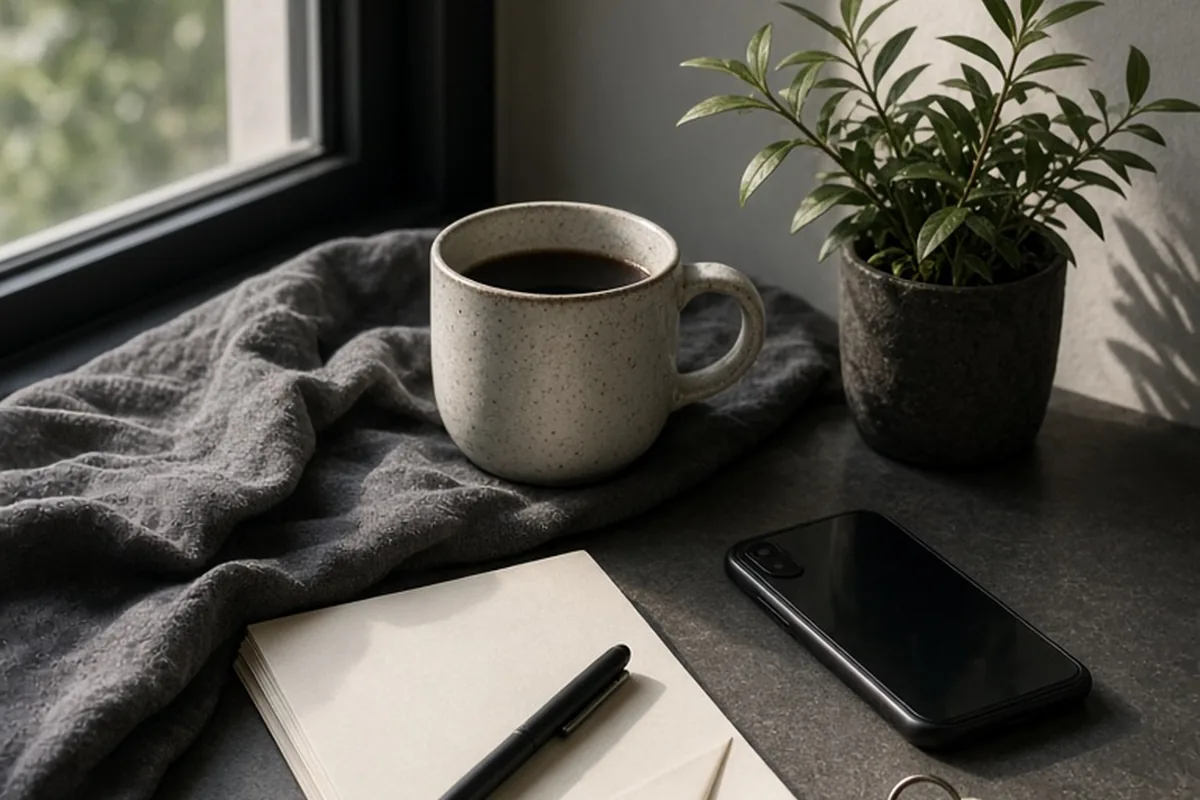
Being happy alone means treating solitude as a usable part of life, not a verdict on your worth. Build a few repeatable pleasures, keep basic needs steady, make one meaningful thing most days, and stay open to people without chasing approval. Loneliness may still visit; the skill is noticing it early and responding with care.
This is not about becoming a hermit or pretending you never need anyone. It is about making your own company reliable enough that quiet evenings, solo errands, and unplanned weekends feel less like absence and more like space you can use.
Separate being alone from feeling unwanted
A useful first step is naming the difference between solitude and isolation. Solitude is a condition: you are by yourself. Isolation is a story: no one would choose me, everyone else is coupled up, I am behind. The same empty apartment can feel peaceful at 6 p.m. and punishing at midnight, which means the facts are not always the problem; the interpretation is. When you catch the story, write down the neutral version: I am alone tonight, I ate dinner, I am tired, I want company. That gives you something workable.
Try a quick check before you act: am I hungry, tired, overstimulated, bored, or actually missing a specific person? Each need has a different fix. Boredom wants a task with texture, not a lecture about gratitude. Missing a friend wants a message, not three hours of scrolling through strangers. A limit matters here: reframing helps, but it does not make every ache disappear. If sadness keeps flattening your days for weeks, treat that as a signal to get more support rather than proof you failed at being independent.
Steady the basics that make solitude easier
Your capacity to enjoy your own company is easier when sleep, food, movement, and daylight are not chaotic. You do not need a perfect wellness routine; you need a floor. Pick a wake time you can keep most days, eat something real before the afternoon crash, get outside for ten minutes, and move your body in a way that does not feel like punishment. These are practical suggestions, not medical rules, but they reduce the static that makes loneliness louder.
Make the basics easy to repeat. Keep soup, eggs, frozen vegetables, or a sandwich fallback for nights when cooking feels impossible. Put walking shoes by the door if you tend to negotiate with yourself. If your schedule is irregular, choose anchors instead of exact times: after coffee I open the curtains, after work I walk one block, before bed I plug my phone in across the room. The trade-off is that structure can feel boring at first. Boredom is often the price of a nervous system that is not constantly scrambling.
Design a solo day instead of drifting through it
Happiness alone rarely comes from a blank calendar; it comes from a day with a few deliberate shapes. Use three anchors: something for your body, something for your attention, and something for your future self. A solo Saturday might be a long walk, an hour at a museum or library, then prepping two lunches for the week. None of that is glamorous, but it creates evidence that your time belongs to you.
Plan for transitions, because that is where alone time often collapses into rumination. Decide what happens after work before you get home: change clothes, start rice, put on a playlist, sit on the balcony for five songs. If you live with roommates or family but still feel alone, create a small ritual that is yours, like a morning coffee on the steps or a nightly sketchbook page. The limit is obvious: a plan cannot guarantee a good mood. It can only lower the number of decisions you have to make while vulnerable.
Make your space and attention less hostile
Your environment can either hold you or needle you. Clear one surface, not the whole home, and make it a place where your body can land: a chair with a blanket, a clean kitchen table, a bedside lamp instead of the overhead glare. Add cues that say life happens here: a mug you like, a book left open, shoes by the door, ingredients visible. When your space looks like a waiting room, your mind starts waiting for permission to begin.
Attention needs the same housekeeping. If every quiet moment gets filled by feeds, your brain never learns that silence is survivable. Try one friction move: log out of the app that leaves you feeling worse, charge your phone outside the bedroom, or keep a notebook where you usually reach for it. Then replace, do not just remove: music while cooking, a podcast on a walk, a movie you actually choose. The trade-off is that less noise can make feelings clearer before it makes them calmer. That is uncomfortable, not necessarily wrong.
Build meaning that does not need an audience
A private life gets sturdier when some part of it is devoted to making, learning, fixing, or caring. Choose something with a visible trace: bread, a garden pot, a language app streak, a repaired bike, a photo folder organized by month. The point is not productivity; it is contact with cause and effect. You act, something changes, and the day feels less like it happened without you.
Keep the project small enough to survive low motivation. Fifteen minutes of guitar is better than a fantasy of becoming the kind of person who practices for hours. If you miss a day, restart without a courtroom scene. A helpful rule is never let a hobby become only content for other people; post if you want, but keep one part unshared so it remains yours. The limit is that meaning is not a mood machine. Some days the work will feel flat, and flat work can still be a vote for the life you are building.
Stay connected without outsourcing your worth
Being happy alone does not mean needing no one; it means connection becomes a choice instead of an emergency exit. Keep a short list of people you can reach for different needs: one for laughing, one for practical help, one who understands your history. Send low-pressure bids: a photo, a question, an invitation with an easy out. Specific plans beat vague hints, so try coffee Thursday rather than we should hang sometime.
Also practice receiving without performing. If a friend calls while you are low, you do not have to become entertaining to deserve the call. Say, I am off today, can we talk while I fold laundry? Let relationships be ordinary. The trade-off is that chosen solitude can slide into avoidance if every invitation feels like a threat. A useful test is whether you are declining to protect energy or to dodge the risk of being seen. Protect energy sometimes; do not build a life where no one can find you.
Handle hard nights and know when to widen the circle
Hard moments need a protocol, not a personality transplant. When loneliness spikes, do a body-first reset: water, food if you have not eaten, shower or wash your face, step outside or open a window, then choose one contact action. That action might be texting a friend, sitting in a public place like a library or cafe, joining a class, or simply writing what you would say if someone asked how you really are. The goal is to move from ache to next step.
Have a few scripts ready because lonely brains are bad at improvisation. Try: I am having a rough night, no advice needed, can you stay on the phone while I make tea? Or: I want company but not a big thing; want to run an errand with me this weekend? If you are worried you will be a burden, remember that clear, bounded requests are easier to answer than silence followed by resentment.
There is a line where self-help is not enough. If being alone regularly comes with hopelessness, panic, drinking more than you intend, thoughts of harming yourself, or weeks of not functioning, reach for professional or crisis support in your area and tell one trusted person plainly. That is not a failure of independence; it is using the same good judgment you would use for a broken bone. Solitude should make your life roomier, not smaller.
Frequently asked questions
Is it normal to feel lonely even when I chose to be alone?
Yes. Choosing solitude removes social noise, but it does not remove the human need for attachment. Treat loneliness as information about a need, not proof that your choice was wrong.
What if I do not know what I enjoy doing alone?
Start by borrowing activities instead of discovering a passion. Try a library hour, a beginner class, cooking one recipe, or walking a new route, then keep only what leaves you calmer or more awake.
How much alone time is too much?
There is no universal number; look at function and feeling. If solitude restores you and you can still connect when needed, it is probably serving you. If you are avoiding everyone, missing obligations, or feeling numb, widen your support.
Can I be happy alone and still want a partner or friends?
Absolutely. Wanting connection and enjoying your own company can coexist. The aim is to make relationships an addition to a life you already inhabit, not the only thing holding it up.
Your next step
Tonight, choose one anchor for tomorrow: a ten-minute walk, a real breakfast, or fifteen minutes on a project, then write it where you will see it.