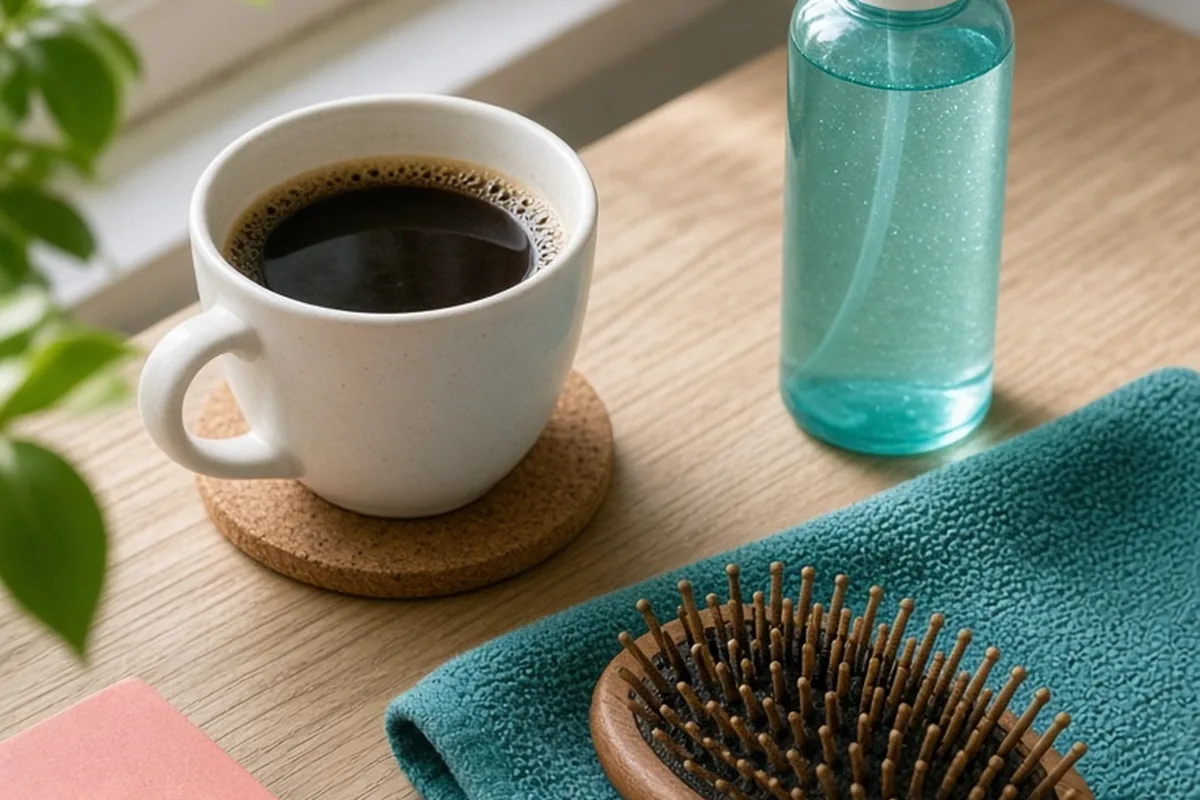
To build a routine for fine low porosity hair, prioritize lightweight hydration, consistent clarifying, and indirect heat. Cleanse with a gentle lathering shampoo weekly and use a clarifying shampoo every ten to fourteen days. Condition using warm water and heat-assisted deep conditioning with water-based formulas rather than thick butters. Finish styling on damp or wet hair using lightweight leave-in sprays and water-soluble styling gels, avoiding heavy oils that easily weigh down narrow hair strands.
Balancing fine strands with a low-porosity cuticle layer can feel like an ongoing contradiction. Because fine hair has a narrow diameter, it quickly flattens under heavy formulations, yet low-porosity cuticles lay tightly compact and resist taking in moisture. When you reach for rich moisturizers designed for dryness, your hair quickly turns greasy and limp; when you skip hydration altogether, your ends turn brittle and straw-like. Establishing an intentional routine solves this dilemma by emphasizing thorough cleansing, temperature-assisted penetration, and weightless product application.
Why Fine Low Porosity Hair Gets Weighed Down and Dry
The unique challenge of this hair profile stems from the intersection of structural diameter and surface biology. Hair texture describes the width of the individual strand, and fine hair has the smallest circumference, possessing less inner cortex mass than medium or coarse strands. Because there is less physical structure, fine hair lacks the stiffness to support heavy coats of styling oils or dense cosmetic creams. Even modest amounts of conditioning agents can collapse root volume and leave the hair looking greasy within hours of drying.
Porosity, on the other hand, describes the condition and orientation of the outer protective layer, known as the cuticle. In low porosity hair, these shingle-like keratin scales lie tightly bonded, compact, and completely flat. Water and conditioning agents do not easily slip past this barrier. Instead of soaking inside the strand, topical products tend to remain on the surface, creating an artificial coating. When heavy sealants like shea butter, castor oil, or raw coconut oil are applied to fine, low-porosity hair, they seal out environmental moisture while flattening fine strands against the scalp, resulting in hair that feels simultaneously dry to the touch and coated with oily residue.
Cleansing Protocols and Buildup Removal
Cleansing forms the most critical foundation of a fine low porosity hair regimen. Because products inevitably accumulate on the tight outer layer of the cuticle rather than absorbing deeply, fine strands suffer from product buildup faster than coarser or higher-porosity hair types. When buildup forms, it acts as a hydrophobic barrier, actively repelling water during wash day and causing severe dehydration over time. Skipping strong cleansers in favor of conditioning washes or co-washes frequently backfires for fine strands, leading to clogged scalp follicles, greasy roots, and dull, limp lengths.
A balanced cleansing cadence relies on two distinct shampoo formulas used in rotation. For primary weekly washes, select a clear, sulfate-free or gentle sulfate-based lathering shampoo that thoroughly dissolves sebum without depositing silicones or heavy conditioning polymers onto the hair fiber. Every ten to fourteen days, swap this cleanser for a dedicated chelating or clarifying shampoo. Clarifying resets the cuticle surface by stripping away mineral deposits from tap water, synthetic polymers from styling gels, and residual oils. When shampooing, use comfortably warm water rather than cold water, as warmth encourages the cuticle scales to relax slightly, allowing the cleansing surfactants to flush out trapped debris.
Conditioning Fine Low Porosity Hair with Heat and Lightweight Humectants
Rinsing conditioner into fine, low-porosity hair requires technique rather than rich product formulation. If you simply apply a traditional rinse-out conditioner and wash it away thirty seconds later, the tightly shut cuticles will prevent the active conditioning agents from delivering slip and softness. To bypass this barrier, rely on heat as a mechanical tool. Warm water during the wash process swells the strand slightly and creates microscopic openings between the cuticle shingles. For deeper hydration treatments, put on a reusable plastic shower cap and apply gentle indirect heat using a heated flaxseed bonnet, a warm damp towel, or a warm hooded dryer for fifteen to twenty minutes.
Ingredient selection in conditioners must favor small-molecule humectants and light emollients over long-chain fatty acids. Look for formulas featuring aloe vera juice, glycerin, panthenol, and propylene glycol near the top of the ingredient deck. These humectants attract ambient moisture to the strand without leaving a heavy film. When choosing conditioning oils, look for lightweight carriers such as squalane, argan oil, jojoba seed oil, and grapeseed oil, while systematically steering clear of heavy unrefined butters, mineral oil, and petrolatum. When rinsing, use lukewarm water to wash away all excess surface conditioner, leaving behind only the moisture that absorbed into the cuticle layers.
Navigating Protein Sensitivity and Strand Elasticity
A common misconception in hair care communities is that all low-porosity hair should avoid protein entirely. While low-porosity hair easily becomes stiff and unmanageable when exposed to excessive protein treatments, fine hair relies heavily on structural reinforcement. Because fine hair has a narrow cortex, it possesses less internal protein volume than coarse hair, which makes it particularly prone to snapping, stretching out of shape, and losing natural curl or wave retention under environmental stress.
The key to managing protein for fine low porosity hair lies in molecular weight and frequency. Avoid heavy protein treatments that use large, unhydrolyzed proteins like collagen or raw egg mixtures, which coat the cuticle in a rigid, brittle shell. Instead, look for products containing hydrolyzed silk, hydrolyzed wheat protein, or individual keratin amino acids formulated in low concentrations near the middle or end of the ingredient list. Limit protein-containing products to once every two to three weeks, or alternate protein-balanced conditioners with purely moisturizing treatments. If your hair begins feeling rough, brittle, or tangles like dry straw, pause protein use immediately and increase warm-water conditioning for several cycles.
Choosing Weightless Leave-In Conditioners and Styling Formulas
Traditional styling methods, such as the liquid-oil-cream technique, are generally ill-suited for fine low porosity hair. Applying multiple layers of creams and heavy occlusive oils inevitably overburdens delicate strands and creates greasy clumps. Instead, adapt your post-wash routine to a minimalist framework that pairs water-based leave-in moisture with light, film-forming hold products. A water-based leave-in spray applied through a fine mist nozzle works significantly better than a thick leave-in lotion, providing even distribution across damp hair without concentrating heavy emollients in single sections.
For styling hold and definition, prioritize water-soluble botanicals or flexible polymers over thick custards and heavy styling waxes. Flaxseed gel, aloe-based styling gels, and weightless volumizing mousses provide definition, reduce friction, and maintain shape without drying into a tacky residue. Apply styling products while hair is still damp or wet to encourage even distribution and to lock in hydration before the cuticles completely settle flat. If you feel your ends require extra protection against friction, apply one or two drops of a dry oil like hemisqualane or pure squalane rubbed thoroughly between your palms, smoothing it strictly over the lowest two inches of your hair.
A Step-by-Step Weekly Wash Day and Refresh Schedule
To establish consistency, arrange your weekly routine around one dedicated wash day alongside low-manipulation mid-week maintenance. On wash day, thoroughly saturate hair with warm water for at least two minutes before applying your cleanser to ensure the low-porosity cuticles are receptive. Work your gentle lathering shampoo into the scalp, massaging thoroughly with your fingertips, and let the running suds cleanse the mid-lengths and ends. Apply your lightweight rinse-out conditioner from the ears down, use a wide-tooth comb or wet brush to gently distribute product, let it sit under warm shower steam for three to five minutes, and rinse completely clean with warm or lukewarm water.
Mid-week care for fine low porosity strands requires avoiding the temptation to restack products daily. Adding new layers of leave-in creams or oils onto dry hair coats the outer cuticle without penetrating, creating rapid buildup by day three. If your hair loses shape or feels dry midway through the week, lightly mist your lengths with plain warm water from a fine aerosol spray bottle to reactivate the humectants and styling polymers already present in your hair. Smooth any stray flyaways gently with damp hands, allow the strands to air-dry completely, and refrain from adding additional styling layers until the next full wash.
Troubleshooting Product Buildup, Flash Drying, and Stiffness
When managing fine low porosity hair, two recurring issues frequently confuse individuals: flash drying and acute buildup. Flash drying happens when a product is applied to wet hair and immediately causes the strands to feel rough, stiff, hard, or webby as if all moisture was instantly drained away. This reaction is not true structural damage; rather, it is a surface incompatibility caused by high concentrations of certain film-forming humectants, unrefined plant oils, or mineral interactions in hard water. If flash drying occurs, rinse the product out immediately with warm water and replace it with a simpler, water-dominant alternative.
Distinguishing between product buildup and true protein overload is another essential diagnostic skill. Buildup presents as a greasy, gummy film, dull appearance, slow drying times, and limpness where curls or waves refuse to hold their natural shape. Protein overload, by contrast, feels stiff, dry, and snapping, with individual strands breaking under minor tension. When in doubt, start your troubleshooting with a clarifying wash to remove surface debris. If the hair remains soft and pliable after clarifying, the issue was surface buildup; if it continues to feel rigid and dry, focus on heat-assisted moisture treatments free from hydrolyzed proteins for the next two weeks.
Frequently asked questions
How often should fine low porosity hair be washed?
Most people with fine low porosity hair benefit from washing two to three times per week. Because fine hair has less surface area to absorb natural scalp oils and low porosity cuticles shed topical products slowly, less frequent washing often leads to rapid buildup and flattened roots.
Is scalp oiling safe for fine low porosity hair?
Heavy scalp oiling with dense oils like castor or coconut oil is generally not recommended, as it can clog follicles and weigh down fine roots. If you choose to oil your scalp, opt for ultra-light oils like squalane or jojoba as a short pre-shampoo treatment, and cleanse thoroughly with a clarifying shampoo afterward.
Does fine low porosity hair need deep conditioning every week?
Weekly deep conditioning is often excessive for fine low porosity hair and can lead to over-moisturization or weighed-down strands. Deep conditioning once every two to three weeks with indirect heat and a lightweight formula is usually sufficient to maintain elasticity without creating product fatigue.
How can you tell if a product is too heavy for fine low porosity hair?
A product is too heavy if your hair feels coated, looks stringy, takes significantly longer to dry, or loses all root volume shortly after styling. Look at the ingredient list and avoid items that feature shea butter, cocoa butter, petrolatum, or heavy waxes within the top five ingredients.
Your next step
Review your current shower products, check the first five ingredients on each bottle to identify heavy butters or dense silicones, and swap your primary shampoo for a lightweight lathering cleanser on your next wash day.