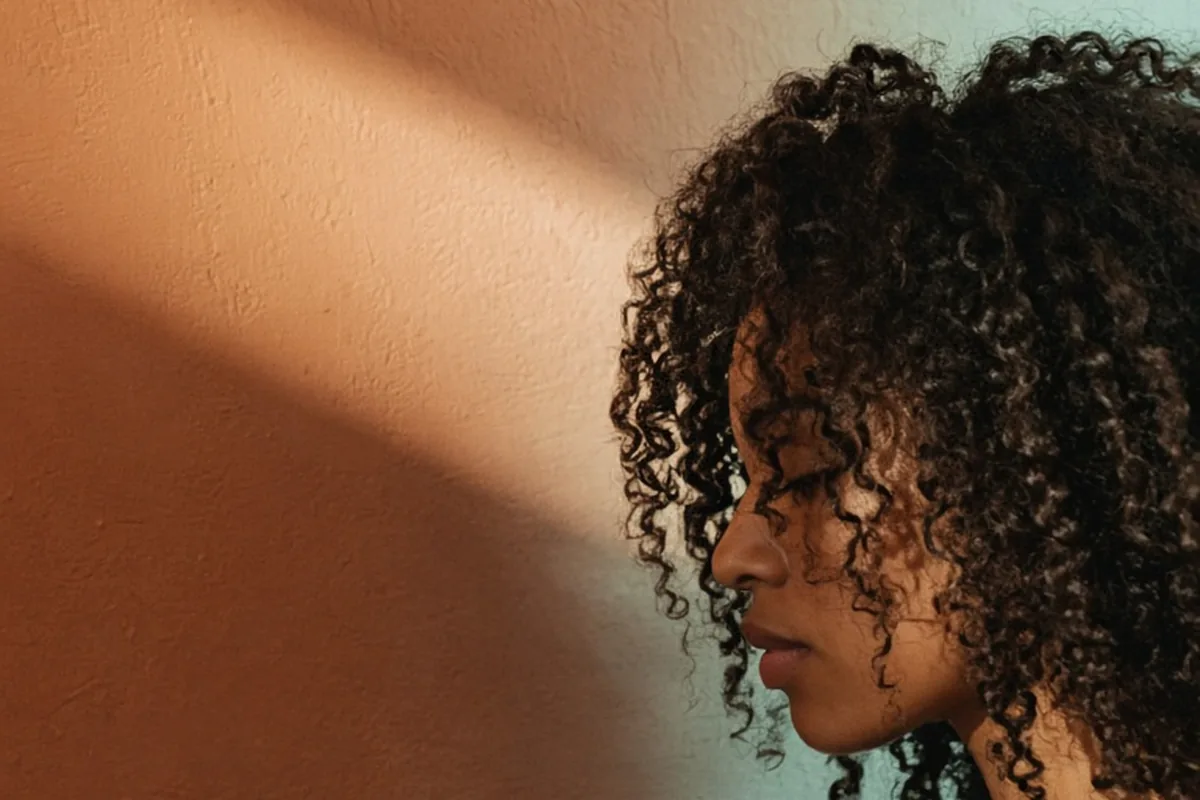
To care for curly hair effectively, focus on preserving natural moisture, reducing mechanical friction, and building a consistent wash routine. Cleanse with a sulfate-free shampoo or co-wash, condition thoroughly while detangling with wide-tooth tools on wet hair, and apply leave-in conditioner followed by a gel or mousse to soaking wet strands. Dry with a diffuser or air-dry without touching your hair, and protect curl clumps overnight using a satin or silk pillowcase.
Curly hair has an elliptical follicle structure that produces distinct bends, spirals, and coils. Because scalp oils cannot travel down these winding strands as easily as they do on straight hair, curly patterns are naturally vulnerable to dryness, tangling, and breakage. Establishing an effective hair care routine does not require dozens of complex formulas; it requires understanding your specific strand properties, handling wet hair gently, and sealing in hydration.
Determining Your Curl Pattern, Porosity, and Density
While visual curl typing charts classify hair into wavy, curly, and coily patterns, porosity is the mechanical property that truly dictates how your hair absorbs and maintains moisture. Porosity measures how open or closed the outer cuticle layer of the hair shaft sits. Low-porosity curls feature tightly shingled cuticles that resist water absorption, causing products to sit on top of the hair as a slick residue unless warmed with water or steam. High-porosity curls have raised, open, or damaged cuticles that absorb water almost instantly but lose that hydration just as rapidly to the surrounding air, leaving hair perpetually dry if not sealed with an emollient.
Density and individual strand width further define which formulas your curls can tolerate. Density measures how many hair follicles grow per square inch of your scalp, while strand width refers to whether an individual fiber is fine, medium, or coarse. Fine curls, regardless of how tightly coiled they are, collapse easily under heavy raw plant butters like pure shea or thick castor oil. Coarse curls, which have a broader diameter and a sturdier internal protein core, thrive on richer creams and heavier conditioning masks. Identifying these traits helps you choose product weights that support your curl shape rather than flattening it.
Designing a Gentle Wash Day Routine Without Stripping Moisture
Wash day establishes the hydration foundation for your entire styling cycle, making your choice of cleanser critical. Traditional clarifying formulas rely on strong sulfate surfactants that remove oil and dirt, but they also strip the natural sebum needed to lubricate the hair shaft. For routine washing, choose a mild sulfate-free shampoo or a conditioning co-wash that cleanses sweat and environmental debris while preserving scalp comfort. Apply your cleanser directly to your scalp, massaging gently with the pads of your fingers in circular motions, and allow the lather to run downward through your lengths rather than scrubbing fragile ends together.
Once your scalp is clean, saturate your mid-lengths and ends with a generous amount of rinse-out conditioner. Work the product through your hair in broad sections, adding warm water to emulsify the conditioner until your strands feel slippery and soft. Cup your hands and squeeze the hair upward toward the scalp repeatedly to encourage water and humectants to penetrate deep into the cortex of the hair fiber. Allow the conditioner to rest for several minutes to soften knots before rinsing with lukewarm water to keep the cuticle laying smooth.
Detangling Curly Hair Safely to Minimize Mechanical Damage
Textured hair is uniquely fragile because every bend, twist, and turn along the shaft creates a localized structural stress point. Brushing curly hair while it is dry pulls against these curves, causing excessive friction that fractures the protective cuticle layer and snaps the strand. Detangling should only happen when your hair is thoroughly wet and saturated with conditioner or a dedicated detangling product that provides generous slip. This lubricates adjacent strands, allowing them to glide past one another rather than catching and tightening into knots.
Use your fingers, a wide-tooth comb, or a wet brush equipped with flexible, spaced bristles. Divide your hair into four or more workable sections to prevent pulling multiple tangled clumps at once. Always begin detangling at the very ends of the hair, gently loosening tangles before working upward toward the roots. If you hit a dense knot, avoid pulling downward with force; apply a few drops of conditioner directly to the snarl and use your fingertips to separate the strands horizontally until the knot loosens.
Applying Leave-Ins, Creams, and Gels for Long-Lasting Definition
Product application must take advantage of water retention, because water is the true source of hydration in any hair care routine. Conditioners and styling products do not inject moisture from scratch; they seal water inside the hair fiber and shape the curl as it dries. Apply your styling products while your hair is still soaking wet, ideally before stepping out of the shower. Smooth a lightweight or medium leave-in conditioner through your hair to lock in base hydration, followed by a curl-defining cream if your hair requires extra softness and weight to reduce surface flyaways.
After applying your moisturizing base, seal your curl pattern with a product that provides hold, such as a styling gel or volumizing mousse. Hold products create a cast, which is a temporary, hardened shell that holds curl clumps together while water evaporates. Work the gel through your hair using smooth, flat palms to tame flyaways, then scrunch upward toward the roots to encourage coil formation. Once the gel is distributed, avoid touching or separating the wet curls, as any disruption at this stage breaks the developing cast and introduces frizz before the hair dries.
Drying Curly Hair: Air Drying Versus Diffusing
The method you use to dry your curls determines both their final volume and how long your definition lasts. Conventional terrycloth bath towels feature tiny looped fibers that snag delicate hair, rough up the cuticle, and absorb water too aggressively. Instead, gently squeeze excess water from your hair using a smooth microfiber towel or a clean cotton T-shirt. If you choose to air-dry, arrange your curls carefully while wet and leave them undisturbed. Air drying eliminates heat exposure, though heavy or high-porosity curls may take hours to dry, during which gravity can stretch out the root area.
Diffusing offers a faster alternative that boosts bounce, reduces drying time, and enhances root volume. Attach a bowl diffuser to your hair dryer, adjust it to low heat and low or medium airflow, and hover the attachment around your head without touching the curls until the outer gel cast begins to firm up. Once the exterior is set, place individual sections of curls into the bowl, lift the diffuser gently toward your scalp, and hold for thirty to sixty seconds per section. When your hair is completely dry, gently scrunch your curls with dry hands or a single drop of lightweight oil to break the crisp gel cast, leaving behind soft, springy definition.
Nighttime Protection and Next-Day Refresh Strategies
Protecting your curls overnight is essential for preserving the definition achieved on wash day. Standard cotton pillowcases create constant surface friction whenever you shift during sleep, absorbing the hair's natural oils and disrupting curl clumps. Sleep on a smooth satin or silk pillowcase to let your hair glide across the fabric without friction. If your hair is long enough, gather your curls into a loose, high ponytail on the crown of your head using a soft satin scrunchie, often called a pineapple. For shorter hair, wearing a satin bonnet or wrapping your head in a silk scarf keeps curls protected.
Second-day and third-day hair rarely requires another full wash, which can over-cleanse the scalp and exhaust the hair shaft through repeated swelling and drying. Instead, assess what your hair needs each morning. If your curls have developed light surface frizz or lost their shape, mist them lightly with warm water or a diluted leave-in conditioner spray, then gently reshape individual coils around your finger. If your roots are flat but your ends remain defined, flip your head upside down and gently shake your roots with your fingertips or an afro pick to restore volume without disrupting the curl clumps.
Balancing Moisture and Protein in Textured Hair Care
Healthy curly hair relies on a careful balance between elasticity and structural strength, governed by the ratio of moisture to protein. Moisture gives hair its flexibility, softness, and natural spring, allowing strands to stretch and return to their original shape. Protein, often listed on labels as hydrolyzed wheat protein, keratin, or amino acids, temporarily fills gaps along damaged cuticles and reinforces the internal structure of the strand. When hair experiences moisture overload, it feels excessively soft, limp, and spongy when wet, struggling to hold a curl pattern even under strong-hold gels.
Conversely, protein overload occurs when hair receives frequent protein treatments without adequate hydration, leaving strands feeling stiff, brittle, and dry like straw. Hair with too much protein snaps easily under minimal tension and loses its soft movement. To maintain equilibrium, read ingredient lists to ensure you are not using heavy protein in every single product you apply. If your curls feel fragile, mushy, and overstretched, integrate a light protein-infused mask once every few weeks. If your hair feels stiff, rough, and unbending, pause protein treatments and focus on moisturizing deep conditioners rich in fatty alcohols and plant oils.
Frequently asked questions
How often should you wash curly hair?
Most people with curly hair benefit from washing once or twice a week to avoid stripping away natural oils. If you exercise frequently or experience product buildup, you can rinse with warm water or use a gentle conditioning co-wash between shampoo sessions. Adjust your wash schedule based on how your scalp feels rather than a rigid calendar routine.
What is the difference between curl cream and gel?
Curl creams provide moisture, softness, and light clump formation, making them ideal for conditioning dry strands and reducing surface frizz. Styling gels provide structure and hold by drying into a protective cast that locks your curl shape in place. Many routines pair both formulas, applying cream first for hydration and gel second for all-day hold.
Why does curly hair frizz as it dries?
Curls typically frizz during drying if the hair was manipulated before the styling cast set or if there was not enough moisture and hold product applied to wet strands. When wet hair dries in low humidity without a sealing product, individual strands break away from their curl clump to absorb ambient moisture from the air, creating a frizzy halo.
Can you brush curly hair when it is dry?
Brushing curly hair while dry separates individual curl clumps, breaks up your natural pattern, and creates significant frizz and mechanical breakage. If you need to detangle between wash days, mist your hair lightly with water or a leave-in spray to reintroduce slip, then use your fingers to gently loosen any snarls.
Your next step
Check the ingredient label on your current daily shampoo, and swap out any formula containing harsh drying sulfates for a gentle, sulfate-free cleanser on your next wash day.