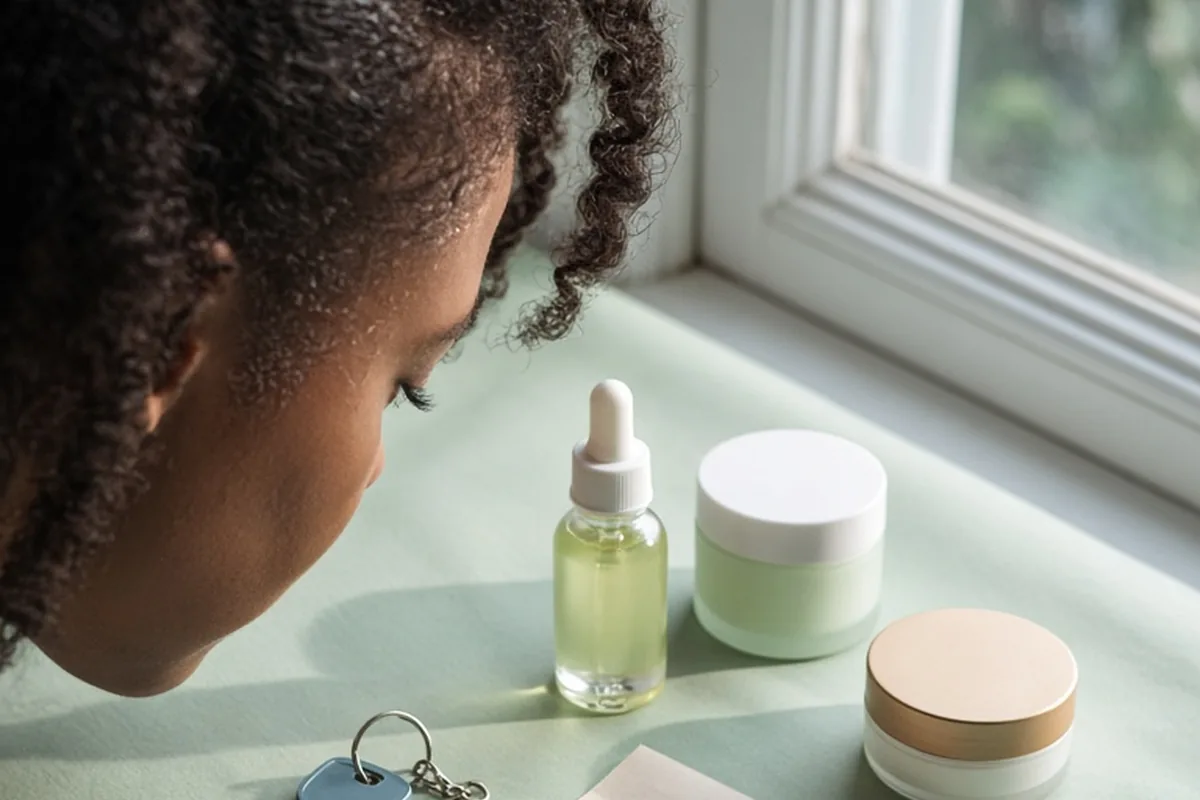
To care for a dry scalp, switch to a gentle, sulfate-free shampoo, reduce wash water temperatures to lukewarm, and apply water-based humectants like hyaluronic acid, aloe, or glycerin directly to damp skin before sealing with a light oil like jojoba or squalane. Avoid harsh clarifying washes and high-heat styling, and tailor your routine to your hair type so you replenish moisture without causing product buildup.
Scalp skin functions much like the skin on the face, requiring a stable lipid barrier and adequate hydration to stay comfortable, flexible, and free of irritation. When environmental changes, aggressive cleansing habits, or underlying skin dryness compromise that barrier, the scalp responds with tightness, itching, and fine, powdery flakes.
Distinguishing a Dry Scalp from Dandruff and Product Buildup
Before changing your routine, verify whether your scalp is truly dry or dealing with dandruff or product residue. A dry scalp stems from a lack of moisture and natural sebum, causing skin cells to shed as small, white, dry specks that drift off easily when you brush your hair. The skin itself often feels tight, itchy, or parched, particularly right after washing or during cold, low-humidity weather. In contrast, classic dandruff (seborrheic dermatitis) is linked to an overgrowth of Malassezia yeast feeding on excess scalp oil, resulting in larger, greasy, yellowish flakes that cling to the hair shaft and scalp alongside localized redness.
Confusing dry scalp with dandruff often worsens irritation. If you apply strong anti-dandruff shampoos containing zinc pyrithione, selenium sulfide, or coal tar to an already dehydrated scalp, these clarifying and antifungal agents can strip the remaining protective lipids and intensify peeling. Similarly, heavy product buildup from styling polymers, dry shampoos, or thick butters can create a dull film that mimics flaking. To test your scalp state, look closely at the shed particles under natural light: fine, dust-like flakes combined with an overall feeling of skin tightness point directly toward barrier dehydration rather than fungal activity.
Adjusting Wash Frequency and Water Temperature for Moisture Retention
The way you wash your hair directly impacts your scalp's epidermal barrier. Steaming hot water strips the delicate sebum layer that seals water into the upper layers of skin, leaving the scalp vulnerable to trans-epidermal water loss. Lowering the shower temperature to lukewarm protects this natural lipid matrix while still allowing cleansers to lift away sweat, dead skin cells, and airborne debris. During the final rinse, cool-to-lukewarm water helps soothe exposed nerve endings and calm post-wash itchiness.
Washing frequency must match your specific scalp oil production, hair texture, and daily activity level rather than a rigid calendar schedule. People with straight or fine hair that produces moderate sebum may need to cleanse every two to three days to avoid follicle clogging, whereas individuals with curly, coily, or chemically treated hair often thrive on washing once a week or every ten days. If you exercise heavily, rinse thoroughly with plain water and lightly condition your hair lengths between wash days instead of shampooing repeatedly, which prevents stripping essential oils from the scalp skin.
Selecting Gentle Surfactants and Hydrating Scalp Cleansers
Traditional clarifying shampoos often rely on aggressive anionic surfactants, such as sodium lauryl sulfate, which cleanse thoroughly but can dissolve intercellular lipids in the stratum corneum. For a dry scalp, transition to cleansers powered by milder surfactant systems, such as sodium cocoyl isethionate, decyl glucoside, or cocamidopropyl betaine. These agents create a gentle lather that lifts surface grime without disrupting the skin's moisture balance, leaving the scalp feeling soft rather than tight and stripped after toweling dry.
Examine ingredient labels for added soothing and humectant ingredients. Shampoos formulated with colloidal oatmeal, panthenol (provitamin B5), allantoin, and aloe vera help calm reactive, itchy skin during the cleansing process. If your routine requires regular styling products, you do not need to abandon clarifying entirely; instead, reserve a stronger, chelating or clarifying shampoo for once or twice a month, followed immediately by an intensive hydrating treatment applied directly along your parts.
Targeted Scalp Serums, Humectants, and Lightweight Oils
A common mistake in dry scalp care is applying thick raw oils or heavy vegetable butters directly onto dry skin. Oils are occlusives or emollients—they seal in hydration, but they do not add water on their own. If your scalp lacks water, slathering it with heavy oil simply traps the dryness underneath and can suffocate hair follicles. An effective routine mirrors facial skincare: first apply a water-based humectant serum containing hyaluronic acid, glycerin, or betaine directly onto a clean, damp scalp to draw moisture deep into the tissue.
Once the water-based hydrator has settled into the skin, seal it with a few drops of a lightweight, biocompatible oil if your scalp naturally lacks sebum. Jojoba oil closely mimics human sebum and absorbs without leaving a greasy residue, while squalane provides weightless barrier support. Dispense the oil onto your fingertips or use a dropper to place it directly along parted sections of hair, gently massaging the scalp with the pads of your fingers using circular motions to stimulate blood circulation without scratching the surface with your nails.
Caring for Dry Scalp in Textured, Curly, and Coily Hair
Textured and coily hair types (types 3 and 4) require a specialized approach to scalp care because natural sebum travels slowly down spiral hair shafts, leaving both the scalp and lengths prone to chronic dryness. When hair is worn in protective styles like braids, twists, or locs, accessing the scalp requires deliberate technique. Avoid applying heavy pomades or petroleums directly to the exposed skin between parts, as these occlude pores and attract lint, worsening irritation over time.
Instead, maintain protective styles using a fine-mist spray bottle filled with water, aloe vera juice, and a splash of lightweight leave-in conditioner or rosewater. Lightly mist the exposed scalp parts two to three times a week, gently pressing the moisture into the skin. If buildup gathers along the parts between full wash days, dip a cotton pad in a gentle micellar water or diluted scalp rinse and lightly swipe the skin before applying a drop of jojoba or sweet almond oil to maintain elasticity and prevent tension-related dryness.
Environmental Adjustments, Heat Styling, and Daily Habits
External factors in your daily environment play a substantial role in scalp moisture levels. Forced-air heating during winter months and constant air conditioning during summer drastically reduce indoor humidity, accelerating moisture evaporation from the scalp. Running a cool-mist humidifier in your bedroom at night counteracts this drying effect, supporting skin barrier recovery while you sleep. Additionally, sleeping on a smooth silk or satin pillowcase minimizes friction against hair fibers and prevents cotton from absorbing your scalp's natural lipids.
Heat styling tools must also be handled with care when managing a sensitive or dry scalp. Holding a high-heat blow dryer too close to the roots bakes the scalp skin, depleting moisture in minutes. Keep blow dryers on a medium or cool setting, maintain at least six inches of distance from the head, and use a concentrator nozzle directed down the hair shaft rather than straight into the scalp. When spending extended periods outdoors in strong sun or bitter wind, wear a breathable, loose-fitting hat to shield your scalp from direct weather exposure.
When at-Home Scalp Care Is Not Enough: Warning Signs and Specialist Care
While mild tightness and occasional dry flakes respond well to gentle washing and hydration, persistent or worsening symptoms demand professional medical evaluation. If your scalp exhibits thick, silvery plaques, widespread bright red inflammation, oozing crusts, or localized patches of hair shedding, you may be experiencing a dermatological condition such as scalp psoriasis, eczema, contact dermatitis, or folliculitis rather than simple dehydration.
Continuing to apply cosmetic oils and moisturizers to inflammatory scalp conditions can exacerbate the problem, delay proper treatment, and lead to temporary follicle damage. A board-certified dermatologist can perform a physical examination or scalp scraping to determine the exact diagnosis. Medical management may include topical corticosteroids, prescription-strength keratolytics, or targeted anti-inflammatory solutions designed to resolve the underlying condition safely.
Frequently asked questions
Can I apply facial moisturizer or hyaluronic acid serum to my scalp?
Yes, lightweight, fragrance-free facial serums containing hyaluronic acid, glycerin, or panthenol work well on the scalp. Apply a few drops directly to damp skin along your parts before blow-drying or air-drying to deliver water-based hydration without leaving greasy residue.
Does scalp exfoliation help cure a dry scalp?
Physical scrubs with coarse granules can scratch an already compromised scalp barrier and worsen inflammation. If you have flaky buildup, opt for gentle chemical exfoliants like lactic acid or low-percentage salicylic acid once every two weeks to dissolve flakes without mechanical irritation.
How long does it take for a dry scalp to heal?
With a consistent routine of gentle cleansing, lukewarm water, and regular humectant application, most people notice relief from tightness and itching within one to two weeks. Full skin barrier renewal typically takes about 28 days.
Is dry shampoo bad for a dry scalp?
Frequent use of dry shampoo can exacerbate dryness because the starch powders absorb natural moisture alongside oils, creating a chalky layer that irritates the skin. Limit dry shampoo to occasional emergency use and wash your scalp thoroughly afterward.
Your next step
Inspect your current shampoo bottle today: if harsh sulfates appear in the top ingredients, replace it with a gentle, sulfate-free cleanser and switch to lukewarm shower water for your next wash.