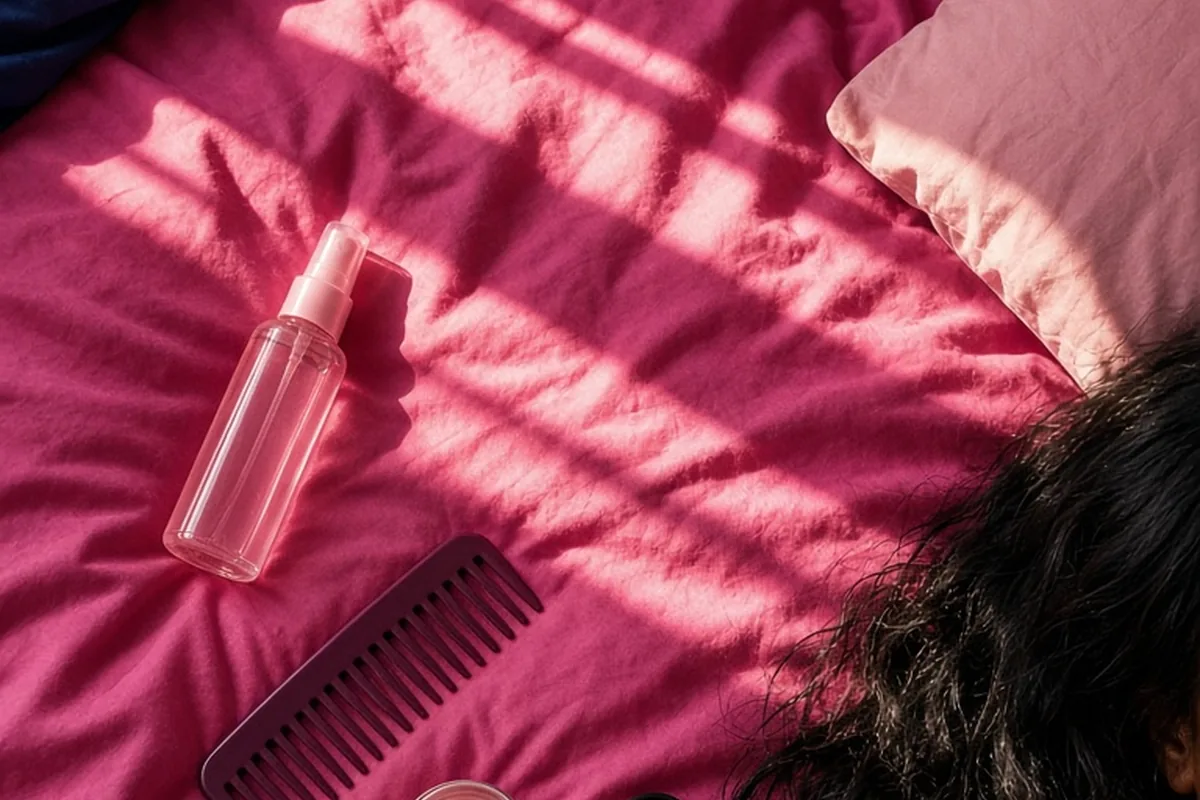
To use heat protectant correctly, apply it evenly to clean, detangled hair before using any thermal tools. For blow-drying, distribute a lightweight spray, cream, or lotion through damp hair from mid-lengths to ends using a wide-tooth comb. When using flat irons or curling wands on dry hair, mist each sub-section lightly and allow it to dry completely before applying direct heat, keeping tool temperatures matched to your hair texture.
Thermal styling tools provide control, smoothness, and shape, but direct exposure to high temperatures strips hair fibers of internal moisture and degrades structural keratin. A quality heat protectant serves as a functional barrier, moderating heat transfer, smoothing the cuticle, and locking in hydration to prevent split ends and chronic dryness.
Selecting the Right Heat Protectant Formulation for Your Hair Texture
Heat protectants are not one-size-fits-all products. The physical structure, porosity, and density of your hair determine whether a lightweight mist, an emulsion cream, or a silicone-based serum delivers the best protection without weighing down your strands. Fine or low-density hair collapses quickly under heavy butters or dense oils, making water-based thermal sprays the most effective option. These formulas disperse evenly without creating greasy residue or causing limp, flat roots after blow-drying.
Coarse, thick, or high-porosity hair requires richer emollients that can seal an open cuticle layer and slow rapid moisture evaporation. Creams, lotions, and rich leave-in formulas containing nourishing conditioning agents provide slip while buffering the hair shaft against the high friction of round brushes and iron plates. If you have fine strands with dry ends, you can use a hybrid approach by misting your roots and mid-lengths with a weightless thermal spray while applying a dime-sized amount of thermal cream exclusively to fragile ends.
Applying Heat Protectant to Damp Strands Before Blow-Drying
The application process begins immediately after washing while your hair is still evenly damp. Gently squeeze out excess water with a microfiber towel or cotton t-shirt rather than rubbing vigorously, which lifts the cuticle and promotes mechanical breakage. Divide your hair into at least four manageable quadrants—two in the front and two in the back—to avoid spraying only the outer canopy while leaving the inner layers unprotected.
Hold spray protectants roughly six to eight inches away from your head, misting each section from mid-shaft downward. If you are using a cream or lotion, emulsify a small coin-sized portion between your palms and fingers before raking it through the hair. Once the product is distributed, gently work through each quadrant with a wide-tooth comb or flexible detangling brush. This mechanical distribution ensures every individual fiber is coated with the protective barrier, eliminating dry friction during rough drying and round-brush styling.
Prepping Dry Hair Before Flat-Ironing and Curling
Applying heated iron plates directly to wet or damp hair creates rapid moisture vaporization known as bubbling or boiling within the cortex, causing irreversible structural weakness. If you blow-dry your hair without a dedicated thermal shield or need to touch up dry second-day hair with a curling iron or flat iron, you must use a formula specifically designed for dry application. Standard blow-dry primers often contain higher water contents that leave strands too damp for high-temperature contact plates.
When working on dry hair, section your hair into clean horizontal slices no thicker than the depth of your styling tool. Lightly mist the individual section, brush through to disperse the mist, and pause for several seconds to allow any surface carrier alcohol or light moisture to flash off completely. The strand should feel entirely dry and silky to the touch before you clamp down with your flat iron or wrap it around a curling barrel. Never apply heat if you hear a sharp sizzling sound or observe steam billowing from the plates.
Calibrating Tool Temperatures and Contact Time
Heat protectant lowers the rate of thermal damage, but it does not make hair immune to extreme heat. Modern styling tools frequently reach temperatures up to 450 degrees Fahrenheit, which can singe the cuticle and melt synthetic extensions or fragile natural fibers. For fine, chemically processed, bleached, or fragile hair, set your thermal tools between 250 and 320 degrees Fahrenheit. Normal to medium-textured hair generally responds well between 330 and 375 degrees, while very coarse, resistant textures should rarely exceed 400 degrees.
In addition to setting an appropriate temperature, focus on tool speed and pass frequency. A single smooth, continuous pass of a flat iron at a moderate pace preserves more fiber integrity than dragging a tool over the same section multiple times at a lower heat. Keep the tool in continuous motion without resting on any single spot for more than two seconds. If a section does not straighten or curl sufficiently on the first pass, let the hair cool down completely before attempting a second light pass.
Layering Heat Protectants with Other Styling Products
Integrating a heat protectant into a broader routine requires careful product layering based on weight and molecular size. As a general rule, apply hair products from lightest consistency to heaviest consistency. Begin with liquid leave-in conditioners and detangling tonics, follow with your thermal protectant mist or cream, and finish with hold products such as mousses, gels, or root lifters before heat application. Heavy finishing oils and shine serums should generally be reserved for the final step after all thermal styling is finished.
Be mindful of cumulative buildup when layering multiple cosmetic products. Many styling foams, texturizers, and smoothing balms already incorporate thermal protection agents such as dimethicone, amodimethicone, or hydrolyzed wheat protein. Review the ingredient lists on your everyday styling routine to avoid duplicating heavy barriers. Overloading strands with multiple overlapping heat products can cause thermal baking, where excess polymers scorch onto the cuticle surface, leaving hair feeling stiff, brittle, and dull.
Protecting Textured, Coily, and Chemically Treated Strands
Type 3 and Type 4 curl patterns, as well as bleached or relaxed hair, have an asymmetrical cuticle structure with natural points of vulnerability along the twists and turns of each strand. When heat is applied to these textures without adequate moisture retention, the curl pattern can suffer irreversible heat training or loss of elasticity. Silk presses and blowouts on textured hair require a comprehensive routine combining deep hydration, leave-in moisture, and a silicone-rich or lightweight botanical heat protectant.
Prioritize clarifying washes followed by deep conditioning masks with balanced protein and humectant profiles before applying direct heat to textured hair. Ensure that your chosen protectant offers high slip to minimize mechanical tension from blow-dryer tension nozzles and combs. When executing a silk press, work in precise micro-sections to ensure even heat penetration without needing multiple passes, and avoid daily thermal touch-ups during the life of the style. Wrap hair at night in silk or satin to retain shape without re-ironing.
Managing Product Buildup and Cleansing Between Heat Sessions
Because effective heat protectants rely on polymers, silicones, and film-forming humectants to create a physical barrier around the cuticle, residues will accumulate on both your hair and your styling tools over time. If not thoroughly cleansed, this residue forms a stubborn coating that blocks moisture absorption during regular washes, resulting in hair that feels simultaneously greasy at the scalp and dry at the ends. Use a gentle clarifying shampoo or sulfate-free chelating wash once every three to four weeks to reset your hair canvas.
Similarly, inspect your hot tools regularly for burnt product accumulation. Styling plates and curling wands coated in baked-on protectant develop rough, uneven surfaces that snag cuticles and cause patchy heat hotspots. Once your tools are unplugged and completely cool, wipe down ceramic, tourmaline, or titanium surfaces using a soft cloth lightly dampened with isopropyl alcohol or warm soapy water. Keeping your styling hardware clean ensures smooth gliding and predictable thermal transfer every time you style.
Frequently asked questions
Can I use heat protectant on completely dry hair before using a flat iron?
Yes, but you must ensure the product is explicitly labeled for dry hair use and allowed to dry completely before touching the hot iron to the hair. Never clamp a hot styling tool onto wet or damp strands, as the moisture will rapidly boil and cause permanent structural damage.
Does natural hair oil like coconut or argan oil work as a heat protectant?
Pure natural oils cannot replace formulated heat protectants because their smoke points and thermal dissipation properties vary widely. While light cosmetic oils add shine and seal moisture after styling, direct high heat applied to raw oil can scorch hair cuticles rather than deflecting thermal energy.
How much heat protectant should I apply to avoid greasy hair?
For fine to medium hair, three to six light spritzes across divided sections or a pea-sized drop of cream is sufficient. For thick, coarse, or long hair, use a dime- to nickel-sized amount of cream or six to ten thorough mistings, always combing through to ensure uniform coverage.
Do I need to reapply heat protectant if I restyle my hair the next day?
If you are touching up your hair with a flat iron or curling wand on second-day hair, you should apply a very light layer of dry-formula thermal spray before reapplying heat. However, avoid heavy creams or re-wetting the hair, and lower your tool temperature to avoid cumulative heat fatigue.
Your next step
Examine your current thermal styling products to verify their recommended temperature limits, section your hair evenly before applying, and wait until damp protectant formulas dry fully before touching hot plates to your strands.