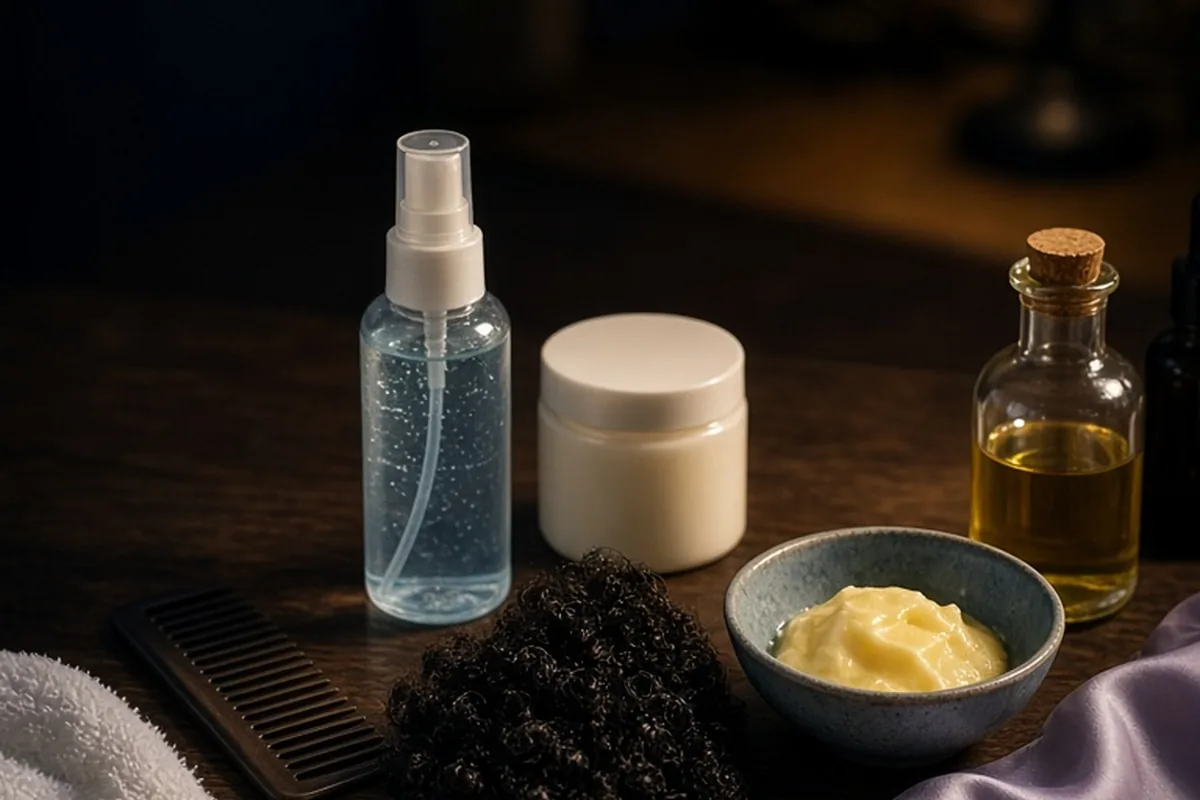
To moisturize and care for 4C hair, apply water or a water-based leave-in conditioner to clean, damp strands, followed by a penetrating cream and an occlusive butter or oil to seal in hydration. Because 4C coils have tight curl patterns that restrict natural scalp oils from traveling down the hair shaft, successful moisture retention relies on regular hydration, gentle finger-detangling, minimal heat, and satin protection at night.
Type 4C hair features tight, dense zig-zag patterns that create rich volume and structural versatility. However, these same structural characteristics make it challenging for natural sebum to coat the entire strand, leaving hair prone to chronic dryness, single-strand knots, and breakage if not consistently hydrated.
Why 4C Hair Loses Moisture Quickly and How Its Structure Works
The unique architecture of 4C hair explains why standard moisturizing habits often fall short. Unlike straight or loosely wavy hair where natural sebum glides freely from the scalp down the strand, 4C coils feature sharp bends, turns, and compact crimps. Each bend represents a point where sebum struggles to travel further, leaving the mid-lengths and ends dependent on external moisture applications. Furthermore, every sharp turn along the hair fiber creates a minor structural stress point where the protective cuticle layer can lift or wear down faster under mechanical friction.
Moisture in hair care refers strictly to water absorption within the hair cortex, not the application of heavy surface grease. When raw oils or butters are applied directly to dry 4C strands without an underlying water source, they create a hydrophobic barrier that seals dryness inside while preventing ambient hydration from entering. Recognizing that water is the sole true hydrator—and that oils function strictly as barriers to slow evaporation—is the foundational principle of effective 4C hair management.
- Tight zig-zag coils prevent natural scalp sebum from traveling down to the ends.
- Bends along the strand represent natural vulnerability points for moisture loss and friction breakage.
- Water and water-based leave-in conditioners hydrate; oils and butters only seal.
Building a Hydrating Wash Day Routine for Tightly Coiled Textures
A successful 4C moisturizing routine begins on wash day. Cleansing hair in loose, unsectioned masses often leads to severe tangles, matting, and uneven product distribution. Dividing the hair into four to six manageable twists or sections before wetting allows you to clean the scalp thoroughly while keeping the hair shaft stretched and aligned. Starting with an optional pre-shampoo treatment using a slippery oil or conditioning detangler softens the hair fiber and reduces shed-hair friction during washing.
When selecting a cleanser, choose a sulfate-free moisturizing shampoo for weekly or bi-weekly maintenance to remove debris without stripping essential lipids. However, using only co-washes or mild cleansers indefinitely leads to product buildup that eventually blocks water absorption. Incorporate a gentle clarifying shampoo once a month to reset the cuticle. Follow every wash with a rich deep conditioner containing both humectants and fatty alcohols, allowing it to sit under a plastic cap for fifteen to thirty minutes to encourage thorough moisture penetration into the cortex.
- Section hair into 4 to 6 twists before washing to prevent tangling and breakage.
- Use a sulfate-free shampoo for routine washes and a clarifying formula once monthly.
- Apply deep conditioner under a warm cap for 15 to 30 minutes every wash day.
Choosing the LOC or LCO Method Based on Hair Porosity
Layering products correctly determines how long moisture remains trapped within 4C strands. The two primary layering frameworks are the LOC method (Liquid/Leave-in, Oil, Cream) and the LCO method (Liquid/Leave-in, Cream, Oil). The ideal choice depends primarily on your hair porosity—how readily your cuticles absorb and release water—rather than your curl pattern alone.
Low-porosity 4C hair has tightly bound, flat cuticles that resist water entry. For this hair type, the LCO method works best because applying a lightweight cream directly over warm water helps hydrate the strand before a light oil (such as jojoba or grapeseed) seals the exterior without weighing it down. Conversely, high-porosity 4C hair absorbs moisture instantly through gaps in the cuticle but loses it just as quickly. High-porosity hair thrives under the LOC method, where a penetrating oil layer cushions the cuticle before a heavy, butter-rich cream (like shea or mango butter) locks the structure shut against rapid evaporation.
- LCO Method (Liquid, Cream, Oil): Best for low-porosity hair requiring lightweight, progressive moisture absorption.
- LOC Method (Liquid, Oil, Cream): Best for high-porosity hair needing a heavy barrier to prevent rapid water loss.
- Always ensure the first liquid step lists water (aqua) as the first ingredient.
Selecting Effective Ingredients: Humectants, Emollients, and Occlusives
Formulating an effective regimen requires understanding how different cosmetic ingredient categories interact with textured hair. Humectants are water-attracting molecules that draw ambient moisture into the hair strand. Common examples include vegetable glycerin, aloe vera juice, panthenol, and honey. In moderate humidity, humectants keep 4C hair pliable and soft; however, in extremely arid climates, high concentrations of simple humectants can pull moisture out of the hair fiber into the dry atmosphere, necessitating heavier sealing.
Emollients and occlusives complete the moisture retention cycle. Emollients—such as cetyl alcohol, avocado oil, and squalane—smooth the cuticle surface, add slip, and enhance flexibility. Occlusives—including raw shea butter, castor oil, and cupuaçu butter—form a physical hydrophobic film that halts water evaporation. For 4C hair, balancing these components ensures that hair not only absorbs moisture during styling but retains flexibility throughout the week without feeling brittle or gummy.
- Humectants (aloe vera, glycerin, panthenol): Attract and bind water to the hair shaft.
- Emollients (plant oils, fatty alcohols): Soften rough cuticles and provide detangling slip.
- Occlusives (shea butter, castor oil, mango butter): Create a protective barrier against moisture evaporation.
Mid-Week Moisture Refreshing Without Creating Heavy Buildup
Expecting 4C hair to maintain wash-day moisture for a full week without intervention often leads to mid-week brittleness. However, applying thick butters every day leads to greasy buildup, lint accumulation, and dullness. A strategic mid-week refresh should replenish water content without saturating the scalp or overloading the strands with heavy polymers.
To refresh styles like twist-outs, braid-outs, or mini twists, lightly mist the lengths with warm water, rosewater, or a diluted water-based leave-in conditioner spray until the hair feels damp, not soaking wet. Smooth a dime-sized amount of a lightweight leave-in or light oil over the ends—the oldest, most vulnerable part of the hair—and allow it to air-dry. Avoid disturbing the curl pattern excessively during this process to keep frizz minimal while restoring elasticity.
- Mist hair lightly with warm water or herbal hydrosols every 2 to 4 days as needed.
- Target the mid-lengths and ends where natural sebum cannot reach.
- Use lightweight oils or milk lotions rather than re-applying heavy butters daily.
Nighttime Care and Low-Manipulation Protective Styling
Moisture retention is easily undone during sleep if hair is exposed to absorbent fabrics. Standard cotton pillowcases absorb natural lipids and applied moisture directly from the hair fiber while creating friction that lifts cuticles and induces tangles. Protecting 4C hair at night with a high-grade satin or silk bonnet, scarf, or pillowcase maintains the moisture barrier and reduces mechanical damage.
Low-manipulation styles—such as flat twists, box braids, passion twists, and loose buns—help retain moisture by keeping fragile ends tucked away from environmental friction. When wearing long-term protective styles, continue moisturizing the natural hair underneath. Spritz exposed roots and braided lengths twice weekly with a water-based conditioning spray, and apply lightweight antimicrobial oils (like tea tree blended into jojoba) sparingly to the scalp to prevent dry flaking.
- Sleep on satin or silk to prevent fabric-induced moisture absorption and friction breakage.
- Keep ends tucked away in low-manipulation styles to extend moisture longevity.
- Continue misting natural hair beneath braids and twists with water-based sprays.
Diagnosing Chronic Dryness, Hard Water, and Protein Imbalances
If your 4C hair feels persistently dry, stiff, or brittle despite regular conditioning, underlying environmental or chemical factors may be interfering with hydration. Hard water is a frequent culprit; dissolved calcium and magnesium minerals bind to the hair shaft, forming a persistent mineral layer that repels water and prevents conditioners from penetrating. Installing a chelating shower filter or using an EDTA-based chelating shampoo periodically removes these mineral deposits and restores softness.
Another common cause of dryness is an imbalance between moisture and protein. Hair subjected to frequent styling, coloring, or natural wear requires occasional protein to reinforce its keratin structure. However, excess protein makes 4C hair rigid, straw-like, and prone to snapping. Conversely, excessive deep conditioning without structural reinforcement leads to hygral fatigue, where the hair becomes overly elastic, mushy when wet, and unable to hold shape. Adjust your routine by balancing moisturizing conditioners with moderate protein treatments according to your hair's tensile response.
- Use a chelating shampoo if living in a hard water area to remove moisture-blocking minerals.
- Identify protein overload: hair feels stiff, brittle, and snaps easily without stretching.
- Identify moisture overload (hygral fatigue): hair feels limp, gummy, or overly stretchy when wet.
Frequently asked questions
How often should 4C hair be moisturized?
Most 4C hair benefits from a full wash and deep conditioning routine every 7 to 10 days, paired with a light water-based refresh every 2 to 4 days. If your hair feels dry to the touch before then, adjust your sealing butter or increase the frequency of your mid-week water spritz.
Can I moisturize 4C hair using only natural oils like coconut or olive oil?
No. Pure oils do not contain water, which means they cannot moisturize hair on their own. Applying oil to dry hair merely coats the strand in a water-repellent film; you must always apply water or a water-based leave-in product first before using oil to seal.
Why does my 4C hair feel dry immediately after applying leave-in conditioner?
This usually indicates product buildup, hard water mineral deposits, or incorrect porosity layering. If cuticles are blocked by buildup, water cannot enter the cortex. Clarify your hair to remove residue, and test whether your hair responds better to the LCO or LOC layering order.
Does drinking more water improve 4C hair moisture?
Adequate internal hydration supports healthy cellular growth at the follicle level, but it cannot lubricate or moisturize the dead keratin shaft once it emerges from the scalp. Topical hydration and occlusive sealing remain necessary for strand health.
Your next step
Assess your hair porosity this week, select either the LOC or LCO method, and begin your next wash day by sectioning your 4C hair into twists before applying a water-based routine.