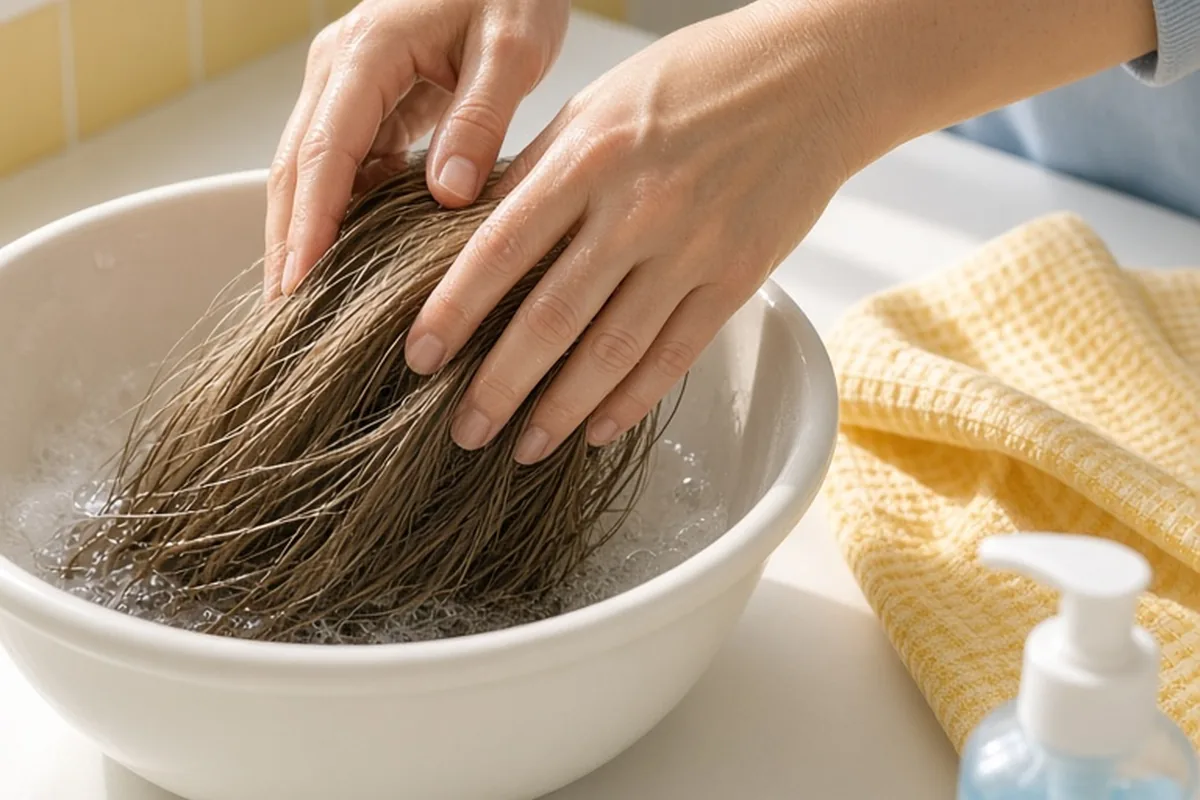
To care for fine hair with moisturizing shampoo, apply a nickel-sized amount exclusively to wet roots, lathering gently with fingertips rather than palms. Choose lightweight humectants like glycerin, hyaluronic acid, or aloe vera instead of heavy plant butters or mineral oils. Alternate hydrating formulas with a gentle clarifying wash every three to four washes to prevent product buildup, rinse thoroughly with lukewarm water, and store bottles away from direct shower heat to protect preservative efficacy.
Fine hair presents a distinct mechanical challenge: each individual strand possesses a smaller diameter than medium or coarse hair, meaning it absorbs moisture rapidly while lacking the internal protein density to support heavy cosmetic coatings. Selecting and using a moisturizing shampoo requires balancing genuine hydration against unwanted gravity, ensuring the scalp stays fresh while delicate mid-lengths and ends retain flexibility.
Recognizing How Fine Hair Reacts to Hydrating Formulations
Fine hair strands have a delicate cortex and a thinner cuticle layer, which alters how moisture enters and remains within the fiber. Unlike coarse hair, which often requires occlusive barriers to trap moisture, fine hair easily absorbs surrounding water molecules but collapses when coated in dense oils or heavy conditioning agents. When a moisturizing cleanser deposits rich lipids along the hair shaft, individual strands cling to one another instead of remaining distinct, resulting in limpness, separated clusters, and an oily sheen within hours of washing.
The primary purpose of a hydrating shampoo for smaller-diameter hair is to cleanse sebum from the scalp while protecting vulnerable ends from surfactant-induced friction. Traditional moisture shampoos rely on heavy emollients that are formulated for coarse textures, creating an immediate mismatch for finer strands. Understanding whether your hair is fine, dry, or chemically processed helps you calibrate how often to introduce lipid-rich cleansers into your regimen, preventing the cycle of over-cleansing to fix the flatness caused by heavy products.
Moisturizing Shampoos Formulated for Fine Hair Ingredients
Reading the ingredient deck on moisturizing formulas helps separate strand-friendly hydrators from suffocating occlusives. Effective formulas for fine textures prioritize humectants—water-binding ingredients such as glycerin, panthenol (provitamin B5), sodium PCA, and aloe leaf juice. These ingredients attract moisture into the strand without leaving an insoluble film behind. Hydrolyzed proteins, such as hydrolyzed wheat, rice, or silk protein, can also provide structural reinforcement, giving fine strands temporary firmness that resists mechanical flattening.
Conversely, formulations packed with high concentrations of shea butter, coconut oil, petrolatum, or insoluble silicones like dimethicone high on the ingredient list usually prove problematic for fine textures. While these substances offer excellent protection for thicker coils or highly porous, damaged hair, they weigh down fine strands and attract ambient dirt. If oils are present, they should appear toward the lower third of the ingredient list or exist as featherlight botanical lipids like argan, squalane, or jojoba oil, which mimic natural scalp sebum without leaving heavy residues.
Proper Application and Lathering Technique in the Shower
The physical application of moisturizing shampoo dictates whether fine hair emerges bouncy or lifeless. Start by thoroughly saturating your hair with lukewarm water for at least sixty seconds before dispensing any product. Rushing this initial wetting step forces you to use more shampoo than necessary to achieve a lather, increasing product deposition. Dispense a modest amount—generally between a dime and a nickel in size—into the palms of your hands and emulsify the liquid with a small splash of water before touching your scalp.
Focus the lather exclusively at the root area and crown, using the pads of your fingers in slow, circular motions to lift away dead skin cells, perspiration, and sebum. Avoid gathering the fragile mid-lengths and ends into a ball on top of your head, as vigorous friction fractures fine cuticles and causes micro-tearing. Allow the diluted suds to rinse naturally down the lengths of your hair; this secondary contact is sufficient to clean the ends without stripping their lipid moisture or depositing heavy conditioning residues.
Wash Scheduling and Alternating with Clarifying Cleansers
Relying exclusively on a moisturizing shampoo without a periodic reset often leads to gradual root heaviness and dullness in fine strands. Fine hair tends to show natural scalp oil faster because the smaller surface area of the hair bundle is quickly overwhelmed by typical sebum production. Depending on your scalp type and daily activity, a practical routine involves using your moisturizing shampoo for two or three consecutive wash days, followed by a gentle clarifying or chelating shampoo on the next cycle.
This intentional rotation prevents conditioning agents and hard-water mineral deposits from creating an impenetrable layer over the cuticle. If you notice your roots feeling waxy immediately after blow-drying, or if your styling volume vanishes within thirty minutes of air-drying, your hair is signaling that hydrating residues have accumulated. Interspersing a clarifying wash strips away that buildup, resetting the canvas so your moisturizing shampoo can hydrate effectively without competing with residual film.
Water Temperature and Rinsing Mechanics for Preserving Volume
Water temperature during the wash cycle directly influences cuticle behavior and the removal of shampoo surfactants. Scalding water strips away the scalp's protective mantle, triggering rebound sebum production that tricks you into thinking your fine hair is greasier than it actually is. Lukewarm water provides the ideal thermal balance, effectively dissolving excess oils and enabling surfactants to foam without inflaming follicular tissue or dehydrating the strand.
Rinsing time should generally double the time spent lathering. Because fine strands lie closely together, residual surfactant and conditioning lipids easily remain trapped near the nape of the neck and behind the ears. Take care to separate hair sections with your free hand while rinsing under the shower stream until the water runs clear and strands feel smooth rather than slippery. Finishing the rinse with cool water can smooth the outermost cuticle layers, imparting shine while minimizing post-wash tangling.
Bottle Storage and Preserving Hydrating Shampoo Formulas
Caring for the physical shampoo bottle is an overlooked aspect of hair health that affects formulation stability. Many premium moisturizing shampoos formulated with humectants and gentle, sulfate-free cleansers utilize preservative systems that are vulnerable to degradation under extreme humidity and direct heat. Storing your shampoo bottle on a high shelf inside a steam-filled shower stall or on a ledge directly exposed to falling water can allow moisture to seep past the dispenser cap, diluting active ingredients and introducing unwanted bacteria.
Store your cleansers away from the direct spray of water, keeping caps tightly sealed between uses. If you purchase bulk or value-sized bottles equipped with pump mechanisms, check that water is not pooling in the neck collar around the pump spring, which can oxidize internal components over time. Maintaining bottle integrity ensures that the humectants, proteins, and gentle cleansing agents maintain their intended chemical balance from the first pump to the last.
Troubleshooting Limp Roots, Dry Ends, and Post-Wash Tangling
A common dilemma with fine hair is experiencing greasy roots alongside straw-like, brittle ends. If your moisturizing shampoo leaves the crown flat while your ends remain parched, the issue usually stems from incorrect product placement rather than a flawed formula. Consider a pre-shampoo conditioning step, where you apply a tiny droplet of lightweight rinse-out conditioner exclusively to dry ends before stepping into the shower, creating a protective buffer against detergent action while your moisturizing shampoo cleanses the scalp.
For post-wash tangling, resist the urge to add heavier conditioning products in the shower. Fine hair stretches up to a third of its length when wet and can snap easily under tension. Instead, pat the hair dry with a microfiber towel to remove excess moisture without roughing the cuticle, then apply a water-based detangling spray. Comb gently from ends toward the roots using a flexible, wide-spaced brush to keep strands intact while preserving the natural lift created by your gentle wash routine.
Frequently asked questions
Can I use moisturizing shampoo every day on fine hair?
Daily use of moisturizing shampoo is generally not recommended for fine hair because the hydrating agents accumulate quickly on thin strands. If you exercise daily or have an oily scalp, alternate with a lightweight balancing wash or rinse thoroughly with water on off days.
Will a moisturizing shampoo weigh down fine hair with curls or waves?
Not if the formula is powered by humectants like glycerin or aloe rather than heavy botanical butters. Fine curls require hydration to hold their shape, but they need water-soluble hydrators that rinse clean rather than occlusive oils that flatten wave patterns.
How do I know if my shampoo is too heavy for my hair type?
If your hair feels sticky, looks stringy at the roots shortly after drying, or loses its natural movement within a few hours, the formula likely contains excessive oils or insoluble silicones. Hair should feel soft, pliable, and separate freely when dry.
Should I still use conditioner after a moisturizing shampoo on fine hair?
Yes, but you should only apply conditioner from the mid-lengths down to the ends, avoiding the root area entirely. Use a nickel-sized amount of lightweight conditioner to seal cuticles and reduce friction without compromising root volume.
Your next step
Inspect your current shampoo bottle for heavy oils in the first five ingredients, and switch to washing roots only with lukewarm water on your next shower day.