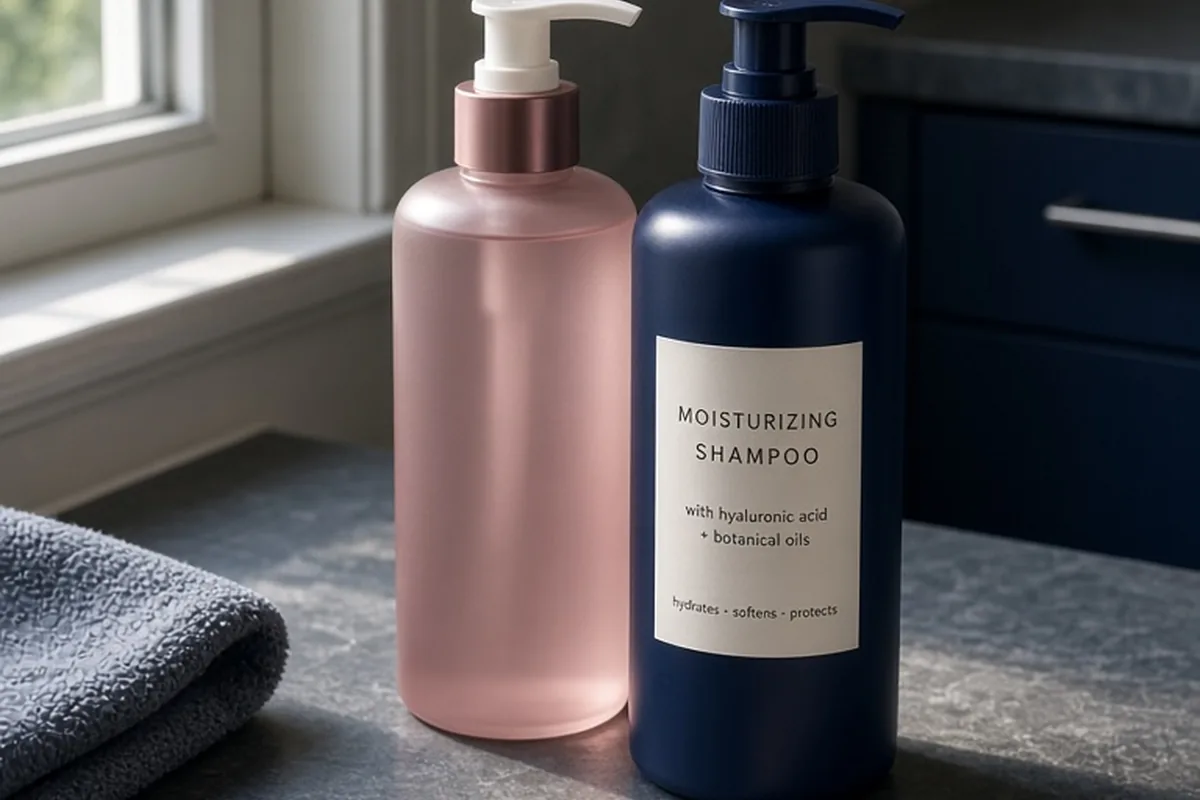
To care for moisturizing shampoo products, store bottles away from direct shower streams, extreme heat, and sunlight to prevent lipid separation and microbial growth. Keep caps tightly sealed and avoid introducing tap water inside the container, which dilutes preservatives. If using pump bottles, wipe dispensing tips weekly to prevent buildup. Store backstock in a cool, dry cabinet between 60 and 75 degrees Fahrenheit, and discard formulas showing rancid odors, persistent separation, or sudden thinning.
Moisturizing shampoos rely on delicate balances of humectants, botanical oils, conditioning polymers, and mild cleansing agents to hydrate hair without stripping natural oils. Because these conditioning formulas feature complex emulsions and nutrient-dense lipids, they are far more sensitive to environmental factors than standard clarifying formulas. Proper handling and storage safeguard the chemical integrity of the product, ensuring that every wash delivers the hydration, softness, and scalp protection the manufacturer intended.
Managing Shower Heat and Humidity to Protect Delicate Emulsions
Moisturizing shampoos are constructed as emulsions, blending water-based hydrators with lipid-rich conditioning agents like argan oil, shea butter, panthenol, and fatty alcohols. These components are held together by specialized emulsifiers and surfactant blends designed to stay suspended at balanced room temperatures. When shampoo bottles sit permanently in hot, humid shower enclosures where temperatures spike repeatedly, the thermal stress can weaken the bonds holding the water and oil phases together, resulting in gradual thinning, ingredient curdling, or permanent phase separation.
To minimize environmental breakdown, reconsider where bottles rest between wash days. Placing bottles on high shelves or in deep niches located away from the direct spray of the showerhead shields them from excessive radiant heat and steam collection. If your bathroom experiences prolonged moisture retention due to limited airflow, leaving the exhaust fan running for twenty minutes after showering helps lower the ambient humidity, protecting not only your shampoos but also the integrity of your overall hair care investment.
Preventing Water Ingress and Bacterial Contamination in Bottle Dispensers
A common point of failure for moisturizing cleansers is the unintentional introduction of tap water into the product container. Cosmetic preservatives are precisely calibrated to inhibit microbial and fungal growth based strictly on the formula volume established during manufacturing. When shower water splashes into an open flip-top cap, pools in screw-thread grooves, or seeps around a loose pump neck, it dilutes that protective preservative system while introducing bacteria and mold spores found in domestic water lines.
Maintaining a water-tight seal requires deliberate daily habits. Make a point of snapping flip-top lids firmly shut immediately after dispensing product, rather than letting the open bottle balance on a shower ledge while you lather your hair. If you prefer twist-off caps, avoid setting the cap face-up on wet tile where water pools. For bottles with dispensing pumps, ensure the collar remains fully threaded and tight against the bottle shoulder so that condensation running down the exterior cannot migrate inside.
Maintaining Pump Dispensers and Preventing Emollient Buildup
Large-format bottles of moisturizing shampoo almost universally rely on mechanical pumps to dispense their viscous contents. Because hydrating cleansers contain dense lipids, cationic polymers, and softening waxes, product residue frequently clings to the internal spring chamber and the tip of the dispensing nozzle. Over weeks of regular use, contact with the air causes this leftover cleanser to dehydrate, creating hard, gummy plugs that either block the spout completely or cause the product to spray unpredictably across the room.
Routine maintenance keeps these dispensing mechanisms working smoothly without compromising the shampoo inside. Once every two weeks, wipe down the exterior spout with a clean, damp microfiber cloth to remove crusted residue before it hardens. If a pump becomes completely obstructed, avoid pumping aggressively, which can crack the plastic housing. Instead, unscrew the pump assembly, place the stem into a small cup of warm water, and pump the clean water through until the channel runs clear, making sure to let the pump dry thoroughly before returning it to the shampoo reservoir.
Storage Rules for Large-Format and Textured-Hair Moisturizing Shampoo Products
Individuals with dry, curly, coily, or chemically treated hair often rely on jumbo-sized containers or keep multiple specialized cleansers in rotation, ranging from gentle low-foaming shampoos to richer co-washes. Leaving large 32-ounce or liter bottles sitting directly in a warm, damp bathroom for six to twelve months exposes substantial product volumes to prolonged humidity cycles, which can degrade botanical actives long before the bottle is emptied.
The most effective way to care for bulk quantities is to adopt a decanting routine. Keep your primary large-format container in a climate-controlled linen closet, vanity drawer, or pantry where temperatures remain stable between 60 and 75 degrees Fahrenheit. Decant a two-to-four-week supply into a smaller, refillable, shower-safe squeeze bottle. When refilling, wash and fully dry the smaller bottle to prevent stale product buildup, and write the decant date on a piece of painter's tape on the base to track freshness accurately.
Identifying Formula Breakdown, Rancidity, and Expired Preservatives
Even when handled with diligence, every moisturizing shampoo product has a finite functional lifespan. On the back of the bottle, look for the Period After Opening symbol, which resembles an open jar marked with a number such as 6M, 12M, or 18M. This indicator represents the number of months the formulation remains stable, potent, and microbiologically safe after the protective seal is broken. Exceeding this timeframe increases the likelihood of lipid spoilage and reduced cleansing efficacy.
Learning the sensory warning signs of spoilage prevents adverse scalp reactions or lackluster styling outcomes. Natural plant oils and butters oxidize over time, producing an unmistakable scent reminiscent of stale cooking oil, wet cardboard, or sour crayons. Visually, a compromised product may show an oily yellow or amber film pooling at the surface that refuses to blend back into the mixture after a gentle swirl. If the shampoo suddenly turns thin and watery, changes drastically in color, or develops small flecks, the emulsion has collapsed and the bottle should be discarded.
Handling Clean, Sulfate-Free, and Naturally Derived Formulations
Clean and naturally derived moisturizing cleansers have surged in popularity, particularly among people looking to avoid synthetic parabens, phthalates, and aggressive sulfates. These modern formulas often rely on alternative preservation systems, such as organic acid salts, caprylyl glycol, or fermented radish root extracts. While effective under normal circumstances, these gentle preservatives have narrower stability margins and tolerate less environmental fluctuation than legacy broad-spectrum chemical agents.
To protect clean formulations, keep them completely away from natural sunlight. Ultraviolet radiation accelerates photolysis, a process that breaks down unrefined plant extracts, degrades natural colorants, and destabilizes light-sensitive essential oil fragrances. If your bathroom features a window that receives bright morning or afternoon light, ensure clear or translucent bottles are tucked away inside a solid medicine cabinet or opaque storage basket rather than sitting exposed on an open ledge.
Restoring and Salvaging Thickened or Cold-Separated Cleansers Safely
During colder months or following package delivery in freezing weather, moisturizing shampoos containing high percentages of coconut oil, babassu oil, or cetyl alcohol may solidify, seize, or develop a cloudy, lumpy consistency. When fatty acid chains chill, they crystallize and lose their fluidity. Experiencing this physical transformation can make the shampoo difficult to squeeze or pump, but it does not necessarily mean the formula is ruined or chemically damaged.
You can safely restore a cold-hardened cleanser by applying slow, indirect warmth. Seal the cap tightly and stand the bottle inside a shallow bowl filled with warm, not boiling, tap water for ten to fifteen minutes. Once the warmth penetrates the container, invert the bottle slowly several times to redistribute the lipids evenly. Never place cosmetic bottles inside a microwave, set them on hot heating registers, or pour boiling water over plastic packaging, as intense direct heat warps container seals and permanently damages active proteins and humectants.
Frequently asked questions
Can I add tap water to thin out a thick moisturizing shampoo?
No, you should never add tap water directly to your shampoo bottle. Introducing unsterilized water dilutes the factory-formulated preservative system and can turn the container into an ideal environment for mold, yeast, and bacterial colonies. If a product feels too thick, emulsify it with water in the palm of your hands immediately before applying it to your scalp.
Does leaving moisturizing shampoo in the shower shorten its shelf life?
Yes, leaving bottles in a damp, hot shower stall exposes them to continuous steam, heat spikes, and incidental water splashes. Over time, these conditions accelerate the oxidation of botanical oils, weaken emulsifiers, and degrade gentle preservative blends. Keeping bottles on shelves outside the direct spray or storing them in a ventilated cabinet helps preserve them.
Why did my moisturizing shampoo separate into clear and white layers?
Separation occurs when the emulsion breaks, often caused by exposure to high temperatures, freezing conditions, or expired stabilizing ingredients. If a gentle shake recombines the product into a uniform cream that stays blended, the formula is likely safe to use. If the layers immediately separate again or smell sour, the emulsion is permanently broken and should be replaced.
How long does an unopened bottle of moisturizing shampoo last?
Most commercially prepared, unopened moisturizing shampoos retain their stability for two to three years when stored in a cool, dry environment away from sunlight. However, formulas relying exclusively on natural botanical oils or unrefined plant butters may have a shorter unopened shelf life of twelve to eighteen months. Always check the packaging for a manufactured date or batch code.
Your next step
Inspect your current shower shelf, wipe down any clogged dispenser spouts with a damp cloth, and relocate backstock bottles to a cool, dark cabinet away from humidity.