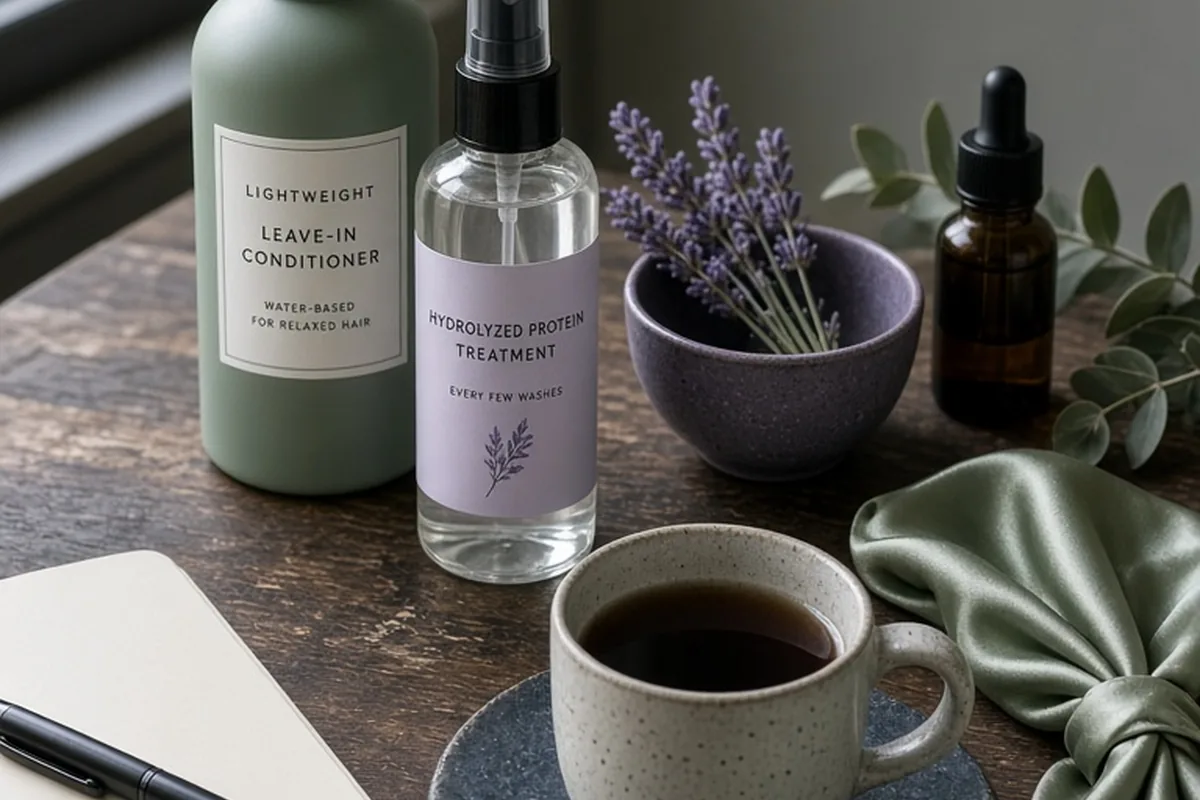
To care for relaxed hair without over-moisturizing, maintain a structured balance of hydration and strengthening protein rather than saturating strands daily. Cleanse weekly with a gentle clarifying or sulfate-free shampoo to remove residue, use lightweight water-based leave-in conditioners rather than heavy pomades, and incorporate hydrolyzed protein treatments every few washes. Keep hair dry between wash days, sleep in a satin wrap, and seal sparingly with lightweight plant oils only when ends feel dry.
Chemical relaxers permanently alter the internal protein structure of textured hair by breaking disulfide bonds to straighten the curl pattern. Because this chemical process leaves strands with increased porosity and reduced natural elasticity, many people attempt to compensate by applying heavy butters, thick creams, and daily leave-in sprays. However, overwhelming chemically straightened strands with continuous moisture compromises the hair fiber, leading to limpness, breakage, and hygral fatigue.
Recognizing the Difference Between Healthy Hydration and Hygral Fatigue
Hydrated relaxed hair feels supple, smooth, and resilient, moving freely and holding a gentle stretch before returning to its resting state. In contrast, over-moisturized relaxed hair suffers from a condition known as hygral fatigue, which occurs when the hair cuticle repeatedly swells and contracts from absorbing excessive water or water-based products. Because relaxed hair already has fewer intact internal bonds, this constant expansion weakens the hair cortex, causing strands to lose structural integrity.
The physical signs of over-moisturized hair are distinct from dry, brittle damage. When wet, over-conditioned relaxed strands feel mushy, gummy, or excessively soft, stretching like a rubber band before snapping without bouncing back. When dry, the hair often appears lifeless, dull, and flat, struggling to hold a curl or maintain volume even after styling. If your relaxed hair feels weighed down and breaks easily despite feeling soft to the touch, you are likely dealing with moisture overload rather than dryness.
Designing a Balanced Wash Day Routine for Chemically Straightened Hair
A successful wash day for relaxed hair centers on effective cleansing and regulated conditioning rather than prolonged soaking. Start with a clarifying shampoo once every three to four weeks to remove styling residue and oil buildup, switching to a moisturizing, sulfate-free shampoo on intermediate wash days. Clean hair cuticles allow targeted conditioning agents to deposit evenly without trapping heavy cosmetic layers beneath new product.
Deep conditioning should be timed strictly rather than left on for extended hours or overnight. When using a rinse-out deep conditioner, ten to twenty minutes with mild, indirect heat from a hooded dryer or thermal cap is sufficient to soften the cuticle and deliver conditioning agents. Leaving wet deep conditioners on relaxed hair for hours over-saturates the cuticle layer, softening the strand beyond its structural tolerance. Always finish with a thorough lukewarm rinse to close the cuticle and remove excess formula before styling.
Selecting Lightweight Hydrators Instead of Heavy Butters and Mineral Oils
The physical weight of your styling products directly impacts how relaxed strands retain volume and structural strength. Heavy formulas packed with raw shea butter, petrolatum, or thick mineral oil coat the hair shaft in an impenetrable layer, which attracts lint and creates false softness while suffocating the cuticle. When you attempt to wash these heavy occlusives out, aggressive stripping shampoos are often required, restarting a cycle of severe dryness followed by excessive moisture correction.
Opt for liquid, water-based leave-in conditioners that list water as the primary ingredient followed by humectants like glycerin, aloe vera, or panthenol in moderate concentrations. Once a light leave-in mist or fluid is applied to damp hair, seal the hydration using just three to four drops of lightweight carrier oils such as jojoba, argan, or grapeseed oil across the entire head. These smaller molecular oils provide slip, seal the cuticle, and impart shine without suffocating the strand or leaving a greasy film.
Integrating Structural Protein Treatments to Fortify Relaxed Strands
Because relaxers permanently remove a substantial percentage of the hair's natural protein content, moisture cannot stay properly balanced without structural reinforcement. Protein treatments work by temporarily filling in the microscopic gaps along the damaged cuticle and cortex, restoring tensile strength and elasticity. Without regular protein, applying moisture is like pouring water into a cracked bucket.
Incorporate a light to medium protein conditioner every two to three wash cycles, looking for ingredients such as hydrolyzed keratin, hydrolyzed wheat protein, or silk amino acids. These hydrolyzed proteins are small enough to adhere to the compromised fiber without causing extreme stiffness. For intensive bond builders or hard protein reconstructors, reserve use for every six to eight weeks, ideally directly before or several weeks after a chemical touch-up, always following up with a light balancing conditioner to ensure the strand remains pliable.
Managing Mid-Week Maintenance Without Daily Spraying and Wetting
A common pitfall in relaxed hair care is the belief that hair must be sprayed with water or leave-in lotions every morning and evening. Daily wetting causes the hair shaft to repeatedly swell and dry, degrading the relaxed cuticle and leading to mushy ends. Relaxed hair thrives on dry styling and minimal daily manipulation between weekly or bi-weekly wash days.
Instead of daily re-wetting, focus on dry maintenance strategies. Smooth a pea-sized amount of lightweight serum or oil onto your ends only if they feel coarse, and gently wrap your hair around your head using a paddle brush. Secure the wrap with a satin or silk scarf, covered by a bonnet to prevent friction against cotton pillowcases. This nighttime wrapping technique preserves internal hydration, flattens the cuticle, and smooths your style using your scalp's natural body heat without adding excess water.
Navigating the Line of Demarcation and Relaxer Touch-Up Schedules
As your hair grows, managing the boundary where naturally curly new growth meets previously relaxed strands—known as the line of demarcation—requires precise technique. Applying heavy moisture to soften the curly roots often results in over-saturating the fragile, porous relaxed ends. The line of demarcation is exceptionally vulnerable to snapping when overloaded with softening agents.
Apply products section by section, concentrating strengthening leave-in treatments on the relaxed lengths while applying slightly richer creams strictly to the new growth if needed. Avoid overlapping chemical relaxer onto previously treated strands during touch-ups, which should generally occur every eight to twelve weeks depending on your growth rate and styling tolerance. Protecting previously relaxed lengths with a coating of petroleum jelly or base oil during touch-up applications prevents accidental over-processing and preserves the fiber's remaining structural protein.
How to Reset and Recover from Over-Conditioned Relaxed Hair
If your relaxed hair is currently suffering from hygral fatigue and feels gummy or weak, you must execute a structural reset. Begin by washing your hair with a clarifying shampoo to strip away accumulated conditioning agents, polyquaterniums, and silicone films that prevent the strand from drying thoroughly. Follow this immediately with a medium-strength hydrolyzed protein reconstructor rather than a moisturizing mask.
After rinsing the reconstructor, apply a light, water-based leave-in conditioner with minimal humectants and let the hair air-dry in sections or blow-dry gently on cool-to-medium heat with a tension method. Avoid wet-wrapping, wet buns, or air-drying in tight ponytails, as keeping hair wet for extended periods prolongs hygral stress. Suspend all heavy deep conditioning for two to three weeks, using only light rinse-out conditioners until your strands regain firmness, snap, and natural body.
Frequently asked questions
How often should I moisturize relaxed hair throughout the week?
Most relaxed hair only requires dedicated moisturizing two to three times per week rather than every day. Apply a dime-sized amount of water-based lotion or a few drops of lightweight oil strictly to the ends when they feel dry to the touch, avoiding daily full-head saturation.
Can over-moisturized relaxed hair cause permanent hair loss?
Over-moisturization causes hair breakage along the shaft rather than damage to the hair follicle itself. While your hair may look thinner due to snapping strands, correcting your protein-moisture balance will allow new growth to thrive without permanent follicle damage.
How do I know if my relaxed hair needs protein instead of moisture?
Perform a simple wet strand test by taking a shed wet hair strand and gently pulling both ends. If the strand stretches excessively without springing back, feels mushy, or breaks easily while feeling soft, it needs protein; if it feels stiff, rough, and snaps immediately without stretching, it needs moisture.
Is it safe to air-dry relaxed hair to avoid heat damage?
Air-drying is safe if done correctly, but leaving relaxed hair wet for hours in tight styles can exacerbate hygral fatigue. To air-dry safely, blot gently with a microfiber towel, apply a light leave-in, and allow hair to dry loose or in loose braids rather than wet buns.
Your next step
Assess your wet hair's elasticity on your next wash day, and replace daily leave-in sprays with a scheduled weekly wash, a light hydrolyzed protein treatment, and nightly satin wrapping.