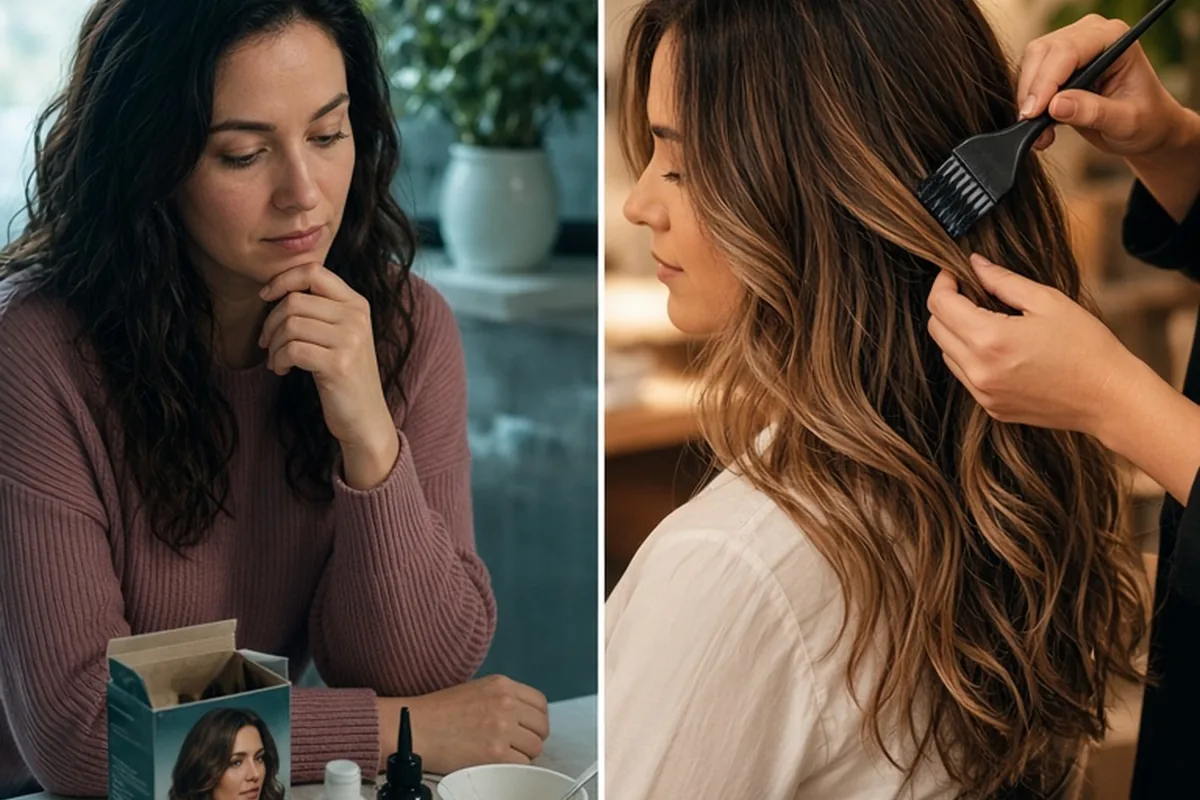
Choose at-home hair color only when staying within one to two shades of your current level, darkening virgin hair, applying a deposit-only gloss, or blending visible root regrowth with a predictable single-process tint. Choose a salon when you want to lift dark hair, transition more than two shades lighter, perform heavy lightening or bleach work, fix patchy color, or treat chemically processed or fragile textured hair that requires custom developer formulation and placement.
Dyeing your hair transforms your look, but deciding whether to open a box in your bathroom or book a professional appointment comes down to technique, chemistry, and how much risk you can afford.
Assessing the Complexity of Your Desired Hair Shade
Every hair color change involves a specific chemical shift. Single-process deposit color means placing pigment onto strands without removing natural pigment first. If your goal is to add rich espresso undertones to medium brown hair, refresh a fading auburn gloss, or match gray roots to an existing dark base, the process remains relatively straightforward. These projects do not demand stripping melanin, meaning they carry fewer variables that can cause unwanted warm tones or blotchy patches.
Complications multiply dramatically the moment you attempt to go lighter than your starting shade. Traditional hair dye cannot lift existing artificial dye, a foundational rule of color theory that catches many home colorists off guard. If your hair already contains box dye or salon color, putting a lighter box shade on top will only lighten the virgin regrowth at your scalp, leaving the lengths muddy or dark. Achieving significant lift, pastel tones, icy platinum, or soft dimensional balayage requires controlled bleaching, tone balancing, and precise timing that box formulations cannot calibrate.
Evaluating Current Hair Condition, Porosity, and Chemical History
Your hair's background determines how it absorbs pigment and tolerates oxidative stress. Virgin hair that has never encountered heat tools, perms, relaxers, or color tends to process evenly, though resistant cuticles can sometimes slow color penetration. In contrast, previously bleached, highlighted, or heat-damaged hair has high porosity. Porous strands absorb dye rapidly, frequently turning darker or ashier than intended, while simultaneously shedding moisture and pigment quickly after a few washes.
Textured hair requires extra consideration during chemical services. Coily and curly hair structures have naturally uneven cuticle layers along each bend and curve, making them prone to dryness and structural snapping under harsh developers. Furthermore, hair that has received keratin treatments, chemical relaxers, or metallic salts from compound hennas reacts unpredictably to box dye developers. In these situations, an experienced colorist can run a strand test, adjust developer volumes to protect the curl pattern, and incorporate bond-protecting additives to prevent irreversible breakage.
The Real Cost Equation: Upfront Box Dye vs Salon Services
The primary draw of at-home dye is immediate affordability. A retail kit costs a fraction of an appointment, and for someone maintaining a simple all-over brunette or covering resistant grays on a tight monthly budget, the savings are real. However, evaluating cost requires factoring in the volume of product required for thick or long hair, necessary tools like tint brushes, sectioning clips, mixing bowls, protective barrier creams, and deep conditioning treatments to manage post-dye porosity.
Salon pricing reflects customized formulation, physical labor, professional-grade toners, and bond-building agents designed to minimize damage. The financial risk of home coloring emerges when things go wrong. Corrective color at a reputable salon often requires multiple sessions, pigment-stripping treatments, and extensive conditioning work billed on an hourly or tiered basis. If an ambitious home experiment produces brassy bands, uneven splotches, or chemical damage, repairing the mistake generally costs far more in time, salon fees, and haircutting than booking a professional service from the outset.
Application Precision and the Risk of Overlapping or Banding
Uniform color application requires consistent saturation, sectioning, and speed. A salon stylist works with clear sightlines around your entire head, cleanly separating quarter-inch subsections so that every strand receives identical product coverage. They can also formulate different developer strengths for your roots and ends, accounting for the natural heat radiating from your scalp that speeds up chemical processing near the base.
Applying dye to the back of your own head in a bathroom mirror rarely achieves that level of consistency. The common habit of pulling permanent dye through to the ends every time you touch up your roots leads to progressive pigment buildup known as color banding. Over time, the mid-lengths and ends turn dull, over-saturated, and brittle, while the scalp displays a lighter, warmer glow commonly called 'hot roots.' Avoiding these flaws at home requires strict discipline to coat only new growth and use gentler, demi-permanent glosses through the mid-lengths.
When At-Home Hair Color Makes Practical Sense
Dyeing at home works best when you want minor, predictable modifications that work with your natural pigment rather than against it. Semi-permanent and demi-permanent glosses, direct-dye conditioning masks, and tone-refreshing glazes carry minimal risk because they do not lift your base or open the cuticle aggressively. If you are experimenting with an espresso rinse, reviving a faded copper tone, or adding shine between salon appointments, doing it at home offers an accessible and low-stakes route.
Similarly, straightforward root touchups on solid, dark-to-medium shades can be managed effectively at home once you establish your routine. If you have been covering gray hair with the same level-five neutral brown for years and your ends remain healthy, applying permanent cream color strictly to your new growth with a brush and bowl saves significant time and upkeep expense. The key rule for home success is simplicity: maintain one single shade, avoid overlapping product on previously processed lengths, and never expect box dye to act as a lightener.
When a Professional Salon Colorist Is Essential
Certain color journeys should never be tackled over the bathroom sink. Any shift that involves lightening dark strands, lifting through layers of previous tint, or achieving platinum blonde demands a professional. Bleaching requires continuous monitoring, delicate developer calibration, and precise toning to neutralize unwanted yellow, orange, or red undertones without frying the cuticle. Attempting to bleach hair at home frequently results in patchy bands, yellow roots, burnt ends, and irreversible structural damage.
You also need a salon professional whenever you want multi-dimensional results like balayage, foliage, baby lights, or complex fashion shades. Blending lighter ribbons seamlessly into darker hair requires hand-painting techniques and tension control that cannot be replicated without training. Additionally, if your hair has experienced heat damage, chemical straightening, or irregular patches from past dye jobs, a colorist can perform a physical elasticity test, suggest restorative treatments, and tailor a multi-stage plan that preserves the integrity of your hair fiber.
Frequently asked questions
Can I use box hair color to go from dark brown to blonde at home?
Standard box color cannot lift dark brown hair to blonde because dye deposits pigment rather than lifting significant melanin. Achieving blonde from a dark base requires targeted decolorizing agents, precise developer control, and custom toners to avoid severe brassiness and breakage.
How do I avoid hot roots when coloring my hair at home?
Hot roots occur when the heat from your scalp accelerates chemical processing, causing the root area to turn brighter or warmer than the rest of your hair. To prevent this, apply color slightly away from the scalp first or choose a lower-volume developer on new growth when working with permanent dye.
Is semi-permanent color safer for damaged or curly hair than permanent box dye?
Yes, semi-permanent and deposit-only demi-permanent dyes do not contain high levels of ammonia or strong developers, meaning they coat the hair shaft without blowing open the cuticle. This significantly reduces moisture loss, split ends, and damage to natural curl patterns.
What should I ask a stylist during a color consultation before booking?
Ask how many sessions your desired shade will require, what maintenance schedule to expect, whether a strand test is recommended for your hair history, and an itemized breakdown of expected service costs including toners and bond treatments.
Your next step
Examine your hair history under direct natural light to record all previous dyes, bleaches, and chemical textures, then book an in-person salon consultation if your target shade is more than two levels lighter than your current base.