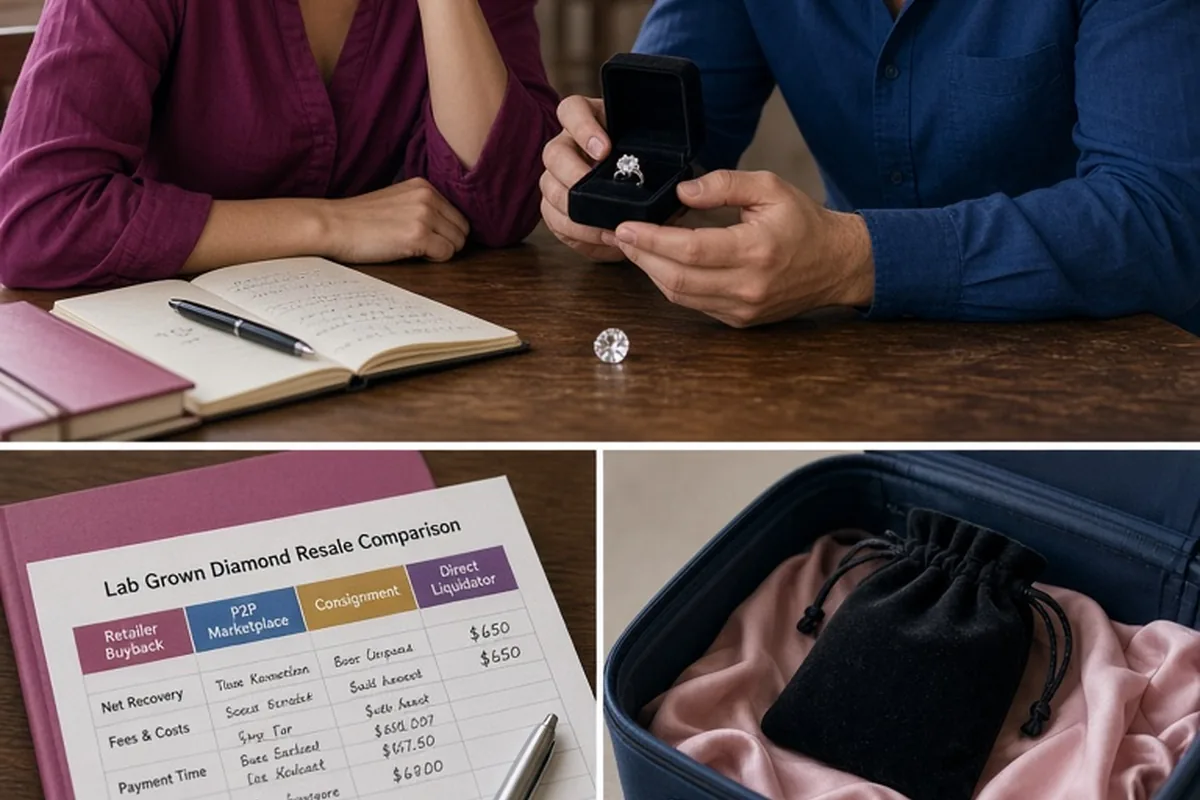
To compare lab grown diamond resale value options, evaluate four distinct selling channels: original retailer buyback policies, peer-to-peer online marketplaces, consignment with estate jewelers, and direct wholesale liquidators. Compare each channel by calculating your net recovery after transaction fees, payment processing costs, listing charges, and shipping insurance, while weighing immediate cash settlement against the patience required for consignment or direct consumer sales.
Selling a previously owned lab created diamond requires understanding how the secondary gemstone market operates differently from the retail sector. Because manufacturing supply continues to expand, pre-owned synthetic diamonds trade on different wholesale fundamentals than mined stones, making a structured comparison of your liquidation channels essential before agreeing to an offer.
Evaluating Original Retailer Buyback and Upgrade Programs
Your first comparison point should always be the return, trade-in, or buyback agreement provided by the retailer where the lab grown diamond was originally purchased. Many traditional and online jewelry retailers offer structured upgrade policies that allow buyers to apply credit toward a new piece, though these programs frequently carry strict qualifying conditions. Review your original sales receipt, warranty documentation, and terms of service to verify whether the merchant provides a direct cash liquidation option or restricts transactions exclusively to in-store merchandise credits.
When analyzing a jeweler trade-in program, check whether the policy requires purchasing a replacement item that costs significantly more than the original stone. Note whether the credit applies only to other lab created stones or can be used for natural gems, settings, or alternative fine jewelry. If the merchant only offers store credit, determine whether you genuinely need an alternative jewelry purchase, because receiving merchandise you do not want yields far less utility than securing liquid funds through a secondary channel, even if the nominal credit figure appears higher.
Comparing Peer-to-Peer Secondhand Jewelry Marketplaces
Peer-to-peer platforms allow individual sellers to list pre-owned lab created jewelry directly to prospective private buyers, cutting out commercial intermediaries who require wholesale margins. Selling directly to an end consumer generally yields a higher gross sale price than liquidating to a dealer, because the buyer is seeking an attractive alternative to full retail pricing rather than purchasing inventory for resale.
However, direct consumer sales require you to handle listing photography, detailed technical specifications, negotiation messaging, and transaction risks yourself. To fairly compare a peer-to-peer platform against direct dealer offers, subtract every anticipated out-of-pocket expense from your expected sale price. These deductions include platform commission fees, payment processing surcharges, independent third-party authentication fees, secure escrow services, and fully insured parcel transit. Additionally, factor in the time required to find a private buyer, as individual listings can take months to attract an offer.
Assessing Consignment with Local and Estate Jewelers
Consignment through an independent estate jeweler or specialized pre-owned luxury dealer represents a middle ground between private sales and wholesale liquidations. In a consignment arrangement, the jeweler cleans, photographs, displays, and markets your lab grown diamond piece in their showcase or online catalog while retaining physical custody until a customer completes the purchase.
When evaluating consignment options, examine the dealer contract terms carefully before handing over your jewelry. Key comparison variables include the percentage commission retained by the showroom upon completion of a sale, the length of the mandatory exclusivity period, insurance coverage while the piece remains in the shop, and whether the jeweler has the unilateral right to reduce the asking price after a designated holding period. Consignment can achieve stronger recovery than instant cash sales, but you must accept indefinite waiting periods and the risk that the piece may go unsold.
Weighing Direct Cash Buyers and Diamond Liquidators
Direct diamond buyers, local pawn shops, gold-buying storefronts, and online precious metal liquidators offer the fastest route to turning a lab grown diamond into immediate funds. These entities evaluate the piece on the spot or via prepaid insured mailers and provide an immediate payment offer upon physical inspection. This channel is best suited for individuals who prioritize certainty, immediate settlement, and zero ongoing listing management.
The trade-off for instant cash is that wholesale buyers base their offers on current manufacturing replacement costs and wholesale inventory availability, not the original retail price paid. Because liquidators must absorb holding costs, market volatility, and resale marketing overhead, cash offers from these businesses represent the lower end of your gross recovery range. When comparing liquidators, request itemized quotes that show how much value is assigned to the diamond itself versus the underlying precious metal mounting.
Separating Precious Metal Setting Value from Gemstone Value
A common complication when comparing resale options for finished jewelry is failing to distinguish the value of the precious metal setting from the value of the lab grown center stone. Gold, platinum, and palladium have universally recognized daily commodity spot prices, allowing jewelers and refiners to calculate immediate melt scrap value based entirely on alloy purity and weight in grams.
Lab grown diamonds do not have standardized spot commodity pricing and are valued based on secondary market demand for specific cuts, colors, and clarities. In many instances, a substantial portion of a direct cash offer on an older or smaller lab grown ring comes from the precious metal setting rather than the stone itself. Ask each prospective buyer to separate the precious metal quote from the gemstone quote so you can evaluate whether selling the complete piece intact or resetting the stone and scrapping the metal yields better financial recovery.
The Role of Grading Certificates in Resale Value Comparisons
Independent laboratory grading reports significantly influence how accurately and quickly potential buyers can evaluate your lab grown diamond across all channels. Reports from recognized gemological laboratories provide verified specifications for carat weight, color grade, clarity grade, cut precision, and growth method, which removes guesswork for both remote private buyers and wholesale appraisers.
If you do not possess the original grading report, factor the cost and logistical effort of obtaining an updated document into your channel comparison. While wholesale buyers have in-house gemologists who can verify dimensions and optical characteristics without documentation, private marketplace buyers and consignment showrooms rarely accept uncertified stones without discounting their offers to protect against unverified grading claims. Compare whether paying for a fresh laboratory report will increase the net buyer pool enough to justify the upfront evaluation fee.
Calculating Total Net Recovery Across All Channels
To make an objective decision, compile your quotes and estimated selling figures into a standardized net payout calculation. A high gross offer on an online peer-to-peer venue can easily end up yielding less cash in hand than an immediate dealer quote once you deduct variable transaction expenses, shipping protection, listing upgrades, and potential return shipping disputes.
Create a side-by-side comparison sheet detailing the headline offer price minus platform percentages, payment processing fees, shipping and insurance charges, appraisal or certification expenses, and mandatory cleaning or photography costs. Next, factor in the non-monetary elements: the speed of payout, the finality of the sale, and your personal comfort level with shipping luxury goods or managing direct buyer inquiries. Selecting the right option means identifying the optimal intersection of net dollar recovery and acceptable transaction effort.
Frequently asked questions
Why is the resale value of a lab grown diamond different from its retail purchase price?
Retail prices include retailer profit margins, custom design labor, marketing overhead, and warranty packages that do not transfer to the secondary market. Furthermore, because production efficiencies for synthetic diamonds continue to improve over time, secondary market buyers can purchase newly manufactured stones at competitive prices, which limits what dealers or consumers will pay for pre-owned inventory.
Can I trade in a lab grown diamond for a natural diamond?
Some retail jewelers allow trade-ins across stone types, but terms vary widely by merchant. Many jewelers restrict lab grown trade-ins exclusively to other lab grown merchandise or require that the replacement purchase meets a specific minimum spending threshold above the original trade-in allowance.
Do pawn shops and local gold buyers purchase lab grown diamonds?
Many pawn shops and local buyers purchase lab grown jewelry, though some prioritize the scrap value of the precious metal setting over the synthetic stone. It is best to call local businesses in advance to confirm whether they actively evaluate and buy loose or mounted lab created gemstones.
Is it better to sell lab grown diamond jewelry as a complete piece or separate the stone from the setting?
Selling as a complete piece is usually preferable on peer-to-peer platforms and consignment showrooms where buyers seek ready-to-wear jewelry. If you are selling to a precious metal refiner or scrap dealer who offers nominal value for the gemstone, separating the stone allows you to liquidate the metal immediately while keeping the diamond for a future project or direct private sale.
Your next step
Gather your original grading certificate and sales receipt, then request written quotes from at least one direct cash buyer, one consignment jeweler, and your original retailer to calculate your true net payout after all fees.