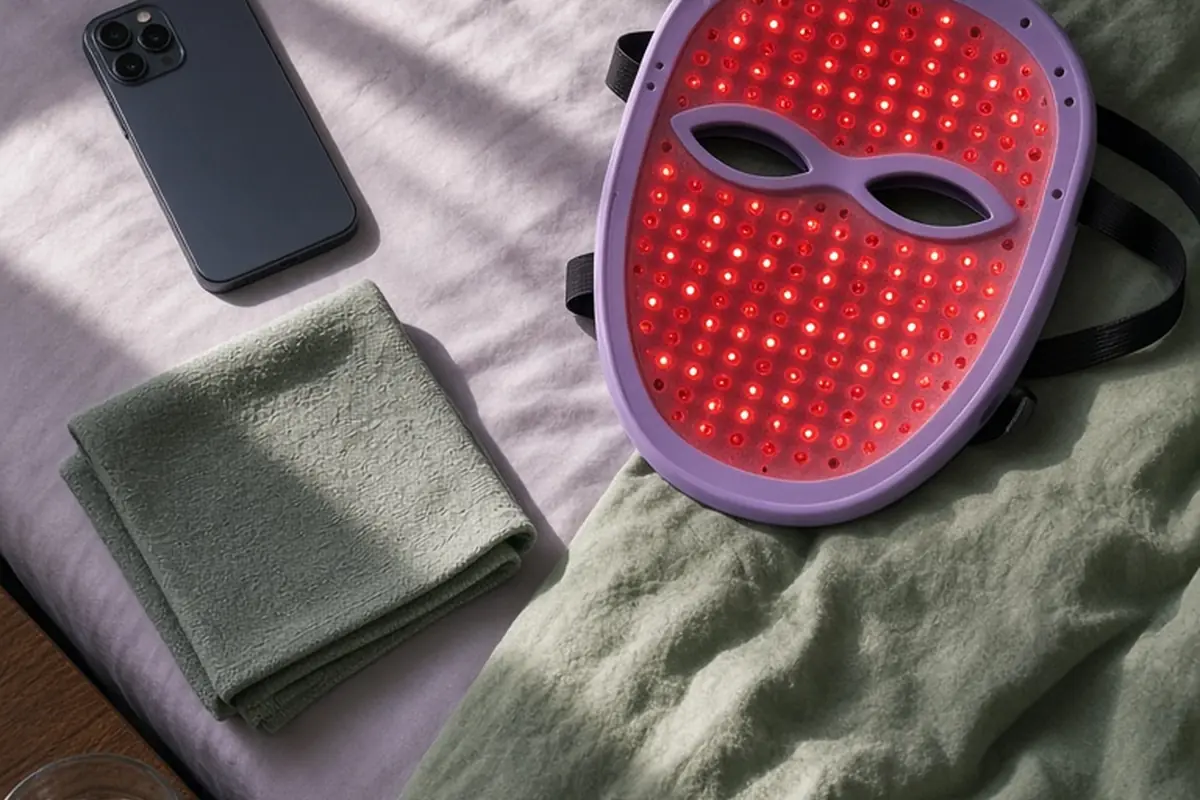
To compare red light masks for home use, check specific wavelengths like red (630 to 660 nanometers) and near-infrared (830 to 850 nanometers), verified power density or irradiance, mask fit and material, eye safety features, and ease of regular maintenance. Prioritize devices with transparent testing data, clear cleaning protocols, and flexible designs that sit comfortably against your skin to ensure consistent, safe, and sustainable daily or weekly routines.
Navigating the expanding market of home light therapy devices requires looking past marketing buzzwords and focusing on the underlying hardware specifications. Understanding how technical details translate into everyday usability ensures you choose a mask that fits both your skincare goals and your personal schedule.
Evaluating Target Wavelengths and Light Spectrum Transparency
When evaluating any light therapy mask, the first detail to verify is the exact wavelength spectrum emitted by the light-emitting diodes (LEDs). Effective personal wellness devices generally focus on specific narrow bands rather than broad ambient light. Most red light therapy devices use wavelengths between 630 and 660 nanometers (nm), which target surface layers, and near-infrared wavelengths between 830 and 850 nanometers, which penetrate slightly deeper into tissue. Some multi-spectrum devices also incorporate blue light (around 415 nm) to target surface bacteria associated with breakouts. A reputable manufacturer will clearly publish the exact nanometer numbers rather than vague claims like broad-spectrum glow or generalized color therapy.
A practical limitation to consider when choosing multi-color options is diode layout and density. In masks that switch between multiple colors using the same diode clusters or alternating bulbs, the actual coverage area for red light alone might be cut in half compared to a dedicated dual-wave (red and near-infrared) device. If your primary goal is overall skin tone support, choosing a device with dedicated red and near-infrared diodes across the entire surface often yields more consistent surface coverage than a unit attempting to offer five or six distinct colors with fewer bulbs per setting.
- Red light (630–660 nm) focuses on top-layer surface rejuvenation and general tone improvement.
- Near-infrared light (830–850 nm) provides deeper tissue reach to support structural clarity and comfort.
- Blue light (around 415 nm) specifically addresses surface-level congestion and topical blemishes.
Assessing Power Output, Irradiance, and Dosage Calculations
Light therapy depends heavily on energy delivery, commonly measured as irradiance or power density in milliwatts per square centimeter (mW/cm²). Irradiance determines how much optical energy reaches your facial tissue over a set duration. Consumer masks typically operate within a moderate range of 20 to 50 mW/cm² at surface contact. Be cautious of brands claiming exceptionally high power densities equivalent to clinical panels, as excess heat buildup in a closed mask format can cause discomfort or skin irritation. Conversely, underpowered masks that do not list their irradiance often fail to deliver sufficient energy within a reasonable ten-to-twenty-minute session.
When comparing technical sheets, consider how power is delivered over time. For example, a mask delivering 30 mW/cm² across a ten-minute session provides a predictable dose without generating hot spots. If a brand refuses to disclose its irradiance at surface distance or only provides total wattage across the entire device, calculating your actual session dosage becomes difficult. Reliable brands provide tested irradiance figures measured at zero distance from the inner mask lining, reflecting what your face actually receives during a treatment session.
Balancing Mask Materials, Facial Contours, and Weight Distribution
The physical construction of a mask dictates whether you will use it consistently or abandon it due to discomfort. Home units generally fall into two categories: flexible medical-grade silicone shells and rigid molded plastic frames. Flexible silicone masks rest directly against the facial contours, allowing the diodes to stay in close, uniform proximity to the skin across the forehead, cheeks, and jawline. They are also lighter, easier to pack for travel, and generally more forgiving for diverse facial shapes and wider cheekbones.
Rigid plastic masks often look sleek but create distinct pressure points, particularly on the bridge of the nose and the orbital bones around the eyes. Because rigid masks cannot conform to individual bone structures, the distance between the LEDs and different zones of your face may vary significantly, leading to uneven light absorption. However, rigid masks are often easier to wipe down thoroughly and sometimes feature integrated neck or chest attachments. Consider your personal comfort threshold: if wearing heavy headgear causes tension, a lightweight, flexible silicone model is usually the more practical long-term choice.
Examining Eye Protection and Built-in Safety Features
Direct ocular exposure to bright LED output, particularly near-infrared wavelengths that are invisible to the naked eye, can cause eye strain or visual fatigue. A well-designed mask includes robust, built-in eye shields made of dense silicone or opaque inserts that seal comfortably around the eye sockets without pressing painfully against the eyelids. Some budget devices provide loose protective goggles that must be worn beneath the mask, which can introduce awkward fitting problems and displace the diodes away from the upper cheeks and brow.
Beyond physical shielding, look for electronic safety features like integrated automatic shut-off timers and temperature management. Masks should automatically turn off after the recommended session duration (usually 10 to 15 minutes) to prevent accidental overexposure if you relax or fall asleep during use. Verify that the device is certified under standard electrical safety regulations and that the LEDs generate steady photonic energy rather than excess thermal heat, which can exacerbate certain pigment conditions like melasma.
Reviewing Power Supplies, Cordless Portability, and Battery Longevity
The power configuration of an LED mask directly influences how it fits into your daily habits. Rechargeable, cordless models use a small handheld controller housing the battery pack, allowing you to move around the house, fold laundry, or read while completing a session. While convenient, internal lithium-ion batteries naturally degrade over years of regular recharging. Check if the manufacturer offers replacement battery remotes or whether a failed internal cell renders the entire silicone mask unusable.
Tethered models require you to stay plugged into an AC wall outlet or USB adapter during the treatment. While this restricts your mobility, continuous mains power ensures identical irradiance from the first minute to the last, eliminating power drops that can occur when a battery pack runs low. If you prefer to conduct your skincare routine quietly in bed or on the sofa, a corded device may offer superior long-term reliability and eliminate the frustration of finding your mask dead right when you want to use it.
Checking Regulatory Clearance, Manufacturer Warranties, and Hygiene Care
When purchasing personal wellness tech, understanding regulatory terminology helps filter marketing claims. Look for devices that have received official 510(k) clearance from the US Food and Drug Administration (FDA) as Class II medical devices. FDA clearance indicates that the device has demonstrated substantial equivalence to existing safe consumer light therapy products in terms of electrical safety, thermal output, and light parameters. Be aware that clearance is not the same as FDA approval, and claims of clinical approval are often marketing misstatements.
Evaluate the warranty length and cleaning protocols before committing to a purchase. A one-to-two-year warranty reflects manufacturer confidence in diode longevity and flexible wiring connections. Furthermore, assess how simple the inner surface is to sanitize. Because the mask sits directly against bare skin, sebum, and residual skincare products, it must be easily sanitized with basic alcohol-free wipes or damp microfiber cloths without clouding the protective diode lenses or damaging the delicate silicone seal.
Factoring Cost per Session and Realistic Routine Commitments
A premium mask is only as effective as your willingness to use it several times per week over several months. Red light therapy operates on cumulative biological stimulation rather than instant fixes. When comparing price tiers—which range from under one hundred dollars to well over four hundred—calculate your expected cost per use over a two-year horizon. A mid-priced, comfortable mask that you happily wear four days a week delivers far greater value than an ultra-powerful, cumbersome rig that sits unused in a drawer.
Consider also whether the device supports standalone use on completely clean, bare skin or requires proprietary serums and disposable sheet masks to operate. Some brands tie their warranties or performance claims to expensive branded consumables, which significantly increases long-term operational costs. Opting for a device that works seamlessly with your existing, gentle hydration routine ensures that your home light care remains financially and practically sustainable over time.
Frequently asked questions
How often should I use a home red light mask to see results?
Most manufacturers suggest using your mask three to five times per week for 10 to 20 minutes per session on clean, dry skin. Consistency over eight to twelve weeks is typically necessary before noticing visible changes in skin texture, tone, and overall glow.
Can I use active skincare serums like retinol right before putting on the mask?
It is generally best to use your LED mask on clean, bare skin or under a simple, non-reactive hydrating serum. Active ingredients like retinol, AHAs, or benzoyl peroxide can increase photosensitivity or degrade under light exposure, so apply them after finishing your light session.
Is a mask with more LED bulbs always superior to one with fewer bulbs?
Not necessarily, because diode quality, output angle, and power delivery matter more than raw bulb count. A mask with fewer, higher-efficiency diodes placed close to the skin often delivers more uniform irradiance than a device with dozens of low-power, poorly calibrated bulbs.
Do I need to close my eyes while wearing an LED face mask?
While quality masks include built-in eye shields or opaque silicone cups to block direct light, keeping your eyes closed during the session is recommended for maximum comfort. If you experience light sensitivity or headaches, discontinue use or consult an eye care specialist.
Your next step
Review the specific wavelength specifications and verified irradiance of your top two mask choices, then pick the design that best fits your daily routine and face shape.