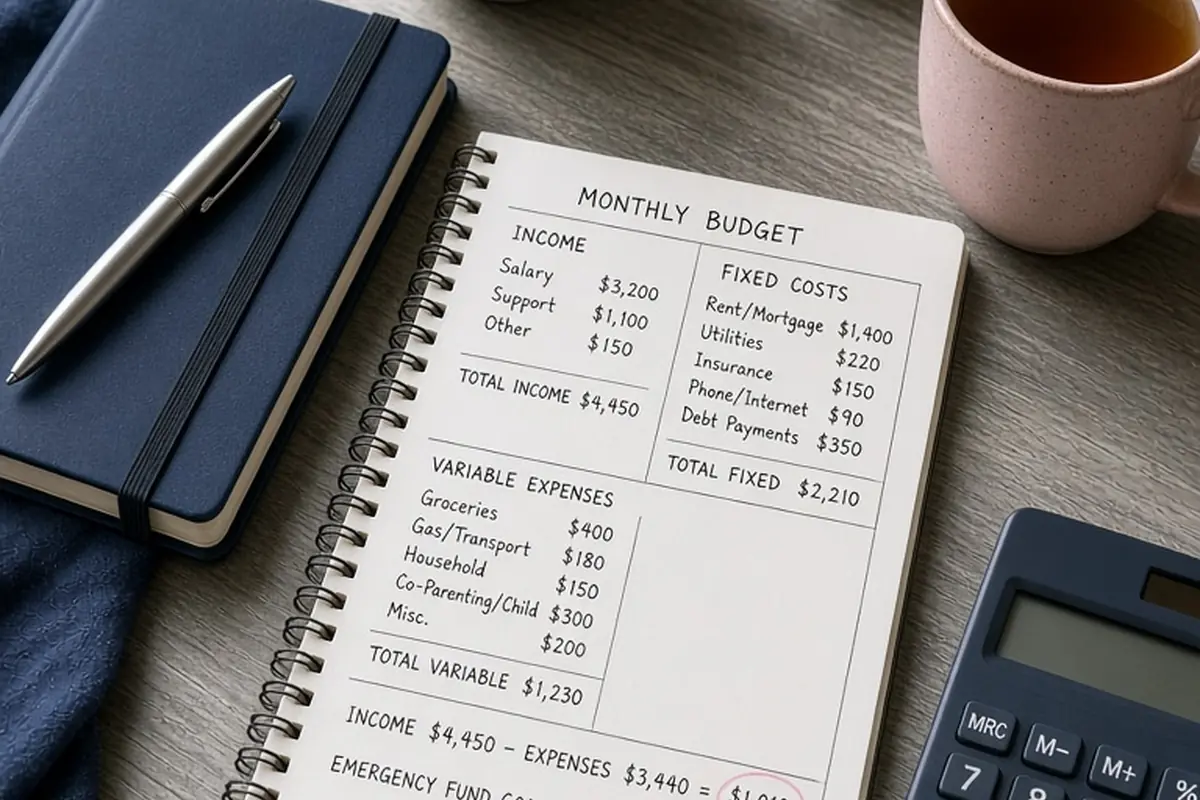
To create a post-divorce monthly budget, start by tallying your verified single-income cash flow, including confirmed support payments. Next, list fixed baseline costs like housing and utilities, followed by variable daily expenses. Separate shared marital debt from personal obligations, build a small emergency cushion, and track every transaction for ninety days. Adjusting categories as true single-living costs emerge ensures practical independence and sustained financial control.
Transitioning from a joint household to an independent financial life requires a clear view of your new baseline. Establishing a structured spending plan replaces guesswork with predictability, giving you the confidence to manage daily expenses and pursue long-term personal goals.
Auditing Your True Single-Income Cash Flow and Support Orders
The first step in building a post-divorce budget is identifying the exact income available to your household each month. When you were married, total income may have blended dual salaries, shared tax withholdings, and informal cash reserves. Operating independently requires working strictly with verified, predictable net figures. Calculate your net take-home pay from employment after subtracting federal and state taxes, retirement contributions, and personal health insurance premiums. If your post-divorce health coverage shifted from a former spouse's plan to your own employer, account for that new payroll deduction immediately.
If your divorce agreement includes alimony or child support, treat these inflows with operational realism. Court-ordered support you receive should be factored into your baseline only if payments have established a consistent track record of on-time delivery. Conversely, if you are the paying party, treat child support and maintenance as non-negotiable fixed obligations that must be deducted before allocating funds to lifestyle or discretionary categories. Avoid budgeting around irregular bonuses, speculative commissions, or delayed reimbursement for shared costs until the funds are settled in your bank account.
A practical approach involves establishing a primary checking account dedicated strictly to receiving verified income and disbursing core living expenses. For example, if your base salary yields three thousand dollars net per month and you receive five hundred dollars in regular child support, your workable monthly baseline is thirty-five hundred dollars. Keeping this figure conservative shields you from sudden cash-flow shortages if external payments face administrative delays.
Establishing Realistic Fixed Costs for Your Independent Household
Fixed costs represent the essential bills that keep your household operational and legally compliant each month. In a shared marriage, overhead such as rent or mortgage payments, property taxes, broadband, and trash collection was divided or absorbed jointly. As a solo householder, you bear the entire weight of these line items. Begin by listing your non-negotiable fixed expenses, including rent or mortgage payments, condo fees, auto loans, basic utilities, cell phone plans, and required insurance policies.
During the immediate aftermath of a separation, many people feel pressured to maintain their previous standard of living to preserve a sense of normalcy. However, staying in an oversized rental or keeping luxury auto leases on a single income can rapidly deplete savings. Evaluate each fixed commitment with an eye toward sustainability. Downsizing to a smaller apartment, choosing a reliable pre-owned vehicle, or shopping for independent auto and renters insurance policies can free up critical monthly margin.
When calculating utility baselines, request historical billing averages from utility providers for your current residence rather than guessing. Winter heating and summer cooling costs often vary significantly from joint estimates. Establishing an accurate baseline for these recurring charges prevents mid-year budget shortfalls and establishes a dependable foundation for personal financial autonomy.
Managing Variable Expenses and Daily Spending Patterns
Variable expenses fluctuate based on consumption, seasonality, and personal choices, making them both the easiest category to overspend and the most flexible area to trim. These costs include groceries, household supplies, personal grooming, gas, vehicle maintenance, and casual social outings. Living alone or adjusting to solo parenting alters routine consumption; buying in bulk may no longer be cost-effective, while cooking for one can lead to higher per-meal food costs or reliance on convenience takeout.
Emotional stress during divorce frequently manifests in unconscious spending, such as frequent restaurant dining to avoid an empty kitchen, impulsive retail purchases, or overcompensating with gifts. To counteract this, establish clear weekly caps for variable categories rather than a vague monthly limit. Breaking a monthly grocery and household budget of six hundred dollars into a strict one-hundred-and-fifty-dollar weekly allowance makes compliance manageable and prevents exhausting funds early in the month.
Select a straightforward method to record daily transactions for at least ninety days. Whether you prefer a dedicated mobile budgeting app, a simple spreadsheet, or a debit-card tracking system, recording every purchase reveals hidden leaks. This deliberate visibility provides the data needed to make informed lifestyle trade-offs without feeling deprived.
Handling Marital Debt Obligations and Individual Liabilities
One of the most complex aspects of post-divorce financial management is addressing lingering debt. It is crucial to understand that a divorce decree is an agreement between you and your former spouse; it does not alter contracts with third-party lenders. If a joint credit card or auto loan was assigned to your ex-spouse in the settlement but your name remains on the account, late payments by your former partner can still harm your credit rating.
Audit all liabilities to separate sole obligations from joint accounts requiring refinancing or closure. For personal credit cards, personal loans, or medical bills, create an active repayment plan within your monthly budget. Choose a structured approach, such as paying minimum balances on all debts while directing extra funds toward the highest-interest balance, or eliminating smaller balances first to build psychological momentum.
Avoid using consumer credit to bridge gaps between your single income and your living expenses. If your monthly obligations exceed your net income, relying on credit cards only compounds stress through accumulating interest. Instead, treat debt service as a mandatory monthly expense and aggressively adjust discretionary spending until your cash flow balances.
Budgeting for Co-Parenting and Shared Child-Related Costs
Raising children across two households introduces ongoing secondary expenses that fall outside base child support orders. These include school registration fees, sports uniforms, extracurricular tuition, musical instruments, seasonal clothing, and out-of-pocket medical or dental copays. Without a systematic plan, these recurring costs often spark fresh interpersonal friction and disrupt monthly cash flow.
Create a dedicated sinking fund within your budget specifically for anticipated child expenses. Calculate the annual cost of predictable items, such as back-to-school supplies, summer camps, and seasonal sports, then divide that total by twelve to determine your monthly contribution. Holding these funds in a designated sub-account ensures that seasonal expenses do not force you into emergency debt.
Establish a clear, transparent protocol with your co-parent for documenting and settling shared variable expenses. Use digital expense-sharing tools or written receipts submitted on a set calendar date each month. Keeping financial transactions organized, objective, and predictable protects your budget and helps maintain a businesslike co-parenting relationship.
Building an Independent Emergency Fund and Conducting Regular Reviews
In a dual-income marriage, a partner's paycheck or shared credit line often served as an informal safety net against unexpected shocks like car repairs or medical bills. Operating as a single adult means you must establish your own dedicated financial shock absorber. A robust emergency fund prevents unexpected events from derailing your standard budget or forcing you into high-interest debt.
Start with an initial milestone of one thousand dollars, allocating a specific dollar figure toward this reserve every pay period. Once that initial cushion is established, gradually expand the fund to cover three to six months of essential fixed living expenses. Keep these reserves in an accessible, high-yield savings account separate from your daily checking account to reduce the temptation to spend them on non-emergencies.
Treat your post-divorce budget as a living document that requires regular calibration. Schedule a brief monthly review to compare actual spending against your planned targets, and conduct a thorough review quarterly. As legal fees conclude, utility patterns stabilize, and personal routines settle, fine-tuning your categories ensures your financial plan continues to serve your long-term independence.
Illustrative Scenarios
Adjusting Fixed Housing Overhead After Separation
After finalizing his divorce, David moved into a modern two-bedroom rental near his former neighborhood. He initially attempted to keep his previous lifestyle intact, dining out with coworkers frequently and maintaining premium subscription services. Within four months, unexpected electric bills and solo grocery costs began pushing his credit card balances upward by several hundred dollars each month. Recognizing the strain, David paused non-essential social spending and audited his actual utility and grocery data. He restructured his budget around a strict weekly grocery cap, switched to a more modest apartment layout at lease renewal, and shifted social outings to casual home dinners with close friends.
Key point: Downsizing fixed costs and setting weekly spending limits early prevents lifestyle inflation from undermining post-divorce independence.
Managing Shared Children Expenses Without Conflict
Sarah shared joint custody of two middle-school children and found herself repeatedly caught off guard by sudden requests for sports gear, band trips, and field trip fees. Each unexpected charge led to stressful, reactive text exchanges with her former partner regarding who owed what, causing both emotional exhaustion and erratic monthly spending. Sarah decided to create a dedicated child-expense sinking fund, setting aside eighty dollars per paycheck. She also proposed a shared digital tracking spreadsheet where both parents logged agreed-upon receipts by the final Sunday of each month.
Key point: Anticipating variable child costs through a monthly sinking fund eliminates reactive financial stress and keeps co-parenting interactions focused and neutral.
Frequently asked questions
How soon should I build a new monthly budget after separating?
You should create an interim baseline budget immediately upon establishing separate living arrangements. Even if legal settlements and support orders are still pending, mapping your current cash flow and essential fixed costs prevents debt accumulation during the transition.
How should I handle child support or alimony that arrives inconsistently?
Base your primary living budget strictly on guaranteed, self-earned income rather than erratic support payments. When delayed support funds arrive, allocate them directly toward your emergency reserve, debt reduction, or future sinking funds rather than relying on them for core monthly bills.
What is the best way to curb emotional spending while adjusting to living alone?
Implement a mandatory seventy-two-hour waiting rule for non-essential purchases over a specific dollar amount, such as fifty dollars. Giving yourself time to evaluate whether a purchase meets a genuine need or serves as a temporary emotional distraction helps preserve your cash reserve.
How large should my post-divorce emergency fund be?
Aim for an initial target of one thousand dollars to handle immediate unexpected repairs without using credit cards. Over time, build this reserve to equal three to six months of basic living costs to safeguard your solo household against major disruptions.
Your next step
Open a clean spreadsheet or dedicated budgeting app today, log your verified net monthly income, and list your top five non-negotiable living expenses to establish your true financial baseline.