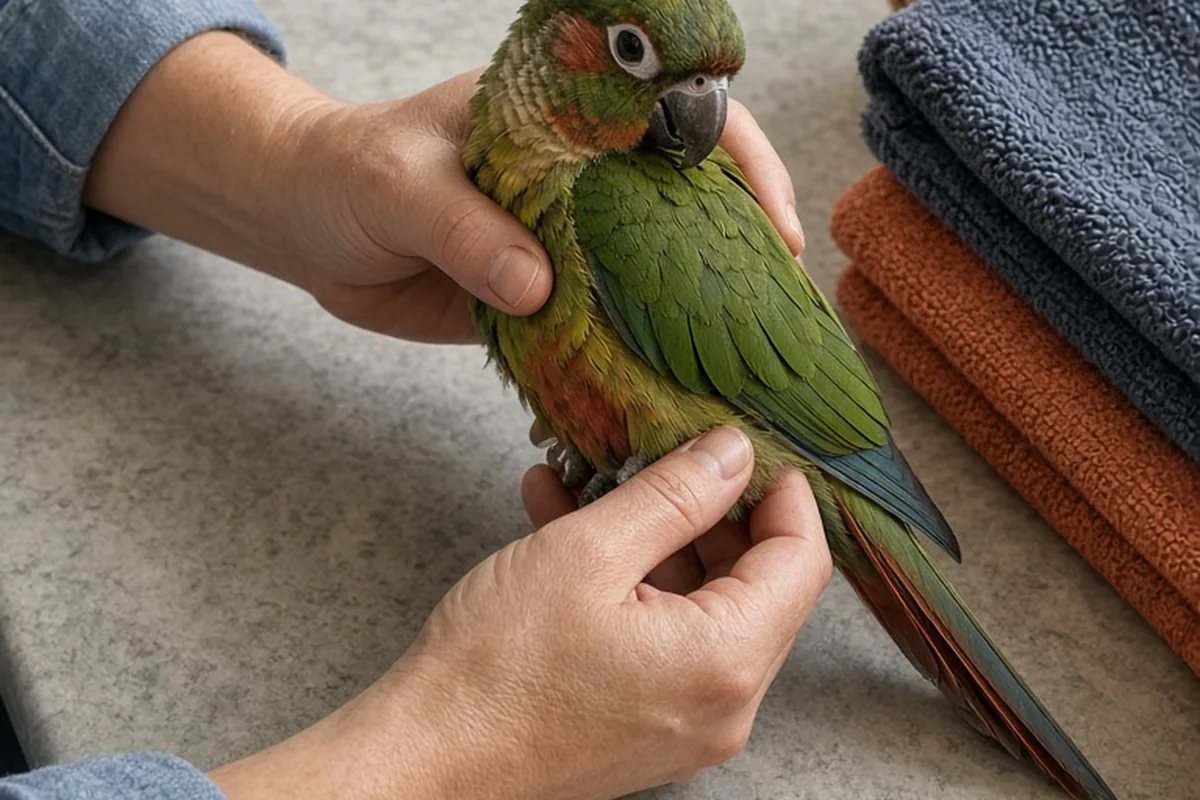
To differentiate male and female conures reliably, you must use laboratory DNA testing or veterinary endoscopy because almost all conure species are sexually monomorphic and look identical. Physical traits and pelvic spacing are unreliable guessing methods. While distinctive reproductive behaviors or laying an egg confirm a female, DNA testing via a freshly plucked feather or blood drop is the safest, most accessible method.
Bringing a conure into your home introduces vibrant personality, intelligence, and playful energy, but determining whether your companion is male or female presents a distinct challenge for most bird owners. Knowing your conure's biological sex plays an essential role in proactive veterinary healthcare, dietary planning, managing seasonal hormonal shifts, and preventing life-threatening reproductive emergencies like egg binding.
Understanding Monomorphism in Pet Conure Species
Most companion conures, including Green-Cheeked, Sun, Jenday, Dusky, Nanday, and Blue-Crowned conures, are sexually monomorphic. This biological classification means that males and females share identical plumage patterns, eye ring coloration, beak shapes, and body dimensions. In the wild, visual uniformity serves evolutionary purposes related to flock cohesion and shared nesting duties, leaving human caretakers unable to determine sex by simple sight.
A widespread misconception suggests that male conures are consistently larger, display broader heads, or possess brighter coloration than their female counterparts. In practice, individual genetic variation, juvenile development stages, and overall nutritional history account for size differences far more than sex does. Relying on visual appearance alone frequently leads to mistaken assumptions that complicate long-term pet care.
DNA Sexing Options and Sample Collection
Polymerase Chain Reaction (PCR) DNA testing represents the most affordable, accurate, and minimally invasive method for identifying a conure's biological sex. In avian genetics, males possess two identical sex chromosomes (ZZ), while females possess two distinct chromosomes (ZW). Specialized avian laboratories analyze the DNA extracted from cellular material to verify whether the ZW female marker is present.
Owners can collect DNA samples at home or have an avian veterinarian perform the collection using one of two primary methods:
When performing an at-home collection, handle your conure gently with a soft towel to minimize stress. Always follow the specific laboratory's instructions regarding sample handling, labeling, and submission envelopes to avoid cross-contamination with other pets or humans in the household.
- Feather Sampling: Pluck two to four small, fresh chest or flank feathers that contain visible pulp in the quill tip. Naturally molted feathers lack viable cellular material and will produce invalid results.
- Blood Card Sampling: Carefully clip a single toenail slightly beyond the quick to yield a small drop of blood, press it onto a sterile testing card, and immediately apply styptic powder to stop bleeding.
Surgical Endoscopy and Veterinary Diagnostics
Surgical endoscopy, also known as laparoscopic sexing, involves a board-certified avian veterinarian inserting a tiny optical scope into the bird's left air sac under general anesthesia. This allows the clinician to directly inspect the reproductive tract to identify either paired internal testes in a male or a single left-side ovary with developing follicles in a female.
While surgical endoscopy delivers an immediate, definitive result, it carries the inherent risks of general anesthesia and surgical recovery. Today, veterinarians generally reserve endoscopic evaluation for comprehensive health screenings, diagnosing internal organ disease, or assessing the active reproductive maturity of potential breeding stock rather than routine sexing for single pet birds.
Behavioral Patterns and Hormonal Expressions
As conures reach sexual maturity between one and two years of age, their seasonal hormonal behaviors often provide clues about biological sex. Females frequently demonstrate intensive nesting behavior, which includes shredding substrate, guarding dark enclosed spaces, and adopting a flattened, receptive posture with an elevated tail. In contrast, males often engage in deliberate regurgitation displays directed at preferred toys or owners, along with masturbatory venting movements where they rub their lower body against perches.
While these behaviors provide meaningful context, they are not definitive proof on their own. Highly bonded males occasionally seek dark cavities or shred paper, and frustrated females may exhibit mounting behaviors. Relying exclusively on behavioral interpretation can lead to incorrect conclusions unless accompanied by biological confirmation.
The Pelvic Bone Myth and Physical Risks
A persistent piece of folklore in the companion bird community claims that an owner can determine sex by feeling the spacing between the conure's pelvic pubic bones. The theory suggests that females possess a wide, flexible gap to facilitate egg passage, whereas males have narrow, rigid bones positioned closely together.
In reality, this manual palpation technique is both inaccurate and physically dangerous. Pelvic bone flexibility and spacing change continuously in response to a bird's age, dietary calcium levels, muscle tone, and whether a female is currently in an active reproductive cycle. Furthermore, attempting to manually squeeze or palpate the fragile pelvic region of a small parrot risks bruising internal organs, fracturing delicate skeletal structures, or creating severe defensive trust issues.
Egg Laying and Associated Health Considerations
The only natural observation that offers absolute, unequivocal proof of a female conure is the production and laying of an egg. Female conures do not require the presence of a male to produce or lay eggs; hormonal stimulation from prolonged artificial daylight, access to nesting boxes, or excessive physical affection can trigger ovulation in solitary birds.
Identifying a female is vital for preventative wellness because captive female birds face unique health risks such as chronic egg laying, cloacal prolapse, and egg binding, a life-threatening condition where an egg becomes lodged in the reproductive tract. Signs of egg binding include a swollen lower abdomen, tail bobbing, lethargy, fluffed feathers, and straining on the cage floor. If you notice these symptoms, immediate emergency veterinary intervention is required.
Environmental Management for Male and Female Conures
Regardless of whether your conure is male or female, managing environmental triggers helps regulate seasonal breeding aggression, screaming, and hormonal stress. Providing 12 to 14 hours of continuous, uninterrupted darkness each night simulates the non-breeding season and naturally suppresses excessive reproductive hormone production.
Additionally, maintain strict petting boundaries by limiting physical touch to the head and neck areas. Petting a conure down the back, under the wings, or near the tail base mimics mating interactions and leads to behavioral frustration or increased reproductive output. Remove enclosed huts, tents, and cardboard nesting boxes from the cage to discourage territorial defensiveness.
Illustrative Scenarios
Resolving Behavioral Frustration Through Accurate Identification
A conure owner assumed their three-year-old Green-Cheeked conure was male based on assertive territorial behavior and vibrant plumage. When the bird began obsessively defending the bottom corner of the cage and losing feathers around the vent, the owner sought veterinary advice. An inexpensive DNA feather test confirmed the bird was biologically female, allowing the veterinarian to adjust her diet to include supplemental calcium and guide the owner to reconfigure cage lighting to curb chronic hormonal cycling.
Key point: Visual and behavioral assumptions often mislead bird owners, whereas laboratory DNA confirmation allows for targeted environmental adjustments and essential health safeguards.
Frequently asked questions
At what age can a conure be accurately DNA sexed?
A conure can be DNA sexed at any age, including as a freshly hatched chick in the nest. As long as you can safely collect a small drop of blood or a newly developing feather with viable cellular pulp, the laboratory can process the genetic sample.
How much does a DNA sexing test typically cost?
Commercial avian testing laboratories generally charge between fifteen and twenty-five dollars per sample for mail-in DNA testing kits. Having an avian veterinarian perform the sample collection during an annual wellness exam may include an additional handling or examination fee.
Can two male or two female conures live together peacefully?
Yes, same-sex conures can frequently cohabit or share play spaces successfully, provided they are introduced gradually and have plenty of personal territory. Compatibility depends far more on the individual personalities, cage size, and socialization history of the birds than on biological sex.
Why did my verified female conure never lay an egg?
Many healthy female conures live their entire lives without producing an egg if their environment lacks strong breeding triggers. Maintaining balanced daily lighting, avoiding nesting boxes, providing a nutritious diet, and keeping handling strictly non-hormonal will naturally keep egg production dormant.
Your next step
Order a laboratory DNA test kit or schedule a routine wellness visit with an avian veterinarian to definitively identify your conure's sex without guesswork or physical stress.