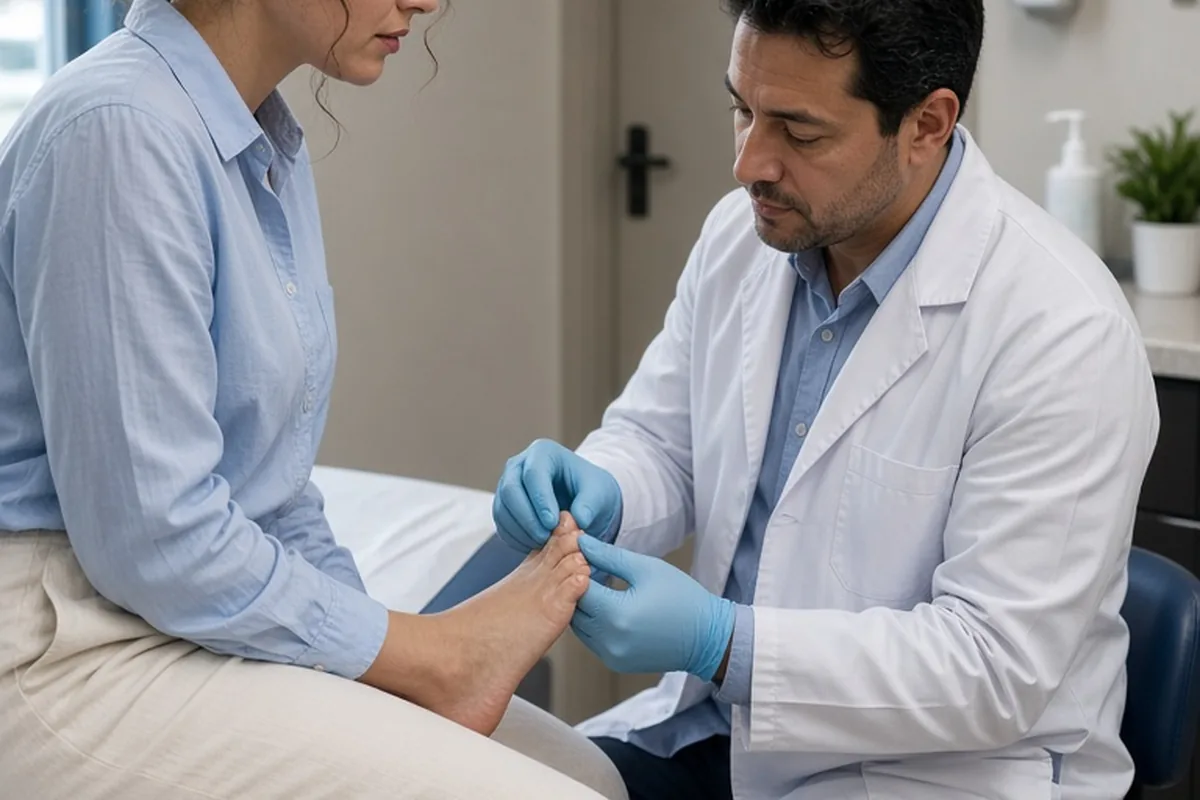
To discuss an ingrown toenail with a podiatrist, clearly describe when the pain started, its severity during daily activities, any visible changes like swelling or redness, and previous home remedies you attempted. Bring a list of current medications and your typical footwear choices. Ask direct questions about conservative versus procedural care, recovery timelines, and preventive trimming techniques so you can collaboratively select an appropriate treatment plan tailored to your lifestyle.
Navigating foot pain can feel intimidating, especially when an uncomfortable border of your nail begins digging into surrounding tissue. Preparing for your specialist appointment ensures you communicate your concerns accurately, receive targeted guidance, and leave with a clear, comfortable plan for recovery.
Tracking and Describing Your Specific Symptoms
Before your appointment, take a few moments to observe the exact characteristics of your toe discomfort so you can describe them clearly to the podiatrist. Note when the pain first became noticeable, whether it throbs constantly or only hurts when wearing tight shoes, and whether the side of the nail feels sensitive to light touch. Clinicians benefit greatly from knowing the progression of the issue, such as whether the area has grown increasingly tender over days or if it flared up suddenly after a specific event like stubbing your toe or trimming your nails.
Visual markers are equally important to communicate during your consultation. Mention if you have observed persistent redness, localized heat, swelling along the lateral nail fold, or any discharge such as clear fluid or pus. For example, telling your doctor, 'The inner edge of my big toe started aching four days ago, and yesterday I noticed yellowish drainage and increased swelling after my morning walk,' provides immediate clinical context. While it is natural to feel self-conscious about discussing inflamed skin, clear descriptive details help the specialist assess the severity of tissue irritation and determine whether an infection might be developing.
Sharing Previous Home Care and Treatments Honestly
Many people attempt to manage an ingrown nail at home before seeking professional care, using warm water soaks, over-the-counter antiseptic ointments, or attempts at self-trimming. It is essential to share every home remedy you have tried without fear of criticism. Podiatrists routinely encounter self-treated nails and need an accurate picture of what has already touched the toe. Concealing attempted bathroom surgery or frequent probing can make it harder for the doctor to distinguish between the primary nail problem and secondary irritation caused by home clipping.
When explaining your home care, outline the duration and frequency of your efforts. You might say, 'I soaked my foot in warm water with Epsom salts twice daily for three days and applied an antibacterial salve, but I also tried to snip the painful corner with standard clippers two days ago.' Sharing this background alerts the specialist to the possibility of a residual nail spike left beneath the skin margin. While home soaking can temporarily soften tissue and reduce superficial inflammation, aggressive self-cutting often exacerbates the problem by creating jagged edges that penetrate deeper into the skin fold.
Reviewing Daily Habits, Footwear, and Medical History
Your lifestyle and overall health provide vital clues about why an ingrown toenail developed and how it should be managed. Be prepared to discuss your routine physical activities, occupations that require prolonged standing, and the types of footwear you wear daily. Tight-fitting running shoes, narrow dress shoes, high heels, and stiff steel-toed work boots can exert significant lateral pressure on the toes, forcing the nail plate into the adjacent soft tissue.
Medical conditions such as diabetes, peripheral artery disease, neuropathy, and compromised immune function significantly influence treatment approaches. If you have any of these conditions, inform the podiatrist immediately, as reduced blood flow or nerve sensitivity requires heightened caution to prevent serious complications. Consider bringing your most frequently worn shoes to the office so the clinician can evaluate the toe box width and wear patterns. A potential challenge is balancing professional or athletic footwear requirements with the space your toes need to heal, but discussing these constraints openly allows your doctor to recommend practical modifications such as custom orthotics or toe-box stretching.
Asking Informed Questions About Conservative Options
Depending on the severity of the ingrown border and whether an infection is present, your podiatrist may suggest conservative management before considering invasive measures. Ask specific questions about what conservative care entails, how long it typically takes to provide relief, and what signs indicate that a mild approach is not working. Inquiring about non-surgical techniques shows your provider that you want to understand the rationale behind each available path.
Practical conservative methods include professional clearing of the offending nail edge, the placement of a small gutter splint or cotton wick under the nail border to guide upward growth, and taping techniques to pull the skin fold away from the nail. For instance, you could ask, 'Am I a good candidate for non-surgical nail lifting, or is the curvature of my nail too severe for conservative methods?' Keep in mind that while conservative approaches avoid the minor discomfort of local anesthesia and healing downtime, they carry a higher rate of recurrence if the underlying cause is an inherently wide or highly curved nail plate.
Discussing In-Office Procedures and Permanent Solutions
When an ingrown toenail is chronic, severely inflamed, or accompanied by an overgrowth of granulation tissue, in-office minor procedures become the standard recommendation. Discussing these options involves asking about partial nail avulsion, where only the problematic sliver of the nail is removed, versus total nail removal. You should also inquire about chemical matrixectomy, a common technique where a mild chemical agent such as phenol is applied to the growth root to permanently stop that specific corner from regrowing.
To alleviate anxiety, ask direct questions regarding procedural comfort, local numbing techniques, and realistic recovery steps. You might ask, 'What does the numbing process feel like, how long will I need to keep the toe bandaged, and when can I return to exercise?' A minor procedure permanently solves recurrent corner pain for most individuals, though it requires a short period of daily dressing changes, temporary open-toed or roomy footwear, and a slight aesthetic narrowing of the nail plate. Weighing these minor trade-offs against ongoing chronic pain helps you make a confident, well-informed choice.
Establishing a Long-Term Prevention and Maintenance Strategy
A productive podiatry appointment ends with a clear strategy for avoiding future ingrown nails. Ask your provider to demonstrate the correct technique for trimming your toenails, including the ideal shape, length, and tool style. Many people inadvertently cut their nails in an exaggerated curve or dig deep into the corners to avoid sharpness, which is the leading mechanical trigger for ingrown borders.
Request guidance on proper tools, such as straight-edged toenail nippers rather than curved fingernail clippers, and discuss how often your nails should be maintained. A concrete question to pose is, 'Could you show me exactly where my nail border should sit relative to my skin fold when I trim it at home?' Establishing a clear understanding of warning signs—such as minor tenderness returning after a trim—ensures you know when to seek a quick professional evaluation rather than letting the border worsen into a painful flare-up.
Illustrative Scenarios
Collaborative Treatment Choice for an Active Professional
Jordan, a project manager who trains for half-marathons, experienced recurrent inner-border soreness on the right great toe that worsened during long runs. During the appointment, Jordan explained the exact training schedule, brought the current running shoes, and disclosed an unsuccessful attempt to cut out the corner two weeks prior. The podiatrist evaluated the toe, noted a deeply curved lateral nail edge with localized inflammation, and discussed both conservative splinting and a minor partial nail avulsion.
Key point: By clearly communicating athletic commitments and previous self-care attempts, Jordan and the podiatrist agreed on a targeted partial avulsion scheduled during an upcoming rest week, eliminating recurring pain while accommodating training goals.
Frequently asked questions
What should I bring or prepare before visiting a podiatrist for an ingrown nail?
Bring a written list of your current medications, your medical history (especially regarding circulation or diabetes), and the shoes you wear most frequently. Avoid applying nail polish or thick topical creams on the morning of your visit so the specialist can clearly examine the nail plate and surrounding skin.
How can I communicate my anxiety about needles or procedural pain?
Tell your podiatrist directly at the start of the visit that you feel nervous about local injections or procedure discomfort. Clinicians can use cold sprays, gentle injection techniques, or take brief pauses to ensure you feel supported and in control throughout the appointment.
Will having an ingrown toenail treated mean losing my entire nail?
In the vast majority of cases, podiatrists only remove a narrow sliver along the problematic side of the nail rather than the full plate. The central and remaining portions of the nail stay completely intact, maintaining a natural appearance while relieving pressure.
Your next step
Write down a brief timeline of your toe symptoms, note your current footwear and past home remedies, and schedule an evaluation with a licensed podiatrist to establish a personalized, lasting treatment plan.