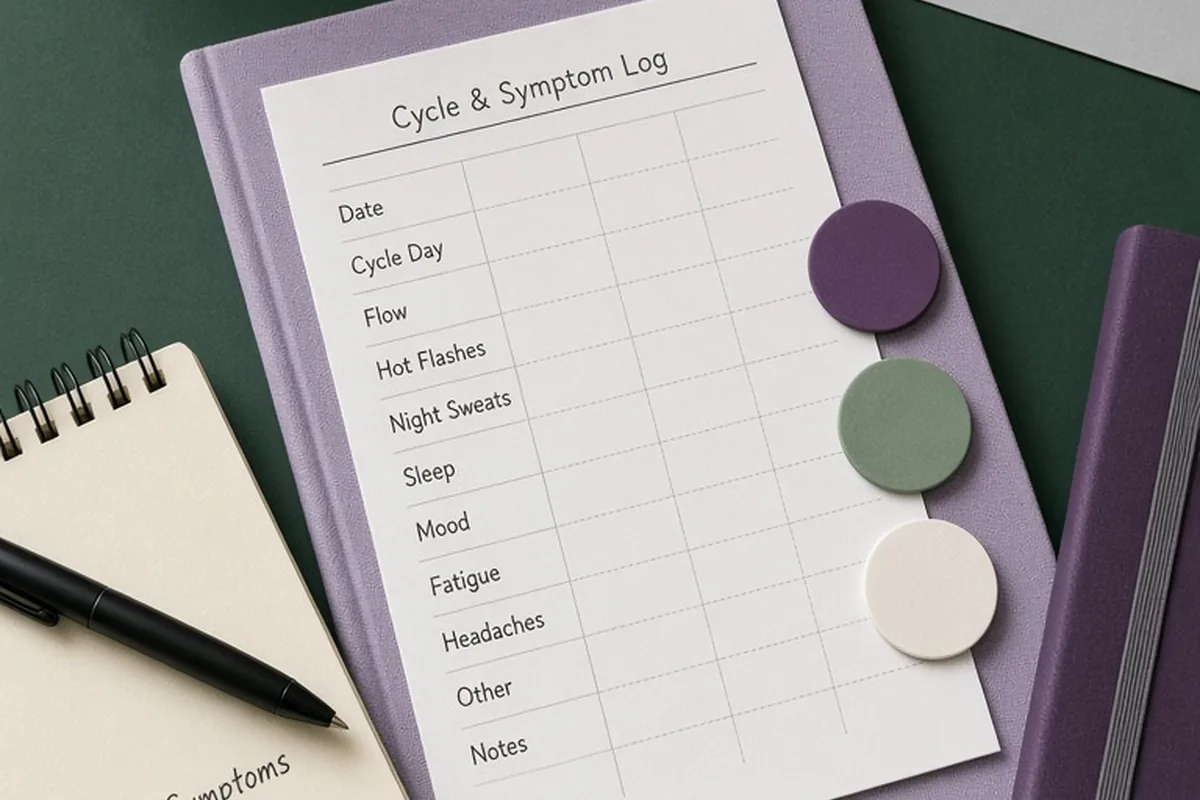
To discuss perimenopause with a doctor, track your cycle changes, physical shifts, and mood patterns for at least two to three months before your visit. Book a dedicated consultation rather than adding it to an annual exam, bring a prioritized list of your top three disruptive symptoms, and request a collaborative review of supportive care options, ranging from lifestyle modifications and non-hormonal therapies to hormone therapy or contraception. Clarify your goals, ask targeted questions about risks and benefits, and establish clear follow-up timelines.
Navigating midlife hormonal changes can feel disorienting when symptoms arrive intermittently or affect areas of health you might not immediately connect to ovarian function. Approaching this conversation with structured records and clear personal priorities helps turn a brief clinical appointment into a productive, collaborative planning session.
Gathering Objective Cycle and Symptom Data Before Your Visit
Clinicians rely heavily on clinical history to assess the transition toward menopause, which means the observations you gather in everyday life serve as essential diagnostic information. Rather than relying on general recollections during a rushed consultation, spend two to three consecutive months documenting your menstrual patterns and accompanying physical changes. Note the first and last day of bleeding, changes in cycle frequency, variations in flow volume, and unexpected spotting. Alongside your cycle, track the onset, time of day, and severity of other common bodily changes such as night sweats, sudden temperature spikes, disturbed sleep, brain fog, uncharacteristic irritability, or new joint discomfort.
A written log or digital tracking application removes guesswork and provides your healthcare provider with a recognizable timeline. If you notice severe fatigue or mood swings, record how those episodes correlate with your menstrual cycle to establish whether they follow a cyclical or unpredictable pattern. Pay specific attention to subtle physical indicators that people often overlook or hesitate to report, including vaginal dryness, pain during intercourse, urinary urgency, or palpitations. Bringing a concise, organized summary of these daily observations allows your doctor to evaluate systemic patterns rather than isolated complaints.
Further reading: Office on Women's Health
Scheduling a Dedicated Perimenopause Consultation
A common obstacle to receiving thorough midlife hormonal care is attempting to cover complex symptoms during a routine preventive appointment. Standard annual wellness exams or cervical cancer screenings are typically scheduled for narrow time blocks dedicated to specific preventive tasks, leaving little room for an in-depth conversation about changing hormones. When scheduling your visit, explicitly inform the clinic staff that you need a problem-focused consultation to evaluate perimenopause symptoms and discuss management strategies. Requesting an extended appointment slot gives both you and your provider the necessary breathing room to review your history without feeling pressed for time.
Understanding administrative and billing policies also prevents unexpected billing friction. Preventive well-woman visits and diagnostic problem visits often fall under separate billing codes within health insurance plans. When you raise persistent health concerns during an annual physical, your clinic may bill for both preventive and diagnostic services, or ask you to return for a separate session. By booking an explicit problem consultation from the outset, you establish a shared agenda focused entirely on symptom assessment, diagnostic testing considerations, and therapeutic pathways.
Framing the Functional Impact of Your Primary Symptoms
Because perimenopause can cause a wide spectrum of fluctuating symptoms, presenting an exhaustive list of ten or twelve concerns can overwhelm a brief clinical conversation. To achieve the best outcome, identify your top two or three most disruptive issues and structure your conversation around their real-world impact. Clinicians assess symptom severity largely through functional disruption—how a condition impairs your ability to work, sleep, maintain relationships, or carry out regular routines.
Instead of stating that you feel fatigued or stressed, describe the tangible effect on your life. For example, explain that waking up drenched in sweat three nights a week leaves you unable to concentrate during afternoon meetings, or that sudden surges of anxiety are interfering with your daily responsibilities. If painful intercourse or urinary changes are straining your intimate relationship or limiting physical activity, state those disruptions plainly. Framing your concerns in terms of measurable functional loss helps your clinician understand the clinical urgency and guides the selection of targeted interventions.
Further reading: Office on Women's Health
Evaluating Hormone Therapy, Contraception, and Non-Hormonal Approaches
Medical management during the menopausal transition is not a uniform prescription, and exploring your choices requires an honest discussion about your medical history and individual risk profile. For individuals seeking cycle control alongside pregnancy prevention, certain hormonal contraceptive methods may be appropriate options depending on age, blood pressure, cardiovascular factors, and personal preferences. Hormonal contraception can stabilize erratic menstrual bleeding while providing effective birth control, which remains necessary until menopause is clinically established.
If cycle regulation is not the primary concern, systemic menopausal hormone therapy using estrogens and progestogens may be considered to relieve vasomotor symptoms like hot flashes and night sweats. For individuals experiencing isolated genitourinary symptoms, localized low-dose vaginal estrogen provides targeted tissue support with minimal systemic absorption. Alternatively, non-hormonal prescription medications or targeted lifestyle adjustments can be evaluated if hormonal treatments are medically contraindicated or not aligned with your personal preferences. Ask your clinician to explain the distinct benefits, potential risks, and contraindications associated with each option relative to your personal and family medical background.
Further reading: CDC: Contraception and birth control methods
Further reading: Office on Women's Health
Understanding the Limitations of Hormonal Blood Panels
Many patients arrive at appointments expecting a single blood test to confirm perimenopause, but clinical realities are more nuanced. During this transition, circulating levels of follicle-stimulating hormone and estrogen fluctuate dramatically from day to day, and even hour to hour. A standard laboratory blood draw captures only a single snapshot in time; normal hormone levels on Tuesday do not rule out perimenopausal transitions that may cause severe symptoms on Thursday. Consequently, mainstream medical guidelines advise diagnosing perimenopause based on age, menstrual history, and clinical symptoms rather than static hormone blood tests.
However, laboratory work remains valuable for ruling out other medical conditions whose presentations closely mimic midlife hormonal shifts. Clinicians frequently evaluate thyroid function by ordering a thyroid-stimulating hormone panel, as hypothyroidism and hyperthyroidism can cause irregular periods, mood swings, weight fluctuations, and temperature intolerance. Checking for iron deficiency anemia, fasting blood glucose alterations, or specific vitamin deficiencies can clarify whether chronic exhaustion stems from heavy menstrual bleeding or nutritional shortfalls. Ask your physician which diagnostic panels are appropriate to rule out overlapping conditions before attributing every shift entirely to ovarian aging.
Further reading: Office on Women's Health
Advocating for Yourself When Concerns Are Minimized
Despite increasing awareness, patients still encounter instances where their midlife symptoms are minimized as standard stress, natural aging, or emotional distress. If your doctor brushes off your concerns without an evaluation or tells you that you must simply endure this stage of life, respond with structured, polite advocacy. You might state that while you recognize this transition is a natural biological process, the functional impact on your daily health warrants proactive management and symptom relief.
Ask your provider to document your symptoms and their specific clinical recommendations in your permanent medical record. If a requested evaluation or treatment discussion is declined, ask what specific diagnostic steps or alternatives they suggest to address your functional impairment. When a collaborative relationship cannot be established, seeking a second opinion from a gynecologist, internist, or a practitioner certified through recognized professional organizations focused on midlife care is a sensible, responsible step toward obtaining attentive medical support.
Establishing a Structured Follow-Up and Review Timeline
A perimenopause appointment should mark the beginning of an ongoing clinical relationship rather than a one-time encounter. Because hormone levels and symptoms continue to evolve throughout the menopausal transition, any initial treatment plan requires periodic re-evaluation. Before concluding your visit, ask your doctor when you should return for a follow-up consultation to assess treatment efficacy and screen for any side effects.
Establish an agreed-upon trial window for any new intervention. Many hormonal and non-hormonal regimens require roughly two to three months of consistent use to deliver their full therapeutic benefits. Clarify what side effects or symptom changes warrant an immediate message through your patient portal versus issues that can wait for your planned follow-up visit. Setting defined milestones ensures that ineffective strategies are adjusted promptly and successful therapies are monitored safely over time.
Further reading: Office on Women's Health
Frequently asked questions
At what age should I start discussing perimenopause with my doctor?
You can initiate this discussion whenever you notice persistent changes in your menstrual cycle, sleep patterns, mood, or temperature regulation, which often begin in your forties but can occur earlier. Bringing up these shifts early helps establish a clear clinical baseline with your healthcare provider.
Do I need blood tests to confirm that I am in perimenopause?
Routine hormone testing is generally not required or reliable for diagnosing perimenopause because estrogen and follicle-stimulating hormone levels fluctuate unpredictably throughout the transition. However, doctors often order blood tests to rule out other medical issues, such as thyroid disorders or anemia, that share similar symptoms.
Can I still get pregnant during perimenopause?
Yes, spontaneous ovulation can still occur intermittently during perimenopause even when menstrual cycles become irregular. If pregnancy prevention is a goal, you should continue using an appropriate contraceptive method until you have experienced twelve consecutive months without a period and reached menopause.
What should I do if my doctor says I am too young for perimenopause?
Present your documented symptom and cycle logs calmly and ask what medical conditions could explain your specific physical changes if not hormonal shifts. If your provider remains unwilling to investigate your symptoms or discuss management options, schedule a consultation with a clinician who specializes in midlife reproductive health.
Your next step
Open your calendar today and set up a daily two-month tracking log for your menstrual cycle and physical symptoms so you have objective records ready when you call to book your appointment.