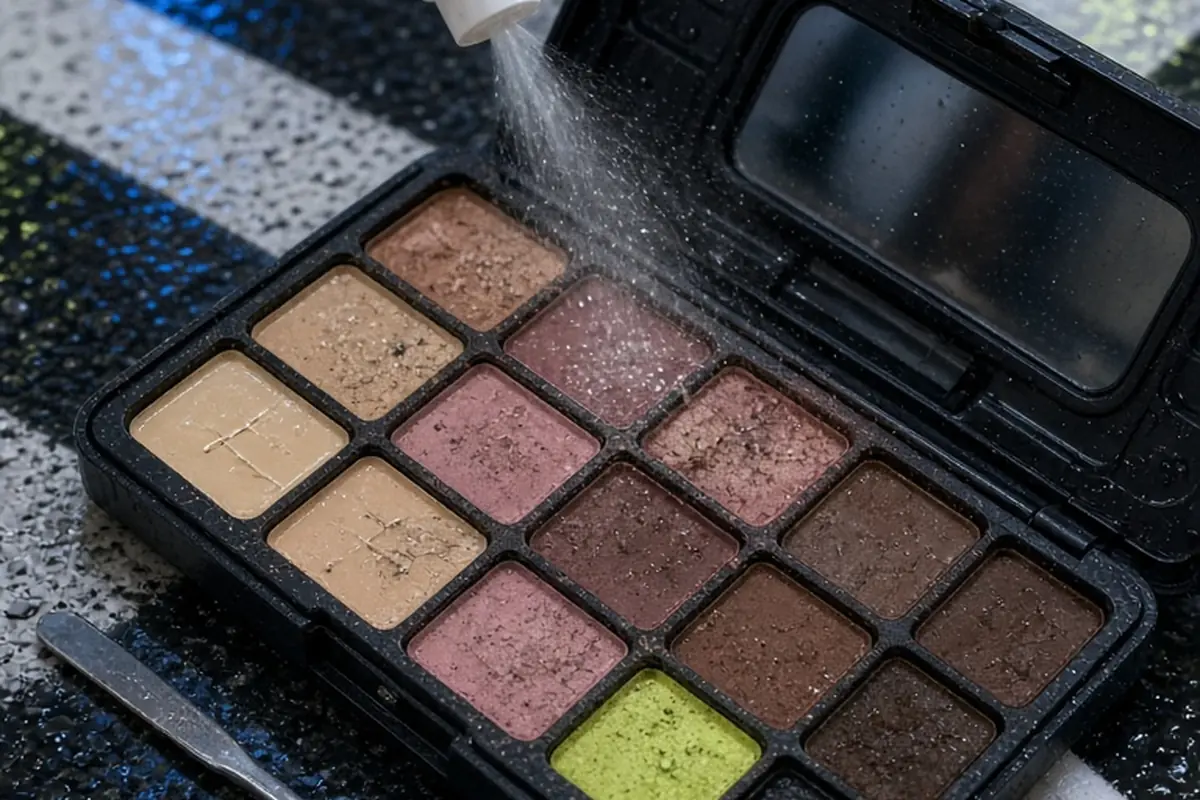
To disinfect powder makeup palettes, mist the surface lightly with 70% isopropyl alcohol and let it air-dry completely without wiping. For cream or wax palettes, first scrape away the thin top layer using a sanitized beauty spatula, then mist or gently wipe the surface with 70% alcohol. Finish by wiping the surrounding casing, mirror, and magnetic wells to prevent cross-contamination.
Every time a brush, sponge, or fingertip touches a makeup palette, microscopic traces of skin oils, dead cells, and airborne particles transfer onto the product. Over time, this buildup can alter the texture of your pigments and introduce unwanted bacteria back to your face. Regular sanitizing keeps your products performing predictably while maintaining a clean cosmetic setup.
Selecting the Right Alcohol Concentration and Essential Tools
The most effective and widely accepted sanitizing agent for cosmetics is 70 percent isopropyl alcohol. While it might seem logical that a 91 percent or 99 percent concentration would clean more aggressively, higher concentrations evaporate too quickly to kill microorganisms effectively. The 30 percent water content in a 70 percent solution slows the evaporation rate, allowing the alcohol to penetrate microbial cell walls and neutralize bacteria before drying.
Before beginning, assemble dedicated tools that keep the process hygienic and prevent accidental damage to fragile pans. You will need a fine-mist spray bottle to distribute the liquid evenly rather than splashing it, a stainless steel cosmetic spatula, lint-free microfiber wipes, cotton swabs, and paper towels to protect your workspace. Never substitute household disinfectants, bleach wipes, or scented hand sanitizers for pure isopropyl alcohol, as these formulas leave toxic residues, chemical scents, or sticky binders that can ruin powder textures and irritate delicate facial skin.
- A fine-mist spray bottle filled with fresh 70 percent isopropyl alcohol
- A flat stainless steel cosmetic spatula or sanitized palette knife
- Lint-free microfiber cloths and precision cotton swabs
- Cellophane tape or a sanitized spoolie for removing hard pan buildup
- A clean paper towel or silicone mat to protect your workspace surface
Sanitizing Powder Palettes Without Ruining Pigments
Powder formulations such as eyeshadows, blushes, bronzers, and highlighters are relatively simple to sanitize because they lack moisture, which naturally limits bacterial growth. However, skin oils transferred from brushes often form a shiny, hardened film across the surface known as hard pan. If you spray alcohol over hard pan without clearing it first, the liquid cannot reach the underlying pigment. To fix this, press a strip of clean cellophane tape lightly across the hardened area and lift it away, or gently scrape the hardened surface with a clean spoolie until fresh powder is visible.
Once any surface glaze is removed, hold your misting bottle approximately six to eight inches away from the palette. Spray a light, uniform cloud of 70 percent isopropyl alcohol across the entire surface of the pans. The powders should appear slightly damp, but you must avoid saturating or drowning the compact, as excess liquid can compromise the binder ingredients and cause pressed pans to crumble. Allow the palette to air-dry completely in a clean, dust-free space for twenty to thirty minutes. Never wipe powder surfaces while they are wet, as this will streak the pigment and disturb the press.
Disinfecting Cream, Gel, and Wax-Based Palettes
Cream products such as lip palettes, cream contours, concealers, and gel eyeliners require a different sanitization method than dry powders. Because cream and wax formulas contain emollients, moisture, and oils, bacteria and debris can settle beneath the immediate surface layer. Simply spraying alcohol onto a cream pan often causes the liquid to bead up on the waxy surface without penetrating, leaving contaminants trapped underneath.
To properly sanitize cream formulas, first disinfect your metal spatula by wiping it thoroughly with 70 percent alcohol. Gently shave off a thin micro-layer from the surface of each cream pan to remove the layer that has had direct contact with brushes or air. After removing the top layer, lightly mist the pans with alcohol or gently glide a clean, alcohol-dampened lint-free wipe over the freshly exposed cream. Leave the palette open to dry for ten to fifteen minutes before closing it to ensure all alcohol vapors evaporate completely.
Deep Cleaning Palette Casings, Mirrors, and Corners
Sanitizing the cosmetic pans is only half the job if the surrounding packaging remains dirty. Palette lids, mirrors, acrylic dividers, and magnetic wells frequently collect loose powder fallout, fingerprints, and oils from your hands. If you sanitize your powders but leave the casing dirty, bacteria and dust will immediately transfer back to the product every time you close and open the lid.
Begin by dampening a microfiber cloth with alcohol to wipe down the exterior casing, inner rim, and mirror. For tight corners, hinge mechanisms, and narrow borders between pans, dip a cotton swab in alcohol and trace the perimeter carefully to lift out packed-in powder residue. If you are cleaning a cardboard or paper-based palette, use extra caution; never spray liquid directly onto cardboard, as it can cause warping and water damage. Instead, use a barely dampened cotton swab to spot-clean the edges around each pan without soaking the paper material.
Handling Baked Formulas, Pressed Glitters, and Fragile Finishes
Certain cosmetic finishes react unpredictably to liquid alcohol and require specialized care. Baked powders, duo-chrome foils, water-activated pigments, and pressed glitters often rely on delicate binding agents or unique baking processes on terracotta tiles. Spraying alcohol heavily onto a baked formula can cause it to crack, dissolve water-activated binders prematurely, or cause loose glitter particles to clump and lose their dimensional sparkle.
For these sensitive formulas, minimize liquid contact as much as possible. Instead of drenching the pans, hold the spray bottle at a greater distance—ten to twelve inches—to deliver an ultra-fine dry mist, or rely primarily on mechanical sanitization by lifting surface dust with clean dry applicators. If you regularly use sensitive pigments or loose glitters, keeping a dedicated UV sanitizing box can offer a chemical-free way to help maintain surface cleanliness between uses without altering the delicate consistency of the pigments.
Creating a Realistic Sanitation Schedule and Spotting Expired Products
How often you should sanitize your makeup palettes depends on how you use them. For personal makeup stored in a clean environment, deep sanitizing powder palettes once every month is generally sufficient, while cream products benefit from sanitization every two to three weeks. However, if you have recently shared a palette with a friend, used products during an active skin breakout, or recovered from an eye condition, sanitize your entire collection immediately before using it again.
It is equally important to understand the boundary between a palette that needs sanitizing and one that has expired. Disinfecting kills surface microbes, but it cannot reverse chemical degradation. If a cream palette smells like stale oil or vinegar, shows oil separation that does not blend back together, or feels gritty, the preservatives have broken down and the product must be discarded. Similarly, if powder pans develop patches of mold—which look like fuzzy white, grey, or greenish spots distinct from hard pan—toss the entire palette immediately, as mold spores penetrate deep throughout the pressed powder.
Optimizing Storage to Prevent Microbial Growth and Moisture Damage
Proper storage is the best defense against contaminated makeup palettes. Many people store their makeup on bathroom counters or inside medicine cabinets, but the steam and humidity generated by hot showers create an ideal environment for mold and bacterial proliferation. Fluctuating temperatures can also soften wax formulas and degrade preservative systems inside both powders and creams over time.
Store your makeup in a dry, temperature-regulated area such as a bedroom vanity drawer, closet organizer, or closed acrylic box. Keep palettes away from direct sunlight, which accelerates product oxidation and fades packaging. If you live in a particularly humid climate, consider placing small silica gel packets inside your vanity drawers to absorb ambient moisture and keep your powders crisp, dry, and clean between uses.
Frequently asked questions
Does spraying rubbing alcohol alter the color or texture of eyeshadows?
When using 70 percent isopropyl alcohol in a light mist, the alcohol will evaporate completely without changing the shade, pigmentation, or blendability of your eyeshadows. Textural problems only happen if the powders are soaked heavily or wiped while still wet.
Can I sanitize and keep an eyeshadow palette after an eye infection?
While 70 percent alcohol kills many common surface bacteria, viruses and resilient pathogens associated with eye infections like conjunctivitis are difficult to eliminate fully from porous cosmetics. For safety, discard any cream products, liquid liners, and mascara used near the affected eye, and carefully assess whether replacing heavily used powder palettes is the safer option.
Can I use micellar water or setting spray to disinfect my palettes?
No, neither micellar water nor setting spray contains antimicrobial properties capable of disinfecting cosmetics. Micellar water leaves behind surfactants and moisture that can encourage microbial growth, while setting sprays contain film-formers and humectants that will ruin powder textures.
How long should I wait after sanitizing before using my makeup?
Wait at least twenty to thirty minutes for powder palettes and fifteen minutes for cream formulas to allow all alcohol liquid and fumes to evaporate fully. Using makeup while alcohol is still wet can sting the skin, irritate your eyes, and compromise application.
Your next step
Take fifteen minutes today to inspect your everyday makeup palettes, remove any hard pan with clean tape, and mist the powder surfaces with 70 percent isopropyl alcohol to keep your collection fresh and hygienic.