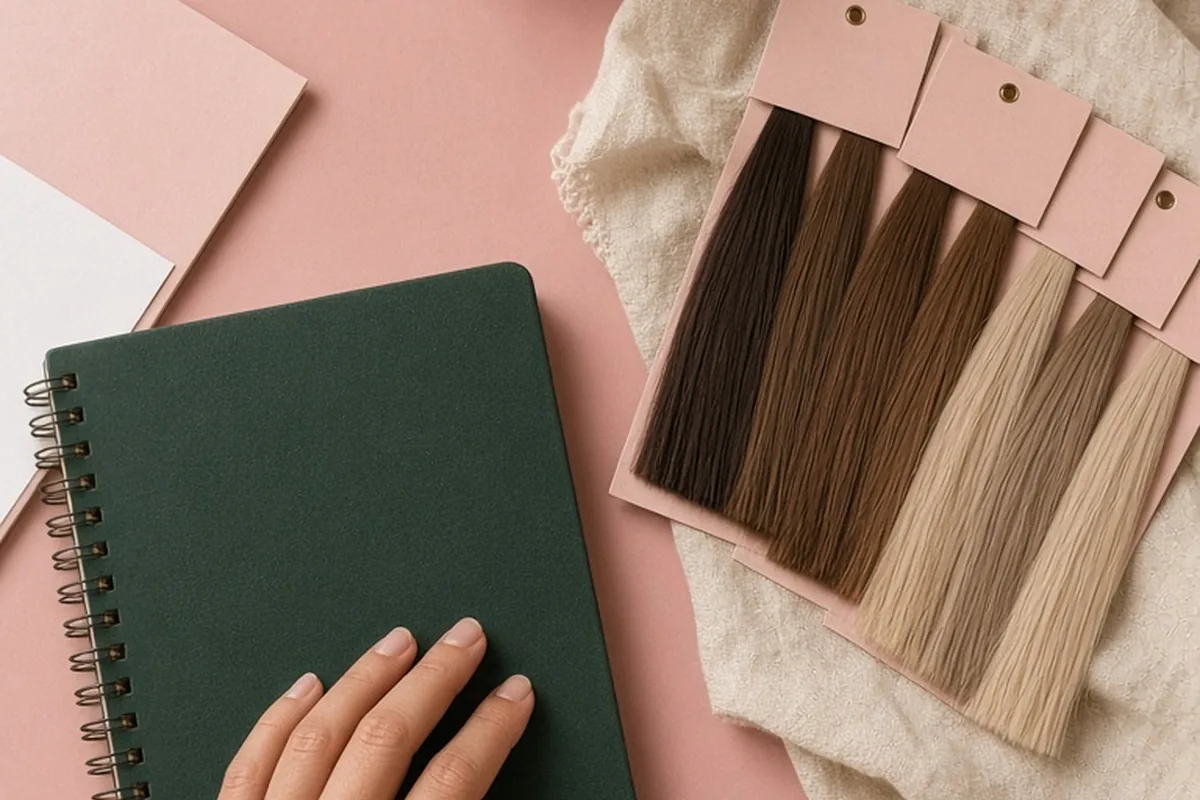
To explain what you want during a hair extensions consultation, tell your stylist your primary goal—whether adding length, filling in thinning perimeters, or creating dimensional color. Disclose your complete chemical and color history, describe your daily styling routine and wash frequency, and present reference photos showing realistic starting densities. This clear information allows your stylist to select the appropriate attachment method, calculate necessary hair weight, and design a customized maintenance plan.
A hair extensions consultation is a collaborative diagnostic appointment where your aesthetic goals meet the structural realities of your natural hair and daily lifestyle.
Clarifying Your Primary Goals: Length, Density, or Dimensional Color
Before sitting in the salon chair, pinpoint the exact physical change you want your extensions to accomplish. Many clients schedule a consultation asking broadly for extensions when their actual objective is focused on a specific problem area, such as filling in sparse sides caused by heat damage, creating fullness through a blunt perimeter, or adding several inches of overall length. When you explain your goal to your stylist, separate your desire for length from your desire for density, as these two outcomes require entirely different placement maps, hair weights, and installation times.
If your primary goal is volume rather than dramatic length, tell your stylist that you want to match your existing baseline while building density through the mid-lengths and ends. This often requires fewer grams of hair and focuses placement lower on the head or around the temples. If you want transformative length—such as taking collarbone-length hair to waist-length—explain that you understand your natural ends will need intentional blending, layering, and sufficient extension density so the transition does not look stringy or disconnected. Clearly articulating whether you want subtle correction, moderate thickness, or total length transformation sets the foundation for an accurate technical plan.
Disclosing Your Full Chemical History and Scalp Sensitivities
Your stylist cannot design a safe extension installation without an unvarnished account of your hair history over the preceding two to three years. Hair retains chemical alterations until it is cut off, meaning past bleach, high-lift tint, permanent relaxers, keratin treatments, or at-home box dyes still impact the tensile strength of your mid-lengths and ends. Explain every chemical service your hair has undergone, even if the color has faded or you believe the treatment has washed out. The stylist needs this information to assess whether your natural strands can support the mechanical weight and anchor points of extension attachments without snapping.
Equally important is an honest discussion of your scalp health and everyday physical habits. Let your stylist know if you experience scalp psoriasis, contact dermatitis, seasonal flaking, or general sensitivity to tension. Mention whether you frequently wear high, tight ponytails for fitness, work in environments requiring head coverings or helmets, or experience hormonal shedding. Disclosing these factors protects you from traction alopecia and allows the stylist to leave adequate perimeter drop-out hair, ensuring extension attachments remain completely concealed and free from painful pulling when your hair is gathered.
Matching Extension Methods to Hair Texture and Daily Routine
Different extension methods interact distinctively with varied hair types, and explaining your typical daily styling routine helps your stylist determine the safest physical mechanism for your strands. Keratin fusion bonds (individual tipped strands fused with a gentle polymer) and micro-bead or I-tip systems offer 360-degree mobility, making them versatile for active individuals who wear their hair up frequently. Tape-in extensions distribute weight across wider horizontal sections, which can be advantageous for fine, uniformly dense hair, while sew-in wefts anchored to silicone-lined micro-bead tracks provide significant density for medium-to-thick or coarse textures.
When explaining your natural hair texture, clarify how your hair behaves when air-dried versus when heat-styled. If you have naturally wavy, curly, or coily hair (ranging from Type 2 to Type 4 patterns), tell your stylist whether you plan to wear your extensions in your natural curl pattern or if you intend to blow-dry and flat-iron them straight daily. For natural textured wear, the extension hair must be ordered with a matching curl or wave pattern rather than standard straight hair. For fine hair, express your priority for lightweight attachments that will not strain fragile follicles or show through low-density crowns.
Presenting Visual References Effectively During the Consultation
Inspirational photos are valuable communication tools, but they can create misunderstandings if presented without context. When curating images to show your stylist, look for models whose starting hair length, natural density, and texture closely resemble your own current hair, rather than focusing solely on the final look. Showing a picture of an ultra-thick, waist-length result on someone with naturally coarse hair will not help your stylist evaluate what is achievable if your natural hair is fine and shoulder-length.
As you show each photo, explain specifically what elements appeal to you. Point out details such as the softness of the perimeter taper, the seamless color gradient between root and ends, or the way the face-framing layers fall around the collarbone. Similarly, show one or two photos demonstrating what you do not want, such as overly blunt transitions, visible attachment beads, or excessive heaviness at the bottom. This boundary-setting prevents misinterpretations and allows your stylist to outline the precise cutting and blending techniques necessary to achieve your vision.
Communicating Your Practical Time and Lifestyle Commitments
Extensions require a consistent investment of time at home, and explaining your genuine lifestyle constraints prevents choosing a method that becomes burdensome. Tell your stylist how often you wash your hair each week, how much time you realistically dedicate to blow-drying and styling each morning, and whether you regularly engage in activities involving water, heavy sweat, or outdoor elements. Extensions cannot be left to air-dry naturally at the roots, as prolonged moisture can soften tape adhesives, cause weft tracks to harbor mildew, or weaken keratin bonds.
Be direct about your willingness to adapt your at-home product regimen and maintenance habits. Extensions demand sulfate-free cleansers, dedicated extension loop or soft nylon bristle brushes, regular oiling of the mid-lengths and ends, and nightly protective measures like loose silk-scrunchie braids and silk pillowcases. Sharing your daily habits enables your stylist to recommend an attachment system that aligns with your real routine rather than an idealized schedule you may struggle to maintain.
Establishing Financial Boundaries and Ongoing Maintenance Schedules
A comprehensive extensions plan includes both the initial transformation cost and recurring maintenance appointments. During your consultation, request a transparent financial breakdown covering every stage of the process. This includes the initial purchase of the raw extension hair, the installation labor fee, custom color matching or root-smudging for the extension pieces, the precision blending haircut, and essential home care starter products.
Ask your stylist to detail the ongoing maintenance timeline and associated appointment costs for your recommended method. For example, tape-ins typically require removal, re-taping, and re-application every 6 to 8 weeks, beaded wefts require routine move-ups every 6 to 9 weeks, and individual keratin bonds last 3 to 5 months before requiring complete removal and fresh hair replacement. Clarify whether the hair itself can be reused across multiple installations and how many cycles it is expected to last with proper care, ensuring the long-term investment fits comfortably within your budget.
Understanding the Stylist Hands-On Diagnostic Assessment
During a professional consultation, the stylist will physically examine your scalp, parting lines, and hair strands. This hands-on assessment is essential for verifying strand elasticity, natural density variations across different zones of your head, and the strength of your hairline. Do not hesitate to ask questions while the stylist evaluates your hair, as this dialogue helps you understand why certain methods or lengths may be recommended over others.
Pay attention to how the stylist tests the weight-bearing capacity of your hair. If your stylist notes that your crown or perimeter hair is too fine to support heavy wefts or wide tape tabs, discuss alternative hybrid placements, such as using individual micro-bonds near the delicate front hairline and a lightweight weft through the denser occipital area. Asking diagnostic questions during this physical check ensures that the final installation plan prioritizes the long-term health and growth of your natural hair.
Frequently asked questions
Should I arrive at my hair extensions consultation with clean or dirty hair?
Arrive with clean, dry hair styled in your normal everyday manner. This allows the stylist to accurately assess your natural texture, density, parting habits, and natural oil production without product buildup masking your scalp condition.
Can I get extensions installed on the same day as my consultation?
Same-day installation is uncommon for professional semi-permanent extensions because the stylist must custom-order hair that precisely matches your natural texture, gram weight, undertone, and length. Most salons require a consultation to order the hair and secure a separate installation appointment.
How do I explain that I want to put my hair up without extension tracks showing?
Tell your stylist explicitly that high ponytails, messy buns, or topknots are part of your regular routine. The stylist will map your installation with a wider perimeter leave-out zone, keeping attachment points positioned far enough inward from your hairline and neck to remain hidden when gathered.
What questions should I ask my stylist before committing to extensions?
Ask which specific method best protects your natural hair texture, how many grams or packs of hair you need, how frequently you will need move-up appointments, and what total initial and recurring costs to expect. Additionally, ask what at-home products are mandatory to protect the hair warranty.
Your next step
Take three clear photos of your current hair in natural daylight—showing the front, sides, and back—and write down your last three years of chemical services before booking your salon consultation.