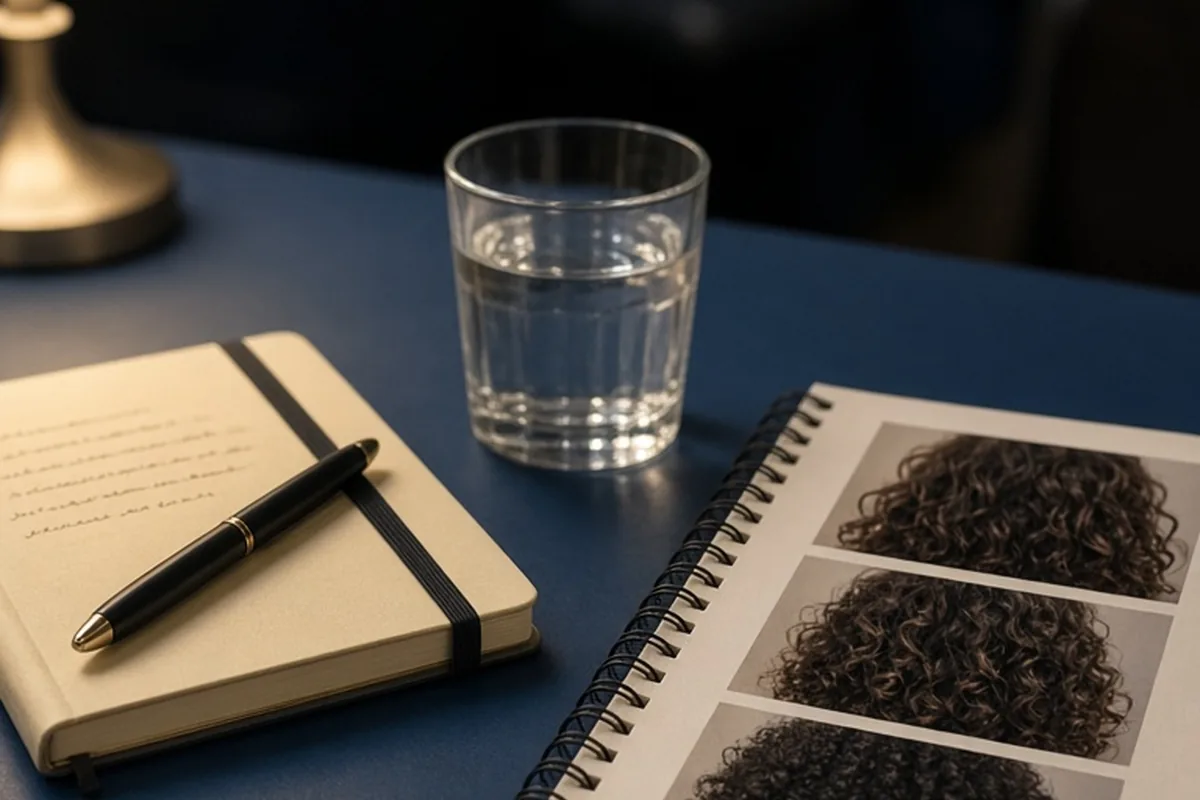
To explain textured hair needs to a hairstylist clearly, describe your natural curl pattern, density, porosity, and shrinkage percentage alongside your daily routine. Arrive with your hair in its natural, dry state rather than manipulated with tight elastics or heavy butters. Bring clear reference photos of realistic finished styles, explain your chemical and heat history from the past two years, and explicitly state your preferences regarding dry cutting, wet cutting, tension, and heat exposure before the service begins.
Navigating a salon appointment for wavy, curly, coily, or tight-textured hair can feel vulnerable when you are unsure whether a stylist fully understands how your pattern behaves. Clear communication before any shears touch your strands protects your curl integrity, prevents unwanted volume changes, and ensures both you and your stylist share identical expectations for length, shape, and moisture balance.
Describing Your Natural Curl Pattern, Density, and Shrinkage
Textured hair rarely exists as a single, uniform pattern across the entire scalp. When describing your hair to a stylist, break down the variations you notice between your crown, nape, and hairline. You might have tighter coils at the back and looser curls near the front, or varying levels of porosity that absorb conditioner differently. Instead of relying solely on alphanumeric typing charts, explain how your hair behaves when wet versus dry, how easily it loses hydration, and how long it typically takes to dry naturally without intervention.
Shrinkage is one of the most critical mechanical factors to articulate during a consultation. Explain the difference between your stretched length and your resting length so the stylist does not remove more hair than intended. If your curls shrink by forty to sixty percent when dry, tell the stylist plainly that cutting two inches while wet could result in four or more inches of perceived loss once the hair dries. Clarify whether your primary goal is to maximize visible length, build rounded vertical volume, or create a distinct perimeter shape that holds its form throughout the week.
Sharing Chemical, Color, and Heat History Accurately
A successful cut or chemical service depends heavily on what your hair has experienced over the preceding twelve to twenty-four months. Because textured strands grow on an elliptical axis with natural points of structural variation, past chemical treatments like relaxers, texturizers, keratin smoothing systems, and permanent dyes leave residual porosity shifts along the hair shaft. Walk your stylist through your complete timeline, including at-home box dyes, professional glosses, bleach applications, and even clarifying treatments that may have altered your moisture retention.
Heat usage is equally vital to disclose, even if you only use hot tools occasionally. Inform the professional about the tools you use at home, such as blow-dry brushes, flat irons, or diffuser attachments, along with the temperatures you typically apply and whether you consistently apply a thermal protectant. If you notice specific sections where your curl pattern has loosened or lost its spring due to past heat styling, point those areas out directly. This gives the stylist the necessary context to adjust their shear technique, moisture treatments, or blow-dry heat levels accordingly.
Clarifying Your Daily Maintenance Routine and Styling Bandwidth
A haircut or shaping service must align with the effort you are willing to invest between salon visits. Describe your standard morning routine, your wash day process, and how many days your wash-and-go or protective styles usually last. If you prefer low-maintenance routines requiring minimal daily manipulation, tell the stylist directly so they do not design an intricate cut that demands extensive sectioning, finger-coiling, or complex product layering to look cohesive.
Be specific about the categories of styling products you regularly apply, such as botanical gels, leave-in conditioners, raw oils, or heavy creams. Some styling techniques and product families interact poorly with specific cut shapes or drying methods. Explaining how your hair responds to humectants in high-humidity or dry climates helps the stylist recommend suitable finishing techniques that you can realistically replicate at home without purchasing an entirely new product collection.
Navigating Dry Cutting Versus Wet Cutting for Textured Hair
The decision between cutting hair dry in its natural state versus cutting it wet on stretched strands dramatically influences the final result. Dry cutting allows a stylist to observe your authentic curl formation, density distribution, and spring factor in real time, making it ideal for asymmetrical shaping, customized volume placement, and preserving perimeter length. If you wear your hair in its natural state the vast majority of the time, explain that you prefer a dry-cut approach where each curl grouping is evaluated organically.
Conversely, if you frequently switch between natural curl sets and blown-out or straightened styles, a wet cut or a precision cut on blown-out hair may offer more versatility and evenness across multiple styling modes. Explain your wear habits clearly: mention what percentage of the month you wear your hair curly versus straight. This information prevents a stylist from creating a specialized dry-cut shape that appears uneven or disjointed whenever you choose to flat-iron or blow out your hair for a sleek look.
Setting Boundaries Around Tension, Heat Styling, and Detangling
Physical comfort and mechanical care during the appointment are foundational to protecting delicate curl patterns from traction and breakage. Before the stylist begins shampooing or detangling, establish clear guidelines regarding your comfort level with mechanical tension. Mention whether your scalp is sensitive to pulling and request that detangling begin gently from the ends upward toward the roots using wide-tooth implements, flexible detangling brushes, and generous water and slip.
You also have the right to set precise boundaries around thermal styling tools and drying apparatuses. If you prefer to avoid direct-contact hot tools such as pressing combs, ceramic irons, or concentrated blow-dry nozzles, state this during the consultation. Clarify whether you want your hair dried under a hooded dryer, diffused on low or medium heat, or left to air dry partially before you leave the salon. Clear boundaries prevent misunderstandings and protect your curl pattern from unintended structural strain.
Preparing Visual References and Asking Diagnostic Questions
Visual references bridge the communication gap between salon terminology and your personal vision. Gather three to four photographs featuring models or clients whose curl pattern, density, and face shape closely resemble your own. When showing these images, point out the exact elements you admire, such as the perimeter weight line, face-framing layers, or crown height, as well as images representing outcomes you explicitly wish to avoid.
During the consultation, ask diagnostic questions that reveal the stylist's familiarity with textured strands. You might ask how they plan to accommodate your specific shrinkage level, what drying technique they recommend for your porosity, or how their proposed cut will maintain its shape as your hair grows over the next two to three months. A knowledgeable professional will gladly walk you through their thought process, explain the structural trade-offs of the shape, and adjust their strategy based on your feedback.
Frequently asked questions
How should I prepare my textured hair before arriving at the salon consultation?
Arrive with your hair clean, fully dry, and styled in your everyday natural pattern, such as a wash-and-go or simple twist-out. Avoid pulling it back into tight ponytails, buns, clips, or braids, as these manipulate your natural curl geometry and obscure your authentic spring factor from the stylist.
What should I say if a stylist starts aggressively brushing my dry curls?
Politely pause the service immediately and explain that dry mechanical brushing causes breakage and alters your pattern. Ask them to apply water, leave-in conditioner, or a dedicated detangling product with adequate slip before gently working through your strands from ends to roots.
Can I request a consultation before booking an actual cut or color service?
Yes, most salons and independent stylists offer standalone consultation appointments. Booking a fifteen-minute consultation allows you to discuss your hair goals, assess the stylist's familiarity with your texture, and inspect the salon environment before committing to a full service.
Your next step
Take photos of your hair fully air-dried from the front, side, and back today so you have an accurate, unaltered visual baseline ready for your next stylist consultation.