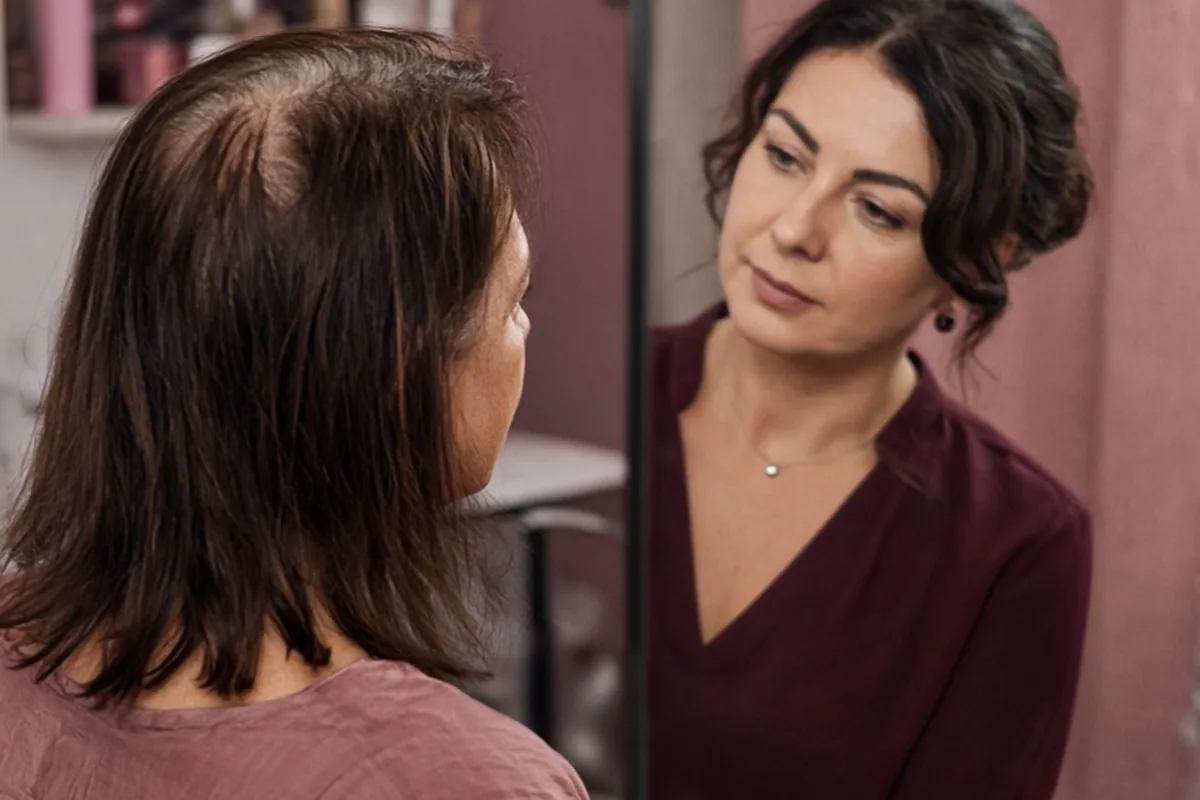
To find a stylist for hair loss during menopause, search for licensed cosmetologists who have verified training in thinning hair, trichology certification, or hair loss management. Look for professionals working in private suites or salons offering dedicated consultation spaces. Screen candidates by asking how they adjust cutting angles, chemical processing, and blowouts for fragile follicles. Choose a stylist who prioritizes scalp health, avoids aggressive retail pitching, respects medical boundaries, and performs a standalone consultation before any service.
Hormonal transitions during perimenopause and menopause frequently alter hair density, diameter, and growth cycles across the scalp. Navigating these visible shifts requires a salon professional who pairs technical skill with empathy and an understanding of hair fiber fragility.
Credentials and Specialized Salon Training to Look For
When searching for a stylist equipped to handle menopausal hair thinning, general salon experience is not always sufficient. Look for professionals who have invested in continuing education focused on hair restoration, fine hair architecture, or scalp wellness. Many stylists pursue specialized certifications through recognized trichology institutes, wig and topper fitting programs, or brand-neutral hair loss academies. These programs teach stylists how to identify different patterns of hair shedding, handle low-density styling without causing traction, and work safely around sensitive or exposed scalp areas.
Take time to review salon portfolios and biographies on professional websites and social media platforms. Rather than looking only for high-glamour transformations, search for clear examples of clients with diffuse crown thinning, widening parts, or receding temples. Stylists who regularly work with mature clients experiencing hormonal changes will often showcase soft perimeter shaping, strategic root-lifting cuts, and subtle dimensional color. If a stylist openly describes their work with clients managing androgenetic alopecia or telogen effluvium, they are far more likely to possess the patience and technical modifications you need.
Screening Potential Stylists for Menopausal Hair Loss During Consultations
A formal, standalone consultation is essential before committing to a haircut or chemical service. When booking, ask if the salon offers a fifteen to thirty minute exploratory appointment to review your hair history, scalp condition, and styling preferences. During this initial meeting, observe whether the stylist takes time to gently part your hair in multiple sections to evaluate follicle density, texture variations, and overall elasticity. A knowledgeable professional will ask what at-home products you use, whether you are under the care of a medical provider, and how your daily styling routine feels.
Pay close attention to how the stylist communicates about your hair. They should speak clearly and respectfully about your hair density without using alarming language or making unsolicited clinical diagnoses. Ask them directly how they approach clients experiencing hormone-related shedding and how they adjust their cutting shears, blow-drying tension, and heat settings. A stylist who welcomes these questions and offers clear, reasoned explanations demonstrates both professional confidence and respect for your concerns.
Haircut Techniques and Structural Styles That Maximize Visual Fullness
The right haircut can significantly improve the appearance of volume while reducing the physical weight that pulls thinning hair flat against the scalp. An experienced stylist will often recommend keeping lengths between the collarbone and chin, as longer lengths can accentuate sparse ends and draw attention to reduced density at the crown. Blunt perimeters, soft internal texturizing, and light surface layering create movement without removing necessary weight from the baseline.
Be cautious with aggressive thinning shears, razor cuts, or heavy texturizing shears, which can create wispy, frayed ends that make menopausal hair look sparser. A skilled stylist will utilize precision dry-cutting or blunt slide-cutting techniques to build density along the perimeter while creating the illusion of fullness. They can also demonstrate how shifting your part line slightly off-center or incorporating soft, sweeping fringe can conceal crown separation and frame your face naturally.
Evaluating Salon Environment, Privacy, and Scalp-Safe Equipment
Experiencing noticeable hair loss can feel emotionally vulnerable, making the physical salon environment an important factor in your comfort. Large, bustling salons with bright overhead lighting and closely spaced styling chairs can heighten self-consciousness during wash and styling steps. Many clients find that boutique salons, independent studio suites, or stylists who offer private appointment blocks provide a calmer, more supportive atmosphere where they can discuss their concerns openly.
Observe the salon tools and washing stations during your visit. Stylists who specialize in delicate hair typically use wide-tooth detangling combs, soft-bristle flexible styling brushes, and professional dryers equipped with precise heat controls and diffusers. Shampoo bowls should feature gentle water pressure options and comfortable neck rests that minimize friction and strain on the hairline. When a salon intentionally invests in ergonomic, low-friction equipment, it reflects an overarching commitment to gentle hair preservation.
Safely Navigating Color, Highlights, and Chemical Services
Hormonal thinning often coincides with changes in hair pigmentation, leading many women to seek gray coverage or blending. However, high-volume developers, harsh lighteners, and frequent full-head chemical processing can weaken fragile hair shafts and cause breakage. A stylist skilled in thinning hair will emphasize gentle coloring strategies, such as ammonia-free demi-permanent glosses, low-volume root retouches, or strategic micro-highlights placed around the face rather than across the entire scalp.
Dimensional placement is a powerful visual tool when executed correctly. By placing slightly darker base tones near the roots and softer, multidimensional tones through the mid-lengths, a stylist creates depth that mimics natural follicle density. Always ask the stylist to perform a strand test before trying a new chemical formula, especially if your hair feels brittle or porous. A conscientious colorist will prioritize the integrity of your hair fiber over dramatic single-session color changes.
Textured and Coily Hair Considerations During Menopause
Menopausal hair changes can present distinct challenges for naturally curly, coily, and tightly textured hair patterns. Reductions in natural sebum production on the scalp combined with hormonal shifts can leave textured strands particularly dry, brittle, and susceptible to breakage at points of curl inflection. When seeking a stylist for textured hair, verify that they have deep expertise in natural curl patterns, moisture retention strategies, and gentle detangling methods.
Stylists working with textured menopausal hair should avoid high-tension protective styles, tight braiding, heavy extensions, or aggressive thermal straightening, all of which place added stress on already weakened roots. Instead, look for stylists who practice low-manipulation shaping, steam hydration treatments, and tension-free styling methods. They should be able to tailor product weights carefully, ensuring moisture reaches the hair shaft without clogging scalp follicles or weighing down natural curl bounce.
Red Flags to Avoid When Choosing a Hair Stylist
Knowing what to avoid is just as critical as knowing what qualifications to seek. Be wary of any stylist who makes definitive medical diagnoses, promises that a specific salon service or botanical serum will cure hormonal hair loss, or dismisses your concerns as vanity. Hair loss during menopause is a complex physiological process that often requires medical oversight, and an ethical stylist will recognize the boundaries of their cosmetology license by collaborating with your healthcare team rather than replacing it.
Another significant warning sign is aggressive upselling of expensive in-salon multi-step scalp treatments or proprietary supplement packages without transparent ingredient information. If a stylist uses high heat without thermal protectants, roughly combs through wet hair from roots to ends, or insists on tight, pulling blowouts despite your discomfort, they are not practicing hair-preserving care. Trust your instincts; if a professional makes you feel rushed, embarrassed, or pressured, continue your search elsewhere.
Illustrative Scenarios
Finding Comfort in a Studio Suite Consultation
A 52-year-old client experiencing progressive widening at her central part felt uncomfortable in large, open-concept salons. She researched local stylists and booked a consultation with a cosmetologist operating out of a private studio suite who advertised fine-hair cutting certifications. During the consultation, the stylist examined her growth patterns, adjusted her part slightly off-center to reduce scalp contrast, executed a blunt collarbone-length bob with soft face framing, and switched her to a low-ammonia gloss to blend new gray growth gently.
Key point: Opting for a private consultation space and a certified stylist who understands density preservation can provide personalized styling solutions without added emotional stress.
Frequently asked questions
Can a hairstylist diagnose the exact medical cause of my menopausal hair loss?
No. While a trained stylist or certified trichologist can identify hair shaft conditions, density patterns, and scalp irritation, only a licensed medical doctor or dermatologist can diagnose the underlying hormonal, nutritional, or medical causes of hair loss.
What terminology should I search for when looking for an experienced stylist?
Search for terms such as fine hair specialist, trichology-certified stylist, hair loss salon consultant, thinning hair cutting specialist, or private suite hair restoration stylist. Check local directories, professional associations, and salon biographies for these specific designations.
Is it safe to get hair color if my hair is thinning from menopause?
Hair coloring is generally safe when performed by an experienced professional using gentle formulations. Ask your stylist about low-ammonia demi-permanent glosses, low-volume developers, and dimensional foil placement that minimizes scalp contact and chemical stress.
Should I wash my hair before attending an initial hair loss consultation?
It is usually best to arrive with your hair in its natural, everyday state, washed one to two days prior. This allows the stylist to accurately assess your natural scalp oil production, styling habits, shedding patterns, and true texture.
Your next step
Contact two local stylists who specialize in fine or thinning hair to schedule standalone consultation appointments before committing to any cut or color service.