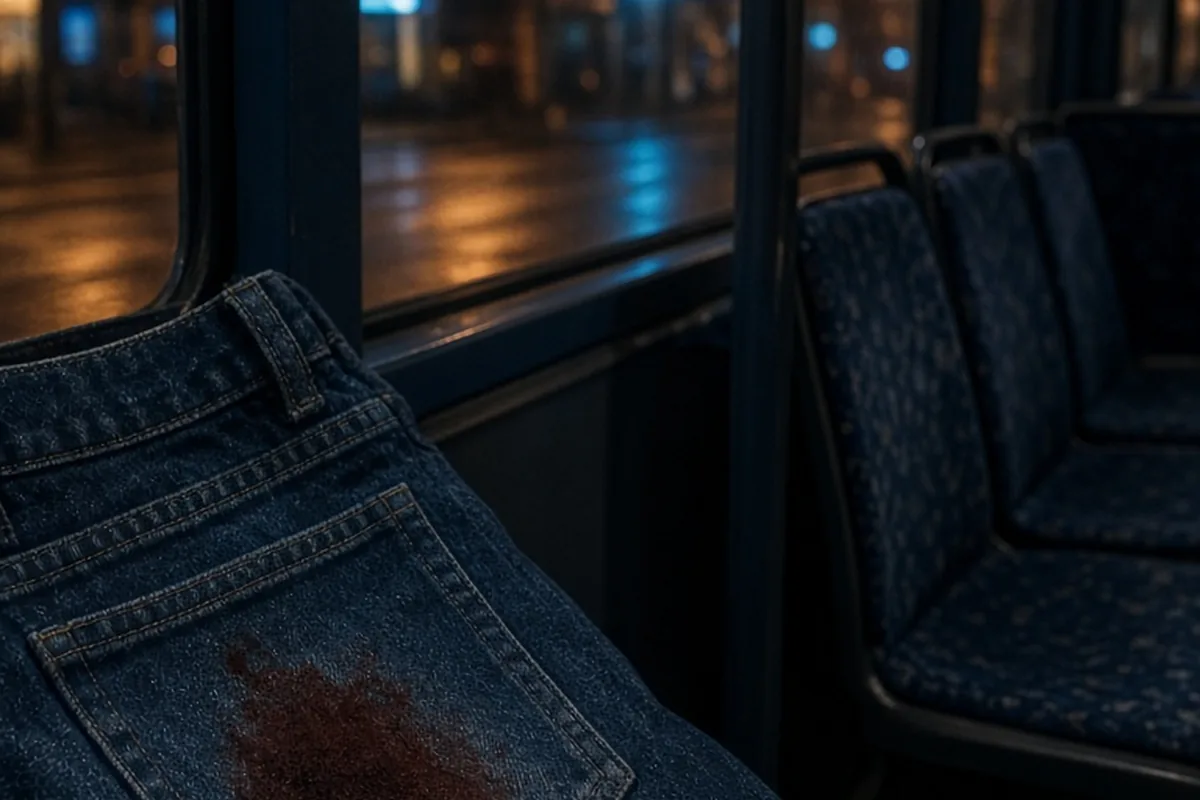
To get menstrual blood out of jeans, rinse the fabric immediately under cold running water from the backside of the stain to push the blood out. Apply a small amount of liquid enzyme laundry detergent, dish soap, or diluted hydrogen peroxide for light denim. Gently work the cleaner into the fibers, soak in cold water for twenty minutes, and wash on a cold cycle. Always air-dry jeans until you confirm the stain is completely gone.
Accidental leaks onto denim happen to almost everyone who menstruates, often at the least convenient moments. Because denim is a thick, tightly woven twill fabric, blood can cling deeply to the cotton yarns, but with the right temperature and household items, you can usually lift both fresh and set-in spots without stripping your jeans of their color or fit.
Why Cold Water and Immediate Flushing Matter for Cotton Denim
Blood is an organic, protein-based stain primarily composed of hemoglobin, albumin, and cellular matter. When biological proteins come into contact with heat, whether from warm tap water, hot wash cycles, or tumble dryers, they undergo denaturation and coagulation. This process chemically bonds the protein molecules to the natural cellulose fibers of cotton denim, effectively baking the stain into the fabric core. Understanding this reaction clarifies why temperature control is the single most important rule when treating denim: hot or even lukewarm water transforms a manageable, water-soluble spot into a permanent discoloration.
The physical construction of denim adds another challenge to the stain-removal process. Jeans are woven in a distinct diagonal twill pattern that creates microscopic ridges and valleys, providing ample space for blood to settle between twisted cotton yarns. When you discover a leak, always turn the garment inside out and flush cold water through the back of the stain toward the front. This backward flushing technique uses water pressure to push blood particles out through the entry point rather than forcing them deeper through the weave. For example, directing a concentrated stream of cold tap water against the interior seat of your jeans pushes the pigment directly outward onto an absorbent towel, reducing the stain density before you introduce any detergents.
Treating Fresh Spots with Everyday Pantry and Household Staples
If you catch a leak while the fabric is still damp, you rarely need specialized chemical treatments to restore your denim. Standard kitchen staples such as table salt and liquid dish detergent are surprisingly effective against fresh menstrual blood. Table salt acts as an osmotic agent and mild mechanical abrasive, helping draw moisture and organic solids out of the cotton fibers without stripping the denim dye. Concentrated liquid dish soap contains powerful surfactants specifically engineered to dissolve biological fluids and break surface tension, allowing plain cold water to flush away the loosened particles.
To apply this method, mix one tablespoon of fine table salt with just enough cold water to form a thick, gritty paste. Pat this paste directly over the damp stain using your fingertips or the back of a spoon, pressing it gently into the denim without scrubbing aggressively. Let the salt mixture rest for ten to fifteen minutes so it can absorb the excess fluid, then rinse it thoroughly under a stream of cold tap water. If a faint reddish ring remains, apply a single drop of liquid dish soap to the area and massage it in circular motions from the outer edges toward the center to avoid enlarging the spot. A critical trade-off to remember is friction: vigorously rubbing denim with stiff brushes or coarse towels abrades the cotton twill, which can leave a permanent fuzzy, lightened patch on the jeans even if the blood itself is completely gone.
Lifting Stubborn, Dried Blood from Heavy Denim Weaves
Dried menstrual blood presents a different obstacle because the proteins have already dehydrated and adhered firmly to the cotton cellulose. Simply throwing dried jeans into a routine wash cycle will rarely eliminate the mark and can set it permanently if the water temperature rises. Successful removal of dried blood requires rehydrating the stain while introducing an active agent to break apart the bonded protein matrix. While unseasoned meat tenderizer containing papain or bromelain can work in an emergency, liquid laundry pre-treatments formulated with protease enzymes or sodium percarbonate pastes provide the most consistent results on heavy denim.
To lift a dried mark, fill a sink or bucket with cold water and add two tablespoons of liquid enzyme detergent or an oxygen-based powdered soak. Fully submerge the stained portion of the jeans and allow them to soak for at least forty-five minutes to two hours; for heavy denim or set-in spots, soaking overnight in cold water provides the enzymes enough time to dismantle the hardened proteins without compromising the structural integrity of the fabric. After soaking, inspect the spot under good lighting. If a brown or yellowish trace lingers, make a paste of oxygen bleach and cold water, apply it directly to the mark, and let it sit for twenty minutes before washing. Avoid chlorine bleach under all circumstances, as it chemically burns protein stains into an indelible yellow mark and instantly bleaches indigo dye.
Navigating Denim Shades: Dark Indigo, Raw Denim, and Light Washes
Not all denim behaves the same way when exposed to stain-removal agents, and using the wrong cleaner on a specific wash can ruin the look of your jeans. Hydrogen peroxide at a three-percent concentration is celebrated for its ability to eradicate blood because its oxidizing action rapidly breaks down hemoglobin molecules into colorless compounds. On white jeans, ecru canvas, or very pale stone-washed denim, hydrogen peroxide works wonders with minimal risk. However, applying hydrogen peroxide to dark indigo, black, or raw denim often causes localized bleaching, replacing the blood spot with an irreversible orange or pale ring that stands out far more than the original stain.
When handling dark or raw denim, dye preservation must guide every cleaning choice. Before applying any commercial cleaner or mild bleaching agent, always conduct a discreet spot test on an unexposed area, such as the inside seam, hem, or inner pocket lining. Apply a drop of the cleaning solution, wait five minutes, and blot with a clean white paper towel to verify that no color transfers. For raw or unwashed denim, where full immersion in water can cause unwanted shrinkage or strip the garment of its characteristic crispness, localized spot cleaning with a damp microfiber cloth, cold water, and a drop of neutral liquid soap is the safest route. You may need to perform multiple gentle spot cleans over several days, but this patient approach prevents the devastating color loss that aggressive chemical treatments cause.
Machine Laundering Practices and Detergent Chemistry
After treating the visible blood spot, machine washing provides the thorough, agitated rinsing needed to eliminate microscopic protein remnants embedded deep within the twill. The choice of detergent plays a decisive role during this step. Everyday budget detergents often rely purely on basic surfactants, which wash away surface dirt but struggle to dissolve organic bodily fluids. In contrast, enzymatic detergents contain specialized biological catalysts—primarily proteases—that target and break down protein molecules into soluble amino acid chains that rinse cleanly away during the spin cycle.
Configure your washing machine to a gentle or standard cycle using cold water for both the wash and rinse phases. Never adjust the dial to warm or hot water, even if the stain looks completely gone to the naked eye, because lingering microscopic hemoglobin traces will instantly set when heated. In addition, skip liquid fabric softeners, scent beads, and dryer sheets entirely during this wash. Fabric softeners work by coating cotton twill yarns in a water-repellent chemical film, which can trap lingering biological residues inside the fiber core and prevent water from flushing them away. If you want to naturally soften stiff denim, pour half a cup of distilled white vinegar into the fabric softener compartment instead; vinegar helps dissolve detergent buildup without leaving behind a residue.
The Air-Drying Rule and Remedying Faint Residual Shadows
The single most critical mistake people make when cleaning menstrual blood from jeans happens at the drying stage. Even if the wet denim appears spotless as you transfer it out of the washing machine, you must never place the jeans into a heated clothes dryer until the garment has air-dried and been inspected under natural daylight. Wet fabric naturally looks darker than dry fabric, which easily conceals faint, lingering blood shadows. The intense, dry heat of an electric dryer will permanently cook those residual proteins into the cotton yarns, converting an otherwise fixable faint shadow into an irreversible mark.
Hang your jeans by the waistband or lay them flat on a drying rack in a well-ventilated area away from direct heat sources. If you are cleaning light-wash or white jeans, drying them in direct sunlight can work to your advantage, as natural ultraviolet rays possess mild bleaching properties that help fade lingering organic shadows. For dark, indigo, or black jeans, air-dry them strictly in the shade to prevent the sun from fading the surrounding dye. Once the jeans are completely dry, inspect the affected area under a strong lamp or bright daylight. If a faint yellowish or gray shadow persists, simply repeat the cold-water soak with an enzyme detergent or an oxygen bleach paste; denim is a resilient textile that can endure several gentle wash cycles without losing its integrity, provided heat has not locked the stain in place.
Discreet Emergency Strategies When Away from Home
Leaking through your jeans while at school, in the office, or during travel requires immediate, low-profile damage control to keep the spot from setting until you can get home. The main goal in any public setting is to prevent the blood from drying deeply into the cotton core while avoiding a large, noticeable water ring on the exterior of your pants. If you have access to a private restroom, head to a stall equipped with a few dry paper towels and one paper towel lightly moistened with cold sink water.
Place the dry paper towel against the outside of your jeans and press the damp paper towel firmly against the inside surface, wicking the fluid outward onto the dry paper without rubbing back and forth. Rubbing creates friction that frays the cotton fibers, forces the blood outward into clean denim, and leaves messy paper towel shreds stuck to the fabric. If you have access to an ice cube from a beverage, you can gently glide it across the spot from the inside of the pant leg; the melting ice provides continuous cold moisture that dilutes the blood without creating a wide flood of water. Once you have blotted away as much pigment as possible, position a panty liner or folded paper towel inside your underwear against the denim to absorb any secondary moisture, and tie a jacket, cardigan, or flannel shirt around your waist until you can properly wash the jeans.
Frequently asked questions
Does hydrogen peroxide ruin dark blue jeans?
Hydrogen peroxide can lighten or strip the dye from medium, dark, and black denim, often leaving behind a noticeable bleached or orange-tinted ring. While it is safe for white or very pale acid-wash jeans, darker denim should be treated with cold water, liquid dish soap, or enzyme-based detergents instead. If you must use it on colored denim, always test a tiny drop on an interior seam first.
Can baking soda lift old menstrual stains from denim?
Baking soda can help lift older blood stains when combined with cold water or liquid laundry detergent to create a spreadable paste. Its mild alkalinity loosens dried biological proteins, while its gentle grit provides mechanical lifting without damaging the cotton twill fibers. Apply the paste to the dried spot, let it rest for thirty minutes, and rinse thoroughly with cold water before machine washing.
What should I do if my jeans already went through the dryer?
While dryer heat sets protein stains and makes them considerably harder to remove, you can often fade the mark with an extended cold-water soak using an oxygen bleach or enzyme cleaner. Soak the garment overnight in cold water, gently massage concentrated liquid enzyme detergent into the remaining mark, and run the jeans through another cold wash cycle. Always let the jeans air-dry afterward to see if the shadow lightened before deciding whether to repeat the process.
Will white vinegar get blood out of jeans?
Distilled white vinegar is mildly acidic and can assist in loosening organic matter, but it is generally less effective against fresh blood than enzymatic cleaners or liquid dish soap. However, adding white vinegar to the rinse cycle of your washing machine helps strip away residual detergent and softens denim without leaving a waxy coating. For the initial stain removal, stick to cold water, salt, dish soap, or enzyme detergents for better results.
Your next step
Take off your jeans, flush the stain immediately with cold water from the inside out, and soak the fabric in cold water with an enzyme detergent before air-drying completely.