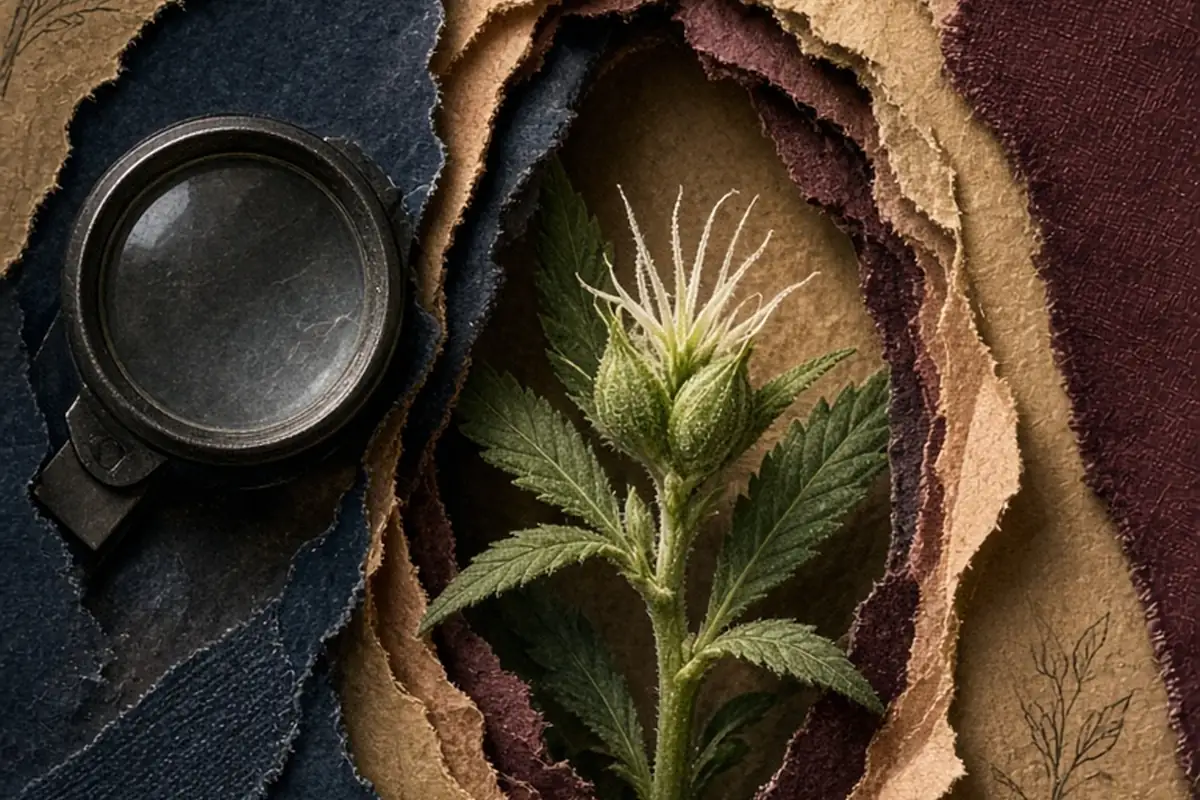
To identify a female pot plant, inspect the nodes where branches meet the main stem during pre-flowering. Female plants produce small, teardrop-shaped green structures called bracts from which two delicate, white hair-like strands called stigmas emerge. In contrast, male plants produce smooth, rounded pollen sacs resembling tiny balls on small stems without hairs. Use a jeweler loupe under clear light around four to six weeks from germination.
Determining the sex of a cannabis plant is one of the most critical milestones in cultivation because female plants generate the dense, resin-rich flowers growers seek, whereas male plants release pollen that can seed an entire garden.
Understanding the Pre-Flowering Stage and Inspection Timing
Cannabis plants remain in a vegetative phase during their early life, focusing energy entirely on foliage, roots, and structural growth. During this period, identifying sex purely by leaf shape, height, or stem thickness is unreliable. Sex expression begins naturally when the plant enters the pre-flowering stage, which typically occurs between four and six weeks from seed germination, or shortly after shifting an indoor lighting schedule from eighteen hours to twelve hours of daily darkness. Recognizing this biological window ensures you check for sexual traits at the exact time they first appear without causing unnecessary stress to young seedlings.
Pre-flowers develop at the plant nodes, which are the junctions where side branches emerge from the central stalk. In a home grow room, checking these specific growth points daily during the fourth to sixth week allows you to catch the earliest signs of development before male pollen sacs can mature and open. Cultivators who wait until full flowering often risk accidental pollination, which diverts female plant energy away from resin production and into seed development. Early observation provides the necessary lead time to make informed culling or isolation decisions.
Key Anatomical Features of Female Cannabis Pre-Flowers
The primary marker of a female plant is the calyx or bract structure that forms directly in the node crevices. A female pre-flower resembles a tiny, pear-shaped or teardrop-shaped green pouch that sits tightly against the stem junction. What distinctly separates a female bract from other plant tissue is the emergence of two hair-like filaments known botanically as stigmas, often referred to informally as pistils. These stigmas are typically bright white or pale translucent cream when young, designed naturally to capture airborne pollen.
As the female plant develops, these bracts multiply at the upper nodes and branch tips, creating clustered formations that will eventually develop into full floral colas. In healthy vegetative transitions, stigmas stand erect or gently curve upward toward the light. A common point of confusion for beginners is mistaking stipules—the small, slender, green leafy growths that emerge at every node on both male and female plants—for stigmas. While stipules are solid green, flat, and cross over each other against the stem, female stigmas are distinctly fuzzy, rounder, and emerge directly from inside a swollen bract.
Recognizing Male Characteristics to Prevent Accidental Pollination
Spotting male plants quickly is just as important as identifying females because a single mature male can release millions of microscopic pollen grains capable of traveling across a room or garden. Male pre-flowers look fundamentally different from female structures. Instead of teardrop bracts with fuzzy white hairs, male plants develop small, smooth, oval-shaped green balls commonly referred to as pollen sacs or staminate primordia. These sacs lack any hair-like protrusions and often hang downward on a tiny individual stem called a pedicel.
In the earliest stages, a single male sac might sit nestled in a node, but within days it typically groups with several others to form small clusters resembling miniature bunches of grapes or crab claws. When inspecting plants side by side, notice that male pre-flowers tend to emerge slightly earlier in the season or light cycle than female pre-flowers. If you observe a smooth sphere on a tiny stalk that opens downward without projecting white hairs, you are observing a male plant that must be isolated or removed immediately if your goal is unseeded flower production.
Identifying Hermaphroditic Traits and Stress Responses
Cannabis is a versatile plant that can occasionally express both male and female reproductive organs on the same specimen, a condition known as hermaphroditism. True hermaphrodites produce distinct female flowers with white stigmas alongside separate male pollen sacs at the nodes. Another common variation is the appearance of mixed floral organs, commonly called anthers or nanners, which are bright yellow, banana-shaped pollen structures that push directly out from the center of an otherwise female bud cluster without a protective sac.
Hermaphroditic expression can stem from genetics, but it is frequently triggered by environmental stressors such as light leaks during the dark period, extreme temperature swings, erratic watering schedules, or physical plant damage. When monitoring your garden, inspect not just the lower nodes but also the interior of dense budding sites throughout the entire flowering cycle. Catching and carefully plucking an isolated anther with sterile tweezers can sometimes salvage an otherwise healthy female plant, but widespread dual-sex development generally warrants removing the plant entirely to protect the surrounding crop.
Tools and Inspection Techniques for Accurate Sexing
Because early pre-flowers measure only one to two millimeters across, relying solely on unaided vision often leads to guesswork and delayed identification. Equipping yourself with a hand lens, a thirty-times to sixty-times jeweler loupe, or a portable digital microscope lets you inspect the microscopic anatomy of nodes with certainty. Clear magnification allows you to view the delicate surface texture of emerging structures, instantly verifying whether a node contains a hair-bearing bract or a smooth-shelled pollen sac.
Proper lighting during inspection is equally crucial. Strong, directional white light from a compact flashlight or headlamp cuts through shadows cast by dense foliage, illuminating the exact attachment points between branch and stem. When examining plants, gently pull fan leaves downward rather than pinching or bending delicate nodal tissue, which can damage future bud sites. Work methodically from the upper third of the plant downward, as pre-flowers almost always reveal themselves first on the newer growth near the top canopy.
Practical Differences Between Regular and Feminized Seeds
The likelihood of encountering male plants depends largely on the origin of your starting genetics. Regular cannabis seeds naturally produce an approximately fifty-fifty split between male and female plants, making thorough sex identification mandatory for every individual container. Growers who work with regular seeds often start twice as many seedlings as their target garden size, anticipating that half the crop will eventually be culled once sex is confirmed during pre-flowering.
Feminized seeds, by contrast, are produced by pollinating a female plant with pollen induced from another female, resulting in seeds with virtually no male chromosome contribution. While feminized seeds yield female plants over ninety-nine percent of the time, they are not entirely immune to stress-induced hermaphroditism or rare genetic anomalies. Even when starting exclusively with feminized genetics, conducting regular node inspections throughout weeks four to seven remains a best practice to catch any unexpected stress reactions early.
Managing Your Garden After Confirming Plant Sex
Once you have conclusively identified the sex of each plant in your space, you can tailor your management strategy to match your cultivation goals. For growers focused strictly on seedless flower production, male plants should be carefully covered with a large plastic bag before cutting them at the base to prevent any loose pollen from circulating into the air system. The remaining female plants can then be spaced out evenly to maximize canopy light penetration and airflow.
After removing any unwanted plants, wipe down nearby surfaces and grow tent walls with clean water or a mild solution, as moisture quickly deactivates stray pollen grains. For the confirmed females, you can comfortably transition your feeding regimen to support flowering, increasing phosphorus and potassium levels while maintaining steady environmental parameters. Continuing weekly node checks through mid-flowering ensures no late-developing male anthers slip past unnoticed.
Frequently asked questions
How early can you tell if a pot plant is female?
You can generally identify female plants around week four to six of the vegetative cycle, or within seven to ten days after changing indoor light schedules to a twelve-hour dark cycle. At this stage, microscopic pre-flowers appear at the upper stem nodes.
What is the difference between a stipule and a female stigma?
A stipule is a solid green, narrow leaf-like structure that grows on both male and female plants right at the node joint. A female stigma is a fuzzy, white or cream-colored hair that emerges specifically from inside a teardrop-shaped calyx or bract.
Can a female plant turn male later in growth?
A genetically female plant cannot become a true male, but it can develop male reproductive parts—such as pollen sacs or yellow anthers—if exposed to severe environmental stress or genetic instability. This condition is known as hermaphroditism and requires prompt removal or isolation.
Do autoflowering plants show sex at the same time as photoperiod plants?
Autoflowering plants reveal their sex automatically based on biological age rather than light cycle changes, usually showing pre-flowers around three to four weeks from germination. The anatomical signs of female bracts and stigmas remain identical to those on photoperiod plants.
Your next step
Inspect the upper nodes of your plants under magnification starting in the fourth week of growth, looking specifically for teardrop bracts with white hairs to confirm female status before flowering advances.