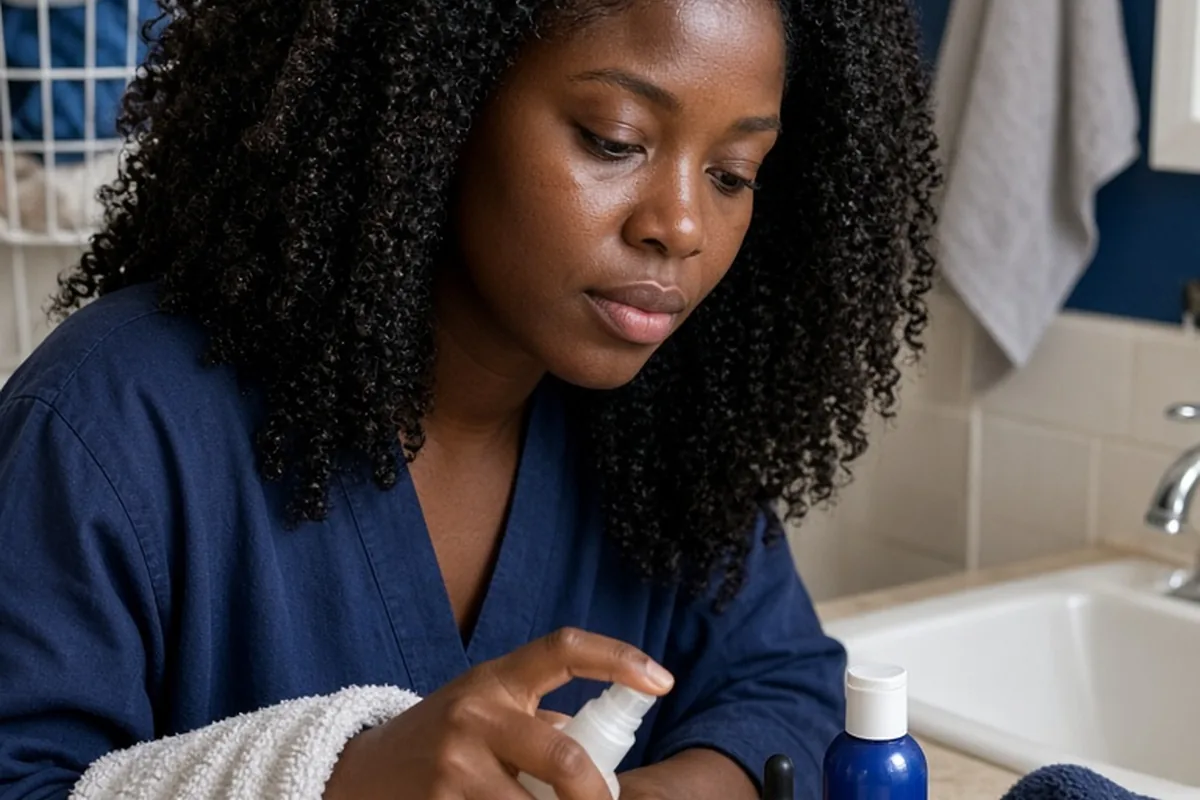
Moisturizing 4C hair at home relies on consistent water-based hydration, rich leave-in conditioners, and sealing butters using the LOC or LCO method. Salon hydration uses commercial hooded steamers, high-grade penetrating masks, and customized protein-moisture balancing to infuse deeper moisture. While at-home care is essential for weekly maintenance, periodic salon visits address stubborn buildup, severe dryness, and uneven porosity that home tools cannot easily resolve.
Tight, coily 4C patterns require deliberate moisture strategies because the natural bends in the hair strand make it difficult for scalp oils to travel down the shaft.
Understanding How 4C Hair Absorbs and Retains Moisture
The unique architecture of 4C hair features tight zig-zag coils with sharp bends along the hair cuticle. Because the natural sebum produced by your scalp encounters resistance navigating these tight turns, the mid-lengths and ends of the hair strand dry out much faster than straighter textures. True moisture for 4C hair comes exclusively from water and water-based humectants, not from raw oils or grease. When water enters the hair cortex, it increases elasticity and softness, which prevents the hair from snapping under mechanical tension.
Retention depends on the condition of the cuticle layer and your specific hair porosity. Low-porosity 4C hair has tightly packed, overlapping cuticle scales that resist moisture entry, often requiring gentle heat to lift the cuticles during washing. High-porosity hair absorbs water instantly but loses it just as quickly through gaps and tears in the cuticle layer. Regardless of whether you manage your routine in your bathroom or visit a professional stylist, your routine must balance hydration, which is putting water inside the strand, with sealing, which is locking that water inside with emollients.
Step-by-Step Techniques for Moisturizing 4C Hair at Home
A successful home moisturizing routine starts on wash day with a clean foundation. Applying rich products over old styling residues prevents water from penetrating the hair shaft, so using a clarifying shampoo once a month followed by a sulfate-free moisturizing shampoo prepares the cuticles. After washing, apply a deep conditioner formulated with slippery elm, marshmallow root, or fatty alcohols. To maximize absorption at home, cover your hair with a plastic cap and apply gentle warmth using a microwaveable thermal cap or warm towel for twenty to thirty minutes before rinsing thoroughly with lukewarm water.
Daily and mid-week moisture maintenance relies on effective product layering, commonly known as the LOC (Liquid, Oil, Cream) or LCO (Liquid, Cream, Oil) method. Start with a water-based liquid leave-in conditioner where purified water or aloe vera juice is the first ingredient. Follow with a nutrient-dense moisturizing cream containing emollients like mango butter, cupuacu butter, or shea butter. Finish by pressing a lightweight or medium-weight sealing oil, such as jojoba oil, argan oil, or sweet almond oil, onto your ends. The LCO sequence is frequently favored by low-porosity coils because it prevents heavy oils from blocking the water-based cream from absorbing.
What Professional Salon Hydration Treatments Offer for 4C Hair
Professional salon moisture treatments go beyond standard wash-and-condition services by utilizing specialized equipment and salon-exclusive formulations. The cornerstone of salon moisture care is the professional standing micro-mist or hooded steamer. Unlike home caps, these commercial steamers generate fine, continuous vapor at calibrated temperatures that gently lift the cuticle layer without thermal damage, allowing hydrating compounds and amino acids to penetrate deep into the cortex while replenishing the hair's moisture reservoir.
Stylists also assess the balance between elasticity and structural strength, often administering bespoke backbar treatments that alternate between hydrolyzed proteins, humectants, and pH-balancing rinses. If your 4C hair is breaking from moisture overload, known as hygral fatigue, or snapping from brittle protein buildup, a licensed cosmetologist can diagnose the exact structural deficiency and apply targeted bond builders, scalp detox treatments, or clarifying chelating agents that strip mineral deposits from hard water before delivering intense moisture.
Comparing Costs, Time Commitments, and Convenience
Choosing between purely DIY care and professional salon appointments involves weighing long-term financial commitments against personal labor. At home, initial investments include basic tools like wide-tooth detangling combs, satin bonnets, thermal heat caps, and high-quality leave-ins, creams, and cleansers. While product costs accumulate over time, DIY maintenance offers full control over your schedule and product selection, though a thorough 4C wash day with sectioning, detangling, deep conditioning, and styling can take anywhere from two to four hours of active effort.
Salon hydration services require recurring appointments that reflect professional labor, salon overhead, and geographic pricing variations. While visiting a stylist saves you the physical fatigue of detangling and washing dense coils, it requires dedicated travel time and advance booking. For many individuals, salon visits provide a periodic reset that reduces the time spent troubleshooting failed wash days at home, serving as a restorative treatment rather than a weekly necessity.
When Home Moisturizing Is Enough vs. When to See a Professional
At-home moisturizing is entirely sufficient if your 4C hair responds well to standard water-based leave-in conditioners, retains softness for multiple days after washing, and sheds normal amounts without excessive snapping. If your ends remain pliable, your protective styles hold up without flaking or dullness, and you do not suffer from persistent scalp irritation, maintaining your hair at home with clean formulas and careful nighttime satin protection will keep your coils healthy and thriving.
Conversely, professional salon intervention is warranted when your hair feels chronically dry, rough, or straw-like despite frequent conditioning, or when you experience severe single-strand knots and mid-shaft breakage. Licensed stylists are particularly valuable after removing long-term protective styles like knotless braids or weaves, when shed hair, dead skin cells, and product residue need professional detangling and deep restoration. Stylists are also essential if you have color-treated or bleached 4C coils, as chemical processing permanently alters porosity and demands specialized moisture-bonding care.
Building a Hybrid Moisture Schedule for 4C Coils
The most effective and sustainable hair care strategy for many 4C individuals is a hybrid model that blends regular DIY maintenance with quarterly professional services. In this routine, you handle weekly cleansing, deep conditioning, and daily hydration layering at home. Every eight to twelve weeks, you visit a salon for an intensive steam treatment, scalp detox, and a professional perimeter and split-end trim to remove weathered ends that snag and cause friction tangles.
Adjust your hybrid schedule according to environmental conditions and lifestyle changes. During dry winter months when indoor heating pulls moisture from natural hair, an extra professional steam infusion can fortify strands against brittle breakage. In humid summer months, your home routine may shift toward lighter leave-in sprays and anti-humectant sealants to prevent swelling and frizz, while salon visits can focus on cleansing scalp buildup from sweat and outdoor activities.
Moisture Mistakes That Lead to Dryness in 4C Hair
A frequent mistake in home 4C care is applying heavy butters, pomades, or mineral oils directly onto completely dry hair. Because oils are occlusive sealants rather than humectants, applying them without an underlying water source merely seals existing dryness out while blocking future atmospheric moisture from entering the strand. Always mist sections with water or apply a water-based liquid before smoothing on any oil or butter.
Another common pitfall is skipping regular clarifying washes out of fear that shampoo will dry out your coils. Over time, layering heavy conditioners, leave-ins, and butters creates a thick barrier on the hair shaft that water cannot penetrate. If your hair feels coated yet brittle and stiff, product buildup is the likely cause. Incorporating a gentle clarifying shampoo once a month strips this hydrophobic film, resetting the hair so that subsequent conditioners can deliver true hydration directly to the cortex.
Frequently asked questions
How often should you moisturize 4C hair at home?
Most 4C hair needs a thorough wash and deep conditioning treatment once every seven to ten days. In between wash days, lightly mist hair with a water-based leave-in spray every two to three days, sealing the ends with a light oil or butter to maintain flexibility.
Does steaming 4C hair at a salon really make a difference?
Yes, professional steaming uses continuous, controlled micro-mist vapor to lift tight cuticles and encourage deep product penetration without direct friction. This process hydrates stubborn low-porosity coils more thoroughly than standard home conditioning caps can manage.
Can you over-moisturize 4C hair?
Yes, over-moisturizing causes hygral fatigue, which happens when the hair cortex swells and contracts constantly from excessive water retention without adequate structural protein. When this occurs, strands lose their spring, feel mushy when wet, and stretch excessively before breaking.
What is the best way to keep 4C hair moisturized under protective styles?
Use a lightweight, water-based braid spray or diluted leave-in conditioner misted directly onto your scalp and along the length of your natural hair two to three times a week. Avoid heavy butters that leave buildup inside the weave or braid extensions.
Your next step
Evaluate your hair's current elasticity and porosity this week by testing whether strands snap easily when dry, then schedule either a clarifying home wash with a thermal heat cap or an appointment for a salon steam treatment.