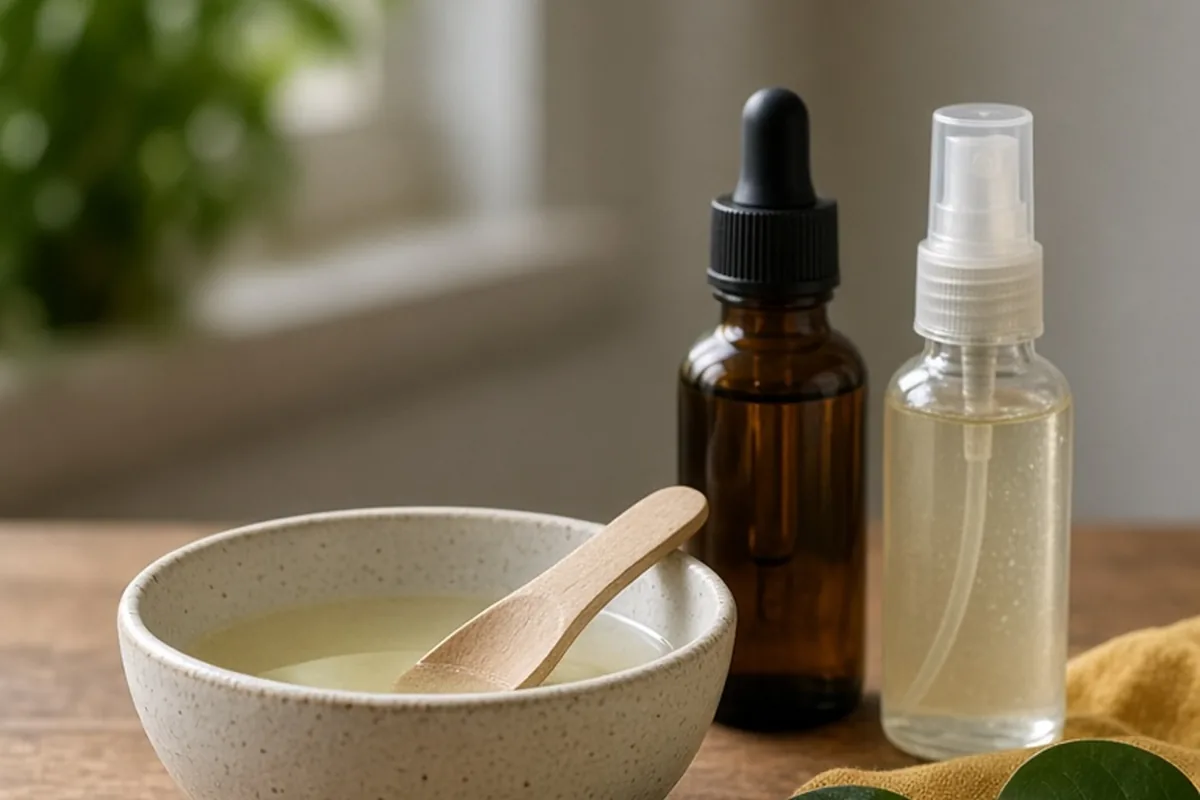
To moisturize fine 4C hair effectively, apply water or a water-based leave-in mist as your foundation, follow with a lightweight moisturizing milk, and seal with a featherlight plant oil like jojoba, argan, or grapeseed. Avoid heavy raw butters and pure petrolatum, which collapse fine strands, trap dirt, and block hydration. Apply products in small, smoothed sections on damp hair to ensure moisture absorbs fully without causing mechanical breakage or greasy product buildup.
Caring for tight 4C coils with fine individual strand diameters requires balancing deep hydration with weightless product application. While coarse 4C strands often tolerate dense pomades and thick butters, fine strands share the same fragile cuticle structure but possess a narrower inner cortex that flattens and suffocates easily under heavy formulations.
Understanding the Structural Needs of Fine 4C Hair
Fine 4C hair combines two distinct physical characteristics: an intricate, tightly coiled curl pattern and a delicate, narrow strand diameter. Strand diameter refers to the thickness of each individual hair fiber rather than overall density, which is the total number of hairs on your scalp. Because 4C coils create natural sharp bends and turns along the hair shaft, the cuticle scales lift slightly at every twist, creating points where moisture escapes rapidly and mechanical friction causes breakage.
When strands are fine, they have fewer protective cuticle layers and a smaller protein cortex compared to medium or coarse strands. Applying the heavy, dense butter-based regimens commonly recommended for 4C textures often coats fine strands in an impermeable shell. This coating creates the illusion of moisture while actually repelling water during subsequent washes. The hair becomes limp, sticky, and prone to snap under minimal tension. Achieving lasting hydration requires choosing formulas that penetrate the inner fiber instead of simply resting on the surface.
Choosing Lightweight Hydrators and Water-Based Leave-In Formulas
True moisture comes exclusively from water. Every effective moisturizing regimen for fine 4C hair must begin with water or an aqueous formulation where purified water, aloe vera juice, or a hydrosol serves as the primary ingredient. When shopping for daily leave-in sprays and conditioning bases, look for fluid, milky consistencies rather than stiff, waxy pastes. Ingredients like vegetable glycerin, panthenol, and sodium PCA act as humectants, drawing atmospheric moisture toward the strand to keep coils pliable.
For fine coils, protein-moisture balance is equally crucial. Hydrolyzed silk, hydrolyzed wheat protein, or amino acids in small concentrations help reinforce the delicate structure of fine strands without making them brittle. A watery leave-in conditioner enriched with mild humectants softens the tight z-pattern coils, allowing you to gently work through tangles with your fingers before applying any sealing agent. If a product requires vigorous rubbing to blend into your hands, it is likely too dense for fine strands.
Adapting the LOC and LCO Methods for Delicate Coils
The traditional Liquid-Oil-Cream (LOC) and Liquid-Cream-Oil (LCO) layering techniques are staple methods for textured hair, but fine 4C coils require strategic modification. In standard routines, thick creams and viscous castor oils form substantial barriers that overwhelm narrow hair shafts. For fine hair, the modified LCO method usually yields the most balanced results because it places the creamy emulsion directly over the water base before locking it in with a minimal quantity of oil.
Begin by misting clean, damp hair with warm water or a liquid leave-in spray. Next, distribute a nickel-sized amount of a lightweight hair lotion, curl milk, or leave-in emulsion across sectioned hair, smoothing downward from just below the roots to the ends. Finish with two to three drops of a lightweight sealing oil pressed gently across the section. If your hair feels weighed down or coated by midday, switch to a simplified Liquid-Oil routine, eliminating the secondary cream entirely.
Selecting Non-Greasy Sealing Oils Instead of Heavy Butters
Sealing is the process of trapping water inside the hair cortex with a hydrophobic barrier. Fine 4C hair needs breathable lipid barriers that seal cuticle gaps without creating a greasy film. High-viscosity sealants like unrefined shea butter, cocoa butter, and thick black castor oil should be set aside in favor of high-spreadability botanical oils. Jojoba oil is structurally similar to human sebum, making it an exceptional option for lubricating fine cuticles without greasy residue.
Argan oil, sweet almond oil, and grapeseed oil offer lightweight alternatives that absorb readily while imparting shine and flexibility to tight coils. Squalane oil, derived from plants, is another ultra-lightweight lipid that spreads evenly across fine strands without clumping coils together. When applying your chosen oil, dispense a few drops between your palms, rub them together to warm the oil, and use the praying-hands method to smooth it over each section rather than raking through fragile ends.
Using Gentle Heat and Steaming to Open Resistant Cuticles
Fine 4C hair often presents low porosity characteristics, where the tight outer cuticles lie flat and resist water absorption. If water beads up on your strands or leave-in products sit on top of your hair without absorbing, ambient application alone will not suffice. Incorporating indirect, mild heat allows the cuticles to swell slightly and open, granting water molecules direct entry into the cortex.
A handheld facial steamer, a hooded salon steamer, or a warm microwavable conditioning cap can transform deep conditioning sessions for fine coils. Apply your water-based deep conditioner, cover your hair with a plastic cap, and apply low indirect heat for fifteen to twenty minutes. The warmth liquifies conditioning agents and relaxes the tight coil structure, delivering deep nourishment without mechanical friction. Always conclude with a cool-to-lukewarm water rinse to encourage the cuticles to settle back down smoothly.
Protective Styling and Nighttime Habits to Retain Moisture
Moisturizing fine 4C hair is only effective if you preserve that hydration throughout the week. Because fine strands have lower tensile strength, tight protective styles with heavy synthetic extensions can cause traction alopecia and localized breakage. Opt for low-manipulation styles that protect the ends without adding weight, such as loose two-strand twists, flat twists, mini-braids using your natural hair, or loose pinned updos.
At night, cotton pillowcases absorb moisture directly out of your strands while creating abrasive friction that causes tangling. Secure your hair inside a high-grade satin or silk bonnet, or sleep directly on a silk pillowcase. If your ends feel dry between wash cycles, avoid rewashing your entire head. Instead, lightly mist the mid-lengths and ends with pure water or rosewater, smooth a single drop of lightweight oil over the perimeter, and retwist the sections loosely before bed.
Clarifying Regimens to Prevent Barrier Buildup on Fine Hair
Fine 4C coils are vulnerable to cumulative product buildup, which occurs when conditioning agents, humectants, and natural sebum accumulate on the hair shaft. Over several weeks, this layer creates a waterproof coating that locks moisture out rather than in, leading to chronic dryness despite frequent product application. Co-washing alone is rarely sufficient for fine hair because it deposits additional conditioning lipids without removing existing residue.
Incorporate a dedicated clarifying shampoo or gentle sulfate-free chelating cleanser every three to four weeks, depending on your lifestyle and styling frequency. If you live in an area with hard water, mineral deposits like calcium and magnesium bind tightly to fine coils, leaving them stiff and dry; a chelating wash removes these mineral bonds. Follow every clarifying session immediately with an intensive, water-rich deep conditioning treatment to reset your hair's moisture foundation.
Frequently asked questions
How often should I moisturize fine 4C hair?
Most fine 4C hair thrives on light rehydration every two to three days rather than heavy daily applications. Use a water-based mist followed by a tiny drop of lightweight oil when strands feel dry to the touch, and perform a thorough wash and deep conditioning routine weekly.
Can I use raw shea butter on fine 4C coils?
Raw shea butter is generally too dense and heavy for fine 4C strands, as it causes coils to clump, traps dust, and blocks moisture absorption. If you enjoy the nourishing properties of shea, choose formulated leave-ins where shea butter appears lower on the ingredient list rather than applying pure unrefined butter.
Why does my fine 4C hair feel dry even after applying oil?
Hair oil is a sealant, not a moisturizer; it contains no water and only acts as a barrier. If you apply oil to hair that has not been properly saturated with water or a water-based leave-in, the oil seals out hydration, leaving the inner cortex completely parched.
Should fine 4C hair be moisturized wet or dry?
Fine 4C hair should always be moisturized when damp, never completely soaking wet or bone dry. Damp hair allows water molecules to enter the cortex while giving you enough structural control to distribute lightweight conditioners without dripping or causing excessive wet breakage.
Your next step
Inspect your current hair products, set aside heavy raw butters and thick pomades, and mist your ends tonight with plain water followed by two drops of jojoba oil to evaluate how your fine coils respond to a lightweight moisture barrier.