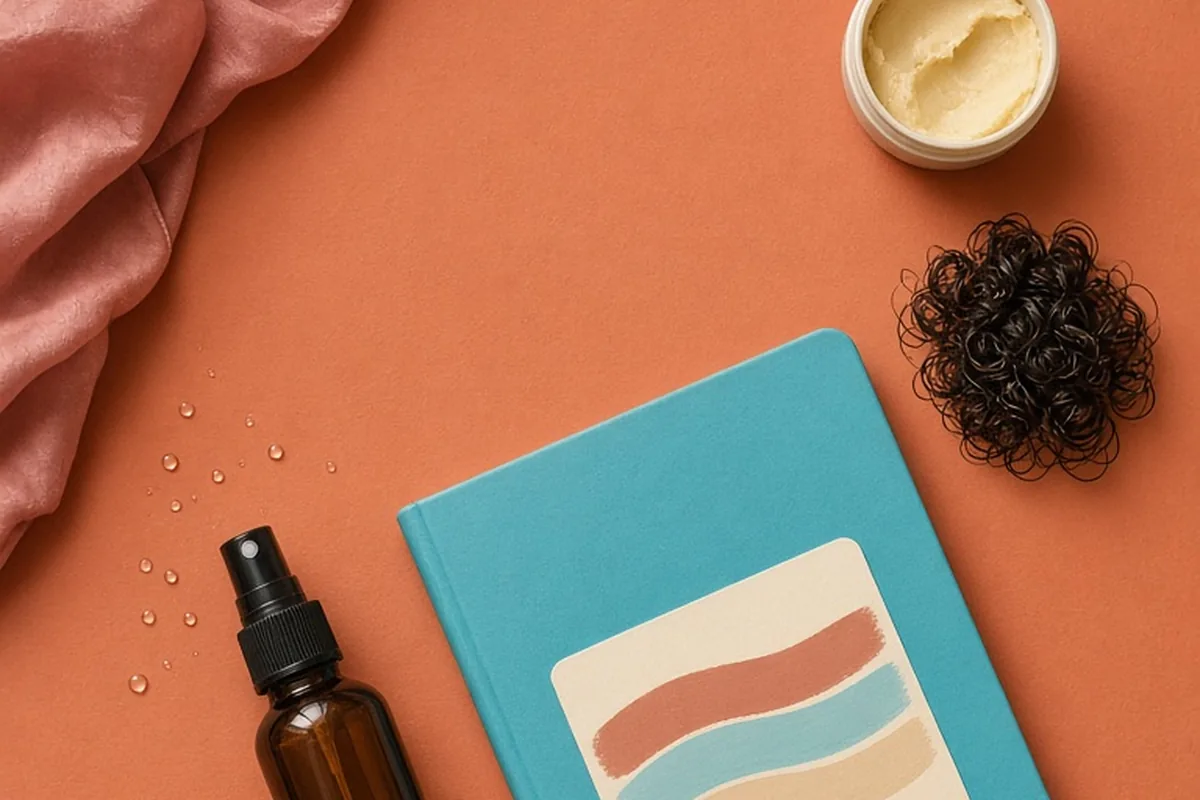
To moisturize 4C hair effectively, follow a tiered schedule: thoroughly cleanse and deep condition on weekly or bi-weekly wash days, apply a water-based leave-in followed by an oil or butter sealant using the LCO or LOC method, refresh strands mid-week with a light water-based mist and cream, and protect hair nightly under satin or silk. Consistency prevents dryness, reduces mechanical breakage, and maintains strand elasticity across styling cycles.
Type 4C hair features tight, dense coils with sharp angles that make it difficult for the scalp's natural sebum to travel down the hair shaft. Without a deliberate, recurring routine, moisture escapes rapidly through evaporation, leaving strands vulnerable to tangling, single-strand knots, and breakage.
Designing Your 4C Hair Moisture Rhythm: Daily, Mid-Week, and Wash Day
A successful moisture schedule for 4C hair relies on cadence rather than applying heavy products randomly whenever hair feels dry. Hair hydration is not a single event; it is a cycle that begins with thorough water saturation on wash day and is maintained through scheduled mid-week adjustments and nightly protection. Treating moisture as an ongoing maintenance plan keeps the cortex flexible and prevents the brittle state that precedes snap breakage during manipulation.
A practical baseline schedule spans seven to ten days. Day one centers on deep cleansing and water replenishment. Days three or four involve assessing moisture levels and applying a targeted mid-week refresh. The remaining days focus on moisture preservation through low-manipulation styling and evening friction barriers. If your hair is exposed to dry indoor heating, arid climates, or frequent outdoor workouts, your refresh frequency may shift from twice weekly to every other day, but the sequence of hydration followed by sealing remains identical.
Executing the 4C Hair Wash-Day Hydration Foundation
Wash day is the most critical phase of the maintenance schedule because true moisture comes only from water. Shampoos and cleansers must remove product buildup, old oils, and environmental debris so that clean water can penetrate the hair cuticle. Skipping clarifying washes in favor of continuous co-washing often creates a stubborn barrier of old butters, which actually prevents water from entering the inner cortex. Use a gentle sulfate-free shampoo for regular wash days and a chelating or clarifying shampoo once a month to reset the strands.
After cleansing, applying a deep conditioner formulated with fatty alcohols and humectants restores elasticity. To maximize penetration through tightly packed cuticles, apply your deep conditioner in sections from ends to roots, then introduce indirect warmth using a hooded dryer, thermal cap, or handheld steamer for fifteen to twenty minutes. Heat temporarily lifts the cuticle layer, allowing nourishing agents to deposit beneath the surface. Rinse with lukewarm water rather than freezing water, as extreme temperature shifts do not improve moisture retention and can make product rinsing difficult.
Layering Products Correctly: Choosing Between the LOC and LCO Methods
Once hair is cleansed and wet, you must seal that hydration before it evaporates into the atmosphere. The two standard layering frameworks are the LOC method (Liquid, Oil, Cream) and the LCO method (Liquid, Cream, Oil). Both start with a liquid base, which should be clean water or a water-dominant leave-in conditioner listing aqua as its first ingredient. Never rely solely on an oil or butter to moisturize dry hair; oils are occlusives and emollients, not hydrators, meaning they can only trap existing moisture or seal out humidity.
Choosing between LOC and LCO depends primarily on your strand density and porosity. The LCO method works exceptionally well for low-porosity 4C hair because applying a water-based cream directly over a leave-in allows moisture to absorb before a light oil film seals the exterior. The LOC method suits high-porosity or highly porous color-treated coils, where a lightweight penetrating oil applied directly to damp hair fills structural gaps along the cuticle before a heavy butter or cream blankets the shaft to lock everything in place.
Mid-Week Refresh Techniques Without Causing Product Buildup
By day three or four, moisture naturally diminishes as environmental air draws water out of the hair fiber. A mid-week refresh is not a full wash day; it is a light calibration designed to restore suppleness without soaking the hair to the scalp. Saturating the entire head mid-week can cause chronic wetness near the roots, which disrupts scalp health and leads to microbial imbalances. Instead, work in four to six large sections to target the mid-lengths and fragile ends.
To perform a clean refresh, lightly mist a section with plain distilled water or an aloe-infused water spray until it feels cool and faintly damp, not dripping wet. Smooth a nickel-sized amount of a lightweight leave-in conditioner or hydrating milk down the length of the section, focusing heavily on the ends where older hair resides. If your ends feel particularly rough, smooth a drop of jojoba, sweet almond, or argan oil over the very tips. Avoid piling heavy pomades or thick raw butters onto dry hair mid-week, as this produces gummy buildup that attracts lint and repels future moisture.
Nighttime Moisture Preservation and Friction Control
Even the most thorough hydration routine fails if moisture is lost overnight to absorbent fabrics. Standard cotton pillowcases and sheets act like desiccant sponges, pulling moisture and natural oils directly out of exposed 4C strands while creating mechanical friction that unravels coil patterns. Evening maintenance is non-negotiable for preserving what you applied during your wash-day and mid-week steps.
Before sleeping, gather loose hair into loose twists, flat twists, large braids, or a loose high puff (the pineapple method) to minimize surface friction and keep ends tucked away. Cover your hair with a high-grade satin or silk bonnet or wrap it securely in a silk scarf. For double protection, sleep on a satin pillowcase in case your headwear slips off during the night. In the morning, remove the cover, let your hair settle for ten minutes to adjust to room temperature, and gently fluff using lubricated fingers without tugging dry sections.
Adjusting Your Moisture Schedule for Hair Porosity and Climate
Your maintenance schedule must adapt to your hair's porosity and the ambient environment. Low-porosity 4C hair features tightly closed cuticle scales that resist water intake. For low-porosity coils, prioritize warmth during conditioning, select lighter leave-in milks rather than heavy petroleum-based pastes, and refresh with warm water mists to help open the cuticle. High-porosity hair absorbs water instantly but loses it just as fast through raised or damaged cuticles, requiring thicker sealing creams, protein-balanced deep conditioners, and slightly more frequent mid-week sealing.
Weather shifts also dictate routine adjustments. In dry winter conditions or air-conditioned indoor spaces, relative humidity drops, causing dry air to strip moisture from your coils. In these environments, incorporate rich emollients like shea butter or cupuacu butter as final sealants, and moderate your use of pure glycerin humectants, which can pull moisture out of the hair when the air contains zero ambient humidity. In humid summer months, switch to lighter botanical gels and light oils to keep hair hydrated without feeling weighed down or greasy.
Identifying Moisture Overload Versus True Dehydration
Maintaining 4C hair requires balancing hydration with structural strength. A common mistake is assuming that any sign of limpness, frizz, or breakage means the hair needs more moisture. In reality, over-moisturizing—known as hygral fatigue—occurs when the hair shaft constantly swells with water and contracts during drying, weakening the internal protein structure. Hair suffering from hygral fatigue feels mushy, excessively stretchy when wet, and lacks the spring and curl definition typical of healthy 4C coils.
Conversely, truly dehydrated 4C hair feels rough, makes a distinct crunching or snapping sound when manipulated, and shows little to no elasticity before breaking off in short fragments. If your hair is dehydrated, increase deep conditioning frequency, use indirect steam, and improve your nightly sealing. If your hair is over-moisturized and gummy, pause deep conditioning for one to two cycles, reduce mid-week water mists, and integrate a gentle hydrolyzed protein or amino acid treatment to reinforce the strand cortex.
Frequently asked questions
Can I spray my 4C hair with water every single day?
Spraying your hair lightly with water daily is acceptable if you wear it in an active wash-and-go or short style, but fully wetting dense 4C hair daily while in protective styles can lead to scalp moisture traps and hygral fatigue. For most styles, refreshing two to three times a week provides sufficient hydration without weakening the hair shaft.
What is the best oil to seal moisture in 4C hair?
The best sealing oil depends on porosity, but jojoba oil, argan oil, and Jamaican black castor oil are standard choices. Jojoba and argan provide lightweight, close matches to natural sebum for low-to-medium porosity hair, while Jamaican black castor oil provides a dense barrier that seals thick, high-porosity ends.
How do I know if my leave-in conditioner is actually moisturizing?
Check the ingredient list to confirm that water (aqua) is the first ingredient, accompanied by humectants like aloe vera or glycerin and fatty alcohols like cetyl or cetearyl alcohol. A quality moisturizing leave-in will soften the strands immediately upon application without leaving a waxy or chalky residue once dry.
Why does my 4C hair feel dry a few hours after applying oil?
Oils do not contain water and cannot moisturize dry hair on their own. If you apply oil directly to dry strands without a water-based moisturizer underneath, the oil forms a barrier that seals dryness in and prevents ambient moisture from entering.
Your next step
Assess your hair's current porosity and dryness today, then schedule your upcoming wash day to include a twenty-minute heated deep conditioning session followed by the LCO or LOC sealing method.