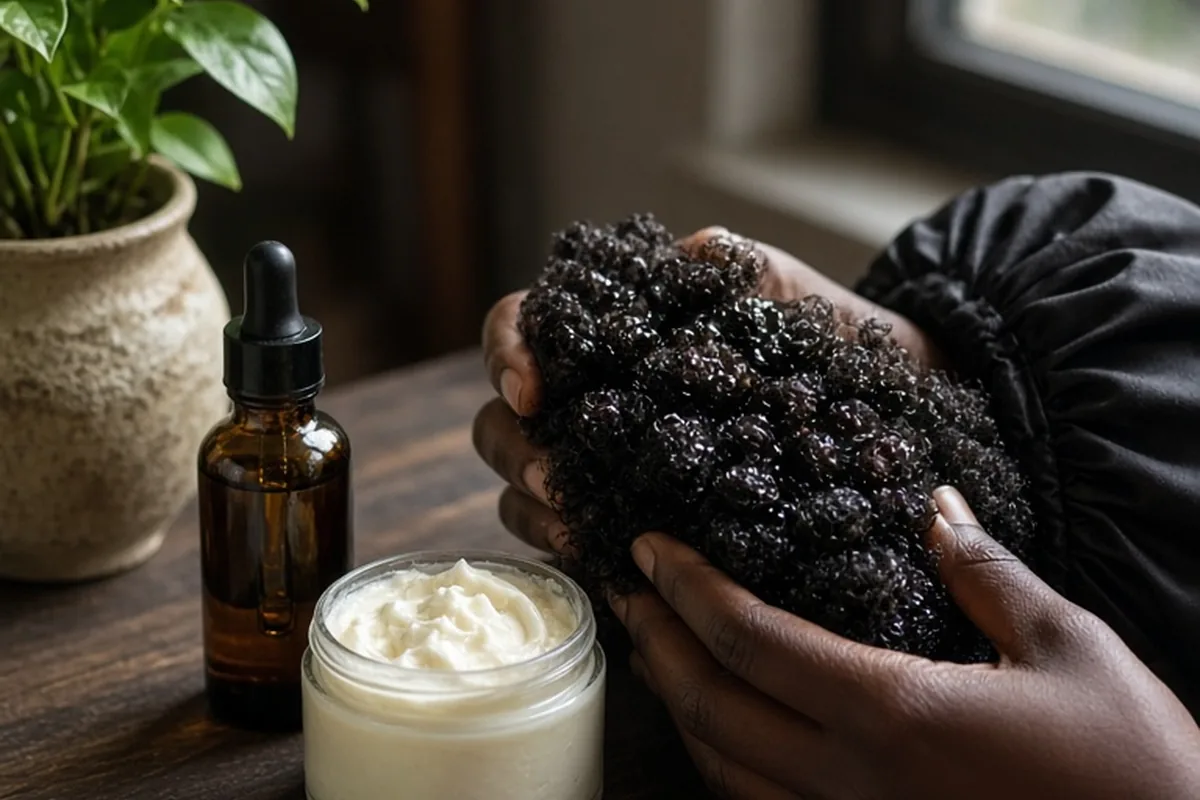
To effectively moisturize 4C hair, start by saturating clean hair with warm water to open the cuticles. Apply a water-based leave-in conditioner to deliver genuine hydration directly into the cortex, followed by a rich moisturizing cream to soften the strand. Finally, apply a plant-based oil or heavy butter to lock that moisture inside the hair shaft. Maintain this hydration balance by sleeping under a satin bonnet and re-misting with water or herbal tea between wash days.
Type 4C hair features tight zig-zag patterns, dense coils, and minimal natural curl definition, which makes it structurally unique and exceptionally vulnerable to dryness. Because the natural sebum produced by the scalp struggles to travel down these compact, angular turns, 4C strands require an intentional, multi-step moisture routine rather than a single topical product.
Recognizing Porosity and Moisture Resistance in 4C Hair
Moisture in hair care refers exclusively to water content, not oil or grease. For 4C hair, the structural shape of each strand means the cuticle layer may either remain tightly clamped down or sit raised and frayed from friction, heat, or styling. Before building a moisture routine, determining your hair porosity is essential. Low-porosity 4C hair has compact cuticles that resist water absorption, causing products to sit on the surface like a film. In contrast, high-porosity 4C hair absorbs moisture instantly but loses it just as quickly because gaps in the cuticle allow water molecules to evaporate rapidly.
To adapt your routine, low-porosity coils benefit from gentle warmth, such as warm water rinses, heated deep-conditioning caps, or steam, which temporarily lift the cuticles and allow hydration to penetrate. High-porosity coils, however, require richer emollient creams, protein-balanced conditioners, and heavier occlusives to physically patch those cuticle gaps and trap water inside the cortex. Recognizing how your hair interacts with plain water prevents product buildup, reduces unnecessary spending on ill-suited formulas, and sets realistic expectations for your retention routine.
Choosing Between the LOC and LCO Layering Methods for Coiled Strands
The standard foundation for moisturizing 4C hair relies on strategic product layering, commonly referred to as the LOC (Liquid, Oil, Cream) or LCO (Liquid, Cream, Oil) method. In both routines, the Liquid stage must always be water or an aloe- and water-based leave-in conditioner. Water provides the actual hydration, while subsequent layers ensure that moisture does not evaporate into ambient air throughout the day.
The debate between LOC and LCO comes down to porosity and strand thickness. With the LOC method, applying a lightweight carrier oil directly after the liquid creates a semi-permeable barrier before applying a thick cream on top, which suits medium-to-high porosity hair that struggles with rapid water loss. The LCO method, on the other hand, places the moisturizing cream directly over the damp hair before sealing everything with an oil or butter. Many individuals with 4C hair find the LCO sequence more effective because it allows the moisturizing emulsion in the cream to bind directly with the water base before the final occlusive layer locks both components in place.
Structuring a Hydrating Wash Day with Steam and Slip
Moisture retention begins in the shower, where cleansing and conditioning establish your hair's moisture baseline for the week. A common pitfall in 4C hair care is skipping shampoo out of fear of dryness. When product buildup, mineral deposits, and old butter layers accumulate on the hair shaft, fresh water cannot penetrate. Use a gentle, sulfate-free moisturizing shampoo for routine cleanses, and incorporate a clarifying shampoo once or twice a month to thoroughly reset the hair cuticle without stripping it raw.
Following cleansing, always apply a rich deep conditioner with high slip to detangle your coils gently in sections from ends to roots. Using heat during this step changes the moisture dynamic entirely: sitting under a hooded dryer, using a microwavable thermal cap, or applying a handheld steamer for twenty to thirty minutes allows the moisturizing agents to infuse the inner cortex. Rinse with lukewarm or cool water to help align the cuticles back down, securing the conditioning benefits within each individual strand.
Selecting Effective Humectants, Emollients, and Sealants for 4C Hair
Building a functional hair routine requires reading ingredient decks to identify three primary categories of ingredients: humectants, emollients, and occlusive sealants. Humectants like glycerin, honey, and panthenol draw water from the environment into the hair shaft. However, in extremely dry or arid climates, strong humectants can backfire by pulling water out of the hair into the surrounding dry air. Balance humectants with rich emollients such as cetyl alcohol, babassu oil, and aloe vera juice, which soften the hair fiber and improve strand elasticity.
The final step in your regimen requires an occlusive sealant to physically block moisture loss. Natural butters like raw unrefined shea butter, mango butter, and cupuaçu butter are dense enough to shield tight 4C coils from environmental friction. For those with fine 4C hair strands that easily weigh down, medium-weight oils like avocado oil, sweet almond oil, or Jamaican black castor oil offer sufficient protective coverage without causing greasy residue or clumping.
Refreshing Mid-Week Moisture Without Creating Product Buildup
Even a flawless wash-day routine will typically lose its moisture balance after three or four days, especially in air-conditioned or heated indoor environments. Rather than slathering on heavy layers of butter every morning—which leads to product buildup, dullness, and scalp irritation—opt for a targeted mid-week refresh. Divide your hair into manageable sections and mist lightly with plain distilled water or a botanical hydrosol like rosewater.
Once the hair feels slightly damp to the touch, smooth a nickel-sized amount of lightweight leave-in milk or a few drops of a non-comedogenic oil over the length of your coils, paying special attention to the fragile ends. The goal is rehydration, not saturation. If you notice white residue or a gummy texture developing at the roots, it is a signal to schedule your next wash day rather than adding another layer of styling product.
Protecting Hair at Night and Using Low-Manipulation Styles
Mechanical friction is one of the most common causes of moisture depletion and breakage in 4C hair. Standard cotton pillowcases and sheets act like desiccant sponges, drawing moisture and natural oils directly out of your strands while you sleep, while the coarse weave catches on individual coils and causes split ends. Switch to a double-lined silk or satin bonnet, a satin scarf, or a high-grade silk pillowcase to eliminate nighttime friction and keep applied products on your hair rather than your bedding.
Pairing fabric protection with low-manipulation styles significantly boosts moisture retention. Styles such as chunky two-strand twists, flat twists, plaits, and loose buns tuck the ends of the hair away from dry air and clothing friction. Keeping hair in organized, low-tension protective styles reduces daily combing and manipulation, allowing the moisture introduced during wash day to remain intact for days longer.
Troubleshooting Chronic Dryness, Hard Water, and Elasticity Loss
If your 4C hair remains chronically dry, brittle, or stiff despite consistent moisturizing efforts, underlying environmental or chemical factors may be interfering. Hard water is a frequent culprit; the dissolved calcium, magnesium, and heavy metals in tap water bind to the keratin structure of the hair shaft, forming an impenetrable mineral barrier that repels moisture. Installing a shower filter or using a dedicated chelating shampoo once a month can remove these mineral deposits and instantly restore softness.
Another critical factor is the balance between moisture and protein. Healthy 4C hair requires both hydration for flexibility and protein for structural tensile strength. If your hair feels mushy, overly soft, and stretches endlessly before snapping, it suffers from hygral fatigue and lacks protein. If it feels hard, straw-like, and snaps immediately with zero stretch, it is protein-overloaded and requires deep, protein-free moisturizing treatments. Restoring this balance will ensure that the moisture you apply translates directly into durable elasticity and length retention.
Frequently asked questions
How often should you moisturize 4C hair?
Most 4C hair requires thorough moisturizing every 2 to 4 days, depending on hair porosity, styling choices, and climate. Rather than sticking to a rigid daily schedule, check your hair texture; if the strands feel stiff or dry to the touch, apply a light water mist and leave-in conditioner.
Can you moisturize 4C hair with just oil?
No, oil does not contain water and cannot moisturize hair on its own. Oils function primarily as sealants or lubricants that hold existing water inside the hair shaft, so applying oil to dry hair will simply seal dryness in and repel external hydration.
Why does my 4C hair feel dry even after applying leave-in conditioner?
This usually occurs because of product buildup or hard water mineral deposits blocking the hair cuticle, or because the moisture was not sealed with an emollient cream or occlusive oil. Incorporating a clarifying wash and sealing with a butter or oil after your leave-in conditioner should resolve this issue.
Is it safe to wet 4C hair every day?
Misting your hair with water daily is safe and beneficial if done lightly, but completely soaking and washing 4C hair every day can lead to hygral fatigue, where the cuticle swells and contracts excessively, causing structural damage. Focus on targeted dampening rather than full saturation.
Your next step
Assess your hair's current porosity and product buildup today, then perform a clarifying cleanse followed by a heated deep conditioning treatment using the LCO layering method.