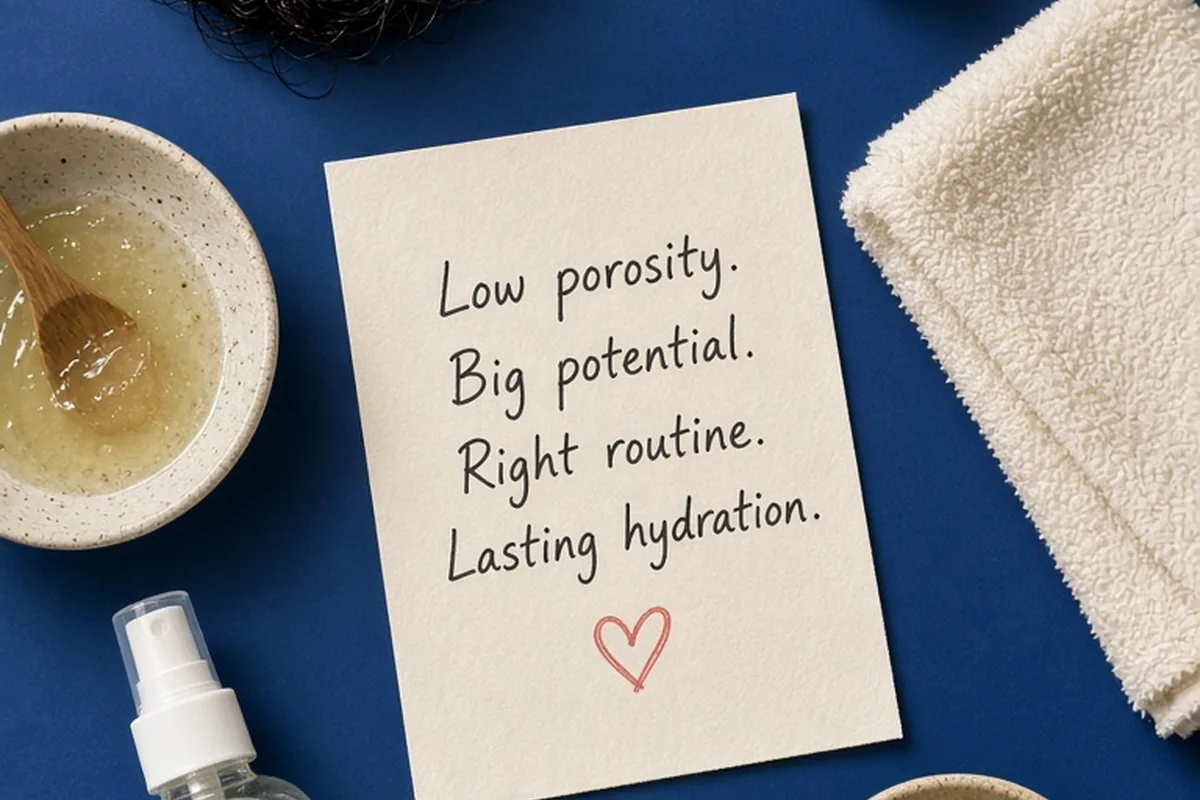
To moisturize low porosity hair, apply water-based leave-in hydrators to clean, warm, damp hair using gentle heat or steam to lift tightly bound cuticles. Choose lightweight humectants like aloe vera and glycerin alongside light oils such as argan or jojoba. Layer products using the Liquid-Cream-Oil (LCO) method and clarify every two to four weeks to clear product buildup.
Caring for low porosity hair often feels counterintuitive because products that promise intense moisture frequently sit on the surface of the hair shaft, leaving strands feeling coated and greasy while remaining dry underneath.
Why Low Porosity Hair Repels Water and Traps Buildup
Low porosity hair possesses a flat, tightly overlapping cuticle layer that acts as a protective shield around the cortex. While this structure is exceptionally resilient and retains moisture well once it enters, getting hydration past the cuticle barrier in the first place is the primary obstacle. When water or heavy products touch low porosity strands, moisture often beads up on the exterior instead of soaking in, leading to extended wash times and hair that takes many hours, or even an entire day, to air dry.
Because products struggle to penetrate the cortex, thick formulations tend to accumulate on the outer cuticle. Over time, this creates a persistent film that repels ambient humidity and subsequent conditioning treatments. Hair suffering from this surface buildup often feels stiff, looks dull, and snaps easily despite frequent product application. Recognizing this structural characteristic is essential: moisturizing low porosity hair is not about using heavier creams, but rather about altering application techniques and selecting formulas that can navigate tightly sealed cuticles.
Using Heat and Steam to Gently Open Tightly Bound Cuticles
The most effective mechanical tool for low porosity hair is indirect heat. Because the cuticles lie flat and overlap tightly, introducing warm water, steam, or thermal heat caps causes the cuticle scales to gently swell and lift. This temporary opening creates physical passageways through which water molecules and conditioning agents can enter the cortex before the cuticle cools and contracts back down.
Incorporate heat during both the wash and conditioning stages. Wash and rinse the hair with warm water rather than cold water, as cold temperatures cause low porosity cuticles to clamp shut prematurely. During deep conditioning, cover hair with a plastic cap and sit under a hooded dryer, wear a microwavable heat cap, or use a facial or hair steamer for fifteen to thirty minutes. If specialized equipment is unavailable, wrapping a warm, damp towel over a shower cap provides a similar thermal effect that dramatically boosts product absorption.
Selecting Water-Soluble Humectants and Lightweight Penetrating Oils
Ingredient choice determines whether moisture enters the hair strand or remains trapped on top as a heavy residue. The foundation of any low porosity regimen must be water, listed as the first ingredient on product labels. Complement water with film-forming and small-molecule humectants such as glycerin, aloe vera juice, honey, agave nectar, and panthenol. These humectants draw atmospheric water into the open cuticle and bind it within the fiber without weighing down fine or coarse textures.
Carrier oils require equal scrutiny. Heavy, dense fats like raw shea butter, pure castor oil, and high concentrations of coconut oil have large molecular weights that struggle to pass through compact cuticles. Instead, opt for lightweight, penetrating botanical oils with high concentrations of unsaturated fatty acids. Jojoba oil, argan oil, sweet almond oil, grapeseed oil, and rosehip seed oil offer the glide and lubrication necessary to seal in moisture without suffocating the hair strand or causing rapid accumulation.
Managing Protein Sensitivity in Dense Cuticle Structures
Low porosity hair naturally contains high structural integrity because its cuticle layer is intact and compact. Consequently, low porosity strands are frequently sensitive to external protein treatments. Formulations rich in hydrolyzed wheat protein, keratin, collagen, or silk amino acids adhere to the cuticle surface to patch gaps; however, when there are few structural gaps to fill, these proteins accumulate rapidly. This results in hair that feels straw-like, brittle, and prone to snapping under tension.
Assess product labels carefully to ensure your daily hydrators and deep conditioners emphasize moisturizing emollients rather than restructuring proteins. If your hair feels stiff or displays sudden breakage after using a strengthening masque, switch immediately to a purely moisture-focused conditioner containing fatty alcohols like cetyl and stearyl alcohol. Protein treatments should generally be reserved for occasional use, such as after heat styling or chemical color processing, rather than weekly maintenance.
The Clarifying Wash Routine to Reset Low Porosity Strands
Because low porosity hair is prone to product accumulation, maintaining a clean slate is non-negotiable. Co-washing—washing hair exclusively with cleansing conditioners—often fails for low porosity textures because the conditioning agents add another layer of film without fully lifting sebum, silicones, and heavy oils. Without regular clarifying, the cuticle becomes entirely blocked, preventing future moisture from reaching the cortex regardless of how much heat is applied.
Use a dedicated clarifying or chelating shampoo every two to four weeks, adjusting the frequency based on your styling product usage and local water hardness. A quality clarifying shampoo contains gentle yet effective surfactants that break down build-up without stripping the hair of its natural lipid balance. Follow every clarifying session immediately with a rich, heat-assisted deep conditioning treatment to replenish water content and restore elasticity.
Applying the Liquid-Cream-Oil (LCO) Layering Method
Product layering order plays a critical role in moisture retention. While high porosity hair often thrives under the Liquid-Oil-Cream (LOC) method, low porosity hair responds far better to the Liquid-Cream-Oil (LCO) sequence. In the LOC method, applying oil immediately after water creates a lipid barrier that prevents the heavier cream from penetrating. The LCO sequence ensures that lightweight hydrators and emollients enter the strand before a fine layer of oil seals the cuticles.
Begin the LCO routine on warm, damp hair straight out of the shower. Step one is the Liquid phase: mist a water-based leave-in spray or apply warm water evenly. Step two is the Cream phase: distribute a dime-to-quarter-sized amount of lightweight moisturizing lotion or milk from mid-lengths to ends, smoothing in downward motions to encourage cuticle alignment. Step three is the Oil phase: apply just two to three drops of lightweight oil, such as argan or grapeseed, to seal the ends and lock the water-based layers inside the cortex.
Maintaining Moisture and Refreshing Low Porosity Curls Mid-Week
Hydration inevitably dissipates between wash cycles due to dry indoor air, friction, and environmental exposure. However, piling on additional heavy styling creams mid-week will only create sticky, coated strands. A low porosity refresh should focus on reactivating existing leave-in products with warmth and light moisture rather than introducing heavy product layers.
To refresh mid-week, mist hair with warm water mixed with a small splash of aloe vera juice or a lightweight leave-in spray. Lightly cup or smooth the hair to distribute the warmth and re-soften the strands without disturbing the cuticle. At night, protect your moisture balance by sleeping on a silk or satin pillowcase, or wearing a satin bonnet. Satin prevents the friction and rapid moisture absorption caused by cotton fabrics, allowing your hair to maintain hydration for several days longer between wash sessions.
Frequently asked questions
Can I use coconut oil on low porosity hair?
Coconut oil can be used, but many people with low porosity hair find that it makes their strands feel brittle and stiff. Coconut oil has a high affinity for hair proteins and can prevent water from entering compact cuticles. If you want to use it, use small amounts blended into a formulated product rather than pure, unrefined oil.
How often should I wash low porosity hair?
Washing every seven to ten days is typical for most low porosity hair types. This timeframe allows sufficient time between washes while preventing excessive product accumulation, though individuals who exercise frequently or use heavy stylers may prefer washing every five to seven days.
Should I apply leave-in conditioner to wet or dry low porosity hair?
Always apply leave-in conditioner to freshly washed, warm, damp hair. Applying products to dry, cool low porosity hair causes the product to sit directly on top of the closed cuticle, leading to white flakes, product buildup, and poor absorption.
Does low porosity hair need cold water rinses?
Cold water rinses are generally unnecessary and often counterproductive for low porosity hair. Because low porosity cuticles already lie extremely flat, cold water can prematurely close the cuticles before leave-in conditioners and sealants are properly absorbed; rinsing with lukewarm water is ideal.
Your next step
Assess your current hair products to replace heavy butters with water-based leave-in conditioners, and use a thermal heat cap or warm damp towel during your next deep conditioning session.