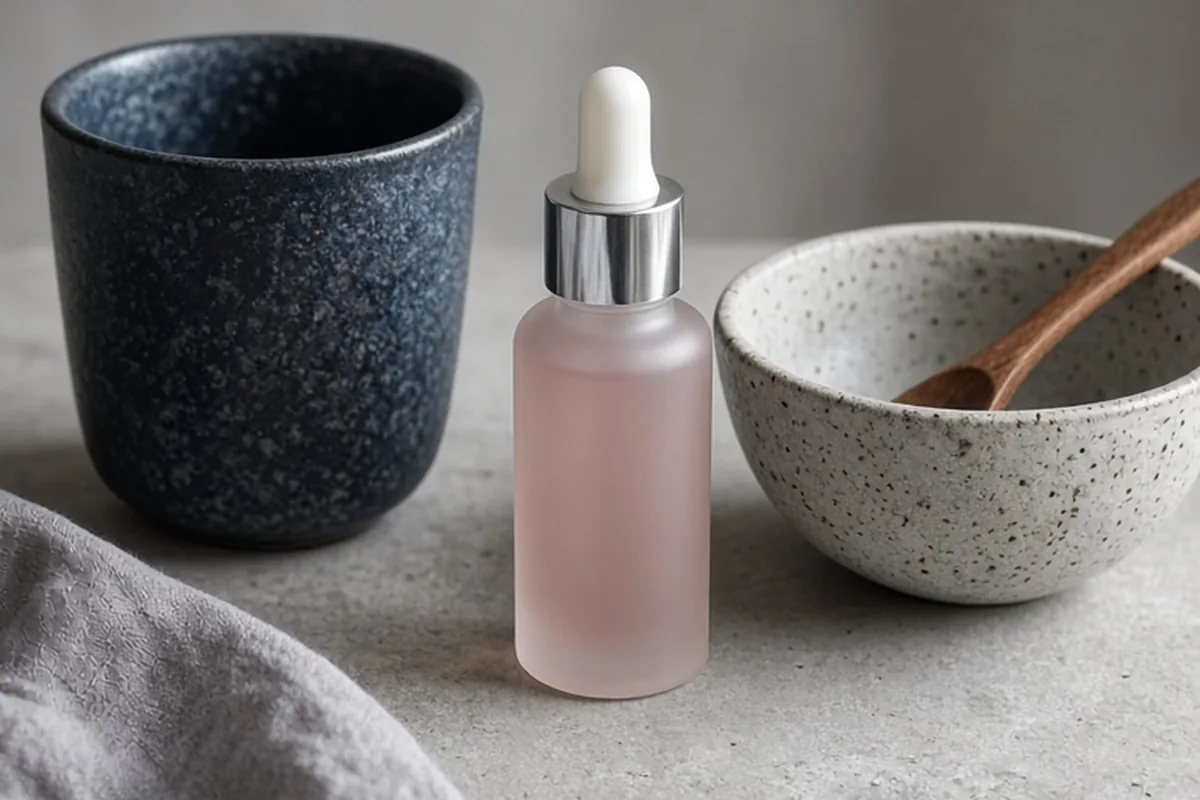
To patch test a new skincare product, apply a pea-sized amount to a discreet area like your inner forearm or behind your ear twice daily for three to seven days. Monitor the spot for redness, itching, burning, or bumps. If no irritation occurs, perform a second test on a small area of your face, such as the jawline, before introducing the product fully into your routine.
Introducing a fresh serum, moisturizer, or exfoliant can feel exciting, but applying an untested formula across your entire face carries the risk of contact dermatitis, barrier damage, or sudden breakouts. Taking several days to observe how your skin handles concentrated actives or botanical extracts preserves your skin barrier and saves you weeks of recovery.
Selecting the Best Location Based on Product Type
Choosing where to perform a patch test depends directly on what type of reaction you want to detect. The skin on your body differs significantly in thickness, sebaceous gland density, and sensitivity compared to facial skin. An inner forearm or the crook of your elbow provides a reliable environment for identifying an acute allergic response to preservatives, essential oils, or fragrances. Because these areas have relatively thin skin that is easily concealed, any sudden hives, redness, or itching can develop safely without affecting your appearance or compromising your facial barrier.
Conversely, testing for pore-clogging potential or localized acne breakouts requires placement on the face itself, as the forearm contains far fewer active oil glands. The side of the neck, behind the lower ear, or the edge of the jawline serves as an ideal bridge between allergy testing and comedogenicity testing. For instance, if you are evaluating a rich plant butter or facial oil known for potential comedogenicity, a patch along the lower jaw provides realistic feedback on whether the lipids will trigger closed comedones. Keep in mind that facial testing should only happen after a product has already cleared an initial twenty-four-hour test on the arm, minimizing the danger of widespread facial swelling or severe contact rash.
Step-by-Step Instructions for Applying the Test
Begin your patch test with a clean, dry surface. Wash the selected test patch using a mild, fragrance-free cleanser and pat the skin completely dry with a clean towel. Avoid testing on areas that already have active blemishes, cuts, sunburn, or visible eczema flares, as compromised skin will give a false impression of how your healthy skin tolerates the formula. Dispense a tiny amount of the product, roughly the size of a grain of rice for concentrated treatments or a pea for creams, and gently smooth it over a circle about the size of a quarter.
How you handle the site after application depends on whether the item is a leave-on formula or a rinse-off product. Leave-on products such as hydrating serums, moisturizers, facial oils, and chemical sunscreens should remain untouched and dry for several hours. For rinse-off formulas like foaming cleansers, clay masks, or exfoliating peel solutions, leave the product on the test area only for the duration specified on the manufacturer label, then rinse it thoroughly with lukewarm water. Protect the test site from other personal care items by keeping your regular body lotions, perfumes, and active treatments away from that immediate perimeter throughout the trial period.
Determining How Long to Monitor Your Skin
A single overnight trial is rarely sufficient to rule out adverse reactions, particularly when dealing with complex cosmetic chemistry. While immediate allergic reactions like histamine-mediated hives or intense stinging can surface within thirty minutes to two hours, delayed contact dermatitis typically takes forty-eight to seventy-two hours to manifest. To conduct a reliable repeat application test, apply the product to the same designated patch of skin twice a day for at least three to five consecutive days. This repetitive exposure reveals cumulative sensitization that a single application might mask.
Pore congestion and inflammatory acne demand an even longer timeline. If your primary goal is assessing whether a heavy emollient or silicone-dense cream causes breakouts, observe a small facial zone for a full seven to ten days. The trade-off of this thorough process is patience: extending a test over an entire week delays the instant gratification of unboxing a new beauty purchase. However, taking seven days to verify compatibility is considerably faster than spending two months repairing a stripped acid mantle or managing a cluster of inflamed papules across both cheeks.
Differentiating Allergic Reactions, Irritation, and Purging
Interpreting your skin's response accurately ensures you do not discard a compatible product prematurely or keep using a harmful one. An allergic reaction involves an immune response; symptoms typically include intense itching, widespread redness, tiny raised hives, swelling, or warm tenderness that may spread beyond the exact perimeter of application. If you notice these signs, your immune system has flagged an ingredient as a threat, and the product should be discontinued immediately.
Irritant contact dermatitis, on the other hand, is a physical or chemical injury to the skin barrier rather than an allergy. It frequently presents as superficial flaking, a tight or tight-shiny appearance, dry rough patches, and an uncomfortable burning sensation when water or basic moisturizer touches the zone. This commonly happens when potent actives disrupt lipid layers. Purging represents a third, distinct process that occurs exclusively with ingredients that accelerate cellular turnover, such as retinoids, salicylic acid, and glycolic acid. Purging produces small whiteheads or pustules in spots where you routinely experience congestion, whereas an adverse breakout from an irritating formulation causes deep, cystic lumps, itching, or blemishes in areas where your skin is normally clear.
Modifying the Process for Potent Active Ingredients
Potent actives like pure L-ascorbic acid, prescription or over-the-counter retinoids, benzoyl peroxide, and concentrated alpha hydroxy acids require a modified testing protocol. Applying an undiluted active twice daily to a sensitive patch of skin will almost certainly produce redness and peeling, even in people who could tolerate the ingredient with proper spacing. When testing strong resurfacing agents, apply the formula only once every other day or twice a week, precisely mirroring how you intend to use it in your actual regimen.
You can also utilize a buffering technique during the patch test if you have a history of reactive skin. Apply your basic hydrating serum or simple moisturizer first, let it absorb, and then place a micro-drop of the active on top within your test perimeter. For highly acidic washes or exfoliating solutions, consider testing on the crook of your elbow first, but rinse it off after half the recommended contact time during the first application. This conservative pacing allows you to determine whether any observed dryness reflects manageable active acclimation or genuine tissue intolerance.
Managing a Sudden Reaction and Documenting Triggers
If a patch test area becomes red, intensely hot, itchy, or swollen, take immediate action to neutralize the site. Wash the area thoroughly with lukewarm water and a non-stripping, surfactant-free cleanser to remove all traces of residual formula. Pat dry without rubbing, and apply a cool, damp washcloth for five to ten minutes to reduce localized heat and inflammation. Afterward, protect the compromised skin barrier with a thin layer of plain petrolatum, medical-grade barrier ointment, or a basic ceramide cream devoid of plant extracts, fragrances, or exfoliating acids.
Once your skin stabilizes, turn the adverse reaction into valuable diagnostic data. Save the ingredient list of the offending cosmetic and compare it against other products your skin already tolerates without issue. Look for common sensitizers, including synthetic fragrances, essential oils such as lavender or citrus extracts, drying alcohols, and preservatives like methylisothiazolinone. By keeping a simple digital or written log of products that caused reactions, you can cross-reference shared compounds over time and gradually pinpoint your specific ingredient triggers, preventing repeat mistakes when buying skincare in the future.
Transitioning from Patch Testing to Full-Face Application
Passing a patch test on your arm and jawline is a critical milestone, but full-face implementation still requires an incremental rollout. Even when a formula does not provoke an acute reaction in isolation, introducing it alongside your existing toners, essences, and prescription creams can create unforeseen friction. The most prudent approach is to introduce only one new product into your routine at a time, keeping all other steps completely consistent for at least two weeks.
When you begin full-face use, start with a conservative frequency of two or three evenings per week rather than daily application, especially for leave-on serums and active moisturizers. Observe how your skin behaves in different zones; for example, your cheeks may tolerate an emollient formula beautifully, while your T-zone might develop excess shine or mild congestion. Spacing your introductions gives your skin barrier time to adapt gracefully and ensures that if a problem eventually develops, you know exactly which bottle in your cabinet is responsible.
Illustrative Scenarios
Evaluating a Botanical Face Oil
An individual with sensitive, blemish-prone skin wanted to introduce a rich facial oil formulated with botanical seed extracts and essential oils. Instead of applying several drops across their entire face, they initiated a two-phase patch test. During the first forty-eight hours, they smoothed a small drop onto the inner wrist twice daily, watching for systemic contact allergy signs such as hives or intense itching. Finding no allergic response, they advanced to the second phase by applying a light smear to a quarter-sized spot on the corner of their jawline every evening for six days.
Key point: By day five of the jawline test, two small closed comedones appeared strictly within the test spot, accompanied by mild surface congestion without any redness, itching, or barrier stinging. This two-phase observation demonstrated that while the botanical formula was entirely safe from an allergic standpoint, its heavy lipid profile was too rich for their facial pores. The trial prevented widespread breakouts across their forehead and cheeks while keeping the product eligible for use on drier body areas.
Frequently asked questions
Can I patch test more than one new product at the same time?
It is best to test only one formula at a time. If you apply two different new products to separate patches of skin and an allergic response occurs, systemic histamine release can cause generalized skin sensitivity, making it difficult to pinpoint which item caused the flare. Testing single items in isolation ensures clean, unambiguous results.
Where should I patch test a wash-off cleanser or exfoliating peel?
Rinse-off formulas should be tested in the crook of your elbow or along the lower edge of your jawline to mimic their real-world application. Apply the cleanser or mask, leave it on your skin only for the recommended duration, and rinse it completely with lukewarm water before monitoring the site over the next two days.
Does passing a patch test guarantee that a product will never cause breakouts?
A patch test provides reliable confirmation that you are free from acute allergies and direct contact irritation, but it cannot completely rule out delayed congestion. Facial sebum production, pore density, and hormonal fluctuations vary across different areas of the face, which is why continuing to observe your skin during a gradual full-face introduction remains necessary.
What does it mean if a product tingles slightly during the test?
A brief, mild prickle can occur normally when applying low-pH formulas containing exfoliating acids or pure Vitamin C as they interact with your skin. However, if the tingling escalates into hot stinging, burning, or visible erythema that lingers beyond a couple of minutes, rinse the formula off immediately because your barrier cannot comfortably tolerate that concentration.
Your next step
Choose the product you intend to use next, wash a small test area along your jawline or inner arm tonight, and commit to monitoring that isolated spot for three to five consecutive days before applying it to your entire face.