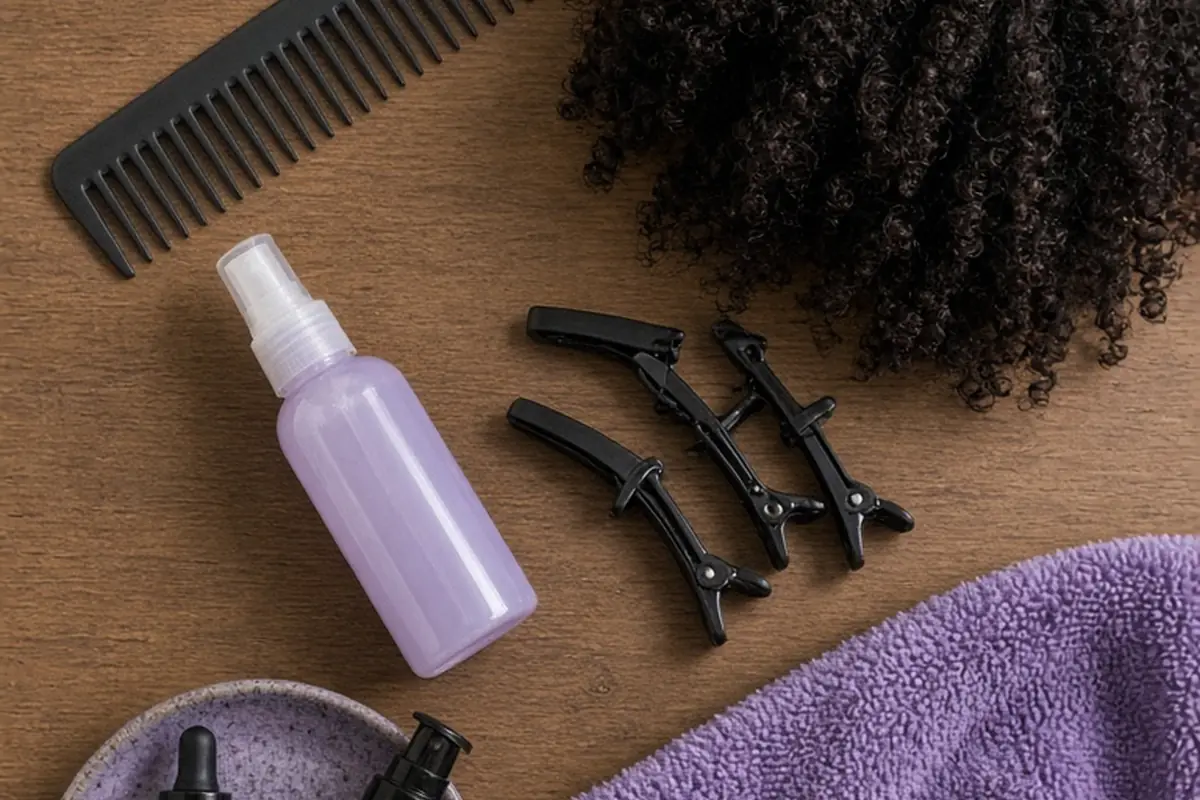
To prepare for 4C hair care, gather foundational tools including a wide-tooth comb, sectioning clips, a continuous mist spray bottle, and a microfiber towel, while establishing a dedicated wash day schedule. Assess your hair porosity, density, and strand thickness to select compatible water-based leave-in conditioners, penetrating oils, and rich sealants. Clear enough time to detangle gently in damp sections, and secure silk or satin nighttime coverings before introducing protective styles or heat manipulation.
Stepping into a structured routine for tight coils requires deliberate preparation rather than impulsive product buying. Taking the time to understand your hair properties, assemble durable tools, and map out a gentle routine protects your strands from unnecessary mechanical stress and chronic dryness.
Evaluating Hair Porosity and Density to Guide Product Choices
Before purchasing shelves of products, you need to understand how your specific strands absorb moisture and how densely they grow on your scalp. Hair porosity describes how easily moisture passes through the hair cuticle layer. Low-porosity 4C hair features tightly aligned cuticles that resist water penetration, often requiring warm water, gentle indirect heat during conditioning, and lighter liquid leave-in formulas to prevent product buildup. High-porosity hair has raised cuticles that absorb water instantly but lose it just as rapidly, benefiting from thicker moisturizing creams, protein treatments to reinforce strand structure, and heavy sealing butters.
Porosity works in tandem with hair density and strand thickness to dictate your routine. Density refers to the number of individual strands across your scalp, which determines how many sections you need during styling, while thickness refers to the width of individual strands. Fine 4C hair requires lightweight moisturizers and minimal manipulation to avoid snapping fragile strands, even if overall density is high. Coarse strands, which have a wider individual circumference, can tolerate richer butters and more robust styling techniques. Evaluating these three factors prevents product overload and ensures your preparation matches your hair biological needs.
Assembling an Essential Toolkit for 4C Hair Care
Equipping yourself with the right hardware makes the difference between a smooth maintenance routine and extensive mechanical breakage. The foundation of your toolkit should focus on slip, gentle separation, and tension management. High-grade plastic or silicone wide-tooth combs with seamless teeth prevent snagging on tight z-pattern coils. Flexible detangling brushes designed specifically for textured hair allow bristles to bend through knots rather than ripping through them. Pair these with sturdy alligator or butterfly sectioning clips to keep your hair organized and manageable during washing and styling.
Your drying and hydration equipment deserves equal attention. Replace standard terrycloth towels with microfiber towels or soft cotton shirts to minimize friction and prevent the roughing up of delicate cuticles. Invest in a continuous mist spray bottle, which distributes water evenly without soaking localized areas. For conditioning and deep treatments, a thermal heat cap or hooded dryer attachment helps lift low-porosity cuticles for deeper nutrient absorption. Lastly, procure high-grade satin or silk bonnets, scarves, and pillowcases to guard against fabric friction during sleep.
Structuring an Efficient Wash Day System in Sections
Preparing for 4C hair care means transforming wash day from an overwhelming chore into an orderly process. Trying to wash, detangle, and condition 4C hair as a single mass almost always leads to severe tangling, matting, and breakage. Divide your hair into four to eight distinct sections before applying water or shampoo, securing each section with clips or loose twists. Working section by section keeps strands stretched and organized, allowing you to thoroughly cleanse the scalp and apply products evenly down each strand.
Consider introducing a pre-shampoo treatment, commonly called a pre-poo, especially if your hair is prone to dryness or single-strand knots. Applying an oil blend, melted butter, or slippery detangling rinse to dry or lightly misted hair before shampooing provides an emollient buffer. This barrier softens the hair fiber, eases initial finger detangling, and reduces the stripping effect of cleansing agents. Washing each section sequentially while keeping the remaining sections secured ensures consistent scalp cleansing without losing control of your curl pattern.
Selecting Cleansers, Conditioners, and Sealants for Tight Coils
Building a functional product collection requires matching ingredient properties to hair needs rather than chasing commercial trends. Begin with two types of cleansers: a gentle, sulfate-free moisturizing shampoo for weekly or bi-weekly maintenance, and a clarifying shampoo for monthly use to remove stubborn sebum, mineral deposits, and styling buildup. Skipping clarification leaves behind a film that blocks moisture absorption, rendering even premium conditioners ineffective.
For conditioning and daily maintenance, prioritize water as the leading ingredient in your moisturizing products. A rich deep conditioner formulated with fatty alcohols, humectants like glycerin or aloe vera, and balanced conditioning agents restores elasticity after cleansing. To lock in this hydration, implement either the Liquid-Oil-Cream (LOC) or Liquid-Cream-Oil (LCO) method. Liquid or leave-in sprays hydrate the hair core, moisturizing creams soften the outer fiber, and occlusive plant oils or shea butter create a physical shield that slows down moisture evaporation.
Mastering Low-Tension Detangling Techniques to Prevent Breakage
Detangling is the most mechanically demanding phase of 4C hair care, and improper technique is the primary cause of length retention issues. Never attempt to detangle 4C hair while it is completely dry or stripped of conditioner; dry coils lack elasticity and readily snap under tension. Always work on damp hair thoroughly coated with a product that provides substantial slip, such as a dedicated rinse-out conditioner or detangling primer with slick emollient agents.
Begin the detangling process using only your fingers to gently separate larger shed hair clusters and tease apart knots. Once manual separation is complete, introduce a wide-tooth comb or flexible brush, starting strictly at the ends of the hair and working progressively upward toward the roots. If the tool encounters resistance, remove it immediately and use your fingers to resolve the knot rather than forcing the tool through. Maintain light, patient tension to keep the hair shaft intact and prevent split ends from migrating upward.
Setting Up Nighttime Protection and Daily Moisture Maintenance
Hydration achieved on wash day dissipates quickly without a consistent nighttime protection strategy and mid-week maintenance plan. Cotton bedding is highly absorbent and abrasive, pulling essential moisture directly from your hair strands and creating friction that causes breakage along the hairline and crown. Prepare your sleep environment by establishing a non-negotiable nighttime routine using silk or satin bonnets, headwraps, or dedicated satin pillowcases that allow coils to glide smoothly without snagging.
In addition to nighttime protection, prepare for mid-week hydration refreshes between wash cycles. Keep a simple spray bottle filled with pure water or water blended with a light leave-in conditioner at hand. Lightly mist sections of your hair when coils feel dry or stiff, gently working the moisture in with your hands before smoothing a small drop of lightweight oil over the strands to reseal the cuticle. This small, regular intervention preserves elasticity, prevents mid-shaft splits, and keeps your hair pliable until your next full wash day.
Preparing Hair and Scalp for Protective Styling
Protective styles such as twists, braids, and cornrows are valuable tools for minimizing daily manipulation, but they require thorough preparation to be effective and safe. Installing a protective style on dirty, dehydrated, or already damaged hair often leads to severe breakage, matting, and traction alopecia. Before any long-term style installation, complete a full regimen of clarifying, deep conditioning with heat, and thorough moisturizing to ensure strands have maximum elasticity and tensile strength.
Scalp health must remain a priority throughout the preparation and duration of any protective style. Avoid pulling hair excessively tight along the hairline during installation, as tension on fragile follicles can cause permanent thinning. Plan how you will clean and moisturize your scalp while the style is in place by keeping witch hazel or specialized scalp cleansing rinses on hand, along with targeted applicator bottles for light oils. Setting realistic duration boundaries—typically keeping styles in for no longer than four to eight weeks—prevents strand accumulation and dreading at the roots.
Frequently asked questions
What is the biggest mistake beginners make when starting 4C hair care?
The most common mistake is manipulating and detangling hair when it is completely dry or lacking slip. Without adequate moisture and an emollient base, tight coils cannot stretch safely, leading directly to high friction, mechanical tearing, and severe breakage.
How often should 4C hair be washed and deep conditioned?
Most 4C hair thrives on a wash schedule of every 7 to 14 days, paired with a deep conditioning session each time. Washing too frequently can strip natural sebum, while waiting longer than two weeks can cause excessive product buildup, scalp irritation, and tangled shed hair.
What is the difference between moisturizing and sealing 4C hair?
Moisturizing introduces water and water-based hydrators into the interior of the hair shaft to maintain suppleness. Sealing applies an occlusive oil or butter over the hair shaft to create a protective barrier that slows down moisture loss over subsequent days.
How do you know if your 4C hair needs protein or moisture?
Hair that feels hard, dry, brittle, and snaps easily under slight tension needs hydration and deep moisture. Hair that feels overly soft, mushy when wet, or stretches excessively without springing back requires a protein treatment to restore structural integrity.
Your next step
Assess your hair porosity today and gather a wide-tooth comb, continuous spray bottle, and satin bonnet before your next wash day.