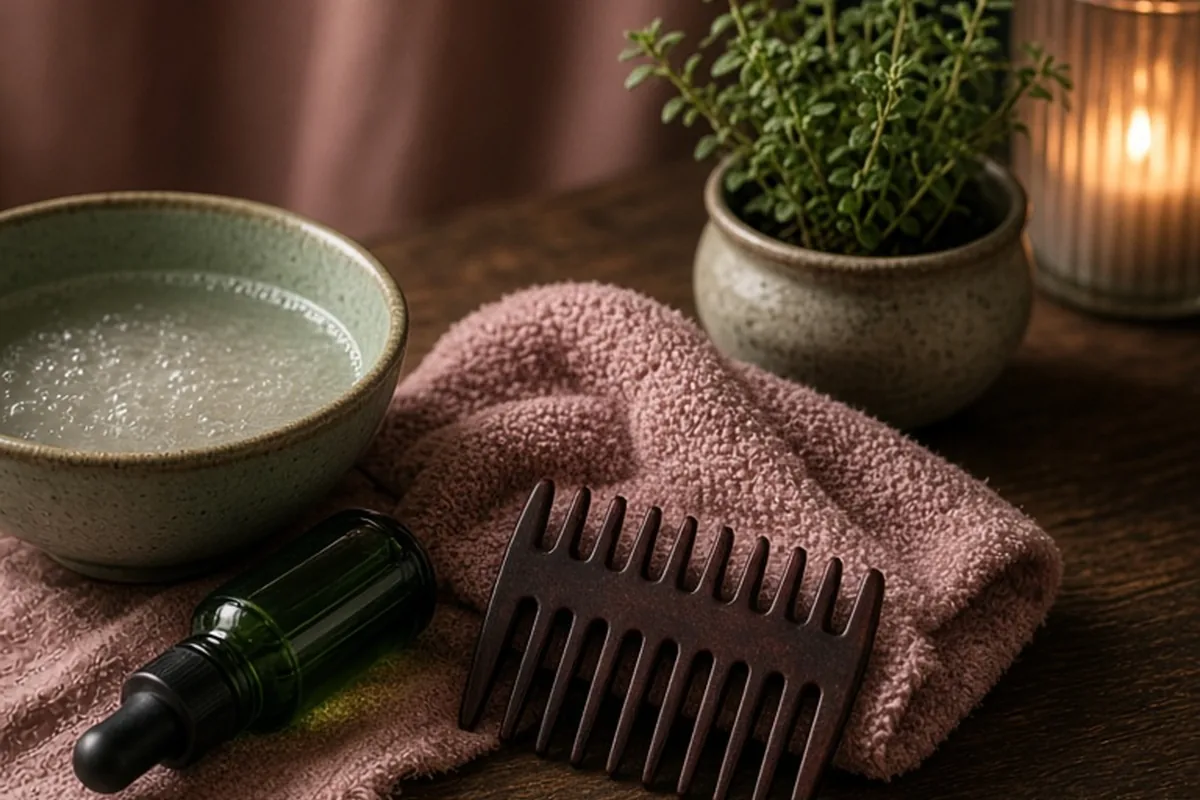
To prepare for a hair mask for dry hair, wash your strands with a gentle sulfate-free or clarifying shampoo to remove buildup, then rinse with warm water to lift the hair cuticle. Gently squeeze out excess water with a microfiber towel until hair is damp, not soaking wet. Finally, detangle from ends to roots using a wide-tooth comb to ensure even mask distribution.
Dry hair often struggles to absorb deep conditioning treatments when surface buildup, closed cuticles, or excess water act as physical barriers. Preparing your hair correctly before applying a rich mask allows the moisturizing agents, plant oils, and humectants to penetrate the cortex instead of merely sitting on the outer strand.
Cleansing the Hair and Removing Surface Buildup
Applying a restorative mask over hair coated in styling polymers, dry shampoo, silicone serums, or natural scalp oils creates an ineffective barrier. When these residues remain on the hair fiber, the nourishing lipid compounds and moisture-binding ingredients in your mask cannot reach the inner structure of the hair. Starting with a thorough cleanse resets the hair surface, clearing away the debris that blocks nutrient transfer.
For standard dry hair, a gentle, sulfate-free moisturizing shampoo provides enough cleansing power without stripping away the remaining natural moisture. However, if you regularly use heavy leave-in conditioners, edge controls, or styling waxes, a clarifying shampoo used once every few weeks is beneficial. Rinse thoroughly with warm water, as the moderate temperature gently relaxes the hair fiber and softens accumulated sebum, allowing the cleanser to rinse clean away without leaving a film.
Avoid using excessively hot water during this initial wash. While warmth helps loosen residues, scalding temperatures can irritate your scalp and cause unnecessary stress to brittle, dry strands. Aim for comfortable, lukewarm to warm water that rinses away lather cleanly while preserving the underlying strength of the strand.
Assessing Porosity to Tailor Your Hair Mask Preparation
Hair porosity refers to how easily your hair absorbs and holds onto moisture, and understanding it dictates how you should prepare your strands. Low-porosity hair features tightly bound, overlapping cuticle scales that resist moisture entry. High-porosity hair, often caused by chemical processing, heat styling, or genetic texture traits, has open, raised, or damaged cuticles that absorb water rapidly but lose it just as fast.
If you have low-porosity dry hair, your primary preparation goal is gently opening the cuticles before mask application. Rinsing with slightly warmer water and keeping the hair consistently warm during prep helps the dense cuticle layer relax. In contrast, high-porosity hair absorbs moisture instantly but is structurally fragile when wet. For high-porosity strands, preparation requires minimal friction, very gentle handling, and avoiding harsh clarifying agents that could further erode the delicate cuticle layer.
Managing Moisture Levels: Why Damp Hair Beats Soaking Strands
A common misstep when applying deep conditioning treatments is placing the product onto dripping-wet hair fresh out of the shower spray. When hair fibers are completely saturated with free water, there is little physical space within the porous structure for the mask's emollient base to penetrate. Furthermore, excess water dilutes the active concentration of the mask, causing a significant portion of the formula to slide off the strands and run down the drain.
The optimal canvas for most commercial hair masks is damp, towel-blotted hair. After washing, use your hands to gently squeeze excess water from the lengths, working from near the roots down to the tips. Follow this by pressing the hair with a soft microfiber towel or a clean cotton T-shirt. Microfiber and cotton absorb surface water efficiently without the rough friction generated by standard terry cloth loops, which can snag and fray parched cuticles.
Sectioning and Detangling to Prevent Mechanical Breakage
Dry hair is particularly vulnerable to mechanical snapping when wet, as the hydrogen bonds that give hair its elasticity are temporarily suspended. Attempting to rake a thick mask through a single, tangled mass of hair leads to uneven coverage and unnecessary tension on weakened strands. Dividing your hair into neat, manageable sections creates a controlled environment for application.
Using wide-tooth hair clips, divide your hair into four to six equal quadrants, depending on your hair's density and length. Take a single section, apply a small drop of water or a light leave-in prep spray if the ends have dried out, and gently detangle using a seamless wide-tooth comb or a flexible-bristle detangling brush. Always begin detangling at the bottom ends, removing small snags before working progressively higher toward the mid-lengths. Once a section is free of knots, it is primed to receive the mask evenly from root to tip.
Using Gentle Warmth to Enhance Product Penetration
Thermal preparation is an effective technique for coarse, stubborn, or low-porosity dry hair. Applying gentle warmth before and during the masking process softens the natural fatty acids on the hair shaft and encourages the outer cuticle layer to lift slightly. This thermal boost allows deep conditioners with higher molecular weight ingredients, such as shea butter and plant oils, to work deeper into the fiber.
You can prepare your hair for thermal absorption by wrapping a warm, damp towel around your freshly washed and blotted hair for three to five minutes before applying the mask. Alternatively, keep a processing cap or thermal conditioning cap nearby. If you choose to use a handheld hair steamer, hold it at a safe distance to allow the gentle steam vapor to hydrate the cuticles without scorching the scalp. Ensure any heat tool or warm towel is comfortable to the touch before placing it against your skin.
Matching Preparation to Moisture and Protein Hair Mask Formulas
Not all hair masks serve the same structural purpose, and your preparation should align with the active ingredients in your chosen treatment. Moisture-focused masks rely heavily on humectants like glycerin and hyaluronic acid, combined with emollients like argan, jojoba, or avocado oil. These formulas need residual water within the hair shaft to bind hydration effectively, making thorough damp-blotting essential so the humectants have moisture to trap.
Reconstructive or protein-rich masks, containing hydrolyzed keratin, wheat protein, or amino acids, behave differently. These formulations aim to reinforce gaps in the damaged cuticle structure. If you are preparing for a protein treatment, ensuring zero silicone buildup through a thorough clarifying wash is critical, as synthetic coatings prevent protein molecules from adhering to the compromised areas of the keratin matrix.
Setting Up Your Workspace and Safeguarding the Scalp
Proper preparation extends beyond your strands to the tools and environment you use. Gather your sectioning clips, wide-tooth comb, application brush, processing cap, and towel before you begin. Dipping wet hands repeatedly into product jars can introduce moisture and tap water bacteria into preservative systems, while fumbling for tools mid-routine leads to patchy application and wasted product.
It is also important to consider your scalp health during preparation. Rich hair masks designed for dry lengths contain heavy waxes, butters, and conditioning agents that can clog hair follicles or cause buildup on the scalp. Plan your sectioning so that you can easily target the mid-lengths and ends—typically starting two inches away from the scalp—unless the specific product is labeled as a dual scalp-and-hair treatment.
Frequently asked questions
Should I wash my hair with shampoo before applying a hair mask?
Yes, you should always shampoo your hair before applying a hair mask. Cleansing removes dirt, oils, and styling residues that prevent deep conditioners from penetrating the hair shaft, ensuring the mask delivers maximum hydration.
Is it better to apply a hair mask to soaking wet or damp hair?
Damp, towel-blotted hair is best for hair mask application. Soaking wet strands dilute the mask formula and prevent active emollients from adhering to the fiber, while completely dry hair cannot distribute thick products evenly.
Do I need to use regular conditioner before or after a hair mask?
You do not need to use regular conditioner before a hair mask, as the mask replaces your daily conditioning step. Some people with high-porosity hair choose to apply a light rinse-out conditioner after washing out the mask to help seal the cuticles, but for most hair types, the mask alone is sufficient.
Can I detangle my dry hair before getting in the shower to prep for a mask?
Performing a gentle pre-wash detangling on dry hair with a brush or your fingers can reduce tangling during the shampoo process. However, you should still do a final gentle detangle with a wide-tooth comb once your hair is cleansed and damp right before mask application.
Your next step
Inspect your hair for product buildup, gather your wide-tooth comb and microfiber towel, and wash with warm water so your damp strands are ready for even mask application.