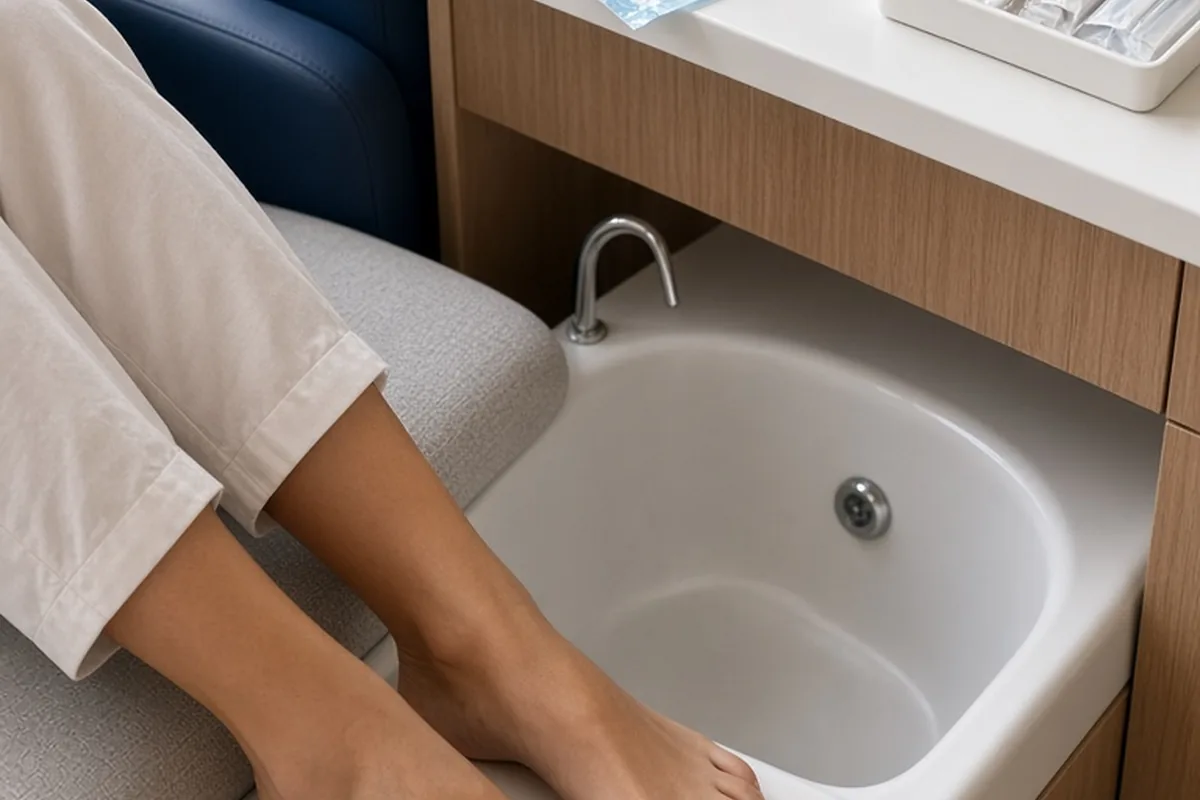
To spot a clean pedicure station, look for pipeless footbaths or fresh disposable basin liners, metal tools opened from sealed sterilization pouches directly in front of you, and brand-new disposable items like buffers and files. The surrounding surface should be free of nail dust, damp towels, or standing water, while liquid disinfectant jars should appear clear and debris-free.
A professional pedicure should offer relaxation and routine foot care, but maintaining hygiene standards is essential for preventing skin irritations and bacterial or fungal exposure. Knowing what a clean station looks like gives you confidence before your treatment begins.
Inspecting the Foot Basin and Water Circulation Systems
The pedicure bowl is the centerpiece of the service and one of the most critical areas to inspect before placing your feet in the water. Traditional whirlpool foot spas with internal pipes and circulating jets present the highest maintenance challenge for salons, as dead skin cells, hair, and organic matter can become trapped inside the plumbing lines if they are not flushed and scrubbed between every single client. High-standard salons increasingly use pipeless basins, magnetic jet systems that detach completely for thorough manual scrubbing, or non-circulating basins fitted with fresh, single-use plastic liners.
When you approach the pedicure chair, examine the basin while it is still dry. A properly cleaned tub should look completely dry, wiped down, and free from any oily film, rings around the waterline, or leftover scrub granules from the previous patron. If the basin uses a plastic liner, make sure the technician opens and fits a new, intact liner from a clean storage bin right before running your water. If you notice cloudy residual water in the bottom of the tub or a strong musty smell around the drain, it is reasonable to ask for the basin to be cleaned and sanitized again before you submerge your feet.
Verifying Tool Sterilization and Storage Methods
Metal implements such as toenail clippers, cuticle pushers, and metal foot rasps require medical-grade decontamination between uses because they make direct contact with skin and nails. The gold standard for metal tools is an autoclave, which uses high-pressure steam heat to kill microorganisms. Tools processed through an autoclave are typically sealed in specialized paper-and-plastic pouches with color-changing chemical indicator strips that darken once proper sterilizing heat is achieved. A conscientious technician will peel open this sealed pouch directly in front of you rather than grabbing loose tools from an open drawer or tray.
Some salons rely on hospital-grade liquid disinfectants to sanitize implements instead of an autoclave. When liquid chemical solutions are used, the liquid should be fully transparent, free of floating debris, and contained in a clearly labeled vessel. Tools must soak submerged for the complete contact time specified by the disinfectant manufacturer to be effective. Be cautious if you see tools sitting in dry metal trays, resting on paper towels with visible dust, or stored inside closed plastic boxes without clear indication that they have undergone a fresh decontamination cycle.
Distinguishing Single-Use Disposables from Reusable Supplies
Porous supplies cannot be properly disinfected once they absorb water, dead skin cells, or moisture from a client. Items made of foam, wood, or porous stone must be strictly single-use and discarded immediately after each appointment. This category includes traditional emery boards, foam buffer blocks, wooden orange sticks used for pushing cuticles, toe separators, and disposable flip-flops. Many reputable establishments either give these items to the client at the end of the appointment or toss them into the trash bin in plain view.
Pumice stones present a unique consideration during pedicures. Natural volcanic pumice or synthetic foam stones are porous and cannot be sterilized for multi-client use. If a salon uses a pumice stone on your heels, it should be brand new and come straight from its original wrapper or packaging. If you notice that the files or buffers on the technician's cart show visible wear, white nail dust, rounded corners, or water discoloration, they have likely been used on a previous client and should not be used on your skin.
Observing Technician Hygiene and Personal Protective Steps
A technician's personal hygiene practices provide immediate insight into how seriously the establishment treats cleanliness. Before touching your feet or handling any tools, the technician should thoroughly wash their hands with soap and water at a designated handwashing sink or apply an alcohol-based hand sanitizer. Many technicians also choose to wear clean, single-use nitrile or latex gloves during the service, which protects both the client and the worker during wet exfoliating treatments.
Pay attention to how the technician handles materials throughout the pedicure. If they wear gloves, those gloves should come out of a fresh dispenser box at the start of your appointment. A technician should not answer a phone, handle cash, or wipe down unrelated salon surfaces with the same pair of gloves they intend to use during your service. Their apron, work shirt, and personal work cart should appear tidy and well-maintained rather than covered in accumulated residue from earlier appointments.
Evaluating Towel Quality and Station Organization
The textiles and surfaces immediately surrounding the pedicure station reflect the salon's daily turnover standards. Every towel used to rest your feet or dry your legs should be freshly laundered, completely dry, and sourced from a clean, closed cabinet or dedicated linen cart. Towels should never feel damp or smell sour, nor should a technician simply flip over a towel that was already resting on the footrest when you sat down in the chair.
Take a moment to look at the side tray and the floor around the chair. Clean stations feature organized tabletops where lotion bottles, scrub jars, and cuticle oils have clean nozzles free from crusty product buildup. The floor should be swept clear of nail clippings and dead skin debris, and the wastebasket near the chair should have an intact plastic liner that is not overflowing with used cotton pads or disposable slippers from previous appointments.
Checking Salon Ventilation and Chemical Product Handling
Air quality and product management provide broader clues about the salon's operational standards. While some chemical scent is expected in any nail salon, the space should not have an overwhelming, eye-stinging odor of solvents or polish fumes. Adequate local exhaust ventilation or active source-capture exhaust units at individual stations help circulate fresh air and reduce airborne dust generated during filing and buffing steps.
Examine how lotions, masks, and exfoliating scrubs are dispensed from their containers. Technicians should use clean spatulas, spoons, or pump mechanisms to extract creams and scrubs rather than dipping their fingers or used implements directly into large communal jars. Cross-contaminating product tubs by double-dipping introduces bacteria into the shared supply, which can compromise the cleanliness of future services for other clients.
Speaking Up and Setting Boundaries Comfortably
Advocating for your comfort and safety does not require confrontation. Clear, polite communication helps establish expectations before the service gets underway. If you are uncertain whether a tool pouch has been newly opened or if a basin has been sanitized, you can simply ask the technician to confirm when it was cleaned. Professional nail technicians understand that hygiene is a top consumer priority and are usually happy to explain their cleaning protocols or open a fresh set of supplies in front of you.
You also maintain full control over which procedures are performed during your pedicure. For instance, you can request that the technician skip razor-style callus shaving blades (Credo blades), which are banned in many jurisdictions due to safety risks, and opt for gentle manual buffing instead. If you notice persistent hygiene red flags that make you uncomfortable and the salon is unwilling to address them, you always have the right to politely decline the service and leave before the treatment begins.
Frequently asked questions
Is it safe to get a pedicure if I have small cuts or fresh shaving nicks on my legs?
It is best to avoid pedicures or avoid shaving your legs for at least twenty-four to forty-eight hours prior to your service. Microscopic nicks and open abrasions provide an entry point for bacteria from water, scrubs, or massage oils. Rescheduling your appointment allows your skin barrier time to fully heal before footbath immersion.
Are UV light sanitizer boxes as effective as autoclaves for metal tools?
No, small UV light boxes do not provide the same level of medical-grade sterilization as an autoclave. UV cabinets can help store pre-cleaned tools in a protected environment, but heat-and-pressure autoclaves are the standard method for eliminating resilient bacterial spores. Look for sealed autoclave pouches with color-shift indicators for optimal reassurance.
Can I bring my own nail tools to a pedicure appointment?
Yes, many salons welcome clients bringing their own personal kit containing clippers, cuticle nippers, and files. If you bring your own tools, remember that you are responsible for washing and disinfecting them thoroughly at home after every use. Inform your technician at the start of the appointment so they can adjust their setup accordingly.
Your next step
Before sitting down for your next pedicure, take sixty seconds to observe the basin cleanliness, confirm tools are opened from sealed packages, and ensure all files and buffers are completely brand new.