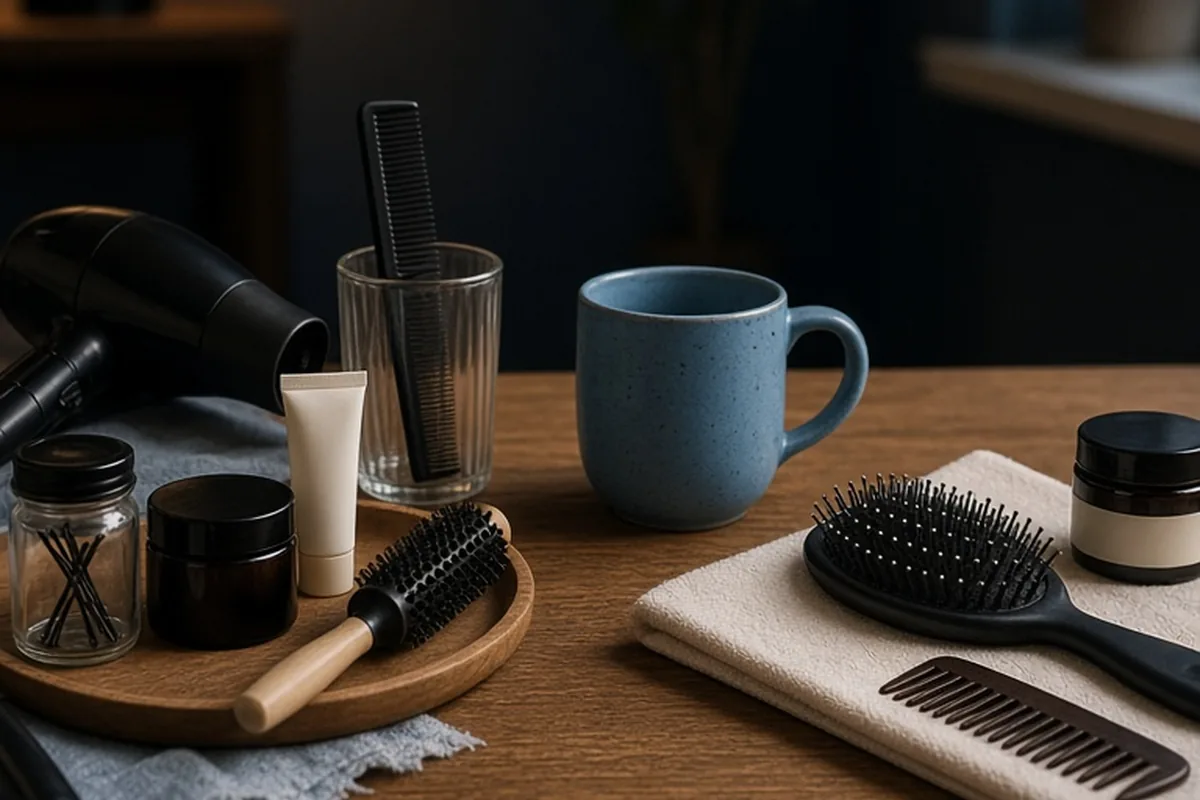
Styling short hair at home requires mastering directional blow-drying, selecting texture-appropriate products like pomades or styling creams, and utilizing small-barrel tools. While a salon provides precision shape resets, polished blowouts, and perimeter refinement using high-heat tension techniques, home styling offers cost-effective daily control once you understand your hair pattern. Reserve salon visits for structural haircut adjustments and complex occasion styling, while handling daily volume, definition, and hold at home.
Short hair demands a distinct approach to daily styling because cut lines, crown cowlicks, and natural growth patterns sit directly in view without the weight of long strands to pull them down.
Evaluating the Daily Difference: What Home Styling Achieves Versus Professional Work
The physical mechanics of styling short hair differ dramatically depending on whether you are standing in front of your bathroom mirror or sitting in a salon chair. When styling at home, your working angles are constrained by your own reach, making the crown and the nape of the neck the most challenging zones to manipulate. At home, you rely heavily on tactile feedback and dual-mirror setups to manage sectioning, volume distribution, and product distribution. However, home styling gives you the freedom to experiment daily, adapting your routine to humidity, morning time constraints, and natural hair texture evolution between wash days.
In contrast, a salon stylist works from an elevated, 360-degree vantage point with full ergonomic control over airflow, tool angle, and mechanical tension. A professional can isolate stubborn growth swirls at the back of your head, direct heat precisely along the cuticle from roots to ends, and create balanced structural volume that is difficult to replicate independently. The result of a salon blowout or set is often longer-lasting smoothing, refined edges, and distinct root lift. Understanding this gap helps you set realistic expectations: home styling focuses on practical daily versatility, texture definition, and quick shape control, while salon styling delivers structural precision, high-polish finishes, and long-wearing occasion results.
Essential Home Tool Kit for Managing Short Crops, Pixies, and Bobs
Replicating professional results on short hair at home requires tools tailored to shorter hair lengths rather than standard-sized equipment. Full-sized flat irons with two-inch plates or large round barrel brushes cannot grip hair shorter than three inches, resulting in accidental scalp contact or flat, lifeless roots. To build an effective home styling station, focus on compact tools designed specifically for precision work.
A concentrated blow-dryer attachment is fundamental for directing airflow downward along the hair shaft to prevent frizz and control unruly cowlicks. Pair your dryer with a small ceramic or boar-bristle round brush measuring between 0.5 and 1 inch in diameter for bobs and longer pixie tops. For pixie cuts, crops, and textured tapers, a flat paddle brush or a classic styling brush with nylon pins allows for directional wrap-drying. When heat styling is necessary, a mini flat iron with 0.5-inch beveled plates allows you to grasp short perimeter pieces, smooth sideburns, and create subtle root bends without leaving harsh crease marks. Tail combs are equally critical for clean sectioning, precise parting, and detailing the crown.
How to Style Short Hair at Home vs Salon: Core Blow-Drying and Texturizing Techniques
The cornerstone of home styling for short cuts is the directional wrap-dry technique. Rather than pulling hair straight out with a round brush, wrap-drying involves brushing damp hair flat against the curvature of the head in alternating directions while following closely with the blow-dryer nozzle on medium heat. This method neutralizes natural cowlicks, softens harsh growth patterns, and molds the hair to the shape of your head. Once the hair is roughly eighty percent dry, you can introduce a small round brush or mini flat iron at the crown to introduce targeted lift or soft curvature.
Product application is where many home routines falter compared to salon finishes. Professional stylists rarely apply styling waxes, pastes, or pomades directly onto the surface of the hair in large clumps. To mimic this technique at home, dispense a pea-sized amount of product onto your palm and rub your hands together vigorously until the product is warm, fully emulsified, and transparent. Begin applying from the back of the head and work forward, distributing product through the roots and mid-lengths first before lightly defining the ends and hairline. This prevents the front of your haircut from becoming weighed down or greasy, leaving your short style pliable and textured rather than stiff.
Navigating Short Hair Routines for Straight, Wavy, Curly, and Coily Textures
Different hair textures require tailored approaches to short hair styling, whether performed in the salon or at home. Fine or straight short hair tends to show scalp separation and lose volume quickly. At home, fine hair benefits from lightweight volumizing foams, dry texturizing sprays, and root-lift powders rather than heavy waxes or silicone serums. At the salon, fine short hair is often given structural density through precise point-cutting techniques and tension-heavy round brush sets that maximize root elevation.
Wavy, curly, and coily short hair requires moisture retention and curl pattern preservation. For wavy and curly short cuts, home styling should prioritize diffusing on low airflow with leave-in conditioner or lightweight curl-defining gels. Avoid raking brushes through dry curls, which disrupts the natural clump pattern and generates frizz. For tightly coiled and textured short hair, home maintenance often involves finger coiling, twist sponges, or wrapping hair with setting lotion under a silk scarf to set defined, uniform patterns. Professional salon visits for textured short hair offer intensive hydration steaming, precision shape sculpting, and silk presses that ensure thermal protection while honoring the hair's natural elasticity.
When to Choose Professional Salon Services Over DIY Styling
While daily maintenance and casual styling are practical at home, specific circumstances warrant professional salon appointments. Major formal occasions—such as weddings, professional photography sessions, or formal events—often benefit from the specialized holding techniques, structural pinning, and multi-angle symmetry that only an experienced stylist can provide on short lengths. A stylist can create the illusion of an updo on short bobs or build long-lasting volume that withstands hours of movement and environmental humidity.
Additionally, when a short haircut begins to lose its intended shape during the growth phase, home styling often becomes frustrating and time-consuming. Heavy weight lines, overgrown napes, and lost layering cannot be solved by styling products alone. Booking a salon visit allows a stylist to perform perimeter cleanup, debulk dense interior sections, and re-establish the balance of the cut. Chemical texture treatments, professional glosses, and deep bond-rebuilding services should also remain within the salon setting to ensure scalp safety and prevent overlapping damage on shorter strands.
Managing Maintenance Schedules, Perimeter Trims, and Overnight Preservation
The ease of styling short hair at home is directly tied to the consistency of your salon trim schedule. Because short hair grows visibly along the hairline and neckline, cuts like pixies, crops, and fades generally require structural maintenance every four to six weeks to keep daily styling effortless. Short bobs and asymmetric cuts can often stretch between six to eight weeks before the baseline loses its crisp profile. Neglecting these maintenance appointments makes home styling significantly harder, as overgrown lengths resist directional blow-drying and collapse under minimal product weight.
Between salon visits, preserving your short style overnight reduces morning prep time and minimizes heat damage. Sleeping on a smooth silk or satin pillowcase prevents friction that causes bedhead, cowlick disruption, and split ends. For cropped or tapered styles, wrapping the perimeter with a silk or satin scarf keeps edges flat and organized overnight. In the morning, you can refresh your style by misting flattened areas lightly with water or a leave-in conditioning spray, reactivating the existing product with a brief thirty-second blast from your blow-dryer, and detailing with a touch of lightweight pomade.
Analyzing Time, Tool Costs, and Skill Acquisition for Both Options
Deciding how much of your short hair routine to handle at home versus outsourcing to a salon comes down to evaluating upfront tool costs, ongoing service fees, and the personal learning curve. Setting up a comprehensive home styling kit involves a one-time investment in a reliable blow-dryer with concentrator attachments, miniature heat tools, specialty brushes, and professional-grade styling pastes. Once these tools are acquired, daily styling costs are minimal, and your daily morning routine typically takes between ten and twenty minutes once muscle memory develops.
Conversely, relying on routine salon blowouts and professional styling sessions involves recurring service costs, tip allocations, and scheduled travel time. While salon styling delivers effortless luxury and flawless finishes for specific days, it is generally unsustainable as a daily solution for most individuals. The most practical approach for short hair wearers is building competence in two or three reliable home styling routines—such as a sleek wrap-dry, a textured piecey look, and a low-maintenance air-dried routine—while budgeting regular salon visits strictly for structural haircuts, occasional specialized treatments, and major milestone events.
Frequently asked questions
How often should short hair be washed when styling daily at home?
Short hair often requires washing every two to three days, as natural scalp oils travel down shorter strands faster than longer hair. However, over-washing can strip moisture and cause product buildup; using a gentle clarifying shampoo weekly and rinsing with warm water between wash days helps maintain style flexibility.
Can I achieve salon-level volume on short hair without using heat tools?
Yes, you can build non-heat volume by applying a lightweight styling mousse to damp hair and setting it with styling clips at the roots while it air-dries. Using a dry texturizing powder or dry shampoo directly at the crown once the hair is completely dry also creates noticeable, matte root lift.
Why does my short hair look different when styled at home compared to the salon?
Salon stylists have 360-degree visibility, high-tension brush control, and industrial-grade dryers that direct airflow precisely down the hair cuticle. Replicating this at home requires a three-way mirror, small-barrel tools designed for short lengths, and directional wrap-drying techniques.
What is the most common mistake people make when styling short hair at home?
The most common mistake is applying too much heavy product directly onto the top or front hairline. This weighs down the cut and makes it look greasy; always emulsify styling products thoroughly between your hands and apply from the back and crown forward.
Your next step
Assess your current styling kit to ensure your brushes and heat tools match your hair length, then practice the wrap-dry technique to establish an efficient daily routine before booking your next structural trim.