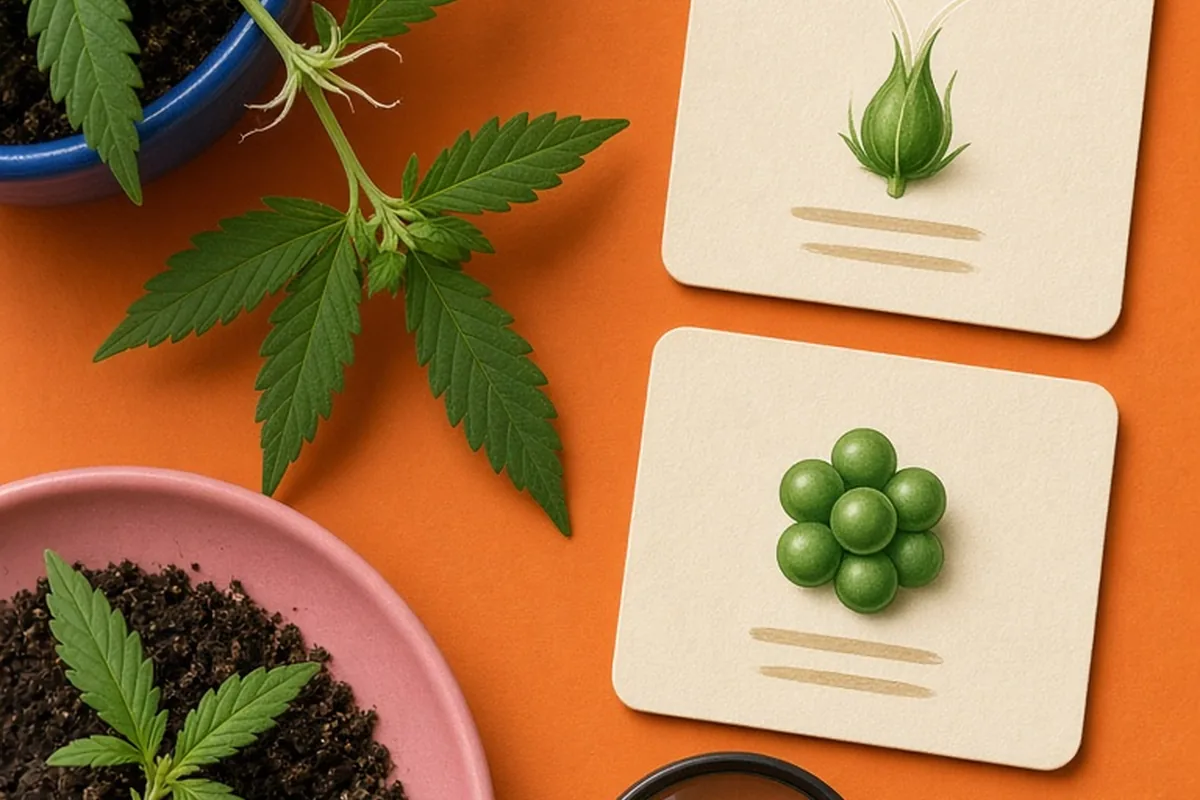
To tell the difference between male and female pot plants, inspect the nodes where branches meet the main stem around week four to six of growth. Female plants develop teardrop-shaped bracts that sprout two wispy, white hair-like pistils. Male plants develop smooth, round pollen sacs that resemble tiny balls or miniature grape clusters without hairs. Spotting these pre-flowers early prevents unwanted pollination.
Cultivating cannabis requires close attention to plant anatomy, particularly during the transition from the vegetative stage to the flowering phase. Knowing how to identify the biological sex of each plant ensures that female crops remain unseeded, resinous, and productive.
The Botanical Importance of Sexing Plants Early
Cannabis is primarily a dioecious plant species, meaning individual plants develop distinct male or female reproductive organs. In standard gardening and botanical cultivation, female plants are prized for their ability to produce dense, resin-rich floral clusters known as buds. When female flowers remain unfertilized by male pollen, they divert their metabolic energy into producing resin, aromatic terpenes, and cannabinoids rather than developing seeds. This unseeded state, historically referred to as sinsemilla, represents the standard quality benchmark for home and commercial cultivators.
Male plants, on the other hand, produce pollen sacks designed by nature to distribute airborne pollen over wide distances. If a single male matures within an enclosed grow tent or an outdoor garden patch, it can release millions of microscopic pollen grains that drift onto surrounding female flowers. Once pollinated, female plants abruptly shift their energy away from floral growth and essential oil production toward seed formation. This results in seedy, harsh, and less aromatic harvests, making early sex identification a critical skill for protecting the entire crop.
When and Where to Inspect for Pre-Flowers
Sex identification relies on checking for pre-flowers, which are miniature versions of mature reproductive organs that appear at the plant's nodes. A node is the specific intersection where a branch or leaf stem emerges from the main stalk. In most seed-grown plants, pre-flowers begin to emerge during the fourth to sixth week of the vegetative cycle, typically starting around the fourth or fifth node from the bottom and moving upward as the plant matures.
To inspect these microscopic structures accurately, gardeners generally use a small magnifying tool, such as a 10x or 30x jeweler's loupe, along with strong direct lighting. Searching between the natural stipules—the small, slender, leaf-like green daggers that grow at every node—reveals the emerging pre-flower. Relying strictly on vegetative traits like leaf width or general vigor is unreliable; physical examination of the nodal tissue remains the only dependable visual method before full flowering commences.
Distinct Anatomy of Female Cannabis Plants
The defining anatomical hallmark of an early female pot plant is the calyx or bract accompanied by stigmas. A female pre-flower appears as a small, teardrop-shaped green structure nestled snugly against the stem at the base of the node. As the bract matures, it pushes out two delicate, translucent or milky-white hairs called stigmas or pistils. These hair-like structures are designed to catch airborne pollen grains and guide them down to fertilize the ovule.
As the plant advances further into its flowering cycle under a shortened light schedule, these single bracts multiply rapidly along the stems, clustering together to form thick colas covered in sticky glandular trichomes. Even before large clusters develop, the presence of even one fuzzy white hair emerging from a small green teardrop confirms that the plant is female. Female plants also tend to display denser, bushier branching structures with shorter internodal spacing compared to their male counterparts.
Distinct Anatomy of Male Cannabis Plants
Male cannabis plants reveal their identity through the development of stamens enclosed in small pollen sacs. An early male pre-flower resembles a smooth, spherical green ball or miniature football mounted on a tiny stalk. Unlike female bracts, these structures are completely smooth and never produce white hairs or fuzzy pistils. In their earliest stage, male pre-flowers can look like tiny closed claws or spades before rounding out into distinct ball shapes.
As the male plant approaches maturity, these single balls multiply into drooping clusters that resemble miniature bunches of grapes. Eventually, the sacs split open along vertical seams to expose yellow, pollen-laden anthers that release pollen into the surrounding air currents. In terms of overall structure, male plants frequently stretch faster and grow taller than females, developing thin, fibrous stalks with wider spacing between nodes—an evolutionary adaptation designed to drop pollen down onto shorter female flowers below.
Recognizing Hermaphroditic Traits and Stress Responses
In addition to strictly male or female plants, cannabis can sometimes exhibit hermaphroditism, where a single plant produces both male and female reproductive organs. Hermaphrodites can arise from genetic predisposition, but they are most frequently triggered by environmental stressors such as light leaks during dark cycles, extreme temperature swings, erratic watering schedules, physical trauma, or severe nutrient imbalances. Because hermaphroditic plants produce viable pollen, they pose the same pollination risks to a garden as pure male plants.
Hermaphroditism presents in two main forms: true hermaphrodites and plants producing stamen-like structures commonly known as anthers or nanners. True hermaphrodites develop distinct male pollen sacs alongside female calyxes at the nodes. Alternatively, stressed flowering females may push bright yellow, curved anthers directly out of the center of developing female buds without forming a protective sac. Gardeners should monitor their flowering plants weekly; if a few isolated anthers appear late in bloom, they can sometimes be plucked with tweezers, but heavily hermaphroditic plants usually require complete removal to protect surrounding crops.
Step-by-Step Removal and Garden Quarantine Procedures
When an unwanted male or hermaphroditic plant is confirmed, removing it safely without dispersing pollen across the grow space requires careful technique. First, turn off all circulating fans, intake systems, and exhaust ventilation to create still air within the room. Moving air can cause even unopened or slightly cracked pollen sacs to burst and spread invisible microscopic dust across adjacent female plants.
Carefully slide a large plastic trash bag over the top of the male plant, working slowly from the upper canopy down to the base of the main stalk. Secure the opening of the bag around the base with a zip tie or tape to trap all plant material inside before cutting the main stem just above the soil line. After removing the bagged plant from the growing area, thoroughly wipe down the grow tent walls, light fixtures, and surrounding pots with a damp cloth or mild water-and-vinegar solution, as moisture effectively deactivates and neutralizes any loose pollen.
- Turn off all oscillating fans and ventilation equipment before touching the plant.
- Gently lower a plastic bag over the entire plant from top to bottom.
- Tie the bag securely around the base of the stem to contain pollen sacs.
- Cut the stem below the bag tie and remove the plant from the garden area.
- Mist the grow area with clean water or wipe surfaces to neutralize stray pollen.
Modern Prevention: Feminized Seeds and Early Genetic Screening
For growers looking to streamline their gardens and eliminate the guesswork of sexing regular seeds, modern horticultural techniques offer reliable alternatives. Feminized seeds are bred by inducing a genetically female plant to produce pollen, which is then used to pollinate another female plant. Because neither parent contributes male chromosomes, seeds produced through this method yield female plants roughly 99 percent of the time, dramatically reducing the risk of accidental pollination.
Commercial cultivators and breeding operations also use agricultural DNA sex-testing kits to identify plant sex as early as seven to ten days after germination. By taking a tiny hole-punch sample from the first set of true seedling leaves and sending it to a specialized plant laboratory, growers receive conclusive genetic results weeks before visual pre-flowers appear. While laboratory screening incurs an added financial cost, it saves significant space, water, electricity, and labor by eliminating male plants before they consume valuable garden resources.
Frequently asked questions
Can a female pot plant spontaneously turn into a male plant?
A genetically female plant cannot turn into a true biological male, but it can develop male reproductive structures due to stress. When subjected to irregular light schedules or severe environmental fluctuations, female plants may produce pollen-bearing anthers as a survival response. Correcting growing conditions and maintaining strict dark cycles helps prevent this stress reaction.
How long do I have to remove a male plant before it pollinates my females?
You generally have one to two weeks from the first appearance of male pre-flowers before pollen sacs mature and split open. However, it is safest to remove the plant immediately upon confirming smooth, spherical sacs to prevent accidental dispersal. Inspecting node junctions every few days ensures you catch them long before pollen forms.
Do male pot plants have any practical uses in gardening?
While male plants are excluded from bud production gardens, they are essential for intentional breeding programs to create new seed lines and genetic crosses. In addition, male plants produce durable bast fibers historically used in textiles, rope making, and paper production. Outside of controlled breeding, however, most home growers cull them promptly.
Your next step
Examine the upper stem nodes of your plants with a magnifying loupe during week five of growth, looking for wispy white pistils or smooth pollen sacs to confirm sex before flowering begins.