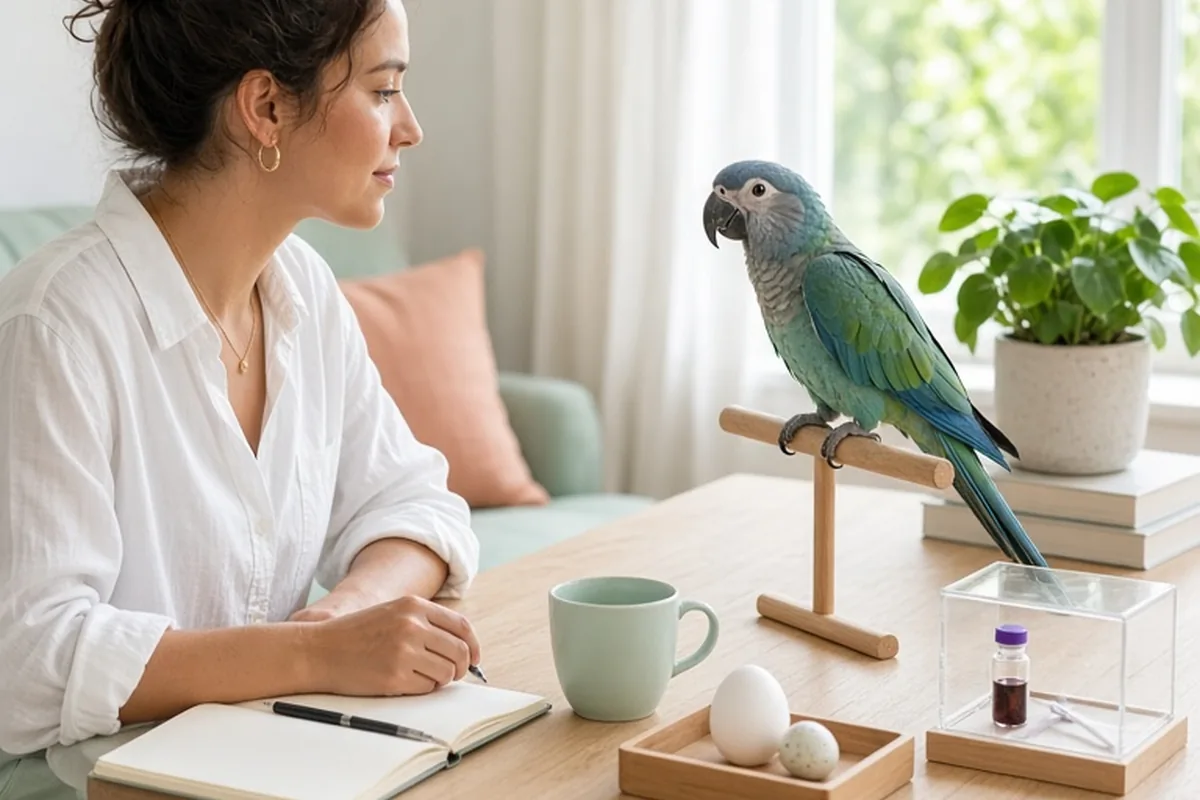
To tell if a parrot is male or female with certainty, an avian DNA blood or feather test is the standard method for most species. A few species, such as Eclectus parrots and adult budgies, display distinct sexual dimorphism through feather coloration or cere shade. In sexually monomorphic species like African greys or conures, physical appearance is unreliable, though egg-laying confirms a female definitively.
Knowing the biological sex of your parrot is essential for proactive healthcare, managing hormonal cycles, and preventing reproductive complications like egg binding. Because the majority of companion parrot species lack visible external differences, owners often need to combine veterinary testing, species knowledge, and behavioral awareness.
DNA Testing as the Definitive Identification Method
Avian DNA sexing is the most accurate, accessible, and non-invasive way to identify the sex of companion parrots. Because female birds possess ZW chromosomes and males possess ZZ chromosomes, laboratory analysis of genetic material yields a definitive result regardless of the bird's age. Owners can obtain samples at home using freshly plucked chest feathers or a drop of blood from a clipped toenail, though having an avian veterinarian collect the sample minimizes stress and avoids painful sampling errors.
When choosing between blood and feather samples, blood generally provides higher concentrations of quality DNA, reducing the likelihood of an inconclusive test. Plucked feathers must contain the active follicle at the base; naturally molted feathers do not contain viable cellular material. While DNA testing boasts accuracy rates exceeding ninety-nine percent, sample contamination or mishandling can occasionally produce inconclusive reports. This test also provides purely genetic data, meaning it cannot detect internal reproductive health issues or developmental abnormalities.
Identifying Sex in Visually Dimorphic Parrot Species
A select group of companion parrot species exhibit sexual dimorphism, meaning males and females develop visibly different physical characteristics upon reaching maturity. The most striking example is the Eclectus parrot, where males display brilliant emerald green plumage with candy-corn colored beaks, while females boast rich crimson and royal blue feathers with solid black beaks. In these species, visual sexing is straightforward once the bird molts into adult plumage, removing the need for genetic testing.
Other common dimorphic species show more subtle differences localized to specific body parts. Adult budgerigars (budgies) typically have a bright blue cere (the fleshy area above the beak) in males, whereas females develop a tan, brown, or pale white cere that roughens during breeding condition. Mature male Indian Ringneck parakeets develop a distinct black and rose-colored neck ring around two to three years of age, which females lack entirely. However, juvenile birds of dimorphic species often resemble females until their first major molt, meaning visual assessments in young birds remain speculative.
The Pitfalls of Visual Sexing in Monomorphic Parrots
The vast majority of popular pet parrot species—including African grey parrots, most Amazons, macaws, cockatoos, and conures—are monomorphic. In these species, males and females share identical plumage patterns, beak shades, and eye colors. Relying on folklore methods, such as evaluating head flatness, beak width, or overall body bulk, consistently leads to inaccurate conclusions because individual variations in genetics and nutrition outweigh sex-based differences.
Another widespread but inaccurate method is pelvic vent palpation, where an owner or handler feels the space between the pelvic bones beneath the tail. While mature laying females may exhibit wider pelvic spacing to accommodate passing eggs, this anatomical flexibility fluctuates with age, general body condition, and hormonal readiness. Relying on vent palpation can cause unnecessary physical discomfort to the bird and frequently misidentifies young females or robust males.
Reproductive Events and Physical Verification
The single indisputable physical confirmation of a female parrot is the production of an egg. Parrots do not require a male partner to develop and lay eggs; hormonal triggers such as extended daylight, warm diets, and perceived nesting cavities can stimulate solitary females to lay clutches. If your parrot lays an egg, you have conclusive proof of its female sex without needing laboratory confirmation.
While egg-laying provides immediate certainty, it also introduces serious veterinary considerations. Chronic egg-laying depletes calcium reserves rapidly and places the bird at risk for life-threatening conditions such as egg binding, yolk coelomitis, and oviduct prolapse. Owners who discover their bird is female through egg production must immediately adjust environmental factors—such as ensuring ten to twelve hours of uninterrupted dark sleep, removing nesting boxes, and consulting an avian veterinarian for dietary calcium supplementation.
Interpreting Hormonal Behaviors and Courtship Signs
Parrots exhibit pronounced behavioral changes as they reach sexual maturity, and certain posturing can hint at their biological sex. Males frequently engage in elaborate courtship displays, such as strutting with pinned pupils, fanning their tails, tapping their beaks against surfaces, and attempting to feed toys or their favorite human through regurgitation. Females may adopt a crouched, receptive posture with wings slightly drooped, tail raised, and quiet chirping noises, often accompanied by active shredding of paper or foraging for dark nesting areas.
Despite these general patterns, behavior alone is not an infallible indicator of sex. Both male and female parrots can exhibit shredding, territorial aggression, masturbatory rubbing, and regurgitation. Environmental stimulation and social bonding heavily influence these actions, and some birds exhibit behaviors typically associated with the opposite sex. Using behavior as a supportive clue alongside verified testing prevents mistaken assumptions about your companion's care needs.
Veterinary Endoscopy and Surgical Sexing
Surgical sexing, also known as avian laparoscopy, was the primary method for sexing monomorphic birds before the advent of commercial DNA testing. During this procedure, an avian veterinarian places the bird under general anesthesia, makes a small incision in the left flank, and inserts an endoscope to visually examine the internal reproductive organs. A single left ovary confirms a female, while paired testes confirm a male.
Today, surgical sexing is rarely used solely to determine gender due to the inherent risks of general anesthesia and surgical recovery. However, laparoscopy remains a valuable diagnostic tool when an avian veterinarian needs to evaluate the structural health of internal organs, check for reproductive tract tumors, or assess gonadal maturity in endangered breeding programs. For standard pet ownership, non-invasive DNA testing has rightfully replaced surgical procedures.
Tailoring Daily Care Once You Know Your Parrot's Sex
Determining your parrot's biological sex allows you to customize daily management to support long-term wellbeing. For females, environmental management focuses on preventing reproductive triggers. This involves avoiding full-body petting (limiting physical contact strictly to the head and neck), removing cardboard boxes or dark enclosed spaces that mimic tree cavities, and managing dietary fat intake to prevent stimulating the ovaries.
For males, understanding their sex helps anticipate seasonal territoriality and courtship aggression. Male parrots experiencing hormonal surges may become possessive of particular family members or cage zones. By recognizing these natural biological drives, owners can implement positive reinforcement training, adjust lighting schedules, and provide foraging enrichment to redirect excess energy safely without resorting to punishment or isolation.
Frequently asked questions
Can I tell the sex of a parrot by the shape of its head?
No, head shape, beak size, and overall weight are not reliable indicators of a parrot's sex. Natural genetic diversity within a species creates wide variations among both males and females, making visual guessing in monomorphic species inaccurate.
At what age can a parrot be DNA sexed?
Parrots can be DNA sexed at any age, even as newly hatched chicks. Because the test examines genetic markers rather than physical development, age does not affect the accuracy of the laboratory result.
Does knowing my parrot's sex change its personality?
A parrot's biological sex does not dictate its baseline friendliness, intelligence, or capacity to bond. Both male and female parrots can be equally affectionate companions, though their specific hormonal behaviors during breeding seasons may manifest differently.
Your next step
Schedule an appointment with an avian veterinarian or order a certified DNA feather collection kit to determine your parrot's biological sex accurately and plan its long-term care.