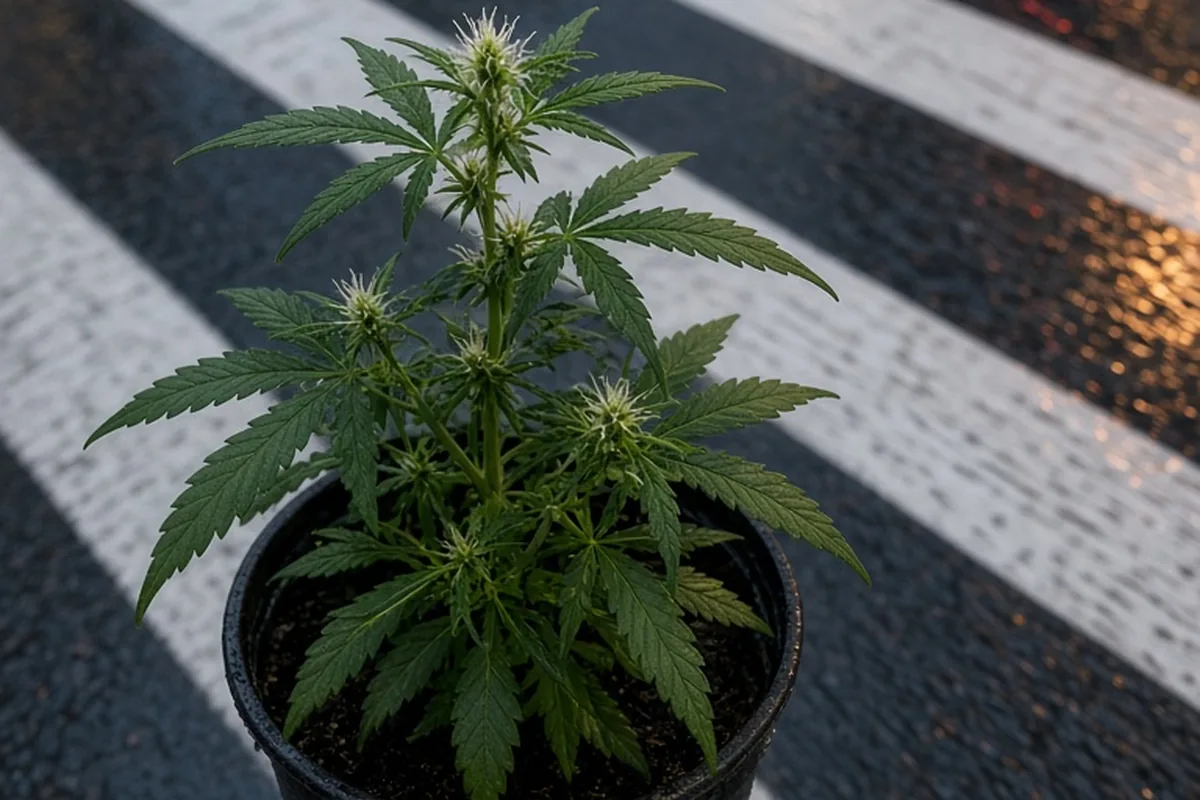
To tell if a pot plant is female, inspect the nodes where branches meet the main stem around week four to six of growth. Female plants develop small, teardrop-shaped pre-flowers called bracts that produce two slender, fuzzy white hairs known as stigmas or pistils. In contrast, male plants produce smooth, rounded pollen sacs that resemble tiny balls on small stems and lack hair.
Cannabis is typically dioecious, meaning individual plants develop distinct male or female reproductive organs. Because only unpollinated female plants produce the dense, resin-rich floral clusters sought by gardeners, learning to identify plant sex early saves time, physical space, and valuable garden resources.
The Biology of Plant Sex and Why Identification Matters
In botanical terms, cannabis plants are predominately dioecious, functioning with separate male and female individuals. In nature, male plants release airborne pollen from specialized stamens to fertilize female flowers. Once fertilized, female plants divert their metabolic energy away from vegetative vigor and resin production into developing viable seeds. For cultivators seeking dense, high-grade botanical flowers, this pollination process significantly reduces the quality, aroma, and overall mass of the floral harvest.
Sensimilla, meaning seedless flower, is achieved entirely by isolating female plants from any source of viable pollen. When female plants remain unpollinated throughout their lifecycle, they continue producing swollen calyxes and protective trichomes containing aromatic terpenes and secondary metabolites. Because a single unnoticed male plant can release millions of microscopic pollen grains capable of drifting across entire grow rooms or outdoor garden plots, learning to identify sex at the earliest developmental stage is an essential defensive skill for every grower.
Timing Your Inspection: When Pre-Flowers Begin to Emerge
Plants do not display their biological sex immediately upon sprouting. During the early vegetative stage, male and female seedlings look virtually indistinguishable, focusing all available energy on root development, foliage growth, and stem thickness. Pre-flowers, which are miniature versions of adult reproductive organs, generally begin manifesting between the fourth and sixth week from germination, depending on genetic lineage and lighting conditions.
Indoor growers working with photoperiod plants typically observe these structures shortly before or immediately after switching their light schedule from vegetative lighting, such as eighteen hours of light and six hours of darkness, to a flowering schedule of twelve hours of light and twelve hours of darkness. Outdoor cultivators usually notice pre-flowers in mid-to-late summer as the natural daylight hours gradually shorten. Autoflowering varieties, which transition based on internal chronological age rather than daylight exposure, usually reveal their sex automatically around week three or four regardless of external lighting shifts.
Where to Look: Locating the Nodal Junctions
To inspect a plant accurately, focus on the nodes, which are the anatomical intersections where secondary branches and fan leaf petioles attach to the primary vertical stalk. Sex organs do not sprout along the broad fan leaves or within the root zone; they emerge directly in the V-shaped crevices of the upper branch joints. The most reliable early indicators usually appear around the fourth, fifth, or sixth node down from the growing apical tip.
Proper inspection requires adequate illumination and magnification. Using a jeweler's loupe, a handheld microscope, or a smartphone camera with macro focus capabilities helps differentiate tiny morphological structures that are easily misjudged with the naked eye. Gently pull back the fan leaf stem to reveal the tight interior pocket of the node, taking care not to bruise or fracture the delicate emerging branch tissue.
Key Anatomical Characteristics of Female Plants
The defining visual hallmark of a female pre-flower is the bract, often casually referred to as the calyx. This structure appears as an elongated, pear-shaped or teardrop-shaped pod that sits flush against the stem without an independent supporting stem. Emerging directly from the tapered tip of this green bract are two distinct, thread-like white hairs known scientifically as stigmas, or collectively as pistils. These hairs serve to capture windborne pollen in nature.
In early development, these pistils are translucent, soft white, or pale yellow, featuring a slightly fuzzy or feathery texture under magnification. As the plant matures into full bloom, these individual bracts multiply exponentially, clustering closely together to form dense floral colas. Over time, mature pistils naturally oxidize, turning amber, orange, red, or brown, while the underlying bracts swell with aromatic resin glands.
- Teardrop-shaped or pear-shaped bracts hugging the main stem closely without a supporting stalk
- Two distinct white, cream, or translucent fuzzy hairs emerging from the apex of each pre-flower
- Pre-flowers that remain singular and tightly nestled in nodal junctions during the early vegetative phase
- Foliage growth that gradually concentrates into dense, leafy floral sites at branch tips
Distinguishing Female Pistils from Stipules
A frequent point of confusion for beginner gardeners is the presence of stipules. Stipules are small, green, dagger-shaped or hair-like vegetative growths that develop at every node on both male and female plants. Because stipules emerge in pairs precisely where pre-flowers form, inexperienced eyes often mistake these upright green spikes for emerging female pistils, leading to premature assumptions about plant sex.
To avoid misidentification, examine the origin and color of the growth. Stipules emerge directly from the plant's main bark or stem surface, pointing upward like miniature green spears. True female pistils, by contrast, emerge exclusively out of the opening of a swollen calyx or bract. Furthermore, stipules remain solid green and stiff, matching the foliage, whereas pistil hairs are softer, flexible, and distinctly pale or white during the pre-flowering stage.
Recognizing Male Pre-Flowers and Pollen Sacs
Male plants exhibit a distinctly different developmental structure. Rather than forming teardrop-shaped bracts with fuzzy hairs, male plants produce staminate pre-flowers that look like miniature spheres or eggs. In their earliest stage, these pre-flowers resemble tiny green or yellowish balls. Unlike female bracts, which sit snugly against the stem, male pre-flowers quickly develop a tiny stem or pedicel, causing them to hang downward slightly like small lanterns.
As male pre-flowers develop, they form clusters that resemble tiny bunches of miniature grapes or spade symbols. Male flowers do not produce white pistil hairs at any point. Once fully developed, these pollen sacs swell, crack open vertically along defined seams, and reveal small pale yellow stamens that shed fine pollen dust. Recognizing these smooth, round spheres before they crack open is essential to protecting female plants nearby.
- Spherical or football-shaped pods that lack any emerging hairs or pistils
- Presence of a short, distinct neck or pedicel connecting the ball to the main branch junction
- Tendency to group into multi-pod clusters rather than remaining isolated single pods
- Down-turned or drooping orientation as the sac prepares to open and release airborne pollen
Spotting Hermaphroditic Traits and Environmental Stressors
Cannabis possesses evolutionary plasticity that allows a genetically female plant to produce male reproductive organs under severe environmental stress. These dual-sex specimens, known as hermaphrodites or monoecious plants, represent a significant risk because they can self-pollinate or fertilize neighboring crops. Hermaphroditism typically manifests in two ways: mixed clusters where standard male sacs and female bracts grow on the same plant, or through specialized yellow pollen-bearing anthers known colloquially as bananas or nanners.
Bananas emerge directly from the center of ripening female floral buds, completely bypassing the formation of a spherical outer pollen sac. Because these exposed stamen structures do not need to burst open to disperse pollen, they can fertilize a garden very rapidly. Cultivators must monitor plants closely for irregular light leaks during the dark cycle, severe temperature fluctuations, physical branch damage, or erratic feeding schedules, as environmental instability is the primary trigger for this survival response.
Safe Removal and Quarantine Protocols for Male Plants
When an inspection confirms the presence of male pollen sacs, immediate and careful action is required. Never roughly shake, pull, or carry an uncovered male plant across a grow room, as drafts from circulation fans or physical agitation can cause mature sacs to rupture prematurely. Before disturbing the plant, turn off all intake fans, exhaust systems, and oscillating air movers to keep the ambient room atmosphere completely still.
Gently slide a large, clean plastic trash bag over the entire plant from the top down, tying the opening tightly around the base of the main stem to seal in any microscopic pollen. Cut the main stalk below the bag line and remove the enclosed plant from the cultivation area entirely. Once the male is disposed of, wash your hands, change clothing, and mist the surrounding female plants and surfaces with clean water; moisture rapidly deactivates airborne cannabis pollen upon contact.
Frequently asked questions
Can you determine the sex of a cannabis plant just by looking at its seeds?
No visual physical characteristic of a cannabis seed, including size, coloration, speckling, or ridge patterns, reveals its biological sex. Sex is determined by underlying genetic chromosomes and expressed visually only when pre-flowers emerge at nodal junctions. Cultivators seeking certainty prior to germination must purchase laboratory-produced feminized seeds or perform early seedling tissue tests.
What should I do if a pre-flower looks ambiguous or swollen without hairs?
When an emerging node structure looks swollen but has not yet developed white hairs or a distinct stem, leave the plant in place and inspect it daily under magnification. Female calyxes sometimes emerge slightly before the pistil hairs push through, while male sacs take several days to develop stems and pollen. Avoid discarding a plant prematurely until clear hairs or hanging spherical clusters confirm its identity.
How long do I have to remove a male plant before it pollinates my females?
You typically have between one and two weeks from the very first visual emergence of tiny male balls until the sacs swell, split, and release pollen. However, male plants mature faster than females, so it is safest to cull and bag the plant the moment spherical shapes on tiny stems are definitively confirmed.
Can a confirmed female plant switch completely to a male plant later in life?
A female plant cannot permanently change its primary genetic identity into a pure male plant. However, severe stress or genetic instability can cause a female plant to express hermaphroditic traits, growing isolated male pollen sacs or bananas alongside its buds. Regular nodal inspections throughout the entire flowering cycle are essential to catch these secondary growths.
Your next step
Inspect the fourth and fifth branch nodes of your plants under a clean magnifying lens this week, documenting any emerged hairs or spherical sacs to determine whether isolation is necessary.