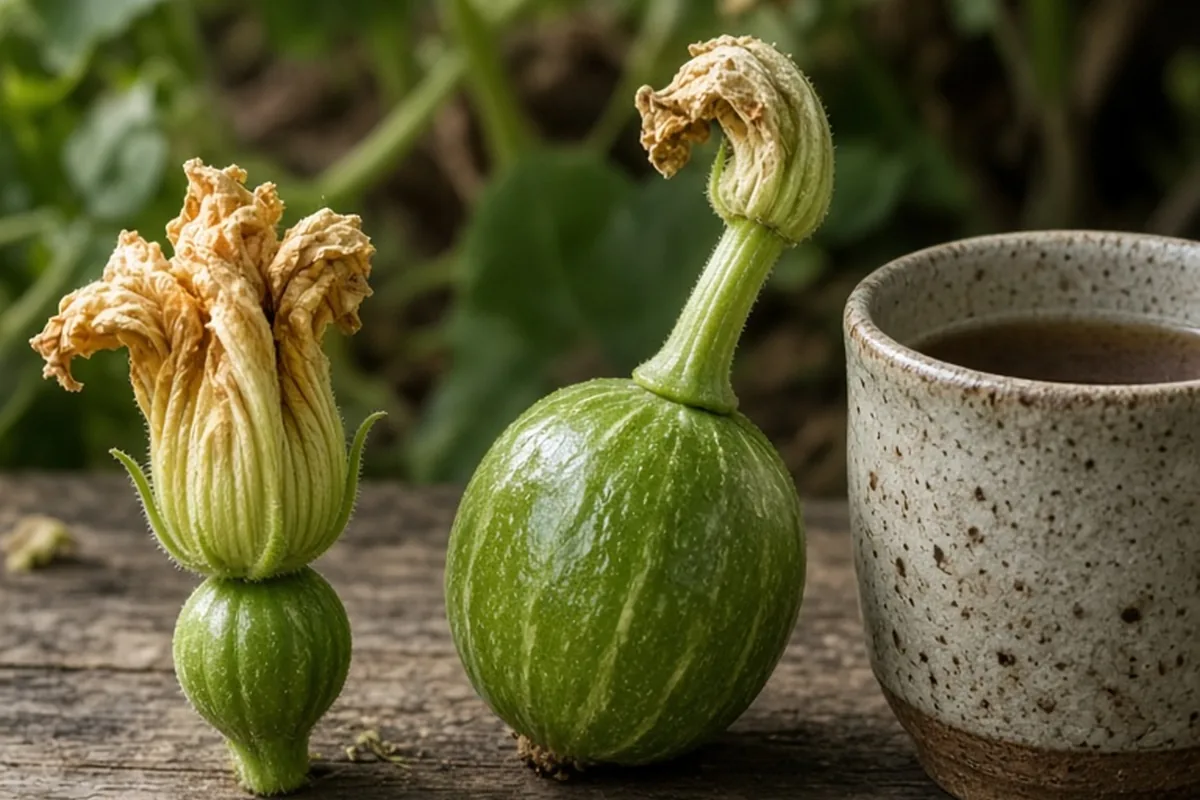
To tell if a female pumpkin flower is pollinated, watch the miniature fruit at the base of the blossom over three to five days after it closes. A successfully pollinated ovary stays bright green, turns glossy, firms up, and visibly enlarges. If unpollinated, the small fruit will turn dull yellow or brown, shrivel at the tip, and detach from the vine within a week.
Growing pumpkins requires close attention to flowering habits because every pumpkin begins as a miniature ovary beneath a female blossom. Because female flowers remain open and receptive for only a brief morning window, learning the physical cues of successful pollination allows growers to monitor crop progress, adjust garden care, and intervene promptly if natural fruit set fails.
Visible Changes in the Ovary Days After Bloom Closure
The primary indicator of successful pollination is a distinct transformation in the small bulbous ovary situated directly beneath the flower petals. Before the blossom opens, this miniature pumpkin is already present, but its growth remains entirely paused until fertilization occurs. Once viable pollen grains transfer from a male flower to the multi-lobed stigma of the female flower, hormones trigger cellular division within the ovary walls. Within seventy-two hours of flower closure, a fertilized ovary shifts from a dull, pale matte appearance to a vibrant, glossy green surface that reflects light evenly.
Texture and expansion provide the next definitive signs. A pollinated pumpkin ovary feels firm and dense when gently pressed between your fingertips, showing no give or sponginess. Over the course of four to seven days, the ovary will experience noticeable size gains, often doubling or tripling from the size of a small marble to that of a golf ball or larger. In contrast, an unfertilized ovary remains completely static in size, failing to show the characteristic outward swelling that signals active nutrient uptake from the parent vine.
Blossom and Stem Clues That Signal Successful Fruit Set
The condition of the fading blossom petals offers clear confirmation of the plant's internal status. After its single morning of receptivity, the golden corolla naturally twists shut and begins to wither. On a successfully pollinated flower, this wilting process occurs cleanly as the petals dry into a crisp, paper-like cap that eventually separates harmlessly from the swelling tip of the fruit. The critical factor is that the drying remains confined strictly to the petal tissue without transmitting soft rot, black mold, or water-soaked lesions into the fruit apex.
The peduncle, or fruit stem connecting the young pumpkin to the main runner, undergoes its own supportive structural changes following fertilization. When the vine recognizes successful seed development, it directs heavy vascular flow through this junction. The stem thickens noticeably, develops a sturdy deep-green hue, and stiffens to support the increasing weight of the developing fruit. If the stem instead becomes thin, pale yellow, or rubbery, the vine is actively forming an abscission layer to drop an unviable blossom.
Distinguishing Successful Pollination from Unpollinated Flower Drop
It is common for novice gardeners to mistake natural blossom drop from failed pollination for disease or pest damage. When a female blossom receives insufficient or no pollen, the absence of developing seeds prevents the production of auxins, the plant hormones responsible for signaling fruit retention. In response, the vine initiates a natural culling mechanism to prevent the waste of metabolic resources. This abortion typically starts at the flower end of the tiny fruit, where tissue softens, turns brownish-yellow, and shrivels inward toward the stem.
Understanding this distinction helps prevent unnecessary chemical treatments or incorrect watering adjustments. For instance, blossom end rot also causes the tips of young fruits to darken, but it typically strikes larger, actively growing fruit during periods of calcium deficiency or irregular irrigation. A failed pollination abortion occurs much earlier, almost immediately within three to six days after bloom closure, and the entire miniature fruit quickly decays or snaps cleanly off the vine at the base of the peduncle.
The Critical Timeline Following Flowering
Tracking the developmental milestones day by day helps remove guesswork from the garden. On day one, the female flower opens near dawn, displaying a receptive, moist stigma coated in nectar to attract foraging bees. By mid-afternoon, the flower closes permanently. During the first twenty-four to forty-eight hours post-closure, there is minimal visible difference between a pollinated and an unpollinated flower, as pollen tubes are still traveling down the style to fertilize the ovules within the internal chambers.
By days three through five, the divergence becomes obvious under close daily observation. A pollinated fruit establishes rapid vegetative momentum, visibly outpacing neighbouring unfertilized blooms. By day seven, a fertilized pumpkin is undeniably established, displaying hardened skin texture, prominent ribbed contours characteristic of its variety, and continuous daily expansion. Any blossom that has not expanded by the end of the first week is unpollinated and will inevitably fall away.
When and How to Intervene with Hand Pollination
If you observe multiple female flowers yellowing and aborting in succession, a lack of pollinator activity is the most frequent cause. Cold morning temperatures, high winds, heavy rain, or a general scarcity of native squash bees and honeybees can prevent natural pollen transfer during the narrow morning window. To confirm this issue, check your vines in the early morning; if female blooms are opening without any visible insect visitors, manual intervention is the most reliable way to secure fruit set.
Hand pollination is straightforward and highly effective when done correctly between sunrise and mid-morning. Identify a freshly opened male flower, which grows on a long, slender stem without a miniature fruit at its base. Carefully peel away the yellow petals to expose the pollen-covered anther, then gently roll and dab the anther across all segments of the multi-lobed stigma inside an open female blossom. Ensuring generous, even pollen coverage across all lobes is essential, as uneven pollination can result in lopsided fruit growth or late-stage abortion.
Environmental Factors That Mimic or Cause Incomplete Pollination
Even when bees visit a blossom, environmental stressors can interfere with the fertilization process and mimic pollination failure. Ambient temperatures exceeding ninety degrees Fahrenheit can render pumpkin pollen sterile, preventing fertilization even if the grains reach the stigma. Similarly, excessive humidity can cause pollen grains to clump tightly together, while arid heat can dry out the receptive surface of the stigma before pollen tubes can germinate. In these conditions, ovaries may swell slightly for a few days before stalling and dropping.
Vine energy allocation also plays a major role in whether a pollinated ovary continues to grow. If a pumpkin vine is already supporting several developing fruits, it may selectively abort newly pollinated female flowers regardless of how thoroughly they were fertilized. Excessive nitrogen fertilizers exacerbate this issue by driving aggressive leaf and vine growth at the expense of fruit retention. Balancing soil nutrients, maintaining consistent soil moisture, and pruning competing vine tips helps ensure that pollinated flowers receive adequate carbohydrates to mature.
Frequently asked questions
How long after flowering does a pumpkin begin to grow visibly?
A pollinated pumpkin typically shows measurable growth within three to five days after the flower closes. By the end of the first week, the fruit should be noticeably larger, firmer, and glossy green compared to its size on the day of blooming.
Why did my pollinated pumpkin turn yellow and fall off after a week?
Late fruit drop usually occurs due to incomplete pollination, high heat that degraded pollen quality, or the vine prioritizing an existing fruit already set earlier on the runner. Consistent watering and balanced soil nutrients help reduce vine stress and prevent unnecessary fruit shedding.
Can a female pumpkin flower produce fruit without a male flower?
No, standard pumpkin varieties require pollen from a male flower to fertilize the female ovary and produce seeds. Without viable pollen transfer from a male blossom of the same species, the female flower will inevitably abort its miniature fruit.
Does rain affect pumpkin flower pollination?
Yes, heavy morning rain can wash pollen grains off the anthers, dilute nectar, and deter bee activity while the bloom is open. If rain is forecast during peak bloom, using temporary hand pollination or covering blooms loosely the evening prior can preserve pollen viability.
Your next step
Inspect your pumpkin vines tomorrow morning at sunrise to check the firmness and color of recently closed blossoms, and perform manual pollination on any freshly opened female flowers if local bee activity is low.