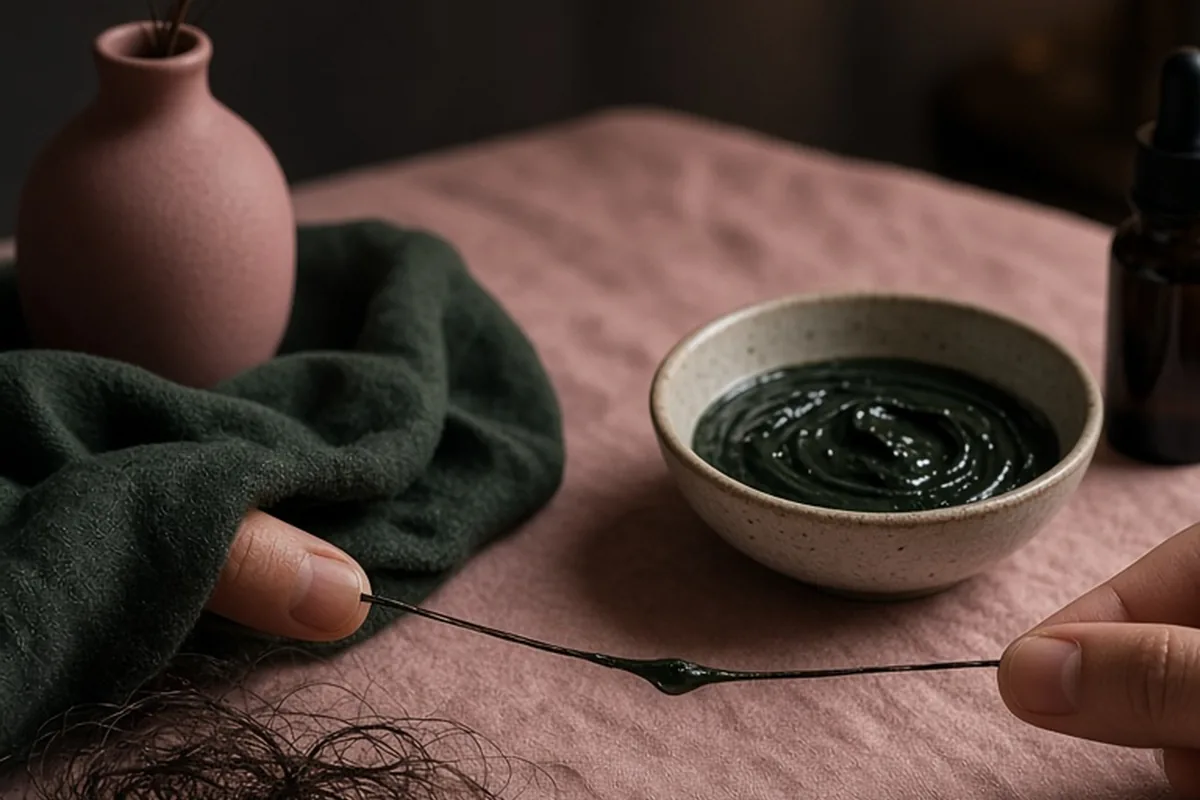
To tell if hair needs protein or moisture, test how a clean, wet strand stretches and snaps. Hair that feels limp, gummy, overly soft, stretches excessively, and snaps without bouncing back lacks protein. Hair that feels dry, rough, stiff, tangles easily, and snaps instantly with minimal stretch lacks moisture. Restoring balance requires matching treatment to physical cues: use hydrolyzed protein treatments to rebuild structural integrity, or apply humectant-rich deep conditioners with emollients to restore flexibility and softness.
Healthy hair depends on a delicate structural equilibrium between internal strength and external hydration. Keratin proteins form the fibrous scaffolding of each strand, providing tensile strength, shape retention, and resistance to breakage. Meanwhile, water content and lipid layers give hair its elasticity, pliability, and smooth surface texture. When these two elements fall out of alignment, strands quickly become unmanageable, dull, or prone to shedding and breakage.
The Wet Strand Elasticity Test and What the Results Reveal
The most reliable physical diagnostic for assessing hair condition at home is the wet strand elasticity test. To perform this test accurately, isolate a single shed strand or a small section of hair while it is clean and damp. Gently hold the strand between the thumbs and forefingers of both hands, leaving approximately one to two inches of hair exposed in the middle. Slowly and steadily pull the strand in opposite directions to observe how far it extends before resisting or breaking.
A healthy, balanced strand will stretch slightly—roughly twenty to thirty percent of its original length—and then gently return to its starting state when tension is released. If the strand stretches unusually far, feels gummy or spongy under tension, and either breaks without retracting or remains stretched out like worn elastic, the internal protein structure has degraded. Conversely, if the strand offers zero give, feels taut and brittle, and snaps immediately upon applying slight tension, the hair is depleted of moisture and cannot flex under normal mechanical stress.
While the strand test is an effective baseline indicator, you must interpret it alongside hair diameter and chemical history. Naturally coarse strands possess a thicker cortex and often feel stiffer regardless of moisture levels, whereas fine strands may feel soft even when they are lacking structural protein. Additionally, strands with product buildup may yield false results by masking true cuticle condition, which is why testing on freshly cleansed hair provides the most accurate reading.
Visible and Tactile Symptoms of Protein Deficiency in Hair
Protein deficiency occurs when the structural keratin chains within the hair cortex become fractured or depleted. This degradation is most commonly triggered by chemical processing, bleaching, permanent color, chemical straightening, and frequent high-heat styling, all of which strip away the protective outer cuticle and expose the delicate inner cortex. When protein levels drop significantly, hair loses its foundational framework and structural memory.
In daily management, protein-deficient hair exhibits very distinct tactile and visual symptoms. When wet, the strands feel mushy, unusually soft, or slightly sticky between the fingers. As the hair dries, it tends to look flat, lifeless, and stringy rather than full-bodied. Naturally wavy, curly, or coily hair experiencing protein loss will show a noticeable loosening or complete loss of its curl pattern, as the hair no longer has the internal rigidity required to hold a defined curl clump or spiral formation.
Another telltale sign of protein deficiency is high porosity caused by structural gaps along the hair shaft. Protein-depleted hair absorbs water almost instantaneously in the shower, becoming saturated in seconds, but loses that moisture just as quickly once exposed to air. Because the damaged cuticle cannot retain internal hydration, applying regular moisturizing conditioners often feels ineffective, leaving the hair feeling weighted down yet strangely hollow and fragile.
Warning Signs That Your Strands Are Deprived of Moisture
Moisture deficiency, or dehydration of the hair shaft, happens when the strand lacks water and the necessary lipid sealants to lock that water inside. Unlike living skin, hair cannot produce its own moisture; it relies on natural scalp sebum traveling down the shaft, ambient environmental humidity, and topical hydrators. When these water reserves drop, hair loses its natural lubrication, making individual strands prone to friction, snagging, and catastrophic snapping.
The primary physical indicator of moisture-starved hair is a dry, straw-like, or raspy texture. When running your fingers down the length of the strands, the hair feels rough, stiff, and uneven, often catching on neighboring hairs to create persistent tangles and knots at the ends. Visually, dehydrated hair looks matte, dull, and frizzy. This frizz occurs because the dry hair shaft attempts to pull water vapor out of the atmosphere, causing the cuticle scales to lift and flare outward in disorderly patterns.
Moisture-deficient hair snaps cleanly with a sharp, audible pop during routine brushing, combing, or styling. Because the cortex lacks water-based flexibility, it cannot bend around styling tools or endure basic tension. This form of breakage often results in short, fractured pieces of hair accumulating on your shoulders or in your sink during detangling, distinct from full-length shedding that originates at the root with a visible bulb.
Navigating Protein Overload and Moisture Overload (Hygral Fatigue)
Attempting to fix damaged hair by applying heavy treatments without proper assessment can trigger an extreme state known as overload. Protein overload occurs when hair is continuously treated with high-concentration protein masks, leave-in keratin sprays, or styling products containing hydrolyzed amino acids without sufficient balancing hydration. The excess protein accumulates on and inside the cuticle, forming a rigid, unyielding layer that makes the hair feel coarse, stiff, brittle, and extraordinarily prone to snapping.
Because protein overload results in stiff, breaking hair, people frequently misdiagnose it as extreme dryness and mistakenly respond with even more heavy restructuring products, worsening the brittleness. The key difference between natural moisture deficiency and protein overload lies in the hair's history: if your hair was relatively healthy and suddenly became stiff, wire-like, and dull after using a new strengthening mask or bond-building line, excess protein accumulation is the probable cause.
On the opposite end of the spectrum is moisture overload, frequently referred to in hair care as hygral fatigue. Hygral fatigue develops when hair is subjected to constant, excessive swelling and contracting as water enters and exits the cortex, often caused by leaving deep conditioners on overnight, washing too frequently without adequate drying time, or using heavy emollients without structural support. Over-moisturized hair feels limp, excessively spongy, gummy, and weak, lacking the elasticity to bounce back when styled.
How Hair Porosity and Texture Shape Protein and Moisture Needs
Hair porosity—the measure of how easily moisture and chemical agents pass through the cuticle layer—dictates whether your hair naturally leans toward requiring more protein or more moisture. Low-porosity hair features tightly packed, overlapping cuticle scales that resist moisture absorption but retain internal water exceptionally well once hydrated. Because the cuticle is intact and smooth, low-porosity hair rarely needs intense protein treatments; in fact, it easily develops protein buildup and requires light, water-based hydrators paired with gentle heat to open the cuticle.
High-porosity hair possesses raised, torn, or naturally wide cuticle gaps, making it prone to chronic moisture loss and structural instability. High-porosity hair benefits significantly from regular protein treatments, which temporarily fill the microscopic fissures along the cuticle wall, reinforcing the shaft and creating a smoother surface that can better hold onto applied conditioning agents. Medium-porosity hair generally maintains a steady balance, requiring only periodic maintenance treatments to preserve integrity.
Curl pattern and strand diameter also influence these demands. Fine hair has a narrower cortex and is easily weighed down by heavy moisturizing butters, making light protein formulations essential for maintaining volume and strength. Conversely, coarse, curly, and coily textures (such as type 3 and type 4 hair) have natural bends and twists along the shaft that impede the travel of sebum from root to tip. These textures generally require substantially more moisture, slip, and lipid-rich emollients to maintain flexibility and reduce friction-induced breakage.
Reading Product Ingredient Labels for Proteins, Humectants, and Emollients
To make informed purchasing decisions and effectively correct an imbalance, you must learn to identify active ingredients on cosmetic product labels rather than relying solely on front-of-bottle marketing claims. Treatments labeled as 'repairing,' 'strengthening,' or 'reconstructing' typically contain proteins, while products marketed as 'hydrating,' 'nourishing,' or 'quenching' emphasize moisture. However, checking the International Nomenclature of Cosmetic Ingredients (INCI) list provides definitive clarity.
Protein ingredients are identified by terms such as hydrolyzed keratin, hydrolyzed wheat protein, hydrolyzed silk, hydrolyzed soy protein, hydrolyzed collagen, amino acids, and oat protein. The word 'hydrolyzed' indicates that the protein molecule has been broken down into small enough fragments to adhere to or penetrate the hair shaft. If these terms appear within the first five to seven ingredients of a formulation, the product delivers a potent, concentrated dose of structural reinforcement.
Moisturizing formulations rely on a combination of humectants, emollients, and occlusives. Humectants attract water into the hair shaft; look for ingredients like glycerin, aloe vera, panthenol (provitamin B5), propylene glycol, and hyaluronic acid. Emollients and fatty alcohols smooth and soften the cuticle; common examples include cetyl alcohol, stearyl alcohol, cetearyl alcohol, and behentrimonium methosulfate. Occlusives and sealing oils—such as shea butter, argan oil, jojoba oil, and squalane—form a protective barrier that locks in the hydration provided by water and humectants.
Targeted Corrective Routines to Restore Equilibrium
Once you have accurately identified whether your hair lacks protein or moisture, implement a deliberate, step-by-step corrective routine to restore balance. If your hair is suffering from protein deficiency, begin your wash routine with a clarifying shampoo to eliminate surface buildup and ensure unobstructed contact with the hair fiber. Next, apply a targeted hydrolyzed protein mask or bond-building reconstructor evenly from mid-lengths to ends, leaving it on for the manufacturer's specified duration.
Because protein treatments can leave the cuticle feeling firm or textured, always follow a protein application with a light, moisturizing rinse-out conditioner to restore surface smoothness and slip. Limit intensive protein treatments to once every two to four weeks depending on your chemical damage level, shifting back to your standard maintenance routine once your hair regains its bounce, elasticity, and curl definition.
For moisture-deficient hair, start with a sulfate-free, hydrating cleanser that washes without stripping natural oils. Apply a rich, deeply penetrating moisturizing mask containing humectants and fatty alcohols. To maximize absorption, use a processing cap combined with gentle indirect heat or a warm towel for fifteen to twenty minutes, allowing the cuticle scales to relax and accept the hydration. Rinse thoroughly with cool-to-lukewarm water, and lock in the moisture on damp strands using a leave-in conditioner followed by a few drops of lightweight sealing oil.
Frequently asked questions
Can hair need both protein and moisture at the same time?
Yes, heavily processed or bleached hair frequently experiences both structural protein loss and severe dehydration simultaneously. When this occurs, address structural integrity first with a strengthening protein treatment, immediately followed by an intensive deep hydrating mask to soften the hair and restore elasticity.
How quickly can you fix protein overload?
Resolving protein overload typically takes two to four weeks of consistent, targeted care. You should wash with a clarifying shampoo to remove excess surface protein buildup, completely pause all protein-containing products, and apply heat-assisted moisturizing masks twice weekly until elasticity and softness return.
How often should healthy hair receive protein treatments?
Healthy, untreated hair generally only requires a mild protein treatment every four to six weeks to maintain structural strength. Over-treating healthy hair can quickly lead to stiffness, so prioritize regular moisturizing conditioning for ongoing maintenance.
Does natural or virgin hair ever need protein treatments?
Virgin hair can occasionally benefit from mild protein, particularly if it is fine in texture or exposed to frequent blow-drying, sun exposure, or mechanical friction from tight hairstyles. However, virgin hair rarely experiences the severe protein depletion common in bleached or chemically relaxed hair.
Your next step
Take a single shed strand from your hair today, perform the damp elasticity test to identify whether it over-stretches or immediately snaps, and inspect your current product labels to select either a hydrolyzed protein treatment or a hydrating mask for your next wash.