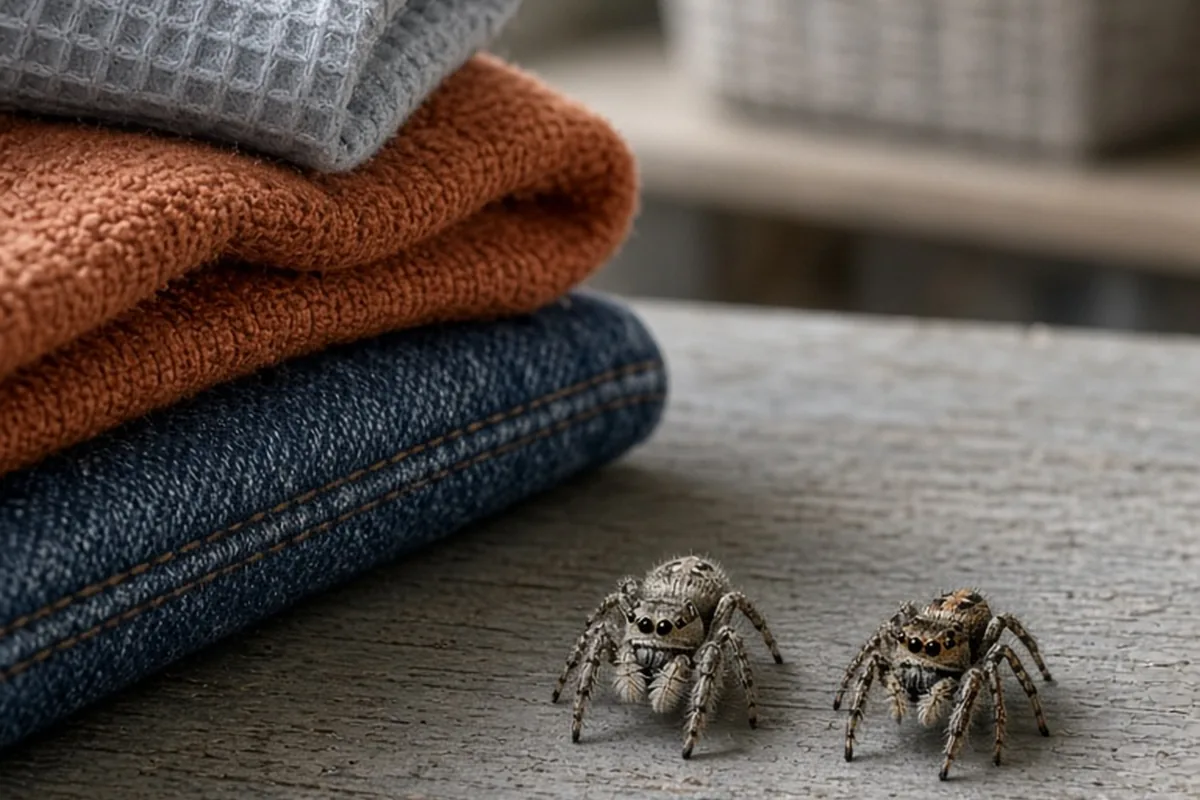
To tell if a jumping spider is male or female, check the pedipalps near the face: mature males possess bulbous, boxing-glove-like palp tips, while females have slender, uniform palps. Females also feature larger, rounder abdomens, occasional epigynal structures underneath, and subtler coloration. Males tend to exhibit slimmer bodies, vivid markings, elongated front legs, and active courtship displays.
Identifying the biological sex of a jumping spider is an exciting milestone for keepers and naturalists, influencing everything from lifespan expectations to habitat arrangements. While adult spiders showcase distinct physical differences, juveniles can easily mislead even experienced hobbyists until their final molts clarify their developmental traits.
Examining Pedipalps for the Signature Boxing Glove Shape
The most reliable visual indicator of an adult male jumping spider is the structure of its pedipalps, which are the two miniature, leg-like appendages located directly in front of the face on either side of the chelicerae (jaws). In mature males, the tips of these appendages feature specialized reproductive organs called emboli housed inside swollen structures known as cymbia. To the naked eye or through a magnifying lens, these terminal segments appear distinctly enlarged, round, and clubbed, strongly resembling tiny boxing gloves or commas. Males use these structures to transfer sperm packets during mating, making the presence of pronounced, bulbous tips a definitive sign of male maturity.
In contrast, female jumping spiders retain relatively slender, straight pedipalps throughout their entire lives. While a female spider frequently uses her pedipalps to groom her eyes, feel surrounding surfaces, and hold prey items, the appendages remain uniform in width from base to tip without any bulbous swelling. Many female jumping spiders possess pedipalps densely coated in fine, light-colored setae, giving them a fuzzy, brush-like appearance that can sometimes be mistaken for width. However, close observation will show that the underlying limb segment remains narrow and consistent, lacking the distinct swollen knob characteristic of the adult male.
Comparing Abdomen Proportions and Overall Body Silhouette
The relative proportion between the cephalothorax (head and thorax area) and the opisthosoma (abdomen) offers another substantial clue when determining sex. Adult female jumping spiders generally display a much broader, rounded, and voluminous abdomen compared to their male counterparts. Because females must accommodate developing egg clutches, their abdomens are built to expand significantly and frequently maintain a plump, teardrop or oval silhouette even when they are on a standard feeding schedule. When fully grown or gravid, a female abdomen can easily measure one and a half to two times the width of her head plate.
Male jumping spiders, by comparison, maintain a far more streamlined, lean, and athletic body profile designed for agility and mate-seeking travel. A male abdomen is typically narrower, elongated, and often roughly equal to or slightly smaller than the width of his cephalothorax. While abdominal shape is a strong secondary trait, keepers must account for recent meals and hydration levels. A heavily fed sub-adult male can temporarily present a swollen, rounded abdomen that mimics a female shape, whereas an underfed or fasted female may appear unusually lean until she receives adequate hydration and nutrition.
Evaluating Species-Specific Coloration and Facial Features
Sexual dimorphism in coloration is pronounced in several widely kept jumping spider species, making color a helpful diagnostic tool when interpreted carefully. In the popular regal jumping spider (Phidippus regius), for example, adult males are almost universally jet black with sharp white markings and iridescent green, blue, or violet chelicerae. Adult females of the same species display an expansive range of lighter color morphs, including warm peach, bright orange, soft tan, gray, or mottled white, frequently paired with vivid pink, magenta, or golden-bronze chelicerae.
In other species, such as the bold jumping spider (Phidippus audax) or various peacock and zebra spiders, color differences can be more nuanced or concentrated in specific facial structures. Males across numerous species often develop pronounced setae tufts above the eyes that resemble small horns or eyebrows, alongside elongated front legs fringed with dense, dark hair used to catch the attention of females during courtship rituals. However, keepers should not rely on color alone for identification, as natural genetic variations, regional morphs, and incomplete molts can occasionally produce atypical pigmentation.
Inspecting the Ventral Underside for the Epigynum
For absolute anatomical confirmation of a mature female jumping spider, experienced keepers examine the ventral (underside) surface of the abdomen. Sexually mature females possess an external genital opening known as the epigynum, located along the epigastric furrow near the upper third of the ventral abdomen. Under bright, focused light and magnification, the epigynum appears as a small, smooth, dark, and glossy button-like structure, often with two minuscule symmetric pores. The presence of this fully formed sclerotized plate confirms beyond doubt that the spider is a mature adult female.
Viewing the epigynum requires a non-invasive setup, such as encouraging the spider to walk onto the clear acrylic wall or ceiling of its enclosure, or gently guiding it into a transparent specimen cup for bottom-up observation. It is essential to recognize that immature females do not show a discernible epigynum, as the structure only fully hardens and surfaces during the final maturation molt. Consequently, the absence of a visible epigynum on a younger spider does not automatically indicate that the specimen is male; it simply confirms the spider has not reached full adulthood.
Navigating Instars and Subadult Development Timelines
Jumping spiders progress through a sequence of developmental growth stages called instars, separated by periodic molting of their exoskeletons. Early instars (typically from emergence through the fourth or fifth molt) exhibit virtually identical anatomy regardless of sex, making early identification unreliable without specialized laboratory equipment. As spiders approach their penultimate and sub-adult stages—often around the sixth through eighth molt depending on species—subtle dimorphic features begin to emerge.
During the sub-adult stage, male pedipalps often begin to show slight thickening or a teardrop-shaped expansion at the tips before the final molt reveals the fully formed cymbium. Meanwhile, sub-adult females maintain slender pedipalps and may begin showing early color differentiation on their chelicerae or body patterns. Rushing to assign sex prior to the final maturation molt frequently leads to misidentification, so keepers should track molt counts and view pre-adult assessments as educated estimates rather than definitive conclusions.
Observing Distinct Behavioral Patterns and Activity Levels
Behavioral patterns often diverge sharply once jumping spiders reach maturity, reflecting their distinct biological priorities. Adult males are driven by reproductive instincts, leading to higher baseline activity levels, frequent exploration, and constant pacing around the perimeter of their enclosures. When a mature male catches sight of another spider or even his own reflection in glass, he will often initiate courtship behavior, raising his front legs high in the air, vibrating his pedipalps rapidly, and executing rhythmic side-to-side zig-zag steps.
Mature females tend to display a more stationary, resource-conserving lifestyle centered around security and nutrition. They spend significant time fortifying their silk hammocks, constructing dense, multi-layered retreats where they can rest, process large meals, or prepare to lay eggs. Even virgin females that have never paired with a male will regularly construct thick nesting sacs and deposit unfertilized, infertile egg clutches. Recognizing these behavioral tendencies helps keepers understand normal enclosure habits without confusing resting female behavior with illness.
Low-Stress Observation and Documentation Methods
Examining a jumping spider for sexing should always prioritize the safety and well-being of the animal, avoiding direct physical handling or restraint. The most effective approach involves macro photography using a modern smartphone equipped with a clip-on macro lens or a dedicated digital camera. By capturing high-resolution still images while the spider naturally explores a clean, transparent container, you can zoom in on the pedipalps, chelicerae, and ventral abdomen on a larger screen without subjecting the spider to prolonged disturbance.
Ensure the observation area has strong, diffused natural lighting or a soft LED light source, as harsh direct spotlights can generate excess heat and disorient the spider's keen vision. Never use tools such as tweezers or stiff brushes to position the spider, as their limbs and abdominal membranes are delicate and susceptible to injury. Once clear reference photos are obtained, return the spider promptly to its main enclosure and compare your images against established species guides at your leisure.
Frequently asked questions
At what age or instar can you reliably tell the sex of a jumping spider?
Most keepers can reliably determine sex during the sub-adult stage, usually around the seventh or eighth instar. Sub-adult males develop noticeable swelling at the tips of their pedipalps, while final adult molts reveal definitive structures like the epigynum or mature coloration.
Can a female jumping spider lay eggs if she has never mated?
Yes, mature female jumping spiders frequently build dense silk nests and lay unfertilized egg clutches known as phantom or dud sacs. These infertile eggs will not develop and are a normal biological event for healthy adult females.
Do male and female jumping spiders have different lifespans?
Female jumping spiders generally live longer than males, often reaching one and a half to two or more years in captivity. Adult males have higher metabolic activity and typically live between ten to eighteen months total.
Your next step
Take a clear, close-up photograph of your jumping spider's pedipalps and underbelly in bright, diffused light, and compare those details after the sub-adult stage for an accurate determination.