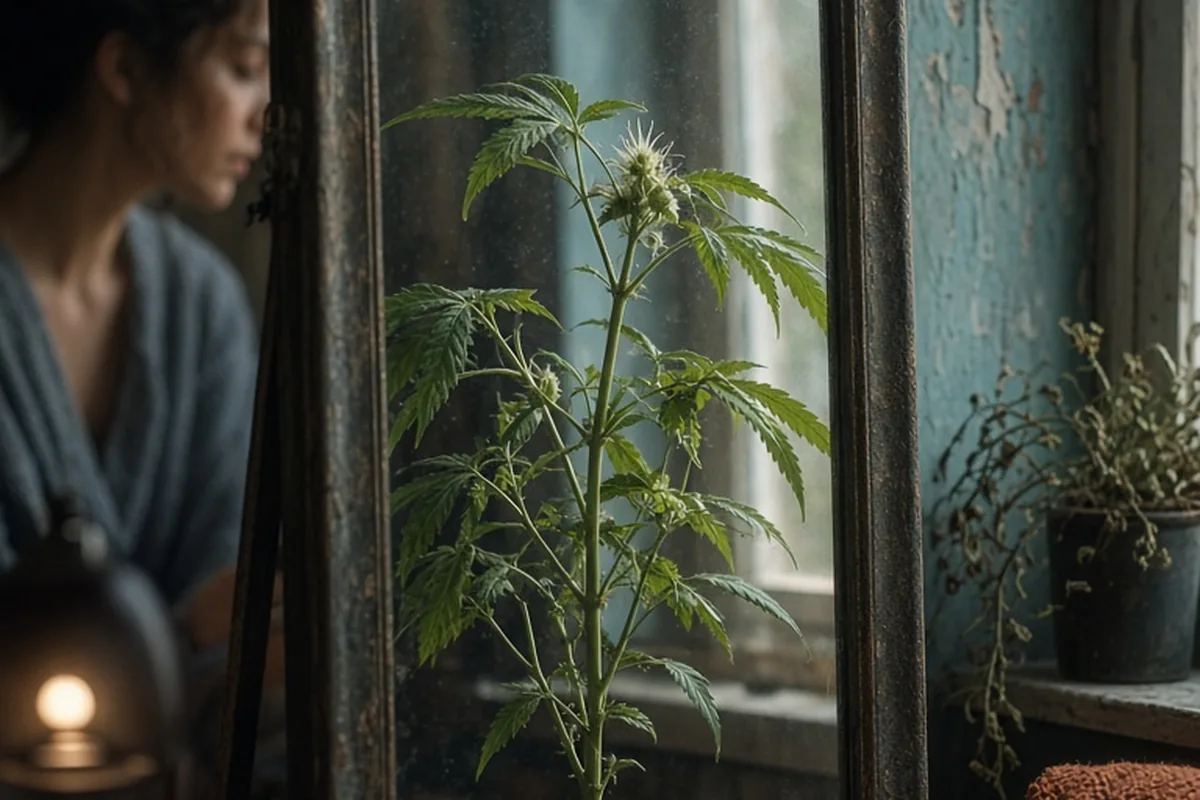
To identify male versus female pot plants, examine the nodes where branches meet the main stem during the pre-flowering stage, typically three to six weeks into vegetative growth. Female plants develop teardrop-shaped bracts with two fine, white hair-like pistils protruding outward. Male plants produce smooth, rounded pollen sacs shaped like tiny balls or miniature crab claws without hairs, which eventually hang in clusters.
Cultivating cannabis successfully requires identifying plant sex as early as possible. Because female plants produce the resinous flowers sought by growers and male plants produce pollen that turns those flowers to seed, learning to read subtle botanical cues protects your time, garden space, and crop quality.
Understanding the Botanical Differences Between Plant Sexes
Cannabis is predominantly a dioecious plant species, meaning individual specimens develop distinct male or female reproductive organs rather than housing both on the same stalk. In natural ecosystems, male plants release airborne pollen that drifts onto nearby female flowers, initiating seed production to guarantee the next generation of plants. For home gardeners and commercial cultivators focusing on unseeded flower production, also known as sinsemilla, preventing this pollination event is the primary objective of sex identification.
Female cannabis plants allocate their energy toward developing dense clusters of calyxes, floral bracts, and glandular trichomes that contain active cannabinoids and aromatic terpenes. When a female plant remains unpollinated, it continues channeling metabolic resources into flower size and resin output rather than embryo and seed coat formation. Conversely, male plants exist to generate and release pollen grains, carrying very low concentrations of resin and negligible amounts of usable flower material.
Understanding this biological divergence clarifies why early detection matters so much. A single mature male plant can release millions of microscopic pollen grains into the air, fertilizing an entire indoor grow room or outdoor garden plot within hours. Once fertilized, female flowers immediately halt excessive trichome development and redirect nutrients toward hardening seeds, significantly altering the potency, aroma, and smokability of the finished harvest.
When and Where to Inspect Plants for Pre-Flowers
Accurate sex determination begins during the pre-flowering stage, a transitional window where plants begin signaling their reproductive intent before full bloom sets in. In standard photoperiod cultivars, vegetative pre-flowers generally emerge three to six weeks after seed germination, usually around the fourth to sixth node from the base of the plant. For growers operating indoor setups with timed lighting, these structures become prominent within seven to fourteen days after shifting the light schedule to twelve hours of uninterrupted darkness.
To inspect your plants correctly, focus your attention on the nodes, which are the intersection points where leaf stems and side branches connect directly to the main stalk. Pre-flowers appear in the upper junction of these branch nodes, tucked tightly behind the stipule, which is a small, pointed, leaf-like green dagger that grows naturally at each joint. Inspecting the upper third of the plant provides the earliest indicators, as newer growth responds to maturity signals before older lower branches.
Using proper inspection tools greatly reduces guesswork during these early stages. A jeweler loupe with thirty-times magnification, a handheld digital pocket microscope, or even a modern smartphone camera with macro focus allows you to distinguish between an emerging bract and an early pollen sac days before they become recognizable to the naked eye. Avoid handling the delicate nodes with bare hands during inspection, as oils and accidental pressure can damage tender growth tips.
Recognizing the Characteristics of Female Plants
The defining confirmation of a female plant is the emergence of pistils protruding from a teardrop-shaped structure called a calyx or floral bract. In the earliest stages, a female pre-flower looks like a tiny, single green teardrop resting flush against the stem joint. Emerging from the narrow tip of this structure, you will observe two slender, translucent or bright white hairs known as stigmas. These hairs are designed by nature to catch airborne pollen grains.
As the vegetative stage transitions into active flowering, these individual calyxes begin multiplying rapidly, stacking on top of one another along the branch nodes to form dense floral clusters. Along with the continuous emergence of fresh white stigmas, female nodes quickly develop tiny, sparkling crystal structures known as glandular trichomes. These resin glands appear along the sugar leaves and bract surfaces, giving the developing bud site a frosted appearance.
A common point of confusion occurs when young vegetative shoots begin branching at the node, mimicking the shape of an early female calyx. To tell them apart, observe whether the structure develops pointed leaf tips or if it remains a closed, rounded teardrop with emerging hairs. If the growth unfolds into a miniature serrated leaf without white stigmas, it is simply new vegetative foliage rather than a reproductive organ.
Spotting Male Plants Before Pollen Release
Male cannabis plants reveal their identity through the development of staminate pre-flowers, commonly referred to by growers as pollen sacs or balls. Unlike the tapered, seated shape of a female bract, a male pre-flower emerges as a small, smooth sphere that resembles a miniature crab claw or soccer ball. As it develops, this sphere attaches to the plant node by a tiny, distinct stem called a pedicel, causing the sac to dangle slightly rather than sit firmly against the main stalk.
Another key visual difference is the complete absence of white pistils or hairs on male structures. Male pre-flowers stay entirely smooth and green, gradually swelling into segmented oval pods that look like miniature melons. Over the course of one to two weeks, these individual sacs multiply into hanging clusters that resemble tiny bunches of unripe grapes, preparing to open and release yellow powdery pollen.
In addition to nodal pre-flowers, male plants often exhibit distinct vegetative growth patterns that can provide early clues. Male plants frequently grow taller and faster than their female counterparts, displaying longer internodal spacing and thinner, sparser foliage. This evolutionary trait allows male plants to tower over surrounding female canopies, facilitating downward wind distribution of pollen once the sacs rupture.
Identifying and Managing Hermaphrodite Plants
Cannabis plants possess the adaptive ability to express both sexes simultaneously, a condition known as hermaphroditism. A hermaphroditic plant, often called a hermie, develops both female pistillate flowers and male staminate organs on the same individual. This biological defense mechanism typically triggers when a plant experiences severe environmental stress, such as light leaks during dark cycles, excessive heat, physical damage, erratic feeding, or underlying genetic instability.
Hermaphroditism manifests in two primary ways across the plant canopy. The first form presents as standard male pollen sacs developing alongside female bud sites at the nodes, which can happen early in the flowering cycle. The second form occurs directly inside mature female buds, producing yellow, curved reproductive structures colloquially called bananas or nanners. Because these anthers lack an outer protective sac, they can shed viable pollen immediately without having to open first.
Managing hermaphrodites depends on the severity of the expression and the layout of your garden. If a single isolated branch produces one or two male sacs due to minor physical stress, carefully plucking them with wet tweezers may temporarily control the issue. However, if a plant exhibits widespread anthers throughout its budding sites, the safest horticultural action is removing the entire plant immediately to prevent cross-pollination across the remainder of the garden.
Safely Removing Male Plants from Your Garden
Once you confirm that a plant is male, removing it promptly and carefully prevents accidental pollination of neighboring female crops. Even young male pollen sacs can mature faster than anticipated under warm, dry indoor conditions. Before touching or moving the plant, gently mist the entire canopy with clean water using a fine spray bottle, as moisture temporarily immobilizes and neutralizes dry pollen grains.
To minimize air disturbance, place a large plastic trash bag over the top of the male plant, sliding it downward until the entire structure is enclosed, and secure the opening around the base of the main stalk. Cut the stem near the soil line beneath the bag opening, keeping the plant sealed inside throughout transport out of the grow space. Never shake, drag, or aggressively handle an uncapped male plant inside an active cultivation area.
After disposing of the male plant, thoroughly wipe down the surrounding grow tent walls, lights, and fans with a damp cloth or mild cleaning solution. If you grow outdoors, position your inspection routine during calm, windless mornings so that any early male plants can be culled before daytime thermal breezes carry potential pollen across your property or toward neighborhood gardens.
Modern Alternatives to Manual Sex Identification
Cultivators looking to bypass the uncertainty of sexing regular seeds often choose feminized seeds, which are bred to produce female plants more than ninety-nine percent of the time. Breeders produce feminized seeds by inducing a genetically stable female plant to produce pollen using specialized mineral solutions like colloidal silver. Because this pollen carries only female chromosomes, all resulting seeds lack the male chromosome, virtually eliminating the risk of raising male plants.
Another emerging method for professional and serious home growers is early laboratory DNA testing using cotyledon or seedling leaf tissue. By clipping a tiny leaf sample within the first week after germination and submitting it to an agricultural testing service, cultivators can verify plant sex through polymerase chain reaction analysis weeks before visual pre-flowers form. While this service introduces an added testing expense, it prevents weeks of wasted electricity, water, and soil space on unwanted males.
Each approach presents distinct trade-offs depending on your cultivation goals. Regular seeds remain the gold standard for breeding projects and maintaining genetic diversity, requiring vigilant visual sexing skills. Feminized seeds save space and eliminate early culling but restrict breeding flexibility, while genetic leaf testing provides absolute certainty at the cost of laboratory processing fees.
Frequently asked questions
Can you tell the sex of a cannabis seed just by looking at it?
No, it is impossible to determine the sex of a cannabis plant by inspecting the physical appearance, pattern, or size of a seed. Sex expression is encoded genetically inside the seed and only becomes visible through pre-flowers during growth or through laboratory DNA analysis of seedling leaves.
What should I do if a male pollen sac has already burst open in my grow room?
Immediately mist all surrounding plants and surfaces thoroughly with clean water, as moisture neutralizes pollen and prevents further airborne spread. Remove the male plant inside a plastic bag, clean the room thoroughly, and monitor your female plants over the following two weeks for early seed formation inside swollen calyxes.
How long after switching to a 12/12 light cycle will pre-flowers appear?
Most photoperiod cannabis varieties begin showing clear male or female reproductive structures within seven to fourteen days after shifting lighting to twelve hours of darkness. Male pre-flowers typically reveal themselves several days earlier than female pistils under identical growing conditions.
Your next step
Inspect the upper nodes of your plants with a magnifying loupe starting at week four of growth, looking specifically for white hair-like pistils or smooth rounded sacs to confirm plant sex.