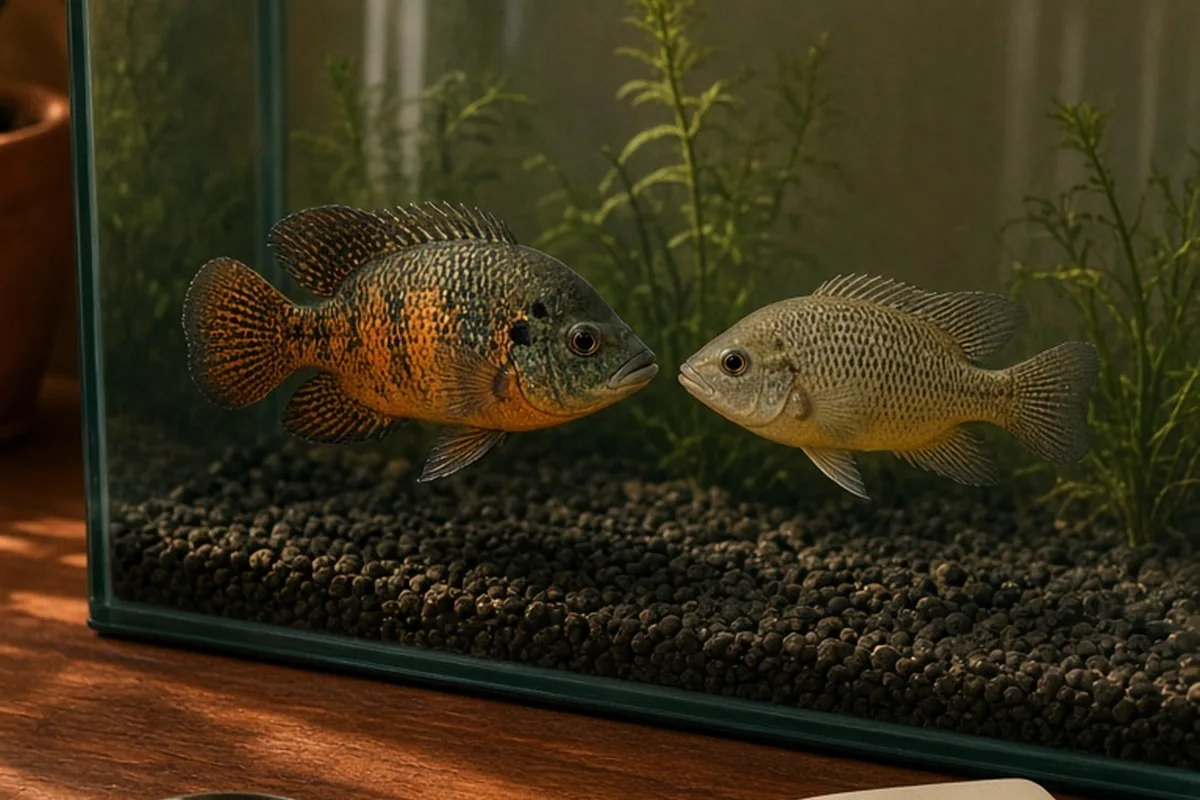
To tell male and female cichlids apart, inspect their physical venting organs, fin shapes, coloration, and behavior. Venting is the most reliable method: females display an oviduct opening noticeably larger than their anus (often described as an 'o-O' pattern), whereas males have two openings of roughly equal size ('o-o'). Additionally, mature males often showcase pointed dorsal fins, brighter pigmentation, and territorial aggression.
Sexing cichlids is an essential skill for managing tank aggression and establishing successful breeding pairs, yet the vast diversity across African, Central American, and South American species often makes visual identification challenging.
Understanding Venting as the Primary Sexing Method
Venting is universally regarded by aquarists as the most definitive technique for identifying the sex of mature cichlids, particularly in monomorphic species where males and females share identical markings. The term refers to inspecting the fish's vent area, situated on the underside directly forward of the anal fin. Every cichlid has two distinct openings in this region: the anus, which expels digestive waste, and the urogenital pore, which releases gametes. By closely examining the relative size and structure of these two apertures, you can determine sex with a high degree of confidence across nearly all cichlid genera.
When performing an inspection, hold the fish gently underwater or rest it against a soaked, lint-free cloth under bright, indirect light. A male cichlid presents two small pores of approximately equal circumference, frequently categorized by breeders as an 'o-o' configuration. In contrast, a female cichlid features a noticeably larger, rounded urogenital pore—the oviduct—designed to allow eggs to pass without internal trauma. This difference creates an 'o-O' appearance, where the anterior pore (the anus) is small and the posterior pore (the oviduct) is prominently dilated. The primary limitation of venting lies in fish maturity; attempting to vent juvenile cichlids under two inches in length often yields inconclusive results because the reproductive tract has not fully developed, and unnecessary physical handling risks stripping protective slime coat layers.
Evaluating Fin Contours and Trailing Filaments
Fin morphology provides valuable secondary evidence when identifying cichlid sex without subjecting fish to the physical stress of netting. In many popular groups, including South American Geophagus, Lake Malawi Peacocks (Aulonocara), and various Central American substrate spawners, mature males develop lengthened, pointed dorsal and anal fins. The trailing tips of these fins often extend past the base of the caudal peduncle, occasionally forming delicate filaments that sweep behind the fish as it swims. These elongated edges serve an evolutionary purpose during courtship displays, making the male appear broader, more formidable to rivals, and more enticing to potential mates.
Females, conversely, typically retain shorter, distinctly rounded margins on both the dorsal and anal fins. While fin shape is a dependable metric in mature, uncrowded aquariums, it carries notable caveats. In semi-aggressive setups, fin nipping from territorial disputes can tear or truncate a male's trailing edges, giving them an artificially rounded silhouette that mimics a female. Furthermore, subordinate males living under the dominance of a larger alpha may suppress their physical development, delaying fin elongation as an instinctive strategy to avoid lethal confrontations. Always cross-reference fin structure against other markers before drawing a firm conclusion.
Interpreting Coloration Nuances and Egg Spots
Coloration is perhaps the most immediate visual differentiator, especially among sexually dimorphic species such as Lake Malawi Mbuna and Victorian haplochromines. In these varieties, dominant males exhibit dazzling shades of electric blue, bright yellow, rich crimson, or velvety black, while females often retain neutral olive, beige, or slate tones designed for camouflage among rocky outcrops. This extreme contrast enables aquarists to identify sexes at a glance once the specimens reach reproductive maturity, typically between eight and twelve months of age.
Egg spots—round, yellow-to-orange ocelli rimmed in dark circles situated on the anal fin—are another common visual feature in maternal mouthbrooding cichlids. During spawning, females attempt to retrieve what appear to be stray eggs, drawing their mouths close to the male's anal fin while he releases milt to fertilize the brood. While heavily clustered, vibrant egg spots traditionally indicate a male, relying entirely on them is risky. Mature females in several species, including Labidochromis caeruleus and Pseudotropheus saulosi, can display several faint egg spots of their own. Treating egg spots as an absolute confirmation rather than a supporting factor often leads to misidentifications in mixed-sex colonies.
Observing Cranial Humps and Overall Body Profile
Body geometry and skeletal proportions provide structural clues that distinguish male cichlids from their female counterparts. Across larger genera such as Cyphotilapia (Frontosa), Amphilophus (Midas cichlids), and hybrid Flowerhorns, males develop a prominent cranial fat deposit known as a nuchal hump. While females of these species may develop slight forehead curvature with advanced age, dominant males generate sizable, pronounced domes that project well beyond the plane of the mouth. In addition to cranial contours, adult males frequently exhibit a deeper torso, thicker caudal peduncles, and broader jaws built for territory defense and substrate excavation.
Female body profiles generally emphasize abdominal volume over vertical height. When carrying developed eggs, a mature female cichlid displays a visibly rounded, swollen lower belly that extends lower than the pelvic fin baseline. This plumpness remains distinct from dietary bloating, as it sits smoothly across the lower posterior abdomen without accompanying signs of lethargy or pineconing scales. To assess body profiles accurately, observe your fish from eye level while they hover mid-water rather than viewing them from above through the aquarium lid.
Decoding Courtship Displays and Territorial Behaviors
Behavioral patterns often reveal a cichlid's sex long before physical differences become obvious. Mature males are intensely territorial and dedicate substantial energy to establishing and defending boundaries within the tank. A male preparing to spawn will claim a specific flat slate rock, cave entrance, or sand pit, chasing away intruders through gill-flaring, jaw-locking, and tail-slapping displays. When a female approaches, the male will often swim parallel to her, shaking his entire body in an exaggerated, rapid tremor known as shimmying, designed to showcase his vigor and entice her into his cleared nest.
Female behaviors center primarily on mate selection, selective foraging, and brood care. Once spawning concludes in mouthbrooding species, the female assumes solitary responsibility for protecting the clutch. A brooding female exhibits a noticeably distended throat, referred to as a dropped buccal cavity, and will cease regular feeding for two to three weeks while tumbling the eggs inside her mouth. Substrate-spawning females, such as those among Convict or Angelfish pairs, will remain closely hovering over the egg clutch, fanning freshwater over the site with their pectoral fins while the male patrols the outer defensive perimeter.
Safely Inspecting Cichlids to Avoid Handling Stress
Because venting requires handling the fish out of water, following a strict physical safety protocol is necessary to protect your livestock from injury or chronic stress. Before catching the fish, prepare a small plastic examination container filled with water from the home aquarium, along with a clean, damp microfiber towel laid across a stable work surface. Use a soft, fine-mesh net to retrieve the specimen swiftly, keeping chasing to an absolute minimum to avoid exhausting the fish or damaging its fin membranes against rocky decor.
Once netted, rest the fish gently against the wet towel, holding its body securely with moist fingers without applying downward pressure on the internal organs. Keep the fish's head shielded from bright room lighting using a corner of the damp towel, which significantly reduces panic thrashing. Using an illuminated magnifying glass or high-resolution mobile phone camera, inspect the vent area for no more than ten to fifteen seconds before immediately returning the fish to the container. If the vent remains obscured or the fish struggles forcefully, abort the inspection and return it to the tank to rest rather than risking drops, scale loss, or compromised gill function.
Frequently asked questions
Can you accurately sex juvenile cichlids before purchasing them?
Juvenile cichlids under two inches in length are rarely sexable through visual inspection or venting because their secondary sexual characteristics and reproductive pores are not fully formed. Most experienced aquarists purchase a group of six to eight juveniles, allowing them to grow together until distinct behaviors, fin shapes, and venting characteristics naturally emerge.
Why does a confirmed male cichlid sometimes look and act like a female?
In competitive aquarium environments, subordinate males often adopt female coloration and subdue their fin extensions to avoid relentless attacks from the alpha male. If the dominant male is removed or relocated, these suppressed males typically transition into full male coloration and territorial behavior within a few weeks.
What is the best male-to-female stocking ratio for cichlid aquariums?
For most polygamous African cichlid setups, a harem ratio of one male to three or four females helps disperse male breeding aggression across multiple tankmates. In monogamous South and Central American pairing species, keeping a single established male-female pair or an all-male display tank is generally preferred to prevent domestic partner bullying.
Your next step
Take ten minutes during your next feeding session to quietly observe your cichlids at eye level, documenting which individuals exhibit pointed fin extensions, nest-digging behaviors, or swollen bellies before deciding if a physical vent check is necessary.