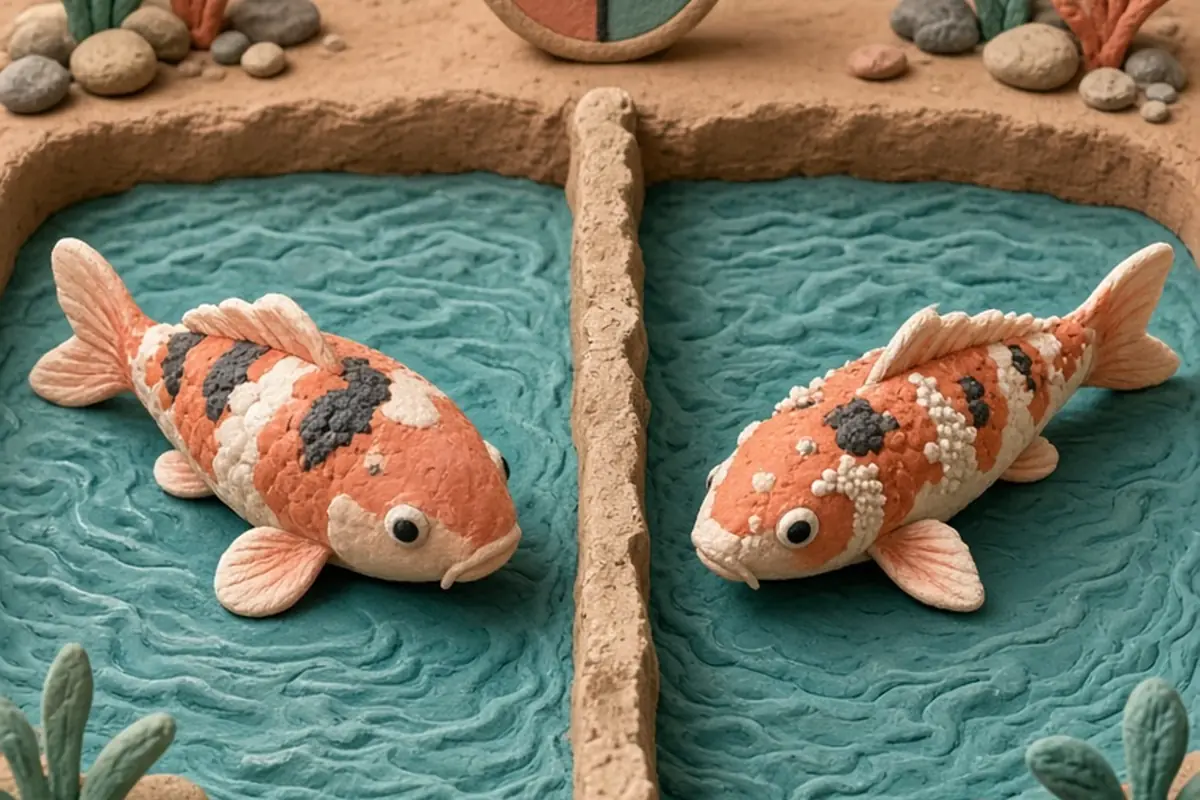
To tell male and female koi apart, inspect body shape, fin structure, and breeding signs once fish reach three years old. Mature females develop rounder, wider bellies, especially before spawning, and have rounded, translucent pectoral fins. Males remain streamlined and torpedo-shaped, develop pointed, opaque pectoral fins, and grow rough white breeding spots, called tubercles, along their gill plates and fin rays during spring.
Knowing the sex of your koi allows you to anticipate seasonal spawning, control population growth, and protect delicate fish from breeding injuries.
Body Shape and Overall Silhouette
Evaluating the silhouette from directly above provides the most reliable initial visual clue for mature koi. A healthy female koi typically carries a wider, more rounded body profile that tapers gradually toward the tail. Her widest point sits midway along her torso, giving her a teardrop or gentle blimp shape when viewed from the surface. As females build up eggs, or roe, across late winter and spring, their abdominal fullness expands significantly, often causing the belly to bulge noticeably on both sides of the dorsal spine.
In contrast, male koi maintain a slender, streamlined silhouette built for rapid swimming. Their bodies resemble a tapered torpedo, remaining relatively narrow from the shoulders back to the tail base without substantial lateral expansion. While an overfed male may develop a soft belly, his midsection will usually retain a flatter, more uniform contour along the flanks rather than the deep, symmetrical curve typical of an egg-bearing female. Relying strictly on body shape can occasionally deceive hobbyists who maintain heavy feeding regimens, making it wise to cross-reference silhouette with fin anatomy.
Pectoral Fin Shape and Opacity
Examining the pectoral fins, located just behind the gill covers, reveals distinct anatomical adaptations between sexes. Female koi possess pectoral fins that are broader, rounder, and noticeably translucent toward the outer edges. The leading ray of a female fin is relatively thin and flexible, contributing to a fan-like outline that assists in stabilizing her heavier body during slow movement. When light shines through the fin in a viewing bowl, you can often see through the membrane clearly.
Male pectoral fins present a firmer, more triangular outline with a distinctly pointed tip. The leading ray of a male pectoral fin is substantially thicker, denser, and more rigid than that of a female. Furthermore, male pectoral fins tend to be solid, milky, or densely pigmented throughout their surface area rather than clear. An easy way to test this difference is to observe the fish while it glides in clear water; a male fin cuts through the water with rigid, paddle-like strokes, whereas a female fin fans outward with greater suppleness.
Breeding Tubercles and Skin Texture
During the spring and early summer breeding season, male koi undergo temporary physical transformations triggered by warming water temperatures. The most definitive indicator of a male koi is the appearance of breeding tubercles, often referred to as breeding stars. These tiny, white, raised bumps emerge along the operculum, or gill plates, and along the rigid leading rays of the pectoral fins. To the touch, these patches feel distinctly like fine sandpaper or coarse grit.
Female koi do not produce breeding tubercles, retaining smooth, slick gill plates and soft fin rays year-round. While handling a koi requires gentle care to protect its protective slime coat, light contact along the cheek plate during spring offers immediate confirmation. If the surface feels completely slick and lubricated, the fish is likely female. If you feel fine friction or see rows of tiny white raised dots, you are observing an active male. Keep in mind that these tubercles fade as water temperatures drop in autumn, rendering this clue seasonal.
Venting and Vent Anatomy
Physical inspection of the vent, located on the underside of the fish immediately in front of the anal fin, provides the most definitive sexing method outside the breeding window. Performing this examination requires placing the koi into a soft inspection cradle or clear viewing tub filled with clean pond water. Because handling can introduce stress or strip away protective mucus, this technique should only be conducted when you need certainty for breeding projects or health assessments.
A female vent features two distinct openings: the anus and a larger, separate genital pore. The entire area is typically convex, protruding slightly from the belly line, with a soft, round, or heart-shaped profile designed to allow the passage of eggs. A male vent consists of an anus and a very small urogenital pore housed within a single recessed, concave slit. In males, the vent sits flush against or slightly indented into the ventral surface, resembling a subtle vertical line rather than a raised mound.
Behavioral Clues During Spawning
Observing seasonal courtship dynamics in early morning hours will often identify the sexes without requiring physical contact. When water temperatures hover between sixty-five and seventy-two degrees Fahrenheit, spawning activity initiates naturally. Males become noticeably energetic and persistent, relentlessly pursuing larger females around the perimeter of the pond. A single female is frequently tracked by two, three, or more males that attempt to pin her against shallow plant shelves, pond walls, or spawning ropes.
The chasing fish are invariably males using their heads and bodies to nudge the flanks of the leading female to stimulate egg release. The pursued fish is the female, who may display signs of exhaustion, clamped dorsal fins, or scuffed scales as the morning progresses. While observing this dynamic is highly accurate, pond keepers must monitor the interaction closely. Aggressive courtship can result in physical injury, excessive foam on the water surface, and dangerous ammonia spikes caused by milt and broken eggs.
Age and Size Limitations on Accuracy
Attempting to sex juvenile koi before they reach physical maturity is notoriously unreliable, even for professional breeders. Koi generally do not display noticeable sexual dimorphism until they reach approximately ten to twelve inches in length, which corresponds to roughly two or three years of age under standard pond conditions. Prior to this stage, both male and female fingerlings possess slender, torpedo-shaped bodies, clear pectoral fins, and undeveloped venting structures.
Environmental factors can also mask sexual characteristics in maturing fish. A koi kept on a restricted diet or housed in an unheated, crowded pond may mature much more slowly, retaining juvenile features well past its third year. Conversely, a male fed high-protein growth food might develop an unusually thick midsection that mimics the silhouette of an immature female. When dealing with koi under ten inches, patience is the best approach; deferring your assessment until their third spring prevents premature or mistaken sorting.
Managing Pond Dynamics by Sex
Understanding your pond's gender balance allows you to organize maintenance routines and prevent avoidable stress. In mixed-gender ponds, maintaining an unequal ratio of too many males to a single female frequently results in severe physical trauma during spawning, as multiple pursuers can batter the female against rocks. A balanced community or a setup with fewer males reduces the intensity of springtime chases and lowers the risk of torn fins or missing scales.
Some hobbyists choose to keep all-female or all-male collections to eliminate spawning issues entirely. An all-female pond avoids the chaotic mess, oxygen depletion, and biological filtration crashes caused by decomposing eggs and milt. Female koi also tend to grow larger and develop more voluminous body shapes favored in competitive shows. An all-male pond, by contrast, eliminates the risk of egg-binding, a serious medical condition where a female cannot discharge her roe, while showcasing vibrant skin colors on sleeker, highly active fish.
Frequently asked questions
Can color or skin pattern indicate whether a koi is male or female?
Color patterns cannot definitively confirm sex, but mature males often show deeper, more intense coloration on a leaner frame. Females may have slightly less saturated pigmentation because their energy is directed into egg production and rapid body growth.
What is egg-binding and does it affect only female koi?
Egg-binding occurs exclusively in female koi when developed eggs cannot be expelled and become impacted internally. This condition can lead to bacterial infections or permanent physical distortion if water conditions or male presence fail to induce a healthy spawn.
At what time of year is it easiest to tell male and female koi apart?
Spring is the easiest season because rising water temperatures trigger noticeable physical changes. Males develop rough breeding tubercles on their cheeks and fins, while females swell noticeably with eggs and trigger energetic courtship pursuits.
Can koi change their biological sex as they grow?
No, koi cannot change their sex. Their biological sex is determined genetically at fertilization, although secondary sexual traits do not become visually apparent to human keepers until the fish reaches maturity.
Your next step
Wait until your koi reach at least ten inches in length, then use a clear viewing bowl in late spring to gently check pectoral fin texture and vent shape.