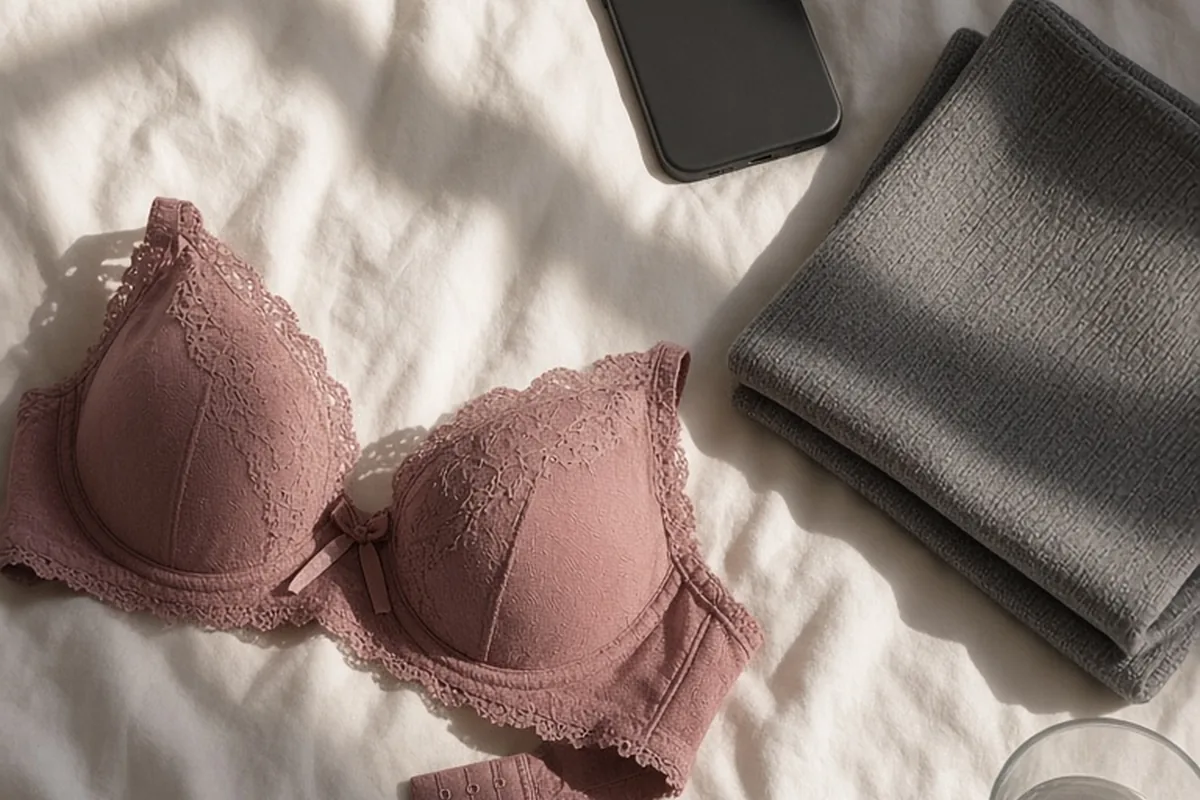
Slide a hand under the band at her back, pinch both sides of the clasp between your thumb and fingers, and push them toward each other so the hooks lift free. Most bras use a hook-and-eye closure that releases with gentle inward pressure, not pulling. If it resists, pause and ask instead of forcing it.
Unhooking a bra is one of those small moments that feels high-stakes in the moment and trivial afterward. The good news: the mechanics are simple, and the part that actually matters, reading the situation and keeping her comfortable, is something you can get right every time.
Start with consent, not technique
Before anything else, the only reason your hands should be near her bra clasp is that she clearly wants them there. That does not require a formal speech. It means the moment has built naturally, she is leaning in rather than tensing up, and you have read her signals honestly instead of hopefully. If you are unsure, a low-key question like "Is this okay?" is not a mood killer. Delivered calmly, it reads as confidence and respect, and most people find that far more attractive than silent guesswork.
Consent also shapes how the unhooking itself should feel. Rushing at the clasp like it is a puzzle to beat sends the message that you are focused on a goal rather than on her. Moving slowly, keeping your touch warm and unhurried, and paying attention to whether she relaxes or stiffens tells you everything you need to know. If she pulls back, laughs nervously, or redirects your hand, take the hint gracefully. The skill that matters most here is not finger dexterity. It is the ability to stay tuned in to another person.
Know what you are unhooking: the common closures
Most fumbling happens because the guy assumes every bra works the same way. It does not. The classic design is a hook-and-eye closure on the back band: a row of small metal hooks on one side that slot into fabric loops on the other. It usually has two or three columns of hooks, sometimes four on larger sizes. To open it, you bring the two sides of the band toward each other so the tension releases and the hooks slip out of the loops. Pulling the sides apart, which is the instinct most people have, actually tightens the closure and makes it harder.
Beyond the standard back clasp, you will run into front-clasp bras that fasten between the cups with a small plastic or metal clip, sports bras and bralettes that pull over the head with no closure at all, racerback styles with the clasp hidden up near the shoulder blades, and adhesive or stick-on bras that simply peel off. You cannot always tell which type she is wearing through clothing, which is one more reason a calm, unhurried approach beats a confident grab. If your fingers find smooth fabric where you expected hooks, that is useful information, not a failure.
- Back hook-and-eye: the standard, released by pinching the band sides together
- Front clasp: a twist or squeeze clip between the cups
- Pull-over styles: sports bras and bralettes with no clasp at all
- Racerback or longline: hooks placed higher or lower than expected
- Adhesive bras: no band, removed by peeling gently
The two-handed method, step by step
The two-handed approach is the reliable default, and there is no shame in using it. Reach around her or slide your hands under the back of her top, and place one hand on each side of the clasp. With your right hand, grip the side of the band that has the hooks; with your left, hold the side with the loops. Now push the two sides toward each other, slightly inward and upward, so the band slackens. The hooks will pop free of the loops almost on their own. Then let the band fall open naturally rather than tugging it.
A few details make this smoother. Keep your hands warm, because cold fingers on bare skin get a reaction you do not want. Use your fingertips rather than your whole palm so you can feel the clasp clearly. And work from the bottom row of hooks upward if there are multiple columns, though in practice releasing the tension on the whole clasp at once usually frees them together. If you are behind her or she is leaning against you, this whole motion takes about two seconds. Done calmly, it looks and feels effortless even though you are using both hands.
The one-handed move and when to skip it
The one-handed unhook has a reputation as a smooth move, and the mechanics are real: slide your index and middle fingers under the band on the loop side, place your thumb on the hook side, and pinch your thumb toward your fingers while pushing slightly upward. The band slackens, the hooks release, and it all happens with one hand while the other stays free. It is worth practicing, but here is the honest part: it is a flourish, not a requirement. Nobody has ever been disappointed by a partner who used two hands and stayed present.
The mistake is treating the one-handed move as a test you have to pass. Guys who attempt it cold, under pressure, often end up snapping the band against her skin or wrestling the clasp for ten awkward seconds, which is the opposite of smooth. If you want the skill, practice it on a spare bra or even a hooked strap when nobody is watching, so the motion lives in your fingers instead of your head. In the moment, choose whichever method keeps you relaxed. Confidence reads as calm, not as a party trick.
Front clasps, sports bras, and other surprises
Front clasps sit between the cups and usually work one of two ways: a small clip that twists or slides apart, or two plastic pieces that squeeze together and release. The trick is that they open with a gentle pinching or rotating motion, not by pulling the cups apart. If you reach behind her and find no clasp, do not keep hunting. Move your hands to her shoulders or waist, kiss her, and let your fingers drift to the front naturally, or simply ask. "Where does this thing open?" said with a smile is charming. Silent panic is not.
Pull-over styles like sports bras and many bralettes have no closure at all, which means the move is helping her lift it over her head, and that is genuinely a two-person job done well. Let her lead the pace, lift from the hem rather than yanking, and watch for earrings, hair, and glasses. Adhesive bras peel off and are best left to her entirely. The pattern across all of these is the same: when the hardware surprises you, slow down and collaborate instead of improvising harder.
When it will not budge, recover with grace
Sometimes the clasp fights back. The hooks are stiff, the band is tight, your angle is wrong, or your fingers suddenly forget how hands work. This happens to everyone, including people with plenty of experience, and the only real failure is how you handle it. The worst moves are going quiet and intense, yanking the band, or muttering frustrated comments that make her feel like a locked door you are trying to pick. All three shift the mood from intimate to uncomfortable fast.
The recovery is simple: pause, smile, and say something light. "This clasp is winning" or "I think it is personally opposed to me" gets a laugh almost every time, and a laugh resets the moment better than silent competence ever could. Then either try again slowly with two hands or invite her help: "Want to give me a hand with this?" Many women will unhook it themselves in one motion, which is not a defeat. It is teamwork, and it keeps the focus where it belongs, on the two of you rather than on your performance.
Mistakes that make it awkward and better moves
The most common mistake is pulling the band apart instead of pushing the sides together, which tightens the hooks and turns a two-second task into a wrestling match. Close behind it is speed: grabbing at the clasp the moment things heat up, before she has signaled she wants that step. A third is the death grip, clamping the band so hard the hooks cannot move. All three come from the same root, treating the bra as an obstacle between you and a goal instead of a small shared moment that is part of the experience itself.
The better moves are boring in the best way. Warm hands, slow approach, pinch rather than pull, and a willingness to laugh or ask when something surprises you. Pay attention to her body the whole time, not as a technique but because that is the actual point of being close to someone. If she is relaxed and engaged, you are doing it right regardless of how the clasp goes. If she tenses or goes quiet, stop and check in. The guys who are genuinely good at this are not the ones with the fastest fingers. They are the ones whose partners feel safe, seen, and unhurried.
Illustrative Scenarios
The fumble that turned into a laugh
A guy in his late twenties is with someone he has been seeing for a month, and things move to the couch and then further. He reaches back, finds the clasp, and pulls the band apart. Nothing. He pulls harder. The hooks hold, she flinches at the snap of elastic, and he feels his face go hot. His first instinct is to go silent and keep fighting it. Instead he stops, exhales, and says, "Okay, this clasp has clearly trained for this." She bursts out laughing, reaches back, and pops it open in one motion. The mood does not just survive; it gets warmer, because he stayed human instead of turning it into a contest.
Key point: A fumble only kills the mood if you let it turn into frustration. Humor and a pause recover almost anything.
The clasp that was not there
On a third date that is going well, a man slides his hand under her top and searches for the hooks. Smooth fabric. He keeps hunting along the band, growing more confused, and she notices the wandering hand and starts to tense. His first read is that he is doing something wrong. The better move, which he lands on, is to stop searching, kiss her shoulder, and murmur, "I think your bra is smarter than me. Where does it open?" She smiles, tells him it fastens in front, and guides his hand to the small clip between the cups. Ten seconds of honesty replaced what could have been a minute of awkward groping.
Key point: When the hardware surprises you, asking is faster and more attractive than guessing. Collaboration beats silent struggle.
Frequently asked questions
Is it okay to just ask her to unhook it?
Yes, and it is often the smoothest option. Saying "want to help me out here?" or simply letting her handle it keeps the moment relaxed and shows you are not performing. Most people find ease and honesty far more appealing than silent struggle.
How many hooks does a typical bra have?
Most everyday bras have two or three columns of hooks, and larger band sizes sometimes have four. You do not need to count them in the moment. Pinching the band sides together releases the tension on all of them at once.
Can I practice before the real moment?
Absolutely, and it helps. If you have access to a spare bra, fasten it around a pillow and practice the pinch-and-release motion until it is automatic. Even practicing the finger motion on a hooked strap builds the muscle memory that keeps you calm later.
What if she tenses up when I reach for the clasp?
Stop and check in. Tension usually means the pace is ahead of her comfort, and the right move is to slow down or ask if she is okay. Respecting that signal builds trust, and pushing past it damages it.
Your next step
Your next step is simple: learn the pinch, not the pull. Practice pressing the two sides of a clasp together until the motion is automatic, and in the moment, lead with consent, warm hands, and the willingness to laugh or ask. That combination, not flawless technique, is what actually makes the moment go well.