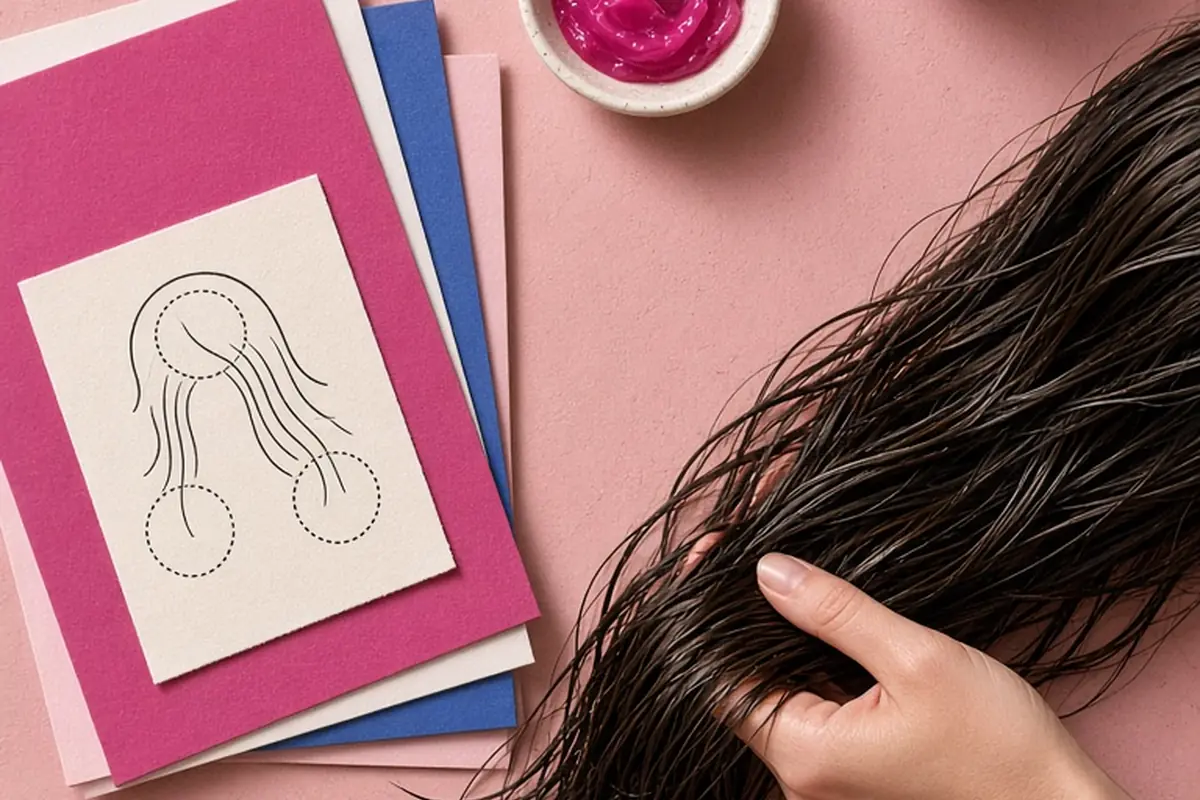
To use a hair mask without weighing hair down, choose a lightweight formula suited to your hair texture, gently squeeze out excess water after shampooing, and apply a nickel- to quarter-sized amount strictly to your mid-lengths and ends. Keep the product entirely off your roots and scalp. Leave the mask on for the manufacturer's recommended duration, typically three to five minutes for fine strands, and rinse thoroughly with lukewarm water until your hair feels clean and free of slick residue.
Deep conditioning treatments provide essential moisture, slip, and cuticle smoothing, but applying the wrong formulation or using heavy-handed techniques can leave hair limp, flat, and greasy within hours.
Selecting the Right Hair Mask Formulation for Fine or Easily Weighed-Down Strands
The primary reason a hair mask causes flat, lifeless strands is an imbalance between the product's lipid density and your hair fiber's diameter and porosity. Traditional conditioning masks are often formulated for coarse, severely damaged, or chemically processed textures that require heavy concentrations of rich plant butters, such as shea butter or cocoa butter, alongside dense mineral oils and unrefined waxes. When these high-molecular-weight ingredients coat fine or medium hair shafts, they create an occlusive layer that the hair cannot absorb. The excess film accumulates on the outside of the cuticle, flattening natural volume and attracting airborne dust and natural sebum.
To avoid this heavy buildup, evaluate ingredient labels carefully before purchasing. Look for conditioning agents based on hydrolyzed proteins like wheat, silk, or rice protein, as well as lightweight humectants such as glycerin, aloe vera leaf juice, and panthenol (pro-vitamin B5). When oils are present, prioritize lighter, rapidly spreading options like jojoba oil, argan oil, squalane, or grapeseed oil over dense animal fats, petroleum derivatives, or solid vegetable butters. Water-soluble silicones or lightweight conditioning polymers can offer detangling benefits and heat protection without forming the stubborn, water-resistant barriers associated with heavier dimethicone-heavy blends.
Prepping Hair for Treatment: Cleansing Thoroughly and Removing Excess Water
Successful mask application depends heavily on what happens before the treatment touches your hair. Applying a concentrated conditioning mask over hair that still contains residual styling products, dry shampoo, or natural oil creates an uneven barrier that traps debris and prevents the mask's moisturizing agents from contacting the cuticle. Begin by thoroughly washing your scalp and hair with a gentle, sulfate-free or clarifying shampoo depending on your recent product buildup. Emulsify the shampoo between your palms, work it directly into the roots to dissolve surface oils, and allow the lather to rinse down through the lengths to cleanse without roughing up the cuticles.
Once your hair is clean, the moisture balance of the strands before application becomes critical. Saturated, dripping-wet hair cannot absorb concentrated active ingredients because the hair fiber's internal spaces are already filled with free water, which dilutes the treatment and causes it to slide off the surface. Before opening your mask container, turn off the water and gently squeeze the lengths of your hair from mid-shaft to ends using your hands. For fine or easily overwhelmed textures, gently press a microfiber towel or soft cotton T-shirt along the lengths to remove excess water until the hair is damp rather than soaking wet. This ensures the product adheres directly to the hair shaft.
Targeting Application Zones: Protecting Roots and Focusing on Mid-Lengths to Ends
A widespread mistake that results in limp, greasy hair is treating a deep conditioning mask like an all-over scalp treatment. The scalp produces natural sebum through sebaceous glands, providing its own continuous lubrication and protection. Applying rich conditioning lipids directly to the scalp or within two inches of the root line suffocates natural lift, clogs hair follicles, and gives freshly washed hair an oily, collapsed appearance. Unless a product is specifically labeled as a soothing scalp treatment with a gel or liquid base, conventional hair masks belong exclusively on older, vulnerable hair fibers.
Begin your application approximately at ear level or jawline level, working downward toward the ends where the cuticle layer is oldest and most prone to dryness, weathering, and split ends. Dispense a measured amount—typically a nickel-sized portion for short to medium-length fine hair, or a quarter-sized portion for longer or denser textures. Rub the formula across your palms and between your fingers to distribute it evenly, then use a gentle raking or prayer-hands motion to coat the mid-lengths and ends. Distribute the treatment evenly by passing a wide-tooth comb or flexible detangling brush through the lower half of your hair, which prevents concentrated clumps of product from weighing down individual sections.
Managing Contact Time: Why Leaving Hair Masks on Longer Can Backfire
A common misconception in hair care is the belief that leaving a conditioning treatment on for double or triple the suggested time yields deeper moisture. While extremely porous, coarse, or bleached hair can sometimes tolerate extended exposure, fine or low-porosity hair quickly reaches a saturation threshold. When conditioning agents sit on delicate hair fibers for an excessive period, they can oversaturate the cuticle and cause hygral fatigue—a state where the hair shaft swells and weakens from absorbing too much water and lipid content. Furthermore, extended exposure allows heavy conditioning agents to adhere so firmly that standard rinsing fails to wash away the excess.
Follow the manufacturer's suggested contact time closely, which generally ranges from three to seven minutes for daily or weekly restorative treatments. If your hair tends to feel coated or heavy even after thorough rinsing, begin by testing the minimum suggested duration, such as three minutes. Setting a timer in the shower prevents accidental over-processing while you complete other personal care routines. If you desire enhanced penetration without extending the duration, wrap a warm, damp washcloth over your clipped-up lengths for three to five minutes; the mild ambient warmth gently relaxes the cuticle without requiring extended chemical contact.
Mastering the Rinsing Process to Prevent Residue and Film Accumulation
Incomplete rinsing is the single most frequent contributor to weighed-down, stringy hair following a mask treatment. Conditioning formulations are designed to deposit substantive lubricating agents on the cuticle, meaning they naturally cling to the keratin structure of the hair. If you perform only a superficial, twenty-second rinse under the showerhead, a significant layer of unrinsed surfactant and lipid base remains on the strands. As the hair dries, this residual coating hardens into a dull film that restricts natural bounce, inhibits airflow during drying, and attracts particulate matter throughout the day.
Take at least two full minutes to rinse your hair thoroughly under warm or lukewarm water. Separate the hair into sections with your fingers to ensure water reaches the interior layers of your mid-lengths, not just the outer canopy. Continue rinsing until the slick, slippery sensation shifts to a smooth, clean texture that feels soft but completely free of greasy glide. Avoid using freezing-cold water for rinsing off rich masks; cold water can cause certain lipid bases and waxes to solidify on the hair shaft before they are rinsed away, locking in unwanted heaviness. Instead, stick to comfortable lukewarm water for effective residue removal.
Calibrating Usage Frequency and Deciding When to Skip Regular Conditioner
Determining how often to use a deep treatment depends on your hair's overall porosity, chemical processing history, and daily exposure to heat tools. Fine, virgin, or low-porosity hair rarely requires deep conditioning more than once every two to three weeks. In contrast, hair that has undergone bleaching, color lifting, perm processing, or daily heat styling may benefit from a weekly application. Using a deep conditioning mask after every single wash overloads normal hair, creating a cumulative barrier that causes persistent limpness and loss of elasticity.
Additionally, evaluate whether your hair needs both a rinse-out conditioner and a mask during the same wash session. For the vast majority of fine, medium, and low-porosity textures, a hair mask serves as a complete replacement for your everyday rinse-out conditioner on the days you use it. Layering a standard conditioner directly before or after an intensive mask adds unnecessary layers of cationic surfactants and fatty alcohols to the cuticle. Wash with shampoo, apply your targeted mask, rinse completely, and proceed directly to your post-wash styling routine to maintain maximum natural body.
Adjusting Leave-In Products and Post-Wash Styling for Maximum Body
The way you style your hair immediately after using a mask determines whether your strands retain movement or settle into a flat, limp shape. When a hair mask has already smoothed the cuticle and sealed in hydration, your hair requires significantly less post-wash leave-in product than it would on a standard shampoo day. Layering heavy leave-in creams, thick silicone serums, and rich styling balms on top of newly conditioned hair creates compounding weight that neutralizes volume. Assess your hair's condition as you step out of the shower before reaching for your standard styling products.
If detangling or thermal protection is needed, select lightweight liquid sprays, light foams, or water-based leave-in mists rather than dense oil-in-water emulsions. Focus any post-wash product strictly on the very tips of your hair, applying it with a light misting motion rather than direct rubbing. When blow-drying, use a medium heat setting and lift the roots upward with your fingers or a vented round brush to encourage airflow underneath the base of the hair. This technique sets the root structure in an upright position before any remaining lightweight conditioning agents settle along the shaft.
Frequently asked questions
Should I use regular conditioner after rinsing out a hair mask?
No, for fine or easily weighed-down hair, a hair mask should replace your regular conditioner on treatment days. Layering both products deposits excess conditioning agents on the hair shaft, which causes flatness and product buildup.
Can I leave a hair mask on overnight to get better results?
Leaving a standard hair mask on overnight is generally not recommended for fine or low-porosity hair. Extended exposure can cause moisture overload and hygral fatigue, leaving strands limp, gummy, and difficult to rinse completely clean.
How do I know if my hair mask has weighed down my hair?
Hair that has been weighed down by a mask will look piecy, stringy, or oily within hours of washing, and will lose its natural root lift and bounce. If your hair feels coated or leaves a waxy residue on your fingers, the formula or application method was too heavy.
Does applying a hair mask to soaking-wet hair make it lighter?
Applying a mask to dripping-wet hair actually dilutes the formula unevenly and causes it to slide down, often ending up closer to the scalp where it causes heaviness. Gently squeezing out excess water before applying ensures targeted placement and proper absorption without requiring excess product.
Your next step
Check the ingredient list of your current hair mask to confirm it uses lightweight hydrators like aloe or jojoba oil rather than heavy solid butters, and apply a nickel-sized amount exclusively from your jawline down during your next wash.