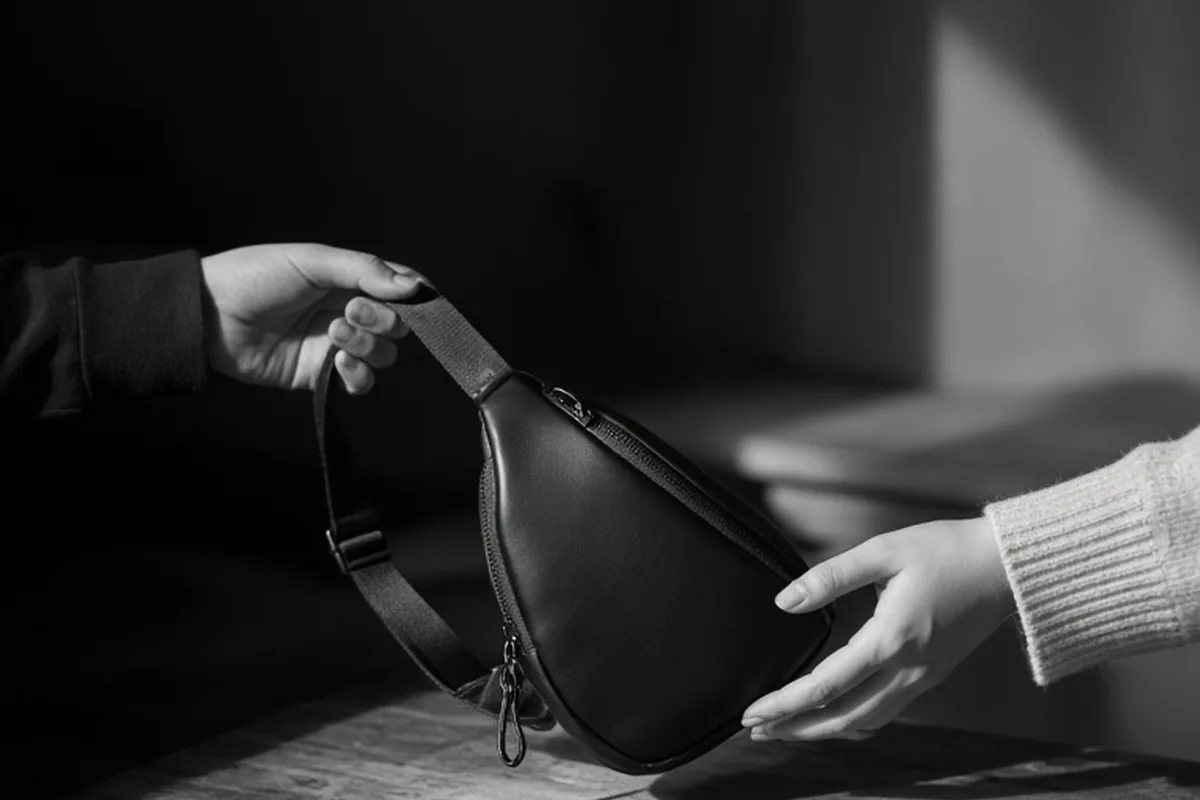
To wear a sling bag, drape the strap diagonally across one shoulder so the pack sits snugly against your upper chest, mid-torso, or back. Positioning the bag at your front gives you immediate access to your items and keeps valuables secure, while sliding it to your upper back frees your arms during active movement. Adjust the strap so the pouch rests firmly against your body without bouncing or restricting your breathing.
Sling bags bridge the gap between structured handbags and hands-free backpacks, offering functional storage without unnecessary bulk. Finding the right way to wear one comes down to balancing ergonomic comfort, security, and personal style across different settings.
The Front-Chest Crossbody Placement for Security and Accessibility
Positioning a sling bag across the front of your chest is one of the most practical and modern ways to wear this accessory. In this orientation, the strap rests across your shoulder and collarbone, bringing the main pouch to rest flat against your sternum or just below the bust line. This placement keeps your essential items, such as your phone, wallet, transit card, and keys, immediately accessible without requiring you to unclip or swing the bag around. It also offers enhanced peace of mind in crowded urban settings or public transportation hubs, where keeping your belongings within your direct line of sight reduces the risk of accidental loss or pickpocketing.
To achieve a clean silhouette and avoid physical strain, adjust the strap so the bag hugs your ribcage closely rather than dangling loosely around your stomach. When worn over structured layers like an oversized blazer or a trench coat, a front-facing leather or matte nylon sling creates a deliberate, intentional focal point. A slight trade-off with front-chest positioning is that rigid or overfilled bags can feel restrictive across the bust or create unnecessary bulk under heavy outerwear, so choosing a bag with soft contours or a low profile works best for all-day front wear.
The Back-Crossbody Placement for Active Commutes and Mobility
Swinging the pouch of your sling bag onto your upper back provides maximum freedom of movement for walking, cycling, or navigating busy days. In this position, the diagonal strap runs across your front torso, anchoring the load symmetrically across your back and leaving your hands entirely unencumbered. This method distributes weight similarly to a miniature backpack while retaining the single-strap convenience of quickly sliding the compartment forward whenever you need to retrieve an item.
For optimal back placement, position the pouch between your shoulder blades rather than letting it sag onto your lower spine. Keeping the load high on your back aligns the center of gravity with your natural posture, preventing neck fatigue and stopping the bag from swinging sideways as you stride. While the back position is ideal for physical mobility, the trade-off is reduced visibility over your zippers, making it less suitable for packed trains or crowded event venues unless you quickly swivel the pack to your front before entering those spaces.
The Single-Shoulder and Hip-Resting Alternatives
While diagonal crossbody wear is standard, you can also wear a sling bag over a single shoulder like a classic tote or shoulder purse. Lengthening the strap slightly allows the bag to rest naturally against your hip or waist. This placement delivers a relaxed, understated appearance that pairs smoothly with casual weekend outfits, slip dresses, or lightweight summer knitwear where a tight diagonal strap across the chest might disrupt the drape of your clothing.
When styling a sling bag on one shoulder, choose models that feature a structured strap or a textured non-slip underside to prevent the bag from constantly sliding down your arm. Keep in mind that single-shoulder carry concentrates the entire weight of the bag on one side of your body, which can cause muscle imbalance during long walking sessions. This style works best for brief errands, casual lunches, or situations where you are carrying only minimal essentials.
Dialing in Strap Length and Torso Proportions
The key to making a sling bag look intentional rather than haphazard lies in precise strap adjustment. A strap that is too long allows the bag to bounce against your thighs or hips with every step, disrupting your balance and creating visual clutter. Conversely, a strap pulled too tight can constrict your movement, bunch up your top, or dig uncomfortably into your neck muscles. The ideal strap setting keeps the pouch stable against your mid-to-upper torso while leaving enough slack for you to breathe naturally and move your arms freely.
Consider your body frame and the thickness of your clothing when setting your strap length. If you have a petite torso, shorter strap lengths keep the bag proportional to your body and prevent the pack from overwhelming your frame. If you wear your sling over heavy winter parkas, chunky wool sweaters, or denim jackets, you will need to extend the strap by an inch or two to maintain the same comfortable resting spot. Bags equipped with quick-release adjusters or cam buckles make these day-to-day transitions seamless.
Pairing Sling Bag Materials and Silhouettes with Outfits
Sling bags come in a broad range of textures and structures, and matching the material to your wardrobe creates a cohesive, polished look. Technical materials like ripstop nylon, cordura, and water-resistant polyester naturally complement athletic wear, leggings, track jackets, and street-inspired denim. These lightweight fabrics handle moisture and abrasion well, making them well-suited for outdoor activities, travel days, and unpredictable weather.
For elevated casual wear, professional work environments, or evening gatherings, opt for full-grain leather, supple faux leather, or fine-weave canvas with refined metal hardware. A sleek black or rich cognac leather sling worn diagonally across a monochromatic turtleneck and tailored trousers adds functional sophistication without reading as purely utilitarian. To keep your overall silhouette balanced, pair larger or more voluminous sling bags with relaxed, oversized silhouettes, and save compact, minimalist designs for sleek, form-fitting outfits.
Transitioning Between Casual Daytime and Evening Wear
A sling bag can effortlessly transition from morning errands to an evening dinner when styled with attention to hardware, strap configuration, and placement. During daytime outings, wearing a sporty or neutral sling high across the chest keeps your styling casual, utilitarian, and ready for movement. You can pair it with sneakers, relaxed-fit jeans, and a classic cotton tee for an easy, modern aesthetic.
When shifting into evening settings, tuck in any excess strap tails and rotate the bag to sit closer to your waist or carry it gracefully off one shoulder. Choosing a sling with low-profile zippers, minimal external branding, and polished metal accents allows the piece to function much like a contemporary clutch or shoulder bag. Swapping an athletic webbing strap for a leather or hybrid strap instantly dresses up the bag, letting it complement midi dresses, blazers, and heeled boots seamlessly.
Selecting Bag Capacity and Organizing Daily Essentials
To get the most out of your sling bag, choose an internal volume that matches your realistic everyday carry. Compact slings ranging from one to two liters hold core necessities such as a smartphone, small cardholder, lip balm, and keys. These smaller packs keep a streamlined profile that sits close against the body without bulging, making them exceptionally comfortable for long periods of continuous wear.
If your routine requires carrying small water bottles, sunglasses cases, hand sanitizers, or compact e-readers, look for slings in the three to five-liter range that incorporate dedicated internal dividers. Organized compartments prevent heavy items from shifting to one side, which keeps the bag balanced flat against your chest or back. Be mindful of total pack weight; overloading a single-strap bag can lead to localized shoulder fatigue, so regularly clearing out unnecessary receipts, coins, and extra clutter will keep your carry light and effortless.
Illustrative Scenarios
Illustrative Scenario: Adjusting a Sling for Daily Commutes and Errands
A commuter wanted a hands-free bag for daily transit and weekend errands but found her initial sling sat too low on her hip, bouncing awkwardly while she walked. By shortening the strap so the pouch rested snugly against her upper ribcage, the bag stayed securely in place during rapid walking. For her crowded morning train rides, she positioned the pouch over her chest for easy fare-card access, then swung it to her upper back during leisurely weekend walks to keep her front torso clear.
Key point: Adjusting the strap length to fit the upper torso and rotating the bag position based on the environment creates the best balance of comfort, stability, and access.
Frequently asked questions
Which shoulder should the strap go over when wearing a sling bag?
You can wear the strap over either shoulder depending on your dominant hand and personal comfort. Most people place the strap over their non-dominant shoulder so their dominant hand can easily reach across to open zippers and retrieve items.
How do you wear a sling bag with a large bust comfortably?
To wear a sling bag comfortably with a larger bust, adjust the strap so the pouch sits slightly lower along your ribcage or diagonally across your upper back. Choosing a sling with a wider, padded strap and a flexible, contoured shape prevents the bag from digging into your chest.
Can you wear a sling bag around your waist like a fanny pack?
Many modern sling bags feature adjustable webbing straps and swivel buckles that allow them to be worn around the waist or hips like a belt bag. Shorten the strap completely and buckle it around your natural waistline or upper hips for a classic hands-free fit.
How do you keep a sling bag from sliding around when walking?
Tighten the strap until the pouch rests securely against your body without slack, ensuring the weight stays anchored to your center of gravity. You can also select bags made with textured backing materials or use a secondary stabilizer strap if your model includes one.
Your next step
Try on your sling bag in front of a mirror, adjust the strap until the pack rests flat against your upper ribcage or back, and test swinging it between your front and rear to find your ideal daily balance.