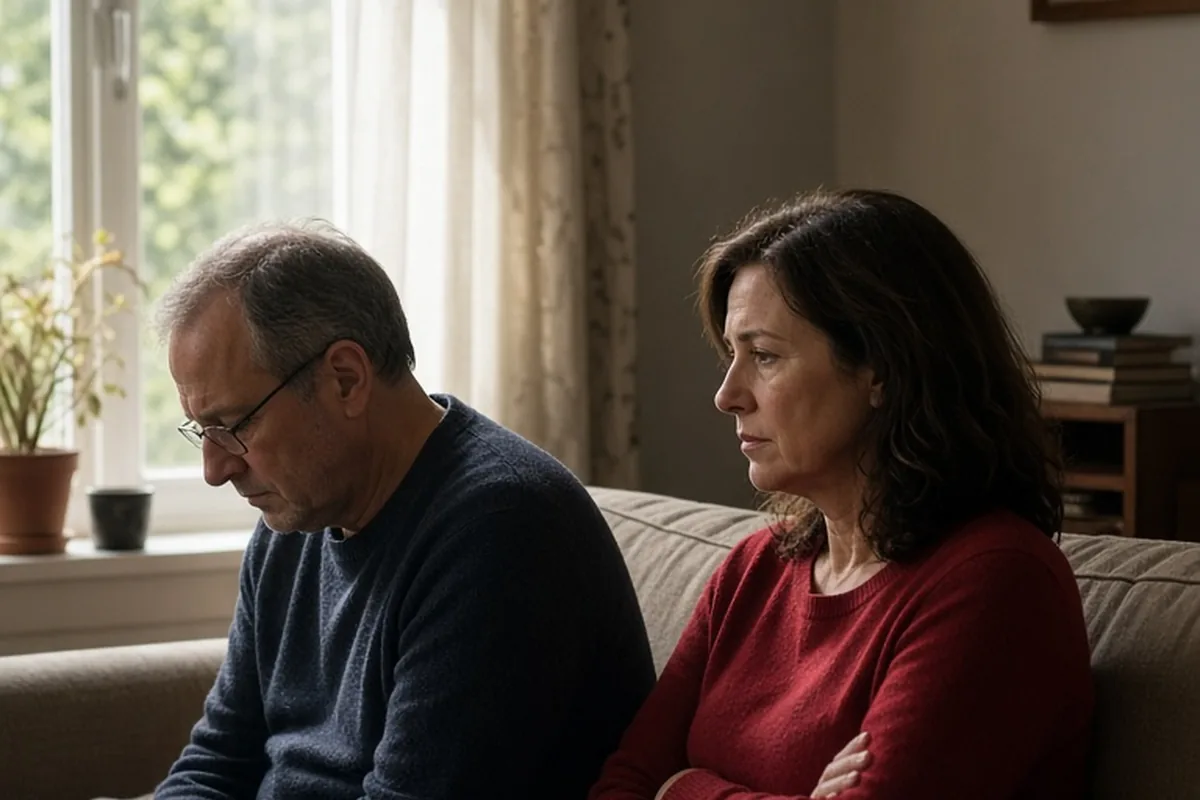
A husband's retirement often alters marital dynamics by disrupting daily routines, shifting personal identities, and increasing togetherness without clear boundaries. When work-related purpose disappears and domestic expectations remain unspoken, unresolved resentments can surface, sometimes accelerating late-life divorce. Couples can protect their relationship by renegotiating space, discussing emotional needs, sharing household responsibilities, and deliberately establishing both independent routines and shared goals.
Leaving the workforce represents one of the most substantial psychological transitions in adult life. When a career ends, the routine that organized decades of family rhythms disappears overnight, leaving both spouses to adapt to an entirely new domestic reality.
Why Retirement Disrupts Long-Standing Marital Routines
For decades, most couples organize their days around structured absences. Work naturally creates space, predictable schedules, and individual spheres of autonomy. When a husband steps away from full-time employment, that daily cadence shifts immediately. Being suddenly present in the same physical environment for twenty-four hours a day can feel claustrophobic if neither partner has prepared for the constant proximity. Without the natural boundaries of the workplace, small habits that were once barely noticeable can turn into frequent friction points.
This disruption is often felt intensely when one partner has already established a predictable rhythm at home, whether through homemaking, remote work, or an earlier retirement. The sudden arrival of a spouse who lacks an established daily plan can feel like an intrusion into a well-managed sanctuary. If the newly retired partner begins commenting on household routines, hovering during errands, or depending entirely on the other spouse for entertainment, irritation can mount quickly. Recognizing that this friction stems from structural change rather than a sudden loss of affection is essential for addressing it constructively.
Identity Loss and the Emotional Shift for Men
Professional careers provide far more than a paycheck; they supply routine, social interaction, status, intellectual challenge, and a steady sense of accomplishment. When a man retires, he may experience an unacknowledged period of grief or disorientation. Without meetings, deadlines, or colleagues seeking his input, questions about relevance and self-worth frequently arise. If a man has tied his entire identity to his job, stepping away can leave an emotional void that is difficult to articulate.
This emotional struggle often manifests indirectly. Rather than expressing vulnerability, a man feeling adrift might become irritable, overly critical of minor domestic matters, or socially withdrawn. In other instances, he might place the burden of his emotional well-being entirely on his partner, expecting her to serve as his sole companion, confidante, and social planner. While empathy from a spouse is vital, a husband must also take active ownership of his transition by exploring independent interests, rebuilding non-work social connections, and defining personal goals beyond the workplace.
Renegotiating Household Labor and Personal Space
A recurring conflict in midlife marriages involves the division of domestic responsibilities after retirement. During working years, couples often operate under explicit or unspoken agreements regarding who handles cooking, cleaning, maintenance, and administrative tasks. When a husband retires, assumptions often clash. A working spouse may expect the retired partner to take over the majority of chores, while the retired partner may view his new status as a permanent vacation from obligation.
Conversely, problems arise when a newly retired spouse tries to take charge of household operations with corporate efficiency, inadvertently treating family members like direct reports. Establishing peace requires an explicit, collaborative conversation about daily operations. Couples benefit from assigning clear, independent zones of responsibility rather than micromanaging each other. Just as important is preserving physical and temporal autonomy: each partner needs dedicated spaces in the home where they can read, work, or relax without interruption, alongside planned periods of independent activity outside the house.
Financial Anxiety and Divergent Lifestyle Visions
Transitioning from accumulating wealth to spending retirement savings is a significant psychological hurdle. Even financially secure couples can experience heightened tension if one partner operates with scarcity anxiety while the other wants to spend freely on travel, hobbies, or home improvements. Money touches deeply rooted feelings about security, legacy, and autonomy, making unaligned financial attitudes a potent trigger for marital distress during this life phase.
Tensions also flare when spouses realize their long-term visions for retirement do not match. One partner may dream of selling the family home to travel the country in an RV, while the other values staying rooted near grandchildren, longtime friends, and familiar healthcare providers. Avoiding late-life divorce requires proactive, transparent discussions about lifestyle priorities. Couples must balance flexibility with firm personal boundaries, seeking practical compromises such as alternating travel seasons with quiet home months rather than demanding an all-or-nothing commitment from the other.
Rebuilding Intimacy and Intentional Connection
During peak career and parenting years, many couples slip into a state of parallel living, functioning efficiently as logistical teammates while allowing romantic and emotional intimacy to fade into the background. When children leave home and work ceases, spouses are suddenly left face-to-face with the foundation of their marriage. If that foundation has not been tended to, the sudden silence can feel alienating, leading partners to wonder if they still have anything in common.
Reconnecting requires deliberate effort rather than passive hoping. Intimacy in midlife flourishes when partners treat each other with curiosity, recognizing that each person has grown and changed over the decades. This involves scheduling dedicated dates that do not revolve around household logistics, sharing honest conversations about emotional and physical desires, and discovering fresh activities that neither partner mastered during their earlier years. Learning a new skill together puts both partners on equal footing, rekindling shared joy and teamwork.
Identifying Warning Signs and When to Seek Help
While adjustment friction is normal in the first year or two following retirement, persistent negative patterns can signal a marriage in serious jeopardy. Chronic contempt, prolonged silent treatments, deep emotional disconnection, and an absolute refusal to discuss shared concerns are red flags that should not be ignored. When one or both spouses feel that their dignity or happiness is consistently compromised, staying the course without intervention rarely leads to improvement.
Couples facing an impasse can benefit substantially from outside perspectives, such as specialized marriage counseling or discernment counseling. A qualified professional can help untangle whether current difficulties are temporary adjustment pains or fundamental incompatibilities that have been ignored for decades. Seeking guidance early provides the best opportunity to repair mutual trust and clarify whether both partners are truly willing to invest in creating a fulfilling shared future.
Illustrative Scenarios
Establishing Daily Autonomy and Structure
After concluding a thirty-year corporate career, Thomas found himself spending all day at home, frequently following his wife, Diane, from room to room to offer commentary on domestic tasks. Diane felt increasingly smothered in her own home, while Thomas felt deeply stung whenever she asked for space, interpreting her requests as personal rejection. The mounting tension led to daily arguments about minor chores. Realizing the pattern was unsustainable, they agreed to formalize their days: Thomas set up a dedicated workshop in the basement for his own projects and joined a local community volunteer board on weekday mornings, while Diane kept her afternoons open for personal interests. Reintroducing structured independence allowed them to genuinely look forward to reuniting for dinner.
Key point: Preserving individual schedules and separate physical zones reduces friction and protects mutual goodwill.
Negotiating Competing Visions of Retirement
Arthur retired eager to downsize immediately and spend several months each year traveling abroad. His wife, Miriam, who continued to work part-time, felt panicked by the thought of leaving their neighborhood, church community, and nearby grandchildren. Arthur viewed her hesitation as resistance to his lifelong dream, while Miriam felt Arthur was completely disregarding her emotional ties. Instead of issuing ultimatums, they consulted a financial and lifestyle planner to explore alternatives. They agreed to a trial period consisting of two separate three-week trips over the coming year while maintaining their primary residence, giving Arthur travel opportunities without forcing Miriam into an abrupt relocation.
Key point: Testing lifestyle changes in manageable increments prevents rigid conflicts over the future.
Frequently asked questions
Why do divorce rates rise around retirement age?
Retirement removes the distractions of demanding careers and busy child-rearing schedules, bringing unresolved marital differences into sharp focus. Additionally, as lifespans lengthen, individuals are increasingly unwilling to spend decades in an unfulfilling or disconnected partnership.
How long does it typically take for a couple to adjust to retirement?
Most couples require twelve to twenty-four months to establish comfortable new rhythms, rebalance household responsibilities, and find individual purposes. Giving each other grace and regularly checking in on emotional well-being can make this transition smoother.
What should a spouse do if their retired partner refuses to find hobbies or social outlets?
Maintain your own social schedule and personal interests rather than pausing your life to accommodate your partner's inactivity. You can offer gentle encouragement and invitations, but each adult remains responsible for building their own daily fulfillment.
Your next step
Schedule a dedicated, calm conversation this week to discuss your daily routines, personal space needs, and lifestyle goals for the next twelve months.