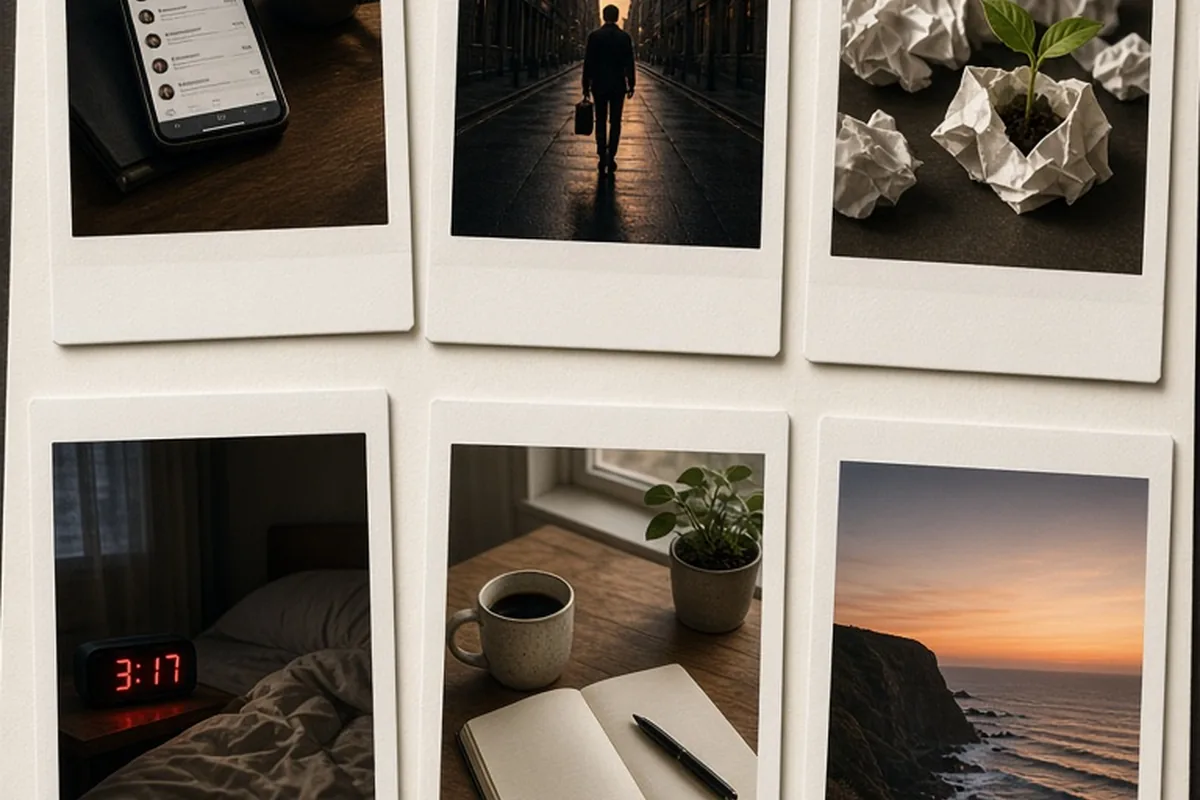
Hustle porn refers to the glamorization and public celebration of extreme overwork, non-stop productivity, and sacrificial labor, primarily broadcast across social media platforms like LinkedIn and X. It frames chronic exhaustion, sleepless nights, and the absence of personal life as moral virtues. Identifying this trend helps workers separate performative busyness from genuine career achievement, preserving well-being while pursuing sustainable, high-impact professional goals.
Scrolling through professional feeds often feels like walking into an endurance contest where sleep is framed as weakness and leisure is treated as a character flaw. While focused dedication has always played a legitimate role in professional achievement, modern digital platforms have mutated diligence into a public spectacle. Learning to see through this posturing allows professionals to pursue ambition with deliberate, healthy intention rather than chasing an illusion of relentless friction.
The Core Mechanics of Hustle Porn and Performative Overwork
Hustle porn operates by turning standard professional duties and excessive working hours into stylized lifestyle content. It typically manifests as posts celebrating eighty-hour workweeks, humblebrags about missed meals or canceled vacations, and sunrise photos paired with aphorisms about outworking the competition. The underlying message is unambiguous: your personal worth corresponds directly to your output, and any boundary between personal life and professional output represents a lack of drive.
This dynamic thrives because it conflates visible suffering with productive value. In many white-collar industries where the outputs of knowledge work are subjective and difficult to quantify immediately, hours spent online or visible activity become a surrogate metric for competence. For instance, a founder sharing a snapshot of their laptop open in a hospital waiting room is not demonstrating superior strategy or business acumen; they are participating in a ritual that treats self-abnegation as proof of commitment.
The trade-off of adopting this mindset is significant. While publicly signaling extreme dedication may attract short-term praise from like-minded peers or anxious managers, it almost always masks underlying operational inefficiencies. When continuous exertion becomes the primary metric of success, individuals lose the incentive to work efficiently, design better systems, or prioritize tasks that truly move an organization forward.
Why Digital Platforms and Feeds Amplify the Grind Narrative
The prevalence of hustle porn is not an accident of human nature; it is actively reinforced by social media algorithms designed to reward high-arousal content. Narratives built around extreme sacrifice, dramatic discipline, and hyper-competitiveness trigger strong reactions, ranging from aspirational longing to guilt and defensive anger. Because platform algorithms prioritize engagement over nuanced truth, provocative declarations about working around the clock receive vastly more visibility than sober advice about steady, moderate pacing.
Furthermore, hustle porn frequently serves as top-of-funnel marketing for an entire industry of productivity influencers, life coaches, and career gurus. By engineering feelings of professional inadequacy in their audience, creators establish the exact psychological vulnerability required to sell masterclasses, lifestyle supplements, morning-routine blueprints, and subscription newsletters. The narrative suggests that if you are tired, falling behind, or unfulfilled, the remedy is not rest or institutional change, but purchasing a system that helps you endure more strain.
Recognizing this commercial incentive is essential for critical digital consumption. When an influencer claims they thrive on four hours of sleep while running multiple ventures, readers are seeing a curated advertisement, not an independently audited schedule. Internalizing these dramatized standards sets an impossible baseline for normal professionals navigating standard workplace environments, family obligations, and biological limitations.
The Real Psychological and Operational Costs of Constant Urgency
Treating life as an uninterrupted sprint exacts severe cognitive and psychological tolls. Chronic exposure to urgency hormones like cortisol degrades executive functioning, impairing the exact capacities required for complex problem-solving, strategic foresight, and empathetic leadership. When a person stays in a perpetual state of hustle, their cognitive scope narrows to immediate firefighting, making high-level creative synthesis virtually impossible.
Beyond cognitive decline, the glorification of overwork fuels widespread cynicism and emotional detachment, commonly understood as the precursors to clinical burnout. Workers begin to resent their colleagues, their projects, and their own aspirations because effort is never met with genuine recovery. Consider a team where the manager regularly sends emails at midnight and praises direct reports who reply within minutes; the resulting environment is not one of high performance, but of hyper-vigilance, where staff spend emotional energy monitoring communication channels rather than producing thoughtful work.
There is also a social trade-off. Extreme devotion to performative work inevitably cannibalizes the foundational pillars of psychological resilience: friendships, romantic partnerships, physical health, and personal hobbies. When work constitutes someone's entire identity, professional setbacks cease to be ordinary business challenges and transform into existential crises.
Separating High Performance from Performative Busyness
Rejecting hustle porn does not require abandoning ambition, excellence, or hard work. The critical distinction lies between high performance—which focuses on leverage, results, and long-term sustainability—and performative busyness, which emphasizes activity, presence, and visible strain. High performers recognize that rest is not a reward earned after exhaustion, but a non-negotiable biological prerequisite for quality output.
True competence often looks remarkably quiet and unhurried compared to the frantic posture of grind culture. A professional who automates a complex reporting workflow, delegates routine tasks, and finishes their day at five o'clock produces more enterprise value than a peer who manually compiles spreadsheets until midnight to demonstrate commitment. The first person leverages intelligence and processes; the second relies on brute physical endurance to cover for operational shortcomings.
To break free from performative habits, you must shift your personal scorekeeping from inputs to outcomes. This transition requires courage, particularly in corporate cultures that mistakenly reward visibility over substance. It involves being willing to be seen taking a lunch break or declining an irrelevant evening meeting, confident that the clarity and caliber of your core work will speak for itself.
- High performance prioritizes high-leverage outcomes; hustle culture prioritizes visible effort and hours logged.
- Sustainable achievement treats rest as active preparation; grind narratives treat rest as lost productivity.
- Strategic professionals build systems to eliminate unnecessary friction; hustle evangelists romanticize the friction itself.
Practical Strategies to Protect Yourself from Grind Contagion
Shielding your daily routine from hustle culture requires intentional friction against cultural and workplace pressures. The most effective starting point is a ruthless curation of your digital intake. Unfollow, mute, or block accounts that frame basic human needs as character flaws or present relentless exhaustion as a badge of honor. Replacing these inputs with voices that emphasize craft, thoughtful methodology, and balanced living reduces social comparison and quiet anxiety.
Within your actual workplace, establish explicit structural boundaries rather than relying on momentary willpower. Communicate your working rhythms clearly and demonstrate reliability within those parameters. For example, rather than engaging in passive-aggressive availability battles, state clearly to your team that you reserve focused work for mornings and do not monitor non-emergency notifications after six in the evening. As long as your output meets or exceeds expectations during core hours, clear boundaries set a professional standard that others often welcome.
However, individual boundary-setting has limits if you work within an organization that systematically demands exploitation. If leadership genuinely equates virtue with around-the-clock responsiveness, holding boundaries may stall advancement in that specific environment. Recognizing this trade-off allows you to make clear-eyed decisions: either adapt temporarily for a calculated short-term goal, or begin strategically organizing an exit toward an organization with healthier operational maturity.
Designing a Sustainable Rhythm for Meaningful Career Growth
A durable career resembles an athletic season rather than an endless race. Professional athletes do not train at maximum heart rate every hour of every day; they utilize periodization, cycling through phases of intense conditioning, tactical practice, active recovery, and complete rest. Applying this periodized model to knowledge work allows you to surge when a project genuinely requires it, balanced by deliberate periods of lower intensity to restore cognitive reserves.
Building this rhythm starts with establishing firm shutdown rituals at the end of each workday. When you finish your tasks, close your work tabs, review your priorities for the next morning, and physically disengage from your workstation. Creating a tangible boundary between your professional role and your domestic life signals to your brain that the period of vigilance has ended, allowing genuine mental recovery to begin.
Ultimately, sustainable ambition demands that you redefine what success looks like on your own terms. When you strip away the social media posturing and the performative urgency, meaningful work is about creating valuable outcomes, solving compelling problems, and supporting the people and causes you care about—all while maintaining the health and relationships necessary to enjoy the life you are working to build.
Illustrative Scenarios
Breaking the Late-Night Availability Loop
Elena, an engineering lead at a mid-sized software firm, felt persistent pressure from online discourse and company leadership to demonstrate constant availability. She began answering Slack messages until 11:00 PM and drafting architectural proposals on weekends, believing this visible hustle was necessary to secure a promotion. Over six months, her sleep deteriorated, her code reviews grew careless, and she felt continuous low-level dread. Recognizing the decline in her output, she initiated a two-week experiment: she turned off evening notifications, set strict 9-to-5 working blocks, and focused exclusively on shipping two critical backlog items. Her team shipped the features ahead of schedule, her error rate plummeted, and her executive team commended the clarity of her work without once noticing her absence from midnight chat channels.
Key point: Substantive results and cognitive clarity consistently outweigh the superficial optics of around-the-clock availability.
Frequently asked questions
Is working long hours always an example of hustle porn?
No. Temporary periods of intense work are sometimes necessary to launch a business, meet a firm deadline, or master a new skill. It becomes hustle porn only when overwork is glamorized as a permanent moral virtue and performed publicly for status or validation.
How can I tell if my ambition is healthy or driven by toxic hustle culture?
Healthy ambition focuses on the intrinsic value of your work, mastery of skills, and long-term goals while accommodating rest. Toxic hustle is primarily motivated by status anxiety, social comparison, and the fear that pausing for any reason makes you unworthy.
What should I do if my manager actively promotes hustle culture?
Focus on over-delivering on agreed-upon outcomes during your scheduled hours while establishing quiet, firm communication boundaries. If the management culture fundamentally punishes anyone who does not work during off-hours, begin quietly planning a transition to a more sustainable workplace.
Your next step
Audit your digital feeds today by unfollowing three accounts that celebrate chronic overwork, and institute a strict device shutdown time this evening to reclaim your personal recovery hours.