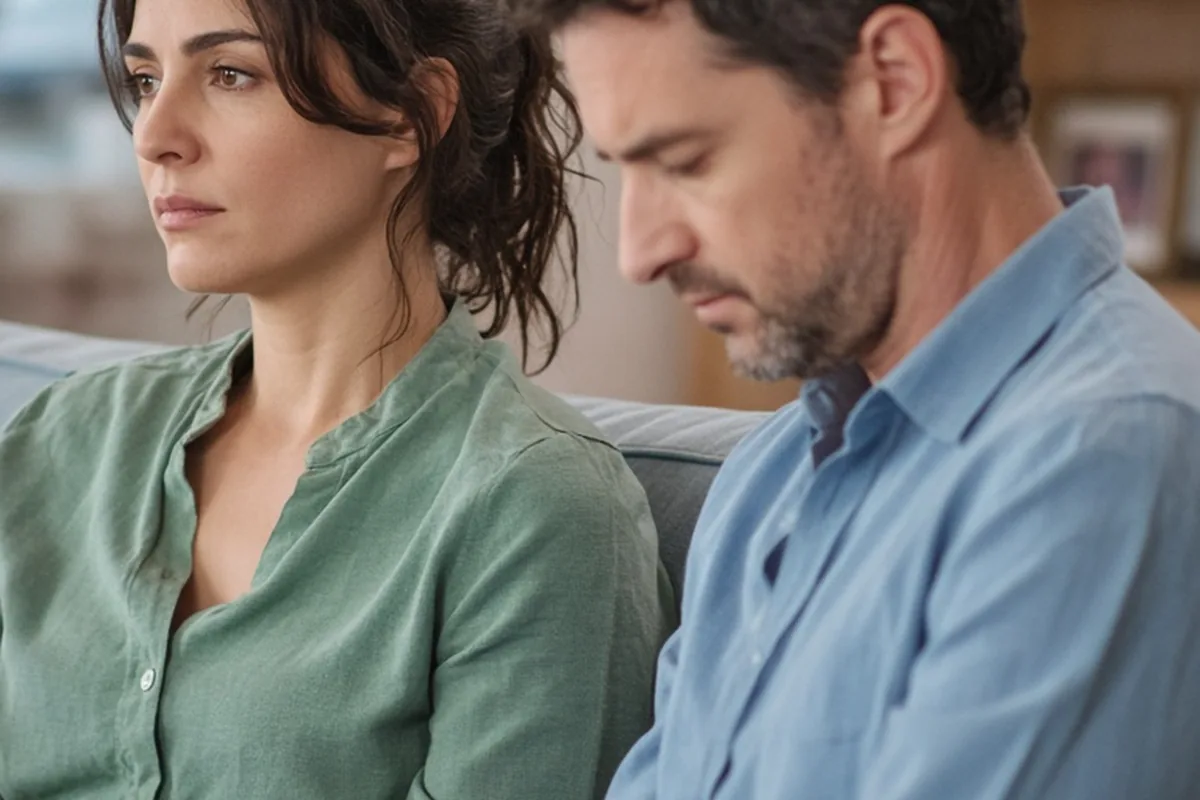
Deciding you will never date a widower again usually comes from the exhaustion of competing with an idealized memory or feeling emotionally secondary to unresolved grief. It is entirely valid to establish this boundary when a relationship leaves you feeling like a placeholder. Stepping back allows you to honor your own emotional needs, recover your self-worth, and pursue partnerships built on mutual presence and complete emotional availability.
Stepping into a romance with someone who has lost a spouse brings unique dynamics that standard dating advice rarely addresses. When unresolved grief, unspoken comparisons, and family complications dominate the partnership, the emotional toll can leave you feeling drained, invisible, and resolved to never repeat the experience.
The Ghost in the Room: Why Competing with an Idealized Memory Hurts
One of the most painful dynamics in dating a widower is the feeling of living in the shadow of someone who cannot be challenged or matched. In psychological terms, when a partner dies, memories often undergo a natural process of sanctification where flaws soften and virtues become magnified. While this is a normal part of mourning, it becomes deeply damaging in a new relationship if the surviving partner constantly holds current moments up against an untouchable standard.
Consider a situation where every restaurant you choose, vacation you plan, or habit you possess is met with a subtle reminiscence of how the late spouse handled things. Even if not intended as an insult, the emotional message is clear: you are existing inside a pre-written story rather than co-authoring a new one. Over time, this dynamic erodes romantic intimacy because genuine passion requires two people seeing and valuing each other as distinct individuals. When a partner uses you to recreate the comfort of their past rather than appreciating your specific presence, walking away is often the only way to preserve your self-respect.
Grief Versus Avoidance: Spotting Emotional Unreadiness Early
A common mistake people make when dating someone who lost a spouse is confusing loneliness with readiness for intimacy. Grief is physically and emotionally demanding, and many people attempt to bypass the acute silence of an empty home by seeking rapid companionship. In these instances, the widower is often seeking a soothing presence or logistical support rather than entering a mature, reciprocal partnership.
Recognizing this pattern requires paying close attention to how comfortable the person is discussing difficult emotions without shutting down or projecting their sadness onto you. If a partner oscillates between intense romantic declarations and sudden emotional withdrawal whenever milestones or anniversaries approach, they may still be in active shock or denial. While offering patience is compassionate, sacrificing your need for consistency to accommodate someone else's unmanaged mourning creates an unsustainable power imbalance where your feelings are permanently sidelined.
Navigating Entangled Loyalties with In-Laws and Extended Family
Dating a widower rarely involves just two people; it often involves navigating an entire ecosystem of friends, former in-laws, and adult children who may view a new relationship as a betrayal of the deceased spouse's memory. When the grieving partner lacks firm boundary-setting skills, they frequently allow family members to dictate the terms of your inclusion in social gatherings, holidays, and home life.
For example, you might find yourself excluded from family photographs, expected to leave the house during visits from former in-laws, or treated with passive-aggressive hostility by relatives who refuse to acknowledge your role. A partner who is genuinely ready for a new commitment will advocate for your position and establish clear, respectful boundaries with their circle. If they expect you to accept perpetual secrecy or second-class status to keep peace with others, it signals that they are not yet prepared to stand beside you as an equal partner.
The Guilt Trap: Why New Partners Suppress Their Legitimate Needs
A subtle yet pervasive challenge in these relationships is the guilt that arises when you experience normal romantic frustrations. When your partner is irritable, distant, or dismissive, it is easy to rationalize their behavior by thinking that their tragedy excuses their conduct. This mindset creates an environment where you feel selfish for asking for basic communication, affection, or reliability.
Suppressing your needs out of sympathy creates a dynamic known as self-abandonment. You stop expressing preferences, tolerate broken plans, and absorb emotional volatility because you fear appearing heartless. However, personal loss does not grant someone a license to neglect their romantic commitments. A healthy partnership requires accountability from both sides, regardless of what either person has endured in their past.
Physical Spaces and Preserved Shrines: The Battle for Shared Territory
The physical environment of a home often acts as a mirror for a person's psychological state. Entering a living space that has been kept entirely unchanged—where clothing remains untouched in closets, framed portraits dominate shared living areas, and personal items cannot be moved—can feel like trespassing in a private sanctuary rather than entering a welcoming home.
When moving forward into a serious commitment or cohabitation, a healthy transition requires creating space for both individuals to feel comfortable. While keeping meaningful keepsakes or private mementos is healthy and normal, insisting that every room remain an active memorial leaves no physical or symbolic room for a new life. If a partner reacts with intense anger or panic at the thought of making shared adjustments, it indicates that their primary attachment remains anchored to the past.
Validating Your Boundary: Why Deciding 'Never Again' Is Acceptable
After enduring the emotional exhaustion of dating an unhealed widower, many people feel a strong instinct to establish an absolute rule against dating anyone who has lost a spouse. Outside observers sometimes label this choice as uncharitable or overly cautious, but honoring your lived experience is an essential part of healthy personal boundaries.
Deciding not to date widowers in the future is not about lacking empathy for human suffering; it is about recognizing your specific emotional capacity and the type of relationship dynamic in which you thrive. If you require a relationship unburdened by active mourning rituals, complex family loyalties, and lingering comparisons, acknowledging that preference upfront protects both you and prospective partners from unnecessary distress.
Rebuilding Self-Esteem and Finding Reciprocal Emotional Availability
Recovering from a relationship where you felt like a secondary figure requires intentional effort to restore your confidence. Spending months or years feeling invisible can leave you doubting your attractiveness, your worthiness of undivided attention, and your intuition. Rebuilding starts with identifying the moments where you minimized your desires in order to accommodate your partner's grief.
As you re-enter the dating world on your own terms, prioritize emotional reciprocity over potential. Look for partners who demonstrate clear interest in your thoughts, initiate plans without hesitation, and have the emotional capacity to be fully present with you in the current moment. Healthy romance does not ask you to compete with memories or settle for whatever warmth is left over.
Illustrative Scenarios
Navigating the Untouched Home
Sarah began dating David, a widower of three years, and eventually began spending weekends at his home. She noticed that the house remained completely preserved as it was before his wife's passing, including personal items on the nightstand and family photos in every room. When Sarah gently suggested making closet space for her overnight bag, David became defensive and accused her of trying to erase his history. Initially, Sarah apologized and tried to ignore her discomfort, believing she was being insensitive. However, as the months passed, she realized that David was unable to compromise on even small aspects of shared living. She decided to step back from the relationship, recognizing that his attachment to the past left no actual room for an equal partner.
Key point: A partner who is ready for a serious relationship will willingly create both emotional and physical space for a new life together.
The Holiday Disconnect
Julian was in a year-long relationship with Clara, whose husband had died several years prior. During the first major holiday season, Clara informed Julian that she would be spending Thanksgiving and Christmas exclusively with her late husband's family, asking Julian not to contact her during those days to avoid upsetting her in-laws. Julian initially accepted the arrangement, wanting to be understanding. Yet when Clara repeated the pattern on her late husband's birthday without offering any reassurance or communication, Julian felt completely isolated. He addressed the issue directly, expressing that while he respected her memories, he could not accept being hidden or discarded during significant life moments. When Clara admitted she could not change the dynamic, Julian ended the relationship.
Key point: Respecting someone's past should never require you to accept complete exclusion from their present life.
Frequently asked questions
Is it normal to feel like second best when dating a widower?
Yes, feeling like second best is a very common reaction when a partner has not fully processed their loss or consistently compares current experiences to an idealized past. While grief naturally lingers, a healthy partner will make you feel cherished and valued as a distinct individual rather than an inferior replacement.
How do you know if a widower is truly ready to date again?
A widower is generally ready when they can talk about their past without emotional volatility, introduce you openly to their social circle, and actively integrate you into their everyday life. They will also show genuine interest in learning about your goals and building a distinct future together without making you feel like an intruder.
Is it selfish to decide never to date a widower again?
No, it is not selfish to know what relationship dynamics you are willing to navigate. Setting a personal boundary based on your emotional needs and past experiences is a healthy way to ensure you enter partnerships where your desire for mutual presence and emotional availability is fully met.
Your next step
Take time to write down your non-negotiable relationship requirements—such as open communication, shared priority during holidays, and reciprocal emotional availability—and use them as a clear standard for choosing future partners.